religion
Articles (6)
Got Science? Then Be Religious In the Right Ways
Lincoln Cannon contends that science supports religiosity—research links religion to better health, mental well-being, and community outcomes.
Symposium on Religion and the Brain at University of Utah
Explore the intersection of neuroscience and religion at the Religious Brain Project symposium, featuring interdisciplinary insights at the University of Utah.
Religion as Social Technology
Carl Youngblood argues religion is not a pre-scientific relic but one of humanity's most powerful social technologies for cooperation and meaning.
Conference on Religion and Technology
A 2012 conference on religion and technology explores how the internet has transformed faith communities, spiritual practice, and religious discourse.
Giulio Prisco To Present in Second Life Conference on the Future of Religion
Giulio Prisco presents at a two-day Second Life conference on the Future of Religions, exploring intersections of spirituality and emerging technology.
Authors (1)
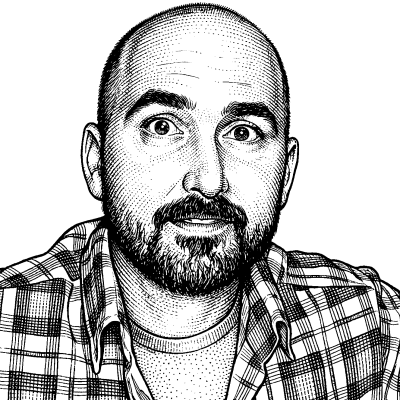
Jason Anthony is a religion journalist and games designer based in New York City. He brings a unique perspective to discussions of next-generation religion, shaped by his diverse experiences and intellectual curiosity. Anthony’s career has spanned various aspects of the media landscape. He has served as the editor of America’s oldest religious magazine and written extensively about the national faith landscape. His observations and reflections following the events of September 11th at the World Trade Center—where he witnessed the intense religious reactions and motivations—led him to delve deeper into the study of religion. Driven by both personal experience and the evolving media landscape, Anthony’s work now extends to the realm of game design. This exploration is epitomized by his project, “The Ten Year Game,” an initiative through which he explores future religious frameworks. Anthony’s involvement in business writing and familiarity with both legal and illegal gambling traditions further enrich his understanding of complex systems and human behavior, lending a multifaceted perspective to his projects.
Quotations (4)
 Clifford Geertz
Topical Guide (2)
Videos (24)
Rachael Givens Johnson
Incarnation: Some Theological-Historical Notes
In an age of seemingly endless possibilities for modifying our bodies, this presentation explores the value of limited embodiment, arguing that constraints and limitations may be prerequisites for cultivating joy, freedom, and connection rather than obstacles to overcome. Drawing on Brian Kershisnik’s painting “Dancing on a Very Small Island,” the speaker examines how recent cognitive science has undergone an “embodied makeover,” recognizing intelligence as embodied, embedded, enacted, and extended. The talk raises theological questions from the Latter-day Saint tradition—particularly Joseph Smith’s vision of resurrection as precise bodily restoration—suggesting that progress might paradoxically occur through condescension, sacrifice, and abnegation rather than purely through increasing autonomy and agency.
Jonathan Jardine
Balancing Emergent and Hierarchical Governance at Church
Jonathan Jardine, drawing on Clay Christensen’s strategic frameworks, examines how decentralization of church practice—not doctrine—can help build Zion. He traces LDS innovations like seminaries, the Primary, and the welfare program back to emergent strategies that bubbled up from local leaders solving real problems, later adopted and standardized by general authorities. Jardine contrasts this with recent decades’ shift toward deliberate, centrally planned initiatives, arguing that the church needs both approaches and should empower members to exercise their “spiritual muscles” through local innovation.
Don Bradley
“Raise Up Seed to Thy Brother”- The Ideologically Levirate Marriage of Joseph, Emma, & Alvin Smith
This presentation proposes that Joseph Smith believed his firstborn son Alvin held special rights to the golden plates because Joseph saw himself as fulfilling the biblical levirate law—raising up seed to his deceased brother Alvin, who had been present when Moroni first appeared and died shortly thereafter. The speaker uses abductive reasoning to argue that Joseph’s marriage to Emma was itself an adaptation of this ancient practice, making their union spiritually polygamous from the start. This hypothesis offers explanatory power for several puzzles in early Mormon history, including Joseph’s outsized expectations for his firstborn son, his need to marry Emma before obtaining the plates, and the later development of proxy work for the dead and plural marriage.
Chris Bradford
Open Thou Mine Eyes
Chris Bradford explores the tension between technological instrumentalism and genuine human relationship, drawing on Martin Buber’s distinction between “I-It” and “I-Thou” encounters. He argues that a purely technological approach to the world risks reducing people and nature to mere objects, and that Mormon transhumanism must complement its technological aspirations with the cultivation of empathy, charity, and recognition of the divine in others. Bradford contends that the grace saturating the world—visible when our “eyes are opened”—calls disciples of Christ to see and serve God in every neighbor, making the transhumanist project a fundamentally religious endeavor.
Ben Blair
The God of Transcending Narratives
This presentation examines how communal narratives function in religious communities, arguing that God consistently bursts self-assured narratives rather than confirming them—as seen in Moses’s life being repeatedly disrupted from Egyptian prince to fugitive to prophet. The speaker critiques both the LDS Church’s institutional narrative and ex-Mormon counter-narratives for missing the “sought goods” that justify any narrative, suggesting that disputes over historical and doctrinal claims miss the more essential question of whether these structures actually deliver salvation. Mormon transhumanism offers a framework where religious aspirations like immortality and eternal life need not remain abstract mysteries but can become serious goals with practical benchmarks, transforming narratives from self-justifying stories into accountable claims measured against real outcomes.