theology
Articles (33)
Without Beginning
Explore how time travel, Mormon theology, and quantum physics intersect in a fascinating examination of recursive creation, indefinite divine regress, and the nature of reality beyond simple causation.
The Veil Is Individuation
In Mormon theology, the veil isn’t merely forgetting—it’s individuation, the sacred process by which God differentiates into more Gods. Explore this profound reframing.
How to Know God
Lincoln Cannon draws on Mormon scripture to explore how God can be known—through intelligence, embodiment, community, and presence throughout the world.
From Liberty Jail to Priesthood Sealing Power
Lincoln Cannon uses Joseph Smith's Liberty Jail experience to show how enduring power comes not from force but from knowledge, persuasion, and relationships.
Theophanies of the Future
Lincoln Cannon speculates on what it would mean for a superintelligence to encounter God—exploring theophanies at the intersection of theology and advanced AI.
Authors (10)
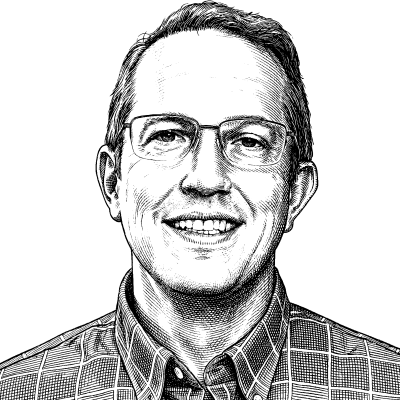
Adam Davis is a physicist and educator. He received his degree from Case Western University and currently teaches physics at Wayne State College. His academic pursuits extend beyond conventional physics into areas that bridge science and theology, particularly within the context of Latter-day Saint beliefs. Davis’s interests lie in exploring the concept of “spirit matter,” a topic central to Mormon theology. He approaches this subject through a scientific lens, seeking to develop models and frameworks for understanding its nature and properties. His work examines the theological necessity of spirit matter and considers its implications for human advancement and the attainment of divine potential. At the Mormon Thought & Engineering Vision conference held in 2009, Davis presented his perspectives on spirit matter, acknowledging the limited understanding currently available while emphasizing the importance of continued exploration. He examined scriptural and anecdotal accounts, including descriptions of spirit bodies and the spirit world, to inform his approach and stimulate further discussion on this complex topic—ultimately suggesting that no current models are completely adequate. Davis served on the MTA Board of Directors for several years.
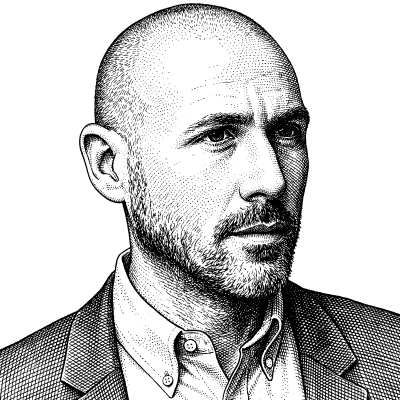
Adam Miller is a philosopher, educator, and author whose work serves as a bridge between contemporary continental philosophy and Latter-day Saint theology. He holds a bachelor’s degree from Brigham Young University and earned his master’s and PhD in philosophy from Villanova University. Miller currently serves as a professor of philosophy at Collin College in McKinney, Texas, where he also directs the college’s honors program. Miller is a leading voice in the “new Mormon theology” movement, characterized by a rigorous yet accessible approach to religious thought that often operates outside traditional institutional hierarchies. His scholarship draws heavily on the work of French philosophers such as Alain Badiou and Bruno Latour to re-examine Mormon metaphysics. In works like Speculative Grace: Bruno Latour and Object-Oriented Theology , Miller explores an “object-oriented” ontology, proposing a theological framework where grace and agency are embedded within the material relationships of the world—a perspective that resonates with discussions regarding the nature of matter and intelligence found within transhumanist discourse. A prolific writer, Miller has authored numerous influential books that challenge readers to engage deeply with scripture and tradition. His Letters to a Young Mormon is widely regarded for its candid and pastoral approach to questions of faith and agency. He has also produced a series of “urgent paraphrases” of biblical texts, including Grace Is Not God’s Backup Plan (Romans) and Nothing New Under the Sun (Ecclesiastes), which seek to unveil the tremendous power of ancient scripture for modern audiences. His engagement with secular culture is evident in The Gospel According to David Foster Wallace , a text praised by The New York Times for its “incantatory and gorgeous” prose. Beyond his writing, Miller has played a pivotal role in shaping the infrastructure of modern Mormon studies. He co-founded Salt Press, an independent publisher of Mormon theology later acquired by Brigham Young University’s Maxwell Institute. He also founded and serves as co-director of the Latter-day Saint Theology Seminar, an annual colloquium that fosters collaborative, close readings of scripture. Through these efforts, Miller has cultivated a space for rigorous theological experimentation, emphasizing a “theology of the present” that calls for active, transformative engagement with the divine in the here and now.

Dorothy Deasy is a Methodist theologian currently pursuing a Master’s of Applied Theology from Merrill Hurst University. Her spiritual journey began later in life with an awakening experience triggered by her study of the historical Jesus. Deasy’s work explores the intersection of spirituality and technology, particularly examining the nature of religious experience in the context of rapidly advancing biotechnologies. She questions whether electronically or pharmacologically induced religious experiences hold the same value and significance as traditional spiritual engagement, emphasizing that true spirituality involves the incorporation of insights from peak experiences into daily life—a call to action and interconnectedness. Deasy posits that neuroscience, with discoveries like mirror neurons, increasingly supports the idea that empathy and sociability are fundamental aspects of human development. She argues against the dualistic separation of science and religion, suggesting that understanding the biological mechanisms behind transcendent experiences does not negate their profound meaning. Her research bridges the gap between scientific understanding and spiritual experience, relevant in an age where humanity has the potential to alter the human body and influence the very triggers of life.
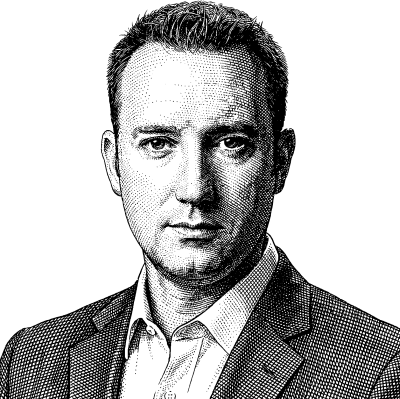
Jacob Baker is a scholar of philosophy of religion and theology who completed his doctoral studies at Claremont Graduate University’s School of Religion. His dissertation explored the inherent unthinkability of the problem of evil in philosophy and theology, arguing that this unthinkability is central to its status as a problem. Baker’s graduate work spans an impressive range of philosophical and theological traditions. He studied continental philosophy under Ingolf Dalferth, examining figures such as Heidegger, Wittgenstein, Nietzsche, Kierkegaard, and Tillich. His paper Heidegger and Wittgenstein: Worldliness and Surveyable Representation in the Architecture of the Ordinary argued that both philosophers share a fundamental orientation toward allowing phenomena to show themselves without philosophical interference. His work on Nietzsche explored how the philosopher’s critique of truth was ultimately in service of affirming and enhancing life itself. In phenomenology, Baker engaged deeply with Jean-Luc Marion’s work, arguing that love is the privileged theme of phenomenology and that Marion’s phenomenology of givenness can reveal how love enables the other to give herself as herself in particularity and unsubstitutability. His paper on Badiou and Zizek’s readings of St. Paul explored how these atheist philosophers converge on understanding Pauline love as work, labor, and struggle—far removed from sentimental notions. Baker has contributed significantly to Mormon intellectual discourse. His article The Grandest Principle of the Gospel: Christian Nihilism, Sanctified Activism, and Eternal Progression appeared in Dialogue: A Journal of Mormon Thought (Vol. 41, No. 3, 2008), examining how early twentieth-century Mormon intellectuals developed eternal progression as an existential response to what they perceived as the nihilistic stasis of traditional Christian heaven. In Element (Vol. 4, Issue 1, 2008), his essay The Shadow of the Cathedral argued that “open system” approaches to systematic theology can accommodate Mormon continuing revelation. His work on Joseph Smith, written under Richard L. Bushman, explored the connection between Smith’s personal experiences with friendship and his developing theology of sealing, arguing that the “welding link” concept emerged from Smith’s vision of uniting all humanity across time through bonds of love. Baker also examined whether Mormon theology can be meaningfully articulated within panentheistic discourse, suggesting that “pansyntheism”—meaning “God with us” rather than “God in us”—better accommodates Mormon emphases on divine personhood and the distinct identities of God and humans. In process theology and medieval theology, Baker examined how panentheism provides a framework capable of unifying disparate experiences—religious and secular, scientific and theological—into a coherent whole. His work on medieval atonement theory argued against contemporary calls to subordinate atonement to incarnation, demonstrating through Anselm, Abelard, Aquinas, and Bonaventure that these doctrines are mutually interdependent. During his presentation at the MTAConf 2016, he offered philosophical challenges to transhumanist thought through the lens of cosmic pessimism. His engagement with transhumanist literature reflects his broader interest in how philosophy and theology address questions of human potential, meaning, and transcendence.
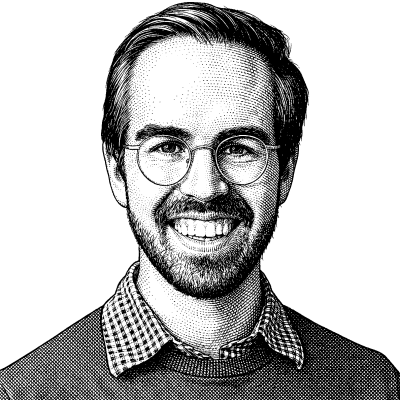
Jaxon Washburn is a Ph.D. student in Near Eastern Languages and Cultures with a focus on Armenian Studies at UCLA. He holds a Master of Theological Studies in History of Christianity from Harvard Divinity School (2023) and dual bachelor’s degrees in Religious Studies and History from Arizona State University (2021), both earned summa cum laude. Raised in an interfaith household, Jaxon has long been passionate about religious studies and interfaith activism, with early speaking engagements at venues including the Parliament of the World’s Religions and the United Nations. He formerly served as youth advisor for the Arizona Interfaith Movement and as a member of the Mormon Transhumanist Association. He went on to serve a mission for the Church of Jesus Christ of Latter-day Saints in Armenia—an experience that profoundly shaped the trajectory of his academic career. At Harvard Divinity School, Jaxon deepened his commitment to both scholarship and faith. He worked as a Research Associate with the Harvard Pluralism Project, contributing to efforts promoting religious literacy and interreligious engagement. His studies there also led to a published essay, “Mormonism: The Most American ‘Religious Other,’” in the Harvard Divinity Bulletin (Fall/Winter 2022). During his time at HDS, he developed a strong interest in Armenian religious history, studying Classical Armenian and working with Dr. Christina Maranci following the reestablishment of Harvard’s Mashtots Chair for Armenian Studies. Jaxon’s current research interests encompass the history of Christianity, Eastern and Armenian Christianity, mediums of interreligious exchange, and religious pluralisms in the South Caucasus. His earlier work on intersections between Hindu and Latter-day Saint traditions around themes of transfiguration and divine embodiment has broadened into a wider exploration of how religious communities interact, exchange, and develop across cultural boundaries.
Quotations (40)
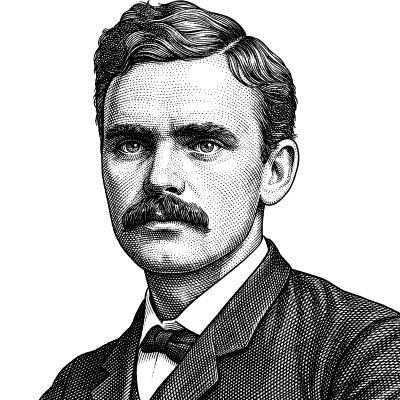 B. H. Roberts