human potential
Articles (4)
The Eternal Dance
Explore “The Eternal Dance,” a visionary poem celebrating love, transformation, and humanity’s divine potential—born from a father’s reflections at his son’s wedding.
God Starts with Your Imagination of the Future
Lincoln Cannon argues that our imagination of better minds, bodies, and a better world is, at its core, an imagination of God.
Adapt to What's Coming
Explore why adaptability is the ultimate form of intelligence. Lincoln Cannon reflects on how learning to think, question, and improvise prepares us for an unpredictable future.
Parallels and Convergences: Mormon Thought and Engineering Vision - Call for Papers
Explore the intersection of Mormon theology and engineering vision at this Claremont Graduate University conference examining how LDS perspectives on God and human potential converge with engineering thought.
Authors (5)

Ally Isom is a business and community leader with a diverse background spanning public service, corporate strategy, and political engagement. Currently a Republican candidate for the United States Senate in Utah, she brings a wealth of experience to the political arena. Isom has demonstrated a commitment to fostering authentic human connection, a theme echoed throughout her work and personal interests. This dedication aligns with the Mormon Transhumanist Association’s focus on leveraging technology to enhance human potential and spiritual growth. Prior to her senatorial bid, Isom held prominent positions in Utah state government, including Deputy Chief of Staff and spokesperson for Governor Gary Herbert. She also served in public affairs, communication, and branding roles within the Church of Jesus Christ of Latter-day Saints. Her career transitioned into the private sector, where she served as Chief Strategy and Marketing Officer and, eventually, acting executive officer for Evok Nano, a company focused on innovation and technology. Isom’s presentation at MTAConf 2022 highlighted the vital importance of human connection, particularly in the wake of the COVID-19 pandemic. She explored the neuroscience behind connection, emphasizing its role in strengthening the immune system, promoting mental and emotional well-being, and fostering spiritual growth. This perspective resonates with transhumanist ideals of enhancing human capabilities and experiences through technology and community engagement. Outside of her professional life, Isom enjoys a variety of activities, including riding, hiking, cooking, and indulging in her favorite dish, mole poblano, preferably enjoyed on a beach with a good book. She is married to Eric and they have four children and five grandchildren.

Benjamin Peters
Benjamin Peters (born 1980) is an American media scholar, author, and professor known for his work on the history of communication technologies, information theory, and the social dimensions of digital networks. He serves as the Hazel Rogers Professor of Communication at the University of Tulsa and has held affiliations with several prominent research institutions. Peters is best known for his book How Not to Network a Nation: The Uneasy History of the Soviet Internet (2016), which explores the failed attempts to build a nationwide computer network in the Soviet Union and examines how social and political systems shape technological development. The work received widespread acclaim for its interdisciplinary approach, bridging media studies, history, and science and technology studies. He has also edited Digital Keywords: A Vocabulary of Information Society and Culture (2016), contributing to critical discourse around the language and concepts underpinning the digital age. Peters’s scholarship carries resonance for those interested in the intersection of technology, human potential, and collective aspiration. By investigating how societies envision and fail to realize transformative technological projects, his work illuminates the deeply human—and often ideological—dimensions of networked communication. His research reminds us that the tools we build to connect and elevate humanity are always embedded in moral, political, and even spiritual frameworks. For communities exploring themes of theosis and the cooperative pursuit of transcendence through technology, Peters’s insights into the promises and pitfalls of networked societies offer valuable perspective on how human aspiration and systemic constraints interact in the ongoing project of building a better world.

Cameron Dayton is an American video game creative director, novelist, and writer known for his work in the gaming industry and speculative fiction. He has held prominent creative roles at several major studios, contributing to well-known franchises and original intellectual properties. Dayton served as creative director at Certain Affinity and has worked in narrative and creative leadership positions across the video game industry. He is also the author of the novel Etherwalker , a science-fantasy work set in a far-future world where technology and myth have intertwined, exploring themes of lost civilizations, human potential, and the rediscovery of powerful ancient technologies. His fiction often inhabits the intersection of epic fantasy and science fiction, imagining futures in which humanity’s relationship with technology is both perilous and transformative. Dayton has roots in the Latter-day Saint community, and his creative work reflects an imagination shaped by themes resonant with Mormon Transhumanist thought—particularly the idea that humanity’s trajectory involves the responsible stewardship of extraordinary power, and that the boundaries between the mundane and the transcendent are more porous than they appear. His speculative worlds frequently explore the tension between knowledge and wisdom, technological mastery and moral responsibility, echoing the Mormon Transhumanist conviction that scientific and technological progress are inseparable from ethical and spiritual development. His storytelling invites readers to consider what it means for ordinary individuals to inherit or rediscover capacities that border on the divine—a narrative arc that parallels the Latter-day Saint doctrine of theosis and the transhumanist aspiration toward radical human flourishing.

Kurtis Lockhart is an urban development leader, researcher, and the Founder and Director of the Africa Urban Lab (AUL). He holds a PhD in political science from the University of Oxford, where his research examined the impact of institutional reforms on public goods provision in sub-Saharan Africa. He also obtained an MSc in Development Management from the London School of Economics—where he graduated top of his class—and a BA in Economics and Development Studies from McGill University. While at Oxford, he taught both quantitative methods and African politics, seamlessly bridging rigorous academic theory with real-world development challenges. Before focusing on urban innovation, Lockhart built extensive on-the-ground expertise managing developmental research and randomized control trials. He served as a Research Manager for the International Growth Centre and Warc Africa in Sierra Leone, and for the ELIMU Impact Evaluation Center in Kenya. These early roles across varied sectors solidified his understanding of the complex bottlenecks facing developing regions and underscored the urgent need for scalable, structural solutions. A prominent advocate for innovative governance, Lockhart previously served as Executive Director and Head of Research at the Charter Cities Institute (CCI), a Washington, D.C.-based think tank. There, he championed the development of charter cities—new urban centers granted special jurisdiction to enact institutional reforms—as a mechanism to address Africa’s rapid urbanization. Expanding on this mission in 2024, he launched the Africa Urban Lab in Zanzibar. Operating as a “teaching hospital” for urban professionals in partnership with the African School of Economics and CCI, AUL trains the next generation of municipal leaders and planners to transform urban growth into economic prosperity. Lockhart’s broader vision aligns deeply with themes of human progress, emphasizing how institutional evolution can lift communities out of poverty and foster long-term resilience. At the MTAConf 2022, he made a presentation on Charter Cities: Empowered Cities for the Urban Age, illustrating how decentralized, empowered cities can overcome traditional development hurdles. By reimagining city governance as a catalyst for human flourishing, Lockhart continues to shape the future of urban resilience and economic freedom across the Global South.

Michaelann Gardner is a speaker who has presented at several Mormon Transhumanist Association conferences. Her presentation at the MTAConf 2019 focused on the impact of family history and ancestral trauma on personal well-being and resilience, particularly in the context of emotional vulnerability and mental health. Gardner’s talk explored the challenges of confronting difficult family narratives and embracing personal messiness and complexity. She drew on personal experiences related to her grandfather, Bert Gardner, and great-grandfather, both of whom struggled with alcoholism and created instability for their families. She connects these family dynamics to broader themes of emotional expression, financial security, and anxiety. She integrates insights from therapy and psychology, referencing research that suggests building resilience through understanding one’s family history. Her work appears to be a combination of personal reflection with family systems and positive psychology.
Quotations (17)


Topical Guide (19)
See all 19 resultsVideos (5)
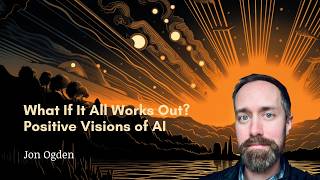
Jon Ogden
What If It All Works Out? Positive Visions of AI
This talk asks a hopeful question: What if it all works out? The speaker envisions AI’s positive potential at three levels—garden, city, and planet. At the garden level, he invokes the simple paradise of Epicurus: friends discussing ideas in peaceful surroundings, suggesting we may already be closer to Eden than we realize. But this vision falters when one considers the unhoused sleeping under Zion’s Bank, prompting a turn to the Mormon vision of Zion where there are no poor. Finally, at the planetary level, the speaker sees AI’s greatest promise in its capacity to detect microscopic toxins and enable truly sustainable material cycles—going from “one to zero” as nature does, so that everyone might eventually enjoy the simple luxury of talking about ideas with friends.

Closing Session: a discussion on COVID-19 and the interconnectedness of our world
This closing session roundtable discussion from the 2020 MTA conference explores the COVID-19 pandemic’s effects on global interconnectedness. Participants highlight encouraging developments—from a seventeen-year-old creating a widely-used pandemic dashboard to international cooperation on medical technology and the rapid expansion of remote work and education. The conversation turns to what the MTA can do during the crisis, with participants emphasizing the need to balance transhumanist optimism with genuine empathy for those suffering, the importance of understanding exponential growth’s implications, and the opportunity to strengthen the broader transhumanist movement through increased virtual collaboration.
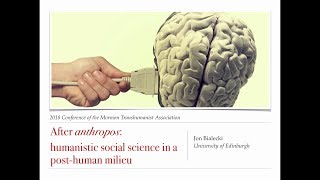
Jon Bialecki
After Anthropos: Humanistic Social Science in a Posthuman Milieu
Anthropologist John Bialecki examines what transhumanism means for a social science that defines itself as the study of the human. He traces anthropology’s Boasian tradition of treating humanity as remarkably plastic yet culturally dependent, then asks whether posthuman transformations—particularly radical scenarios like Churchland’s networked “centipede” minds—would place future beings beyond the reach of ethnographic methods. Bialecki proposes that anthropology’s capacity to study a transformed subject might serve as a test for whether that transformation enhances or abandons what we recognize as human.
Kathy Wilson
Report on humanitarian work in India
Kathy Wilson reports on her experiences traveling to India over twenty years, describing how the country’s explosive population growth—from 800 million to over a billion—has intensified problems of poverty, corruption, and gender inequality while simultaneously expanding her understanding of what is possible on Earth. She shares observations from Delhi slums housing millions of people and discusses her work with NGOs supporting marginalized widows and children. Wilson connects these global humanitarian challenges to transhumanist themes, arguing that as the planet shrinks into a global society, those with technology and education have a responsibility to address problems in developing countries rather than ignore them.
James Felton Keith
Integrationalism: Spiritual Disincentives for Humanity
James Felton Keith presents his philosophy of “integrationalism,” arguing that traditional spirituality—by emphasizing individual spirits and their unique relationship with the divine—inadvertently incentivizes elitism, protectionism, and violent conflict over scarce resources. He proposes that insights from string theory, which suggest all existence is fundamentally interconnected, could provide a new framework for human cooperation. Keith contends that rather than pursuing “moral good” based on relative spiritual beliefs, humanity should focus on protecting mortal lives as inherently valuable, recognizing that our group interdependence is essential for technological and philosophical progress.