ethics
Articles (10)
What Is True and Good?
Lincoln Cannon defines "truth" and "good" from a Mormon Transhumanist perspective—a concise account of epistemology and ethics from MTA discussions.
From Coronavirus to Compassion
COVID-19 challenges us all, but it reveals a fundamental truth: sharing one planet means choosing between coercion and cooperation. Discover why compassion is our only path forward.
Reform Church Interview Practices Related to Sex
Lincoln Cannon responds to the MTC sexual assault case by calling on the LDS Church to reform interview practices around sexual topics for greater safety.
To Love Is Better Than to Know Is Better Than to Obey
Explore why love transcends knowledge and obedience in Mormon faith. A thoughtful reflection on virtuous priorities, healthy discipleship, and the ethical limits of conformity.
“I Was a Stranger”
Explore how Christ’s call to welcome the stranger challenges us to see divinity in humanity’s humblest forms—and what that means for our ongoing moral trial.
Authors (5)

Ben Romney is a senior software engineer at Qualtrics. Outside of his professional career, he pursues his interest in moral philosophy. He presented at the MTAConf 2020 on his paper, “A Gradient Rubric for Human and Non-Human Utility,” available at bromney.com/ethicspaper.pdf. Romney’s work focuses on expanding ethical considerations beyond the human species to encompass animals, plants, and potentially robots, all in service of maximizing global happiness. He advocates for a utilitarian approach, proposing a gradient rubric to quantify various life forms’ capacity for happiness, aiming to prioritize efforts to improve the world for all sentient beings.

Brian Green is a scholar at Santa Clara University specializing in the intersection of transhumanism and Catholic ethics. His research explores the complex relationship between these seemingly disparate fields, seeking to identify areas of both conflict and potential collaboration. He has dedicated approximately a decade to this field of study, commencing with his master’s program at the Graduate Theological Union in Berkeley. His work aims to foster mutual understanding and dispel misconceptions between transhumanist and Christian communities. At the Religion and Transhumanism Conference 2014, Green addressed prevalent myths regarding the Catholic Church’s stance on life extension and human genetic manipulation, arguing for a more nuanced perspective that acknowledges the diversity within both transhumanism and Christianity. He advocates for identifying true points of tension and exploring potential alliances between these groups. Green’s research considers the justice implications of emerging technologies, and the practical challenges of achieving immortality. He seeks to encourage productive dialog that reconciles the benefits of emerging technologies with Catholic concerns for social justice, human dignity, and spiritual well-being.
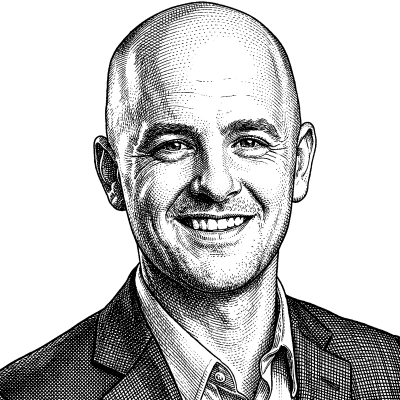
Evan McMullin
Evan McMullin (b. 1976) is an American politician, intelligence officer, and civic leader whose career has been defined by a commitment to democratic principles, moral courage, and service to the common good. Born in Provo, Utah, and a member of The Church of Jesus Christ of Latter-day Saints, McMullin served as a clandestine operations officer with the CIA for over a decade, working in counter-terrorism and national security across the Middle East and North Africa. He later served as Chief Policy Director for the House Republican Conference before launching an independent presidential campaign in 2016, earning 21% of the vote in Utah and drawing national attention as a principled alternative to the major-party candidates. McMullin’s public life has centered on the defense of constitutional democracy and human dignity against authoritarian impulses. In 2021, he co-founded the anti-authoritarian organization Stand Up Republic, and in 2022 he ran as an independent candidate for U.S. Senate in Utah, earning broad cross-partisan support. His advocacy consistently draws on moral foundations rooted in his faith, framing democratic participation and the protection of individual rights as ethical imperatives rather than merely political ones. McMullin’s career reflects a conviction that intelligence, courage, and moral clarity are inseparable—that the work of protecting human dignity requires both rigorous discernment and principled action. His willingness to challenge concentrated power and defend pluralistic institutions resonates with the Mormon transhumanist commitment to decentralized flourishing and the notion that genuine community requires consent, accountability, and the active participation of morally engaged individuals. In an era when technology increasingly mediates political power, McMullin’s insistence on transparency and ethical responsibility points toward the kind of stewardship that responsible technological progress demands.

Steven Peck is a scholar whose interests lie at the intersection of science, ethics, and faith. His work reflects a fascination with future technologies and their implications, exemplified by his collaborative publications with students on topics ranging from the ethics of pregnancy on Mars to the use of neuroimaging for communication with individuals experiencing locked-in syndrome. These projects, published in mainstream bioethics journals, showcase his engagement with cutting-edge advancements and their potential impact on humanity. Beyond future technology, Dr. Peck harbors a deep appreciation for the natural world, particularly insects such as ants and bees. This interest extends beyond mere observation, as demonstrated by his anecdotes of field experiments involving insects and his reflections on evolutionary efficiency. His connection to the Mormon Transhumanist Association is evident in his willingness to explore the ethical and spiritual dimensions of scientific progress, blending scientific inquiry with theological considerations. Dr. Peck’s academic endeavors reflect a commitment to exploring complex ethical dilemmas arising from advancements in science and technology. His unique perspective, informed by both scientific curiosity and a strong foundation of faith, positions him as a notable voice within the Mormon Transhumanist community.

Tamara Kneese is a researcher and author whose work examines the ethical and environmental implications of technology, particularly concerning digital afterlives and artificial intelligence. Her recent book, Death Glitch: How Techno-Solutionism Fails Us in this Life and Beyond , explores the material infrastructure and collective labor required to maintain digital representations of the deceased, questioning the true cost of keeping the dead alive online. She focuses on the intersection of technology, ethics, and sustainability. Kneese’s research delves into the labor and environmental impact needed for AI systems, specifically how this plays a role in digital preservation of loved ones. This work focuses on the energy consumption and sustainability challenges associated with data centers and AI, particularly in the context of maintaining digital legacies on a fragile planet. She highlights the often-overlooked labor performed by women and marginalized groups in maintaining these systems. Kneese has engaged with Mormon Transhumanist Association (MTA), attending their conference in Provo in 2019 as part of her book research. She is interested in the combination of religious cosmologies and technological life extension, emphasizing the MTA’s ancestrally oriented approach to transhumanism and kinship networks.
Quotations (3)

 William James