philosophy
Articles (13)
Bayesian Generalized Simulation Argument and Calculator
Explore a Bayesian formulation of the generalized Simulation Argument with an interactive calculator. Are we living in a created world or headed for doom? Dive in.
Vazza Overstates Constraints on the Simulation
Lincoln Cannon argues Vazza overstates computational constraints on the Simulation Hypothesis—defending its plausibility against dismissive critiques.
Technological Uniformity Saves the Simulation
Lincoln Cannon argues that technological uniformity resolves Bostrom's Simulation Argument — advanced civilizations converge on creating ancestor simulations.
Marek Wójtowicz on the New God Argument
Lincoln Cannon responds to philosopher Marek Wójtowicz’s formal critique of the New God Argument, published in Roczniki Filozoficzne.
What Is True and Good?
Lincoln Cannon defines "truth" and "good" from a Mormon Transhumanist perspective—a concise account of epistemology and ethics from MTA discussions.
Authors (15)
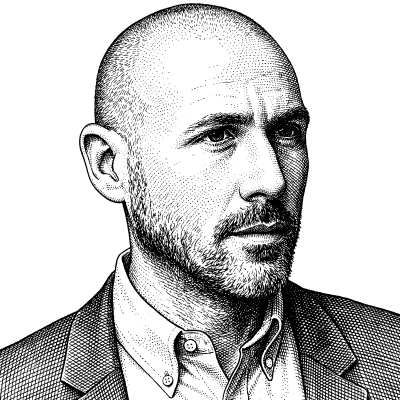
Adam Miller is a philosopher, educator, and author whose work serves as a bridge between contemporary continental philosophy and Latter-day Saint theology. He holds a bachelor’s degree from Brigham Young University and earned his master’s and PhD in philosophy from Villanova University. Miller currently serves as a professor of philosophy at Collin College in McKinney, Texas, where he also directs the college’s honors program. Miller is a leading voice in the “new Mormon theology” movement, characterized by a rigorous yet accessible approach to religious thought that often operates outside traditional institutional hierarchies. His scholarship draws heavily on the work of French philosophers such as Alain Badiou and Bruno Latour to re-examine Mormon metaphysics. In works like Speculative Grace: Bruno Latour and Object-Oriented Theology , Miller explores an “object-oriented” ontology, proposing a theological framework where grace and agency are embedded within the material relationships of the world—a perspective that resonates with discussions regarding the nature of matter and intelligence found within transhumanist discourse. A prolific writer, Miller has authored numerous influential books that challenge readers to engage deeply with scripture and tradition. His Letters to a Young Mormon is widely regarded for its candid and pastoral approach to questions of faith and agency. He has also produced a series of “urgent paraphrases” of biblical texts, including Grace Is Not God’s Backup Plan (Romans) and Nothing New Under the Sun (Ecclesiastes), which seek to unveil the tremendous power of ancient scripture for modern audiences. His engagement with secular culture is evident in The Gospel According to David Foster Wallace , a text praised by The New York Times for its “incantatory and gorgeous” prose. Beyond his writing, Miller has played a pivotal role in shaping the infrastructure of modern Mormon studies. He co-founded Salt Press, an independent publisher of Mormon theology later acquired by Brigham Young University’s Maxwell Institute. He also founded and serves as co-director of the Latter-day Saint Theology Seminar, an annual colloquium that fosters collaborative, close readings of scripture. Through these efforts, Miller has cultivated a space for rigorous theological experimentation, emphasizing a “theology of the present” that calls for active, transformative engagement with the divine in the here and now.

Alan Watts
Alan Wilson Watts (1915–1973) was a British-born American philosopher, writer, and speaker best known for popularizing Eastern philosophy—particularly Zen Buddhism, Taoism, and Hinduism—for Western audiences. He remains one of the most influential interpreters of Asian religious thought in the twentieth century. Watts began his career in England, where he was involved with the Buddhist Lodge in London. He later moved to the United States, briefly serving as an Episcopal priest before leaving the ministry to pursue a broader philosophical vocation. He became a professor and dean at the American Academy of Asian Studies in San Francisco and authored over twenty-five books, including The Way of Zen (1957), Psychotherapy East and West (1961), and The Book: On the Taboo Against Knowing Who You Are (1966). His lectures, many of which survive as recordings, continue to reach millions worldwide. Watts’s central teaching—that the individual self and the universe are fundamentally one—resonates with Mormon Transhumanist themes of theosis and the expansive potential of consciousness. His insistence that human beings are not merely in the universe but of it, expressions of a deeper cosmic process, parallels the tradition’s interest in humanity’s divine trajectory. However, significant differences exist. Watts generally rejected the concept of a personal God, viewing divinity as an impersonal process rather than a being with whom one could have a relationship. He was skeptical of doctrines of sin and moral depravity, seeing guilt as a psychological obstacle rather than a theological reality. He also questioned the Western emphasis on individual free will, favoring a view of spontaneous action aligned with Taoist wu wei . Despite these divergences, his lifelong project of dissolving boundaries between the sacred and the secular, the human and the divine, offers rich material for dialogue with Mormon Transhumanist thought.
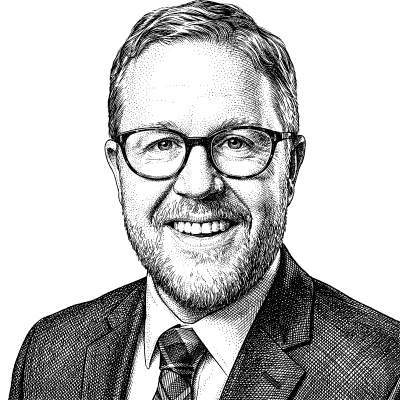
Ben Blair holds a PhD in philosophy and education from Teachers College, Columbia University. He is the co-founder of Newlane University—a platform focused on deinstitutionalizing education. An active member of the Church of Jesus Christ of Latter-day Saints, Blair’s work and perspective explore the intersection of religious community and secular ideals. He is particularly interested in how religious and post-religious communities can work towards shared goals, and he questions the equation of any particular organization with the broader concept of the ‘kingdom of God’. Blair, along with his wife, Gabrielle Blair, resides in France and they are the parents of six children. He presented at Sunstone West and is an attendee and speaker at Mormon Transhumanist Association conferences, where he explores the philosophical implications of faith, community, and progress.

Britt Hartley is an author, philosopher, and educator whose work explores the intersection of Mormon thought, philosophy, and the human search for meaning. Raised in a Latter-day Saint family in Idaho, she taught high school history and LDS seminary before pursuing graduate studies in theology with a focus on the future of American religion. Hartley is the author of Mormon Philosophy Simplified: An Easy LDS Approach to Classic Philosophical Questions (2019), which bridges the rich tradition of Mormon academic theology—drawing on thinkers like Terryl Givens, Hugh Nibley, and Blake Ostler—with the everyday questions of Latter-day Saint life. She presented at the 2019 Conference of the Mormon Transhumanist Association on how genealogical record-keeping across cultures reflects the priorities and narratives of the societies that produce them, and how advancing technology is expanding the transparency and complexity of Mormon genealogy in ways that may drive theological reflection. In her subsequent work, Hartley has focused on helping individuals navigate questions of meaning, connection, and spiritual practice beyond traditional religious frameworks. She is the author of No Nonsense Spirituality: All the Tools, No Faith Required (2024) and hosts the No-Nonsense Spirituality podcast, where she draws on philosophy, psychology, and contemplative practice to explore themes of awe, ritual, community, and purpose—concerns that resonate with the transhumanist commitment to human flourishing in all its dimensions. Hartley lives in Boise, Idaho with her husband and four children.

Charles Sanders Peirce
Charles Sanders Peirce (1839–1914) was an American philosopher, logician, mathematician, and scientist, widely regarded as the founder of pragmatism and one of the most original minds in the history of Western philosophy. Though he spent much of his career in relative institutional isolation—he held no permanent academic post and much of his work was published only posthumously—his influence on logic, semiotics, epistemology, and the philosophy of science has proven immense. Peirce was educated at Harvard and worked for decades with the U.S. Coast and Geodetic Survey, conducting pioneering research in geodesy and the measurement of gravity. In parallel, he developed a sweeping philosophical system he called “synechism”—the view that continuity is a fundamental feature of reality—alongside “tychism,” the doctrine that genuine chance is real and irreducible in the cosmos. These were not idle speculations but part of a rigorous effort to understand how mind, matter, meaning, and evolution are woven together. His theory of signs (semiotics) proposed that all thought is mediated by signs, making inquiry itself a kind of living, self-correcting process oriented toward truth. Peirce’s cosmological vision is among the most theologically resonant in the American philosophical tradition. He argued that the universe itself is a process of mind coming to know itself—that evolution, continuity, and the growth of reasonableness are not merely biological or physical facts but expressions of a cosmic tendency toward greater intelligence, order, and love. He described this tendency with the term “agapasm”: evolutionary love as the animating force of the universe. In this light, his remark that creation’s purpose, in its highest expression, is “God’s movement toward self-reproduction” is not a peripheral aside but a central conviction—that the cosmos is oriented toward the emergence and amplification of mind, and that intelligence, creativity, and moral aspiration are participations in something genuinely divine. For those who hold that humanity’s destiny is theosis—transformation into ever greater intelligence, compassion, and creative power—Peirce’s cosmology offers a richly consonant philosophical foundation.
Quotations (2)
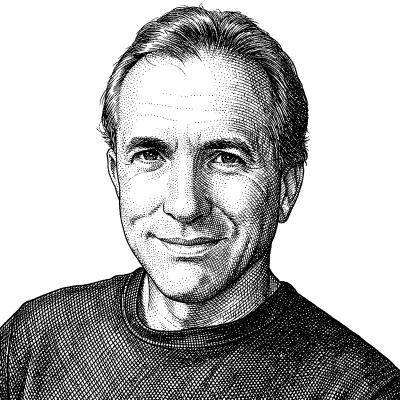 Michael Shermer
 William James