Authors
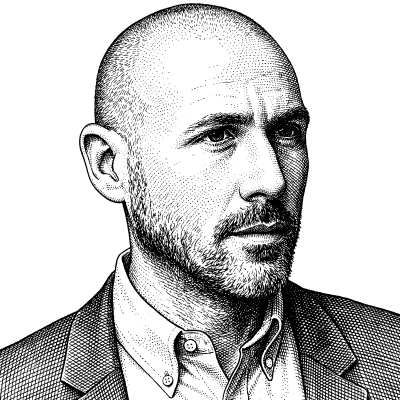
Adam Miller is a philosopher, educator, and author whose work serves as a bridge between contemporary continental philosophy and Latter-day Saint theology. He holds a bachelor’s degree from Brigham Young University and earned his master’s and PhD in philosophy from Villanova University. Miller currently serves as a professor of philosophy at Collin College in McKinney, Texas, where he also directs the college’s honors program. Miller is a leading voice in the “new Mormon theology” movement, characterized by a rigorous yet accessible approach to religious thought that often operates outside traditional institutional hierarchies. His scholarship draws heavily on the work of French philosophers such as Alain Badiou and Bruno Latour to re-examine Mormon metaphysics. In works like Speculative Grace: Bruno Latour and Object-Oriented Theology , Miller explores an “object-oriented” ontology, proposing a theological framework where grace and agency are embedded within the material relationships of the world—a perspective that resonates with discussions regarding the nature of matter and intelligence found within transhumanist discourse. A prolific writer, Miller has authored numerous influential books that challenge readers to engage deeply with scripture and tradition. His Letters to a Young Mormon is widely regarded for its candid and pastoral approach to questions of faith and agency. He has also produced a series of “urgent paraphrases” of biblical texts, including Grace Is Not God’s Backup Plan (Romans) and Nothing New Under the Sun (Ecclesiastes), which seek to unveil the tremendous power of ancient scripture for modern audiences. His engagement with secular culture is evident in The Gospel According to David Foster Wallace , a text praised by The New York Times for its “incantatory and gorgeous” prose. Beyond his writing, Miller has played a pivotal role in shaping the infrastructure of modern Mormon studies. He co-founded Salt Press, an independent publisher of Mormon theology later acquired by Brigham Young University’s Maxwell Institute. He also founded and serves as co-director of the Latter-day Saint Theology Seminar, an annual colloquium that fosters collaborative, close readings of scripture. Through these efforts, Miller has cultivated a space for rigorous theological experimentation, emphasizing a “theology of the present” that calls for active, transformative engagement with the divine in the here and now.

Alan Watts
Alan Wilson Watts (1915–1973) was a British-born American philosopher, writer, and speaker best known for popularizing Eastern philosophy—particularly Zen Buddhism, Taoism, and Hinduism—for Western audiences. He remains one of the most influential interpreters of Asian religious thought in the twentieth century. Watts began his career in England, where he was involved with the Buddhist Lodge in London. He later moved to the United States, briefly serving as an Episcopal priest before leaving the ministry to pursue a broader philosophical vocation. He became a professor and dean at the American Academy of Asian Studies in San Francisco and authored over twenty-five books, including The Way of Zen (1957), Psychotherapy East and West (1961), and The Book: On the Taboo Against Knowing Who You Are (1966). His lectures, many of which survive as recordings, continue to reach millions worldwide. Watts’s central teaching—that the individual self and the universe are fundamentally one—resonates with Mormon Transhumanist themes of theosis and the expansive potential of consciousness. His insistence that human beings are not merely in the universe but of it, expressions of a deeper cosmic process, parallels the tradition’s interest in humanity’s divine trajectory. However, significant differences exist. Watts generally rejected the concept of a personal God, viewing divinity as an impersonal process rather than a being with whom one could have a relationship. He was skeptical of doctrines of sin and moral depravity, seeing guilt as a psychological obstacle rather than a theological reality. He also questioned the Western emphasis on individual free will, favoring a view of spontaneous action aligned with Taoist wu wei . Despite these divergences, his lifelong project of dissolving boundaries between the sacred and the secular, the human and the divine, offers rich material for dialogue with Mormon Transhumanist thought.
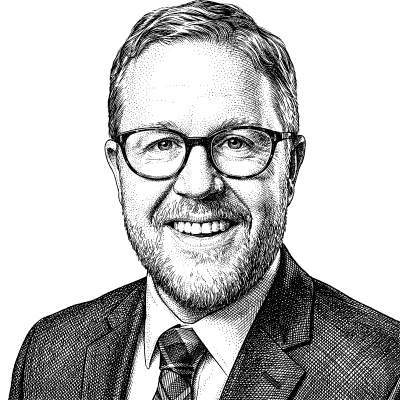
Ben Blair holds a PhD in philosophy and education from Teachers College, Columbia University. He is the co-founder of Newlane University—a platform focused on deinstitutionalizing education. An active member of the Church of Jesus Christ of Latter-day Saints, Blair’s work and perspective explore the intersection of religious community and secular ideals. He is particularly interested in how religious and post-religious communities can work towards shared goals, and he questions the equation of any particular organization with the broader concept of the ‘kingdom of God’. Blair, along with his wife, Gabrielle Blair, resides in France and they are the parents of six children. He presented at Sunstone West and is an attendee and speaker at Mormon Transhumanist Association conferences, where he explores the philosophical implications of faith, community, and progress.

Britt Hartley is an author, philosopher, and educator whose work explores the intersection of Mormon thought, philosophy, and the human search for meaning. Raised in a Latter-day Saint family in Idaho, she taught high school history and LDS seminary before pursuing graduate studies in theology with a focus on the future of American religion. Hartley is the author of Mormon Philosophy Simplified: An Easy LDS Approach to Classic Philosophical Questions (2019), which bridges the rich tradition of Mormon academic theology—drawing on thinkers like Terryl Givens, Hugh Nibley, and Blake Ostler—with the everyday questions of Latter-day Saint life. She presented at the 2019 Conference of the Mormon Transhumanist Association on how genealogical record-keeping across cultures reflects the priorities and narratives of the societies that produce them, and how advancing technology is expanding the transparency and complexity of Mormon genealogy in ways that may drive theological reflection. In her subsequent work, Hartley has focused on helping individuals navigate questions of meaning, connection, and spiritual practice beyond traditional religious frameworks. She is the author of No Nonsense Spirituality: All the Tools, No Faith Required (2024) and hosts the No-Nonsense Spirituality podcast, where she draws on philosophy, psychology, and contemplative practice to explore themes of awe, ritual, community, and purpose—concerns that resonate with the transhumanist commitment to human flourishing in all its dimensions. Hartley lives in Boise, Idaho with her husband and four children.

Charles Sanders Peirce
Charles Sanders Peirce (1839–1914) was an American philosopher, logician, mathematician, and scientist, widely regarded as the founder of pragmatism and one of the most original minds in the history of Western philosophy. Though he spent much of his career in relative institutional isolation—he held no permanent academic post and much of his work was published only posthumously—his influence on logic, semiotics, epistemology, and the philosophy of science has proven immense. Peirce was educated at Harvard and worked for decades with the U.S. Coast and Geodetic Survey, conducting pioneering research in geodesy and the measurement of gravity. In parallel, he developed a sweeping philosophical system he called “synechism”—the view that continuity is a fundamental feature of reality—alongside “tychism,” the doctrine that genuine chance is real and irreducible in the cosmos. These were not idle speculations but part of a rigorous effort to understand how mind, matter, meaning, and evolution are woven together. His theory of signs (semiotics) proposed that all thought is mediated by signs, making inquiry itself a kind of living, self-correcting process oriented toward truth. Peirce’s cosmological vision is among the most theologically resonant in the American philosophical tradition. He argued that the universe itself is a process of mind coming to know itself—that evolution, continuity, and the growth of reasonableness are not merely biological or physical facts but expressions of a cosmic tendency toward greater intelligence, order, and love. He described this tendency with the term “agapasm”: evolutionary love as the animating force of the universe. In this light, his remark that creation’s purpose, in its highest expression, is “God’s movement toward self-reproduction” is not a peripheral aside but a central conviction—that the cosmos is oriented toward the emergence and amplification of mind, and that intelligence, creativity, and moral aspiration are participations in something genuinely divine. For those who hold that humanity’s destiny is theosis—transformation into ever greater intelligence, compassion, and creative power—Peirce’s cosmology offers a richly consonant philosophical foundation.

Dr. Emile Alexandrov is an Assistant Professor of Philosophy and visiting scholar at Waseda University, Tokyo. His research focuses on metaphysics across Eastern and Western traditions. He earned his PhD in Philosophy from the University of Notre Dame Australia, and has extensive research and teaching experience in areas ranging from contemporary American and post-Kantian German philosophy to classical metaphysical traditions in the Graeco-Arabic world, Buddhism, and Daoism. Dr. Alexandrov has held academic appointments at the University of Erfurt in Germany, Novosibirsk State University and the University of Tyumen in Russia, and National Taiwan University in Taiwan. He is the author of The Other Platonist Beginning — Heidegger and Neoplatonism and the forthcoming Metaphysics and Ineffable . With Dr O’Neill, he co-directs the biennial International Symposium on Buddhism and Neoplatonism . Alongside Dr. Steve Stakland, he also co-leads the American Philosophy Series at Routledge.
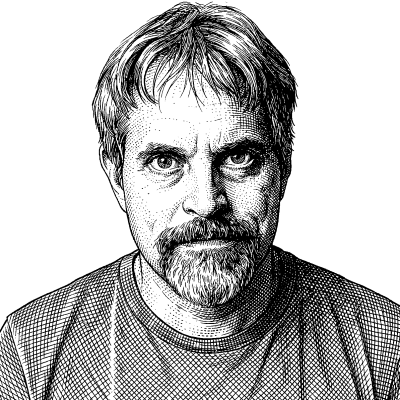
Eric Steinhart is a Professor of Philosophy at William Paterson University and the author of Your Digital Afterlives: Computational Theories of Life After Death . His work centers on metaphysics, employing contemporary analytical and logical methods, while also exploring historical metaphysical systems such as Neoplatonism and the philosophy of Leibniz. He is particularly interested in the intersection of formal sciences and theology, with a focus on alternatives to Abrahamic religions. Steinhart’s background is diverse. He grew up on a farm and initially trained as a computer scientist and mathematician, working as a software designer for several years, during which time he obtained patents for some of his algorithms. He later pursued advanced degrees in philosophy, and his earlier philosophical work included analyses of Nietzsche and metaphor, using possible world semantics. His research extends into the realms of metaphysics and computation, and he is featured in the documentary film Chronotrip , which deals with the concept of time travel. He affirms the existence of transfinitely endless hierarchies of sets, computers, languages, games, strategies, and minds. Steinhart’s current philosophical interests align with themes of eternal progression, alternative religious movements, and the application of evolutionary theory to cosmology.

Forrest Landry is a philosopher, writer, researcher, scientist, engineer, craftsman, and teacher whose work centers on metaphysics, the design of very large scale complex systems, and the thriving of all forms of life on this planet. He is also the founder and CEO of Magic Flight, a company known for introducing the portable vaporizer, and a third-generation master woodworker who found that his hands-on training in craft carried directly into skill in software systems design, governance architecture, and community process. Landry grew up in rural Maine, working wood alongside his father from early childhood and building, in his words, a felt sense that “nature doesn’t negotiate”: a discipline learned through the body before it was learned through mathematics. At sixteen he made a vow to go into the forest alone and meet the natural world unaided, without expectation or projection, a rite of passage he later described as an encounter with the world unmasked. That experience convinced him that no existing spiritual or religious tradition offered the rigor he was looking for: real depth of feeling, real formal precision, and a clear bridge between the two. Rather than search further, he set out to build that bridge himself, a decades-long project that became his book An Immanent Metaphysics , an attempt to restore legitimacy to metaphysics through a coherent, precise account of what is, what it is to know, and why we are here. That same combination of craft discipline and formal ambition carried Landry into large-scale systems work, including federal classified and unclassified projects for the FBI, DARPA, and the Library of Congress Congressional Records System, and later into collaboration with Daniel Schmachtenberger’s Consilience Project on sensemaking, governance, and existential risk. Across all of it runs a single ethical claim he states plainly: love is what enables choice, love is stronger than fear, and one should always choose on the basis of love. That claim, and the larger project behind it, sits close to convictions a Mormon transhumanist sensibility already holds: that rigor and reverence are not competitors, that the architecture of our systems is a moral question and not merely a technical one, and that compassion is the standard against which any exercise of power, human or artificial, should be measured. Landry’s insistence on building the bridge himself when no tradition supplied one, and his instinct to treat both feeling and formalism as trustworthy sources of understanding, gives his work a natural kinship with a theology that asks its adherents to do the same kind of integrative labor toward the thriving of all life.
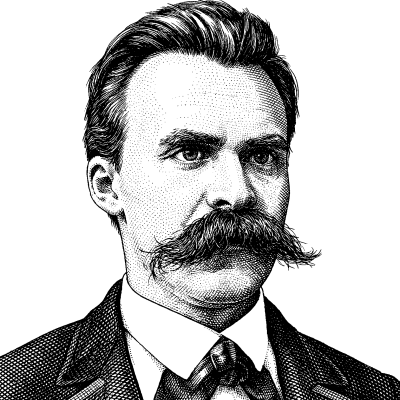
Friedrich Nietzsche
Friedrich Wilhelm Nietzsche (1844–1900) was a German philosopher, cultural critic, and philologist whose provocative ideas about morality, religion, and human potential have profoundly influenced modern thought. His concept of the ‘Übermensch’ (often translated as ‘overman’ or ‘superman’) and his call for humanity to transcend conventional values have made him a touchstone for transhumanist philosophy, even as his ideas remain subject to intense debate and varying interpretations. Born in Röcken, Prussia, Nietzsche was the son of a Lutheran pastor who died when Friedrich was four years old. He showed exceptional academic ability and became a professor of classical philology at the University of Basel at the remarkably young age of twenty-four. However, chronic illness forced his retirement from teaching in 1879, after which he spent the next decade as an independent philosopher, living modestly in boarding houses across Switzerland, Italy, and France while producing his most important works. Nietzsche’s major works—including Thus Spoke Zarathustra , Beyond Good and Evil , On the Genealogy of Morality , and The Gay Science —challenged the foundations of Western morality and religion. He famously proclaimed that ‘God is dead,’ not as a celebration but as a diagnosis of modern culture’s loss of transcendent meaning. His response was to call for a ‘revaluation of all values’ and the emergence of individuals who could create new meaning through the exercise of will. The concept of the Übermensch represents Nietzsche’s vision of human potential. Rather than a biological superman, Nietzsche envisioned a human being who had overcome the limitations of conventional morality to create new values and embrace life fully. This figure would say ‘yes’ to existence, including its suffering, through what Nietzsche called amor fati —love of fate. The Übermensch was to be the meaning of the earth, replacing otherworldly hopes with earthly creativity and self-overcoming. In 1889, Nietzsche suffered a mental collapse from which he never recovered, spending his final years in the care of his mother and sister. Despite the tragic end of his productive life, his influence only grew after his death. Transhumanists have drawn on his vision of human self-transcendence, though they typically emphasize technological means of enhancement that Nietzsche himself never contemplated. His insistence that humanity is ‘something to be overcome’ and his rejection of static human nature resonate with contemporary projects aimed at expanding human capabilities.

Jacob Baker is a scholar of philosophy of religion and theology who completed his doctoral studies at Claremont Graduate University’s School of Religion. His dissertation explored the inherent unthinkability of the problem of evil in philosophy and theology, arguing that this unthinkability is central to its status as a problem. Baker’s graduate work spans an impressive range of philosophical and theological traditions. He studied continental philosophy under Ingolf Dalferth, examining figures such as Heidegger, Wittgenstein, Nietzsche, Kierkegaard, and Tillich. His paper Heidegger and Wittgenstein: Worldliness and Surveyable Representation in the Architecture of the Ordinary argued that both philosophers share a fundamental orientation toward allowing phenomena to show themselves without philosophical interference. His work on Nietzsche explored how the philosopher’s critique of truth was ultimately in service of affirming and enhancing life itself. In phenomenology, Baker engaged deeply with Jean-Luc Marion’s work, arguing that love is the privileged theme of phenomenology and that Marion’s phenomenology of givenness can reveal how love enables the other to give herself as herself in particularity and unsubstitutability. His paper on Badiou and Zizek’s readings of St. Paul explored how these atheist philosophers converge on understanding Pauline love as work, labor, and struggle—far removed from sentimental notions. Baker has contributed significantly to Mormon intellectual discourse. His article The Grandest Principle of the Gospel: Christian Nihilism, Sanctified Activism, and Eternal Progression appeared in Dialogue: A Journal of Mormon Thought (Vol. 41, No. 3, 2008), examining how early twentieth-century Mormon intellectuals developed eternal progression as an existential response to what they perceived as the nihilistic stasis of traditional Christian heaven. In Element (Vol. 4, Issue 1, 2008), his essay The Shadow of the Cathedral argued that “open system” approaches to systematic theology can accommodate Mormon continuing revelation. His work on Joseph Smith, written under Richard L. Bushman, explored the connection between Smith’s personal experiences with friendship and his developing theology of sealing, arguing that the “welding link” concept emerged from Smith’s vision of uniting all humanity across time through bonds of love. Baker also examined whether Mormon theology can be meaningfully articulated within panentheistic discourse, suggesting that “pansyntheism”—meaning “God with us” rather than “God in us”—better accommodates Mormon emphases on divine personhood and the distinct identities of God and humans. In process theology and medieval theology, Baker examined how panentheism provides a framework capable of unifying disparate experiences—religious and secular, scientific and theological—into a coherent whole. His work on medieval atonement theory argued against contemporary calls to subordinate atonement to incarnation, demonstrating through Anselm, Abelard, Aquinas, and Bonaventure that these doctrines are mutually interdependent. During his presentation at the MTAConf 2016, he offered philosophical challenges to transhumanist thought through the lens of cosmic pessimism. His engagement with transhumanist literature reflects his broader interest in how philosophy and theology address questions of human potential, meaning, and transcendence.