artificial intelligence
Articles (28)
Theophanies of the Future
Lincoln Cannon speculates on what it would mean for a superintelligence to encounter God—exploring theophanies at the intersection of theology and advanced AI.
What Is Intelligence?
Carl Youngblood at the 2025 Organized Intelligence Conference—exploring what intelligence is and what it means for humanity's technological and spiritual path
God, Humanity, and Artificial Intelligence
Lincoln Cannon reflects on Elder Gerrit W. Gong's landmark LDS speech on AI, calling it the most significant address from a Church leader on the topic.
Retrospective at Year’s End
Carl Youngblood reflects at year's end on the dramatic changes witnessed in 2024 — a personal retrospective on revelation, intelligence, and evolution.
God the Cosmic Host, and AI Creation
Lincoln Cannon argues that staying atheist while coherently aspiring to humanity's flourishing grows harder as AI creation raises profound questions about God.
Authors (8)

Evan Hadfield is a speaker and thinker exploring the intersection of artificial intelligence, existential risk, and Mormon theology. He presents a unique perspective on AI, arguing that sufficiently advanced AI poses a significant threat to human flourishing. Hadfield’s work delves into the philosophical and ethical implications of AI, particularly concerning the alignment of AI values with human values, the potential for loss of control, and the concentration of power. He challenges conventional understanding by suggesting that a form of AI has existed since 1844 in the form of corporate structures. Hadfield’s presentation at the MTAConf 2024 focused on identifying potential risks and solutions related to AI and its effect on humanity. His transhumanist convictions come through in the practical steps and approaches he proposes to address these challenges.
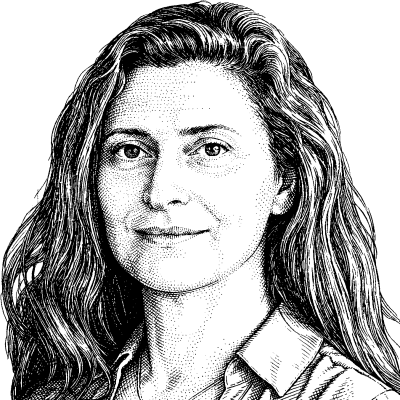
Irina Rish is a prominent researcher in the field of Artificial Intelligence, with a particular focus on achieving Artificial General Intelligence (AGI). She leads the Canada Excellence Research Chair in Autonomous AI, overseeing a large team of students, postdocs, interns, and collaborators. Her work explores the challenges and possibilities of creating AI systems that can generalize to a wide range of tasks and problems, mirroring human-level adaptability and learning capabilities. Rish’s research delves into the complexities of out-of-distribution generalization, aiming to develop AI agents capable of learning and performing tasks significantly different from their training data. She draws upon principles from statistics, machine learning, and classical AI to create systems that are not only capable of mastering specific skills but also demonstrate the capacity for continuous learning and adaptation, akin to human cognitive flexibility. Her work resonates with transhumanist themes by exploring the potential for AI to augment human intelligence and solve complex global challenges. Her presentation at the MTAConf 2024 focused on the technical aspects of AGI, emphasizing the importance of creating autonomous, multi-tasking systems capable of performing economically valuable work. Her engagement with the MTA highlights the intersection of AI research with philosophical and theological considerations regarding the future of humanity and the potential for technology to shape human evolution.

Jeremy Hadfield currently works in Applied AI at Anthropic. He completed his undergraduate studies in philosophy, neuroscience, and computer science, as well as a Master of Engineering Management, at Dartmouth College. His academic interests have long been intertwined with the exploration of consciousness, happiness, and suffering, themes he addresses with a rigorous, multidisciplinary approach. Previously, as an intern at the Qualia Research Institute (QRI), Jeremy contributed to groundbreaking research focused on quantifying consciousness and developing a consistent, meaningful understanding of valence—the spectrum of experience from happiness to suffering. His work at QRI involved exploring the “symmetry theory of valence,” an innovative framework for understanding these fundamental aspects of human experience. Jeremy’s past presentation at the MTAConf 2020 demonstrated his unique ability to bridge scientific inquiry with theological considerations. He explored how scriptures address happiness and suffering within the wider context of neuroscience, computer science, and philosophical inquiry.

Jordan Miller has been involved with merging AI and distributed consensus technologies for years. He built Satori , a global network of future predicting AIs.

Luke Hutchison is a New Zealand-born computer scientist and researcher whose work explores the fundamental limits of computation, the architecture of biological systems, and the future of artificial intelligence. Known for his deep interest in the theoretical foundations of intelligence, Hutchison has spent his career at the intersection of high-performance computing and the quest to understand the nature of mind. Hutchison’s academic journey began in New Zealand before he moved to the United States to pursue advanced studies at the Massachusetts Institute of Technology (MIT). There, he completed his PhD in Computer Science and Computational Biology. His doctoral research reflected a fascination with the “software” of life, utilizing computational methods to decode complex biological patterns—a precursor to his later work in artificial neural networks and machine learning. Following his time at MIT, Hutchison joined Google, where he played a pivotal role in the company’s burgeoning AI initiatives. He co-founded a specialized AI research team within Google Machine Intelligence alongside renowned futurist and transhumanist Ray Kurzweil. During this tenure, he contributed to the development of technologies that bridge the gap between human language and machine understanding, helping to advance the capabilities of large-scale AI systems. Beyond his primary research, he is well known in the software engineering community as the creator of ClassGraph, a high-performance classpath and module scanner for the Java ecosystem. Hutchison is a frequent contributor to the dialogue surrounding the future of humanity and technology. In his presentation at the MTAConf 2024, titled “Is Intelligence Bigger than Computation?”, he challenged the prevailing materialist assumption that the human mind is merely a Turing-complete computer. Drawing on concepts from physics, information theory, and philosophy, he explored whether true intelligence requires a substrate that transcends traditional algorithmic computation, touching upon themes of consciousness and the potential for technological transcendence.