mormon authorities
Articles (23)
29 Thoughts on April 2026 General Conference
Lincoln Cannon reflects on the April 2026 LDS General Conference, reading 29 talks through a transhumanist lens of faith, technology, and transformation.
Predicting Future Church Presidents
Lincoln Cannon explores predicting future LDS Church presidents through seniority and actuarial reasoning, following the death of Jeffrey R. Holland.
From Liberty Jail to Priesthood Sealing Power
Lincoln Cannon uses Joseph Smith's Liberty Jail experience to show how enduring power comes not from force but from knowledge, persuasion, and relationships.
Origin of Eternal Power
Lincoln Cannon draws on D&C 121 to explore how eternal power flows from righteousness, persuasion, and love — not compulsion or force.
God, Humanity, and Artificial Intelligence
Lincoln Cannon reflects on Elder Gerrit W. Gong's landmark LDS speech on AI, calling it the most significant address from a Church leader on the topic.
Authors (55)
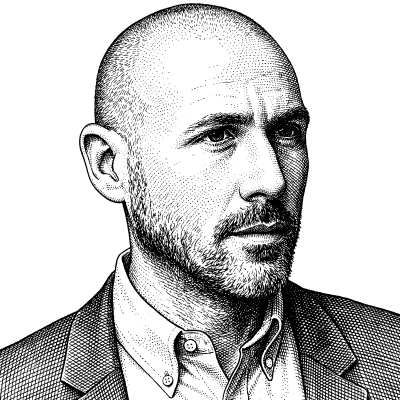
Adam Miller is a philosopher, educator, and author whose work serves as a bridge between contemporary continental philosophy and Latter-day Saint theology. He holds a bachelor’s degree from Brigham Young University and earned his master’s and PhD in philosophy from Villanova University. Miller currently serves as a professor of philosophy at Collin College in McKinney, Texas, where he also directs the college’s honors program. Miller is a leading voice in the “new Mormon theology” movement, characterized by a rigorous yet accessible approach to religious thought that often operates outside traditional institutional hierarchies. His scholarship draws heavily on the work of French philosophers such as Alain Badiou and Bruno Latour to re-examine Mormon metaphysics. In works like Speculative Grace: Bruno Latour and Object-Oriented Theology , Miller explores an “object-oriented” ontology, proposing a theological framework where grace and agency are embedded within the material relationships of the world—a perspective that resonates with discussions regarding the nature of matter and intelligence found within transhumanist discourse. A prolific writer, Miller has authored numerous influential books that challenge readers to engage deeply with scripture and tradition. His Letters to a Young Mormon is widely regarded for its candid and pastoral approach to questions of faith and agency. He has also produced a series of “urgent paraphrases” of biblical texts, including Grace Is Not God’s Backup Plan (Romans) and Nothing New Under the Sun (Ecclesiastes), which seek to unveil the tremendous power of ancient scripture for modern audiences. His engagement with secular culture is evident in The Gospel According to David Foster Wallace , a text praised by The New York Times for its “incantatory and gorgeous” prose. Beyond his writing, Miller has played a pivotal role in shaping the infrastructure of modern Mormon studies. He co-founded Salt Press, an independent publisher of Mormon theology later acquired by Brigham Young University’s Maxwell Institute. He also founded and serves as co-director of the Latter-day Saint Theology Seminar, an annual colloquium that fosters collaborative, close readings of scripture. Through these efforts, Miller has cultivated a space for rigorous theological experimentation, emphasizing a “theology of the present” that calls for active, transformative engagement with the divine in the here and now.
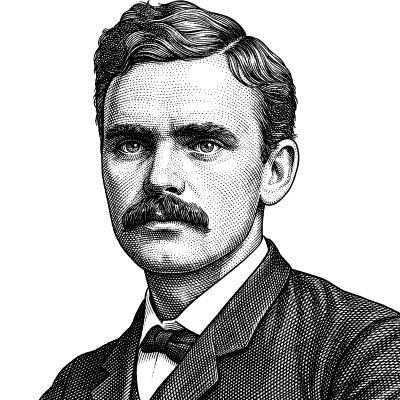
B. H. Roberts
Brigham Henry Roberts (1857–1933) was a historian, theologian, and General Authority of The Church of Jesus Christ of Latter-day Saints, widely regarded as one of the most rigorous and intellectually ambitious thinkers Mormonism has produced. Born in Warrington, England, and emigrating to Utah as a child, Roberts rose from a difficult, impoverished youth to become a missionary, editor, congressman-elect, and a member of the First Council of the Seventy from 1888 until his death. Roberts’s career bridged ecclesiastical leadership and serious scholarship. He served missions in the American South and presided over the Eastern States Mission, and he was elected to the U.S. House of Representatives in 1898, though he was denied his seat in a national controversy over plural marriage. He devoted decades to writing and editing, producing the six-volume Comprehensive History of the Church , editing the seven-volume History of the Church , and authoring theological works including The Mormon Doctrine of Deity , The Truth, The Way, The Life , and Studies of the Book of Mormon . In these works he engaged geology, biology, biblical criticism, and comparative religion with a candor unusual for his time and office. Roberts’s legacy resonates deeply with themes of human potential, intelligence, and the entanglement of faith with progress. He read the nineteenth and early twentieth centuries—railroads, electric light, wireless telegraphy, aviation, the spread of liberty—as “collateral rays” of the same light that opened the heavens to Joseph Smith, suggesting that the millennium might already be quietly underway in the works of human hands. He insisted that scientific research, including evidence of life and death long before Adam, belongs on the side of “development” rather than “contraction,” and that to engage such inquiry is “to link the church of God with the highest increase of human thought and effort.” Equally striking is Roberts’s generosity toward other traditions and his impatience with mental laziness. He refused to identify any particular church—Catholic, Protestant, Greek, Buddhist, Muslim, or even the societies of deists and atheists—as the “church of the devil,” reserving that phrase for the kingdom of evil wherever it appears, and affirming that wise teachers and prophets are raised up among all peoples. Against “simple faith” understood as ignorant acquiescence, he championed an intelligent, rational faith that strives “up to the very limit of man’s capacity” to know. In his confidence that intelligence is the glory of God and of humanity, that revelation invites rather than forecloses inquiry, and that the children of men are “moving up to a higher and truer conception of the things of God,” Roberts remains a vital voice for those who see in technology, science, and expanding moral imagination the natural shape of a divine future.
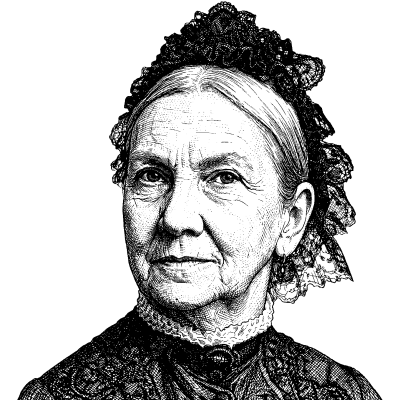
Bathsheba W. Smith
Bathsheba Wilson Bigler Smith (1822–1910) served as the fourth general president of the Relief Society from 1901 until her death. Born in what is now West Virginia, she was raised on her family’s 300-acre plantation before joining the Church in 1837 at age fifteen. She married George A. Smith, the youngest member of the Quorum of the Twelve, in 1841. At age nineteen, Bathsheba was the youngest woman present at the organization of the Relief Society in Nauvoo in 1842. She later served as matron of the Salt Lake Temple, a member of the Deseret Hospital board, and a leader in the western woman’s suffrage movement. In 1888, she became second counselor in the Relief Society general presidency. As Relief Society general president, Smith oversaw construction of the original Relief Society Building (completed 1909) and introduced classes on childrearing, industry, and marriage. Under her leadership, Relief Society wheat was shared with earthquake survivors in San Francisco and famine victims in China. She was the first woman granted a funeral service in the Salt Lake Tabernacle.

Boyd K. Packer
Boyd K. Packer (1924–2015) was one of the most influential and theologically deliberate leaders of The Church of Jesus Christ of Latter-day Saints in the twentieth and early twenty-first centuries. Born on September 10, 1924, in Brigham City, Utah, the tenth of eleven children, he overcame childhood polio, served as a bomber pilot in World War II, and earned a doctorate in education from Brigham Young University before dedicating his life to religious service and teaching. Called to the Quorum of the Twelve Apostles in 1970, he served as its acting president from 1994 to 2008 and as its president from 2008 until his death on July 3, 2015. Packer’s career spanned more than five decades of general authority service. He worked extensively within the Church Educational System, overseeing seminary and institute programs, and served as a mission president in New England. He served on the scripture revision committee that produced the landmark 1979–1981 LDS editions of the Bible and standard works. He dedicated temples and missions across multiple continents and was a prolific author and teacher. He was also a gifted visual artist, known for his paintings and sculptures of birds—a dimension of his character that reflected a disciplined attention to the natural world and a belief that beauty and truth are inseparable. Packer’s theological legacy is marked by a deep reverence for the eternal sweep of Mormon cosmology. In one memorable interview, he cited the hymn ‘If You Could Hie to Kolob’—that most expansive of Mormon texts, celebrating eternal progression, a plurality of Gods, and worlds without end—and connected it to Brigham Young’s conviction that learning is not a process approaching a terminus but one that opens onto ‘an eternity of knowledge.’ That orientation—toward an unending, ever-expanding intelligence—runs beneath much of Packer’s teaching about the relationship between mortality and eternity, between what we now see and what God sees.

Brigham Young
Brigham Young (1801–1877) was the second president of The Church of Jesus Christ of Latter-day Saints, the architect of the Mormon migration to the Great Basin, and the founding governor of Utah Territory. As the organizing genius behind the settlement of the American West, he directed the colonization of more than 300 towns, established institutions of commerce and education, and shaped a distinctive religious civilization from the desert floor. Born in Whitingham, Vermont, Young converted to the restored church in 1832 after years of searching among the Methodist and Reformed faiths. He rose quickly through the Quorum of the Twelve Apostles, led the harrowing evacuation of Nauvoo following Joseph Smith’s martyrdom in 1844, and guided an exodus of tens of thousands across the plains to the Salt Lake Valley in 1847. As church president for thirty years, he presided over the construction of the Salt Lake Temple, founded the University of Deseret, championed the Perpetual Emigration Fund to gather converts from Europe, and negotiated—not always successfully—the church’s uneasy relationship with the federal government. What the historical record reveals, and what Young’s own sermons confirm at every turn, is a mind constitutionally unwilling to divide the sacred from the natural. He taught that God operates by law, that miracles are simply “results or effects of causes hidden from our understandings,” and that every discovery in science and art has been “given by direct revelation from God.” The telegraph, the steam engine, the plow—all were, in his view, eternal principles progressively disclosed to a humanity climbing upward from its infancy. Science and religion were not rivals in his theology but two names for the same structured reality: “there is no true religion without true science, and consequently there is no true science without true religion.” This integration carried moral weight. Young urged the Saints to become a thinking people, warning against the spiritual danger of surrendering judgment to leaders rather than seeking personal revelation—a remarkable insistence on epistemic independence from a man who wielded considerable institutional authority. His vision of human destiny was correspondingly expansive. He affirmed that God “was once a man in mortal flesh as we are” and that humanity is “organized to become Gods,” called to exercise creative authority over matter across eternal worlds. He taught that identity—the preservation of the self through resurrection and exaltation—is “the greatest gift that God can bestow,” and he framed mortality as the school in which that self is forged through trial, independent thought, and disciplined living. His counsel to “prepare to live” rather than merely to die, and to extend healthy life by understanding natural law, anticipates a tradition of practical, body-affirming faith that takes seriously both the present body and its glorified future. Young remains a towering, complicated figure whose earthly administration included serious moral failures; yet his theological instinct—that intelligence, technology, and theosis belong to a single continuous story—endures as one of the most generative ideas in the Latter-day Saint tradition.
Quotations (163)
 Jeffrey R. Holland
 Joseph Smith