harmonization
Articles (23)
Ordaining Priesthood for Resurrection
Explore how Mormon Transhumanism and priesthood intersect—discover why ordination matters in a world of miraculous technology, and how ancient authority illuminates the path to resurrection.
A Dialogue of Faith with Jesus and Socrates
Lincoln Cannon imagines a dialogue between Jesus and Socrates on science, faith, and the nature of God—a philosophical encounter in an ancient olive grove.
Faithful Mormon Transhumanism
Lincoln Cannon shares how a friend discovering Mormon Transhumanism found it mind-expanding, faith-promoting, and practically meaningful to live.
The True Church
Lincoln Cannon reflects on loving the LDS Church while holding a transhumanist perspective—engaging critically with its truth claims from within the faith.
Got Science? Then Be Religious In the Right Ways
Lincoln Cannon contends that science supports religiosity—research links religion to better health, mental well-being, and community outcomes.
Authors (9)
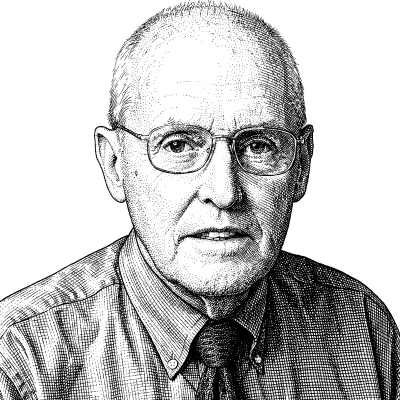
Allen Leigh is a veteran software engineer, electrical engineer, and author whose work seeks to harmonize the rigors of technical science with the principles of Latter-day Saint theology. With a professional career spanning forty-four years in the software industry and a background in electrical engineering, Leigh brings a pragmatic, systems-based perspective to religious inquiry, focusing on the structural mechanics of creation and eternity. Leigh’s intellectual contributions are best encapsulated in his book, One Mormon’s View of the Science-Religion Debate and the Quest for Eternity . In this text, he navigates the often-contentious boundary between empirical evidence and spiritual belief, arguing that the two disciplines are not mutually exclusive but rather complementary frameworks for understanding the universe. His work suggests that the perceived rift between science and religion often stems from a misunderstanding of the methodologies inherent to both. A key figure in discussions on Mormon Transhumanism, Leigh has applied his technical expertise to theological cosmology. His presentation at the MTAConf 2009 entitled “God, the Perfect Engineer” focused on the concept of “engineering design cycles”—the iterative processes used to plan, build, test, and refine complex systems. Leigh proposed a model in which God functions as a Master Engineer, utilizing similar design cycles in the creation of the earth. This framework raises profound questions regarding the nature of divine omnipotence and the practical realities of creation. By drawing parallels to earthly engineering projects—which are subject to constraints, iterations, and the risk of failure—Leigh investigates whether the creation of the earth followed a similar, non-linear path. He challenges his audience to consider if a divine creation project could, in theory, fail, and what the implications of such a failure would be for our understanding of God’s plan. Through this lens, Leigh encourages a view of the cosmos that appreciates the intricate, perhaps even experimental, nature of existence.
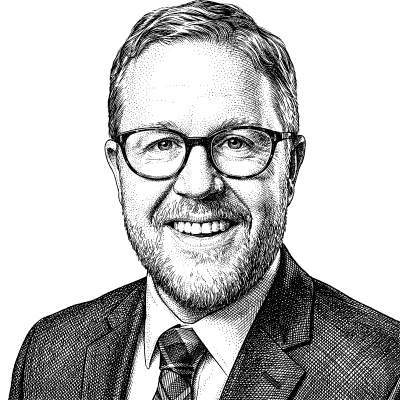
Ben Blair holds a PhD in philosophy and education from Teachers College, Columbia University. He is the co-founder of Newlane University—a platform focused on deinstitutionalizing education. An active member of the Church of Jesus Christ of Latter-day Saints, Blair’s work and perspective explore the intersection of religious community and secular ideals. He is particularly interested in how religious and post-religious communities can work towards shared goals, and he questions the equation of any particular organization with the broader concept of the ‘kingdom of God’. Blair, along with his wife, Gabrielle Blair, resides in France and they are the parents of six children. He presented at Sunstone West and is an attendee and speaker at Mormon Transhumanist Association conferences, where he explores the philosophical implications of faith, community, and progress.
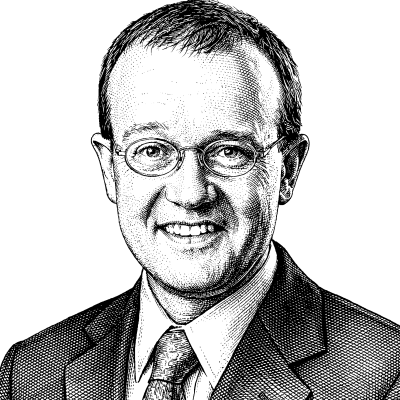
Brian Green is a scholar at Santa Clara University specializing in the intersection of transhumanism and Catholic ethics. His research explores the complex relationship between these seemingly disparate fields, seeking to identify areas of both conflict and potential collaboration. He has dedicated approximately a decade to this field of study, commencing with his master’s program at the Graduate Theological Union in Berkeley. His work aims to foster mutual understanding and dispel misconceptions between transhumanist and Christian communities. At the Religion and Transhumanism Conference 2014, Green addressed prevalent myths regarding the Catholic Church’s stance on life extension and human genetic manipulation, arguing for a more nuanced perspective that acknowledges the diversity within both transhumanism and Christianity. He advocates for identifying true points of tension and exploring potential alliances between these groups. Green’s research considers the justice implications of emerging technologies, and the practical challenges of achieving immortality. He seeks to encourage productive dialog that reconciles the benefits of emerging technologies with Catholic concerns for social justice, human dignity, and spiritual well-being.

Caleb Jones is a speaker and thinker deeply engaged with the intersection of Mormon theology, transhumanism, and intergenerational connection. His work focuses on the spirit of Elijah, as referenced in Malachi, and its implications for creating faith-based connections across generations, both living and deceased. He advocates for a broader interpretation of this principle, extending it beyond traditional temple work to encompass a reconciliation of ancient wisdom with modernity. Jones draws upon G.K. Chesterton’s concept of the “democracy of the dead” to frame his exploration of tradition and remembrance. He posits that our ancestors, through their artifacts and influence, continue to participate in the present. He sees the redemption of the dead through these artifacts—books, music, laws, traditions—as a collective human endeavor involving various disciplines such as literary scholarship, archaeology, and religious studies. His perspective emphasizes the importance of engaging with the past to inform and enrich the future, particularly within the context of Mormonism and its emphasis on family history and genealogical work. Jones champions seeking a healthy balance and ongoing reconciliation of the hearts and minds of the dead and dying with the hearts and minds of the living, to redeem rising generations.
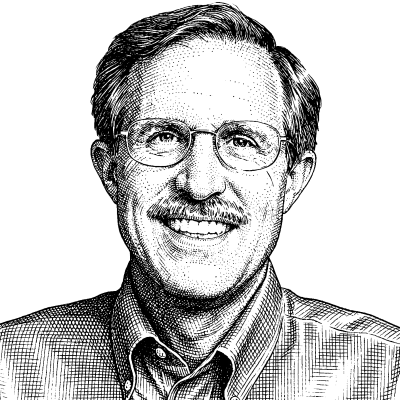
David Harold Bailey is a distinguished American mathematician and computer scientist whose work has fundamentally altered the landscape of computational number theory. A pioneer in the field of experimental mathematics, Bailey is perhaps best known for co-discovering the Bailey-Borwein-Plouffe (BBP) formula, an algorithm that allows for the calculation of the n-th binary digit of pi without calculating the preceding digits—a feat previously thought impossible. Born in 1948, Bailey pursued his education at Brigham Young University, where he received his B.S. in mathematics in 1972, followed by a Ph.D. from Stanford University in 1976. His career spanned decades at the forefront of high-performance computing, including fourteen years at the NASA Ames Research Center and fifteen years as a Senior Scientist at the Lawrence Berkeley National Laboratory. Bailey’s most famous contribution, the BBP formula, was published in a 1997 paper co-authored with Peter Borwein and Simon Plouffe. This discovery not only revolutionized how irrational constants could be computed but also provided deep insights into the question of “normality”—whether the digits of constants like pi are statistically random. Beyond pure mathematics, Bailey has made significant strides in numerical analysis and parallel computing. He is a co-author of the NAS Benchmarks, a standard metric for assessing the performance of supercomputers, and has conducted critical research into financial mathematics, warning against “pseudo-mathematics” and statistical overfitting in financial markets. A devoted member of the Church of Jesus Christ of Latter-day Saints, Bailey actively works to bridge the gap between scientific inquiry and religious faith. He operates the website Science Meets Religion , where he advocates for the harmonization of modern science—including evolution and cosmology—with theology. He argues that scientific truth and religious truth are complementary parts of a greater whole, a perspective that resonates deeply with the transhumanist pursuit of truth through both spiritual and technological means.
Quotations (51)
 James E. Talmage
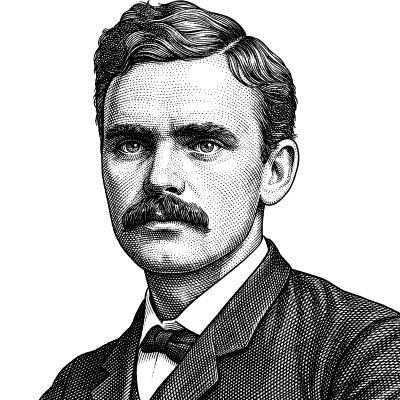 B. H. Roberts
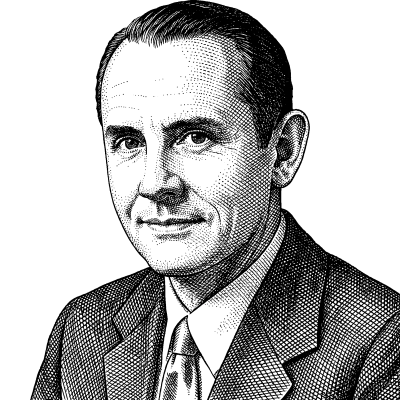 Spencer W. Kimball
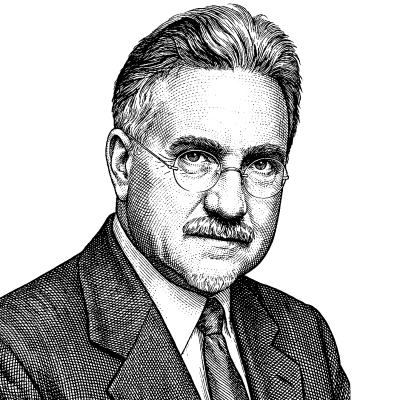 John A. Widtsoe