eternal progression
Articles (8)
Embody Christmas
Lincoln Cannon reflects on Christmas as a call to embodiment, meditating on the manger, the stable, and what incarnate faith means for a transhumanist.
Why Are We Not Already Gods?
Lincoln Cannon grapples with a provocative question: why are we not already Gods or superintelligences, and what does eternity tell us about becoming divine?
The Economy of Godhood
Explore how theosis demands more than faith alone—requiring new economics, decentralized value, and radical cooperation to unlock humanity’s divine potential.
Redeeming (Most of) the Seven Deadly Heresies
Lincoln Cannon revisits McConkie's "Seven Deadly Heresies," redeeming most of them through a Mormon transhumanist reading centered on eternal progression.
Last General Conference Sermons of Church Presidents
Explore the final general conference sermons of all 15 LDS Church presidents, from Joseph Smith to Thomas S. Monson—featuring transcripts, recordings, and notable excerpts.
Authors (11)
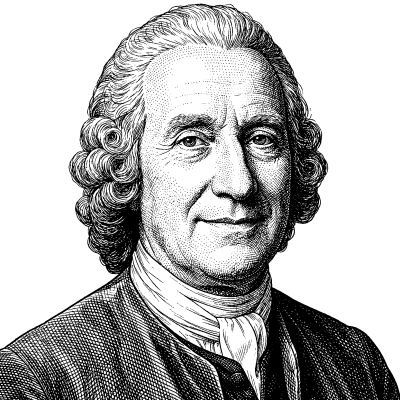
Emanuel Swedenborg
Emanuel Swedenborg (1688–1772) was a Swedish pluralistic scientist, philosopher, theologian, and mystic. His theological writings describe a detailed structure of the spiritual world and emphasize the importance of useful service. Born in Stockholm to a prominent family, Swedenborg was one of the most learned men of his age, making significant contributions to mining engineering, anatomy, and other sciences before turning to spiritual matters in his fifties. His theological works, including Heaven and Hell , describe the afterlife as a realm of continued activity, purpose, and progression. His emphasis on useful service and continued growth after death has influenced many religious movements, including some aspects of Latter-day Saint thought about the nature of heaven and eternal progression.
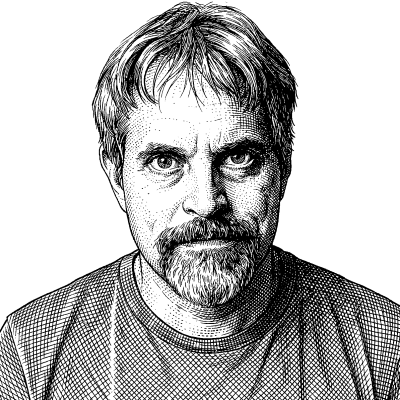
Eric Steinhart is a Professor of Philosophy at William Paterson University and the author of Your Digital Afterlives: Computational Theories of Life After Death . His work centers on metaphysics, employing contemporary analytical and logical methods, while also exploring historical metaphysical systems such as Neoplatonism and the philosophy of Leibniz. He is particularly interested in the intersection of formal sciences and theology, with a focus on alternatives to Abrahamic religions. Steinhart’s background is diverse. He grew up on a farm and initially trained as a computer scientist and mathematician, working as a software designer for several years, during which time he obtained patents for some of his algorithms. He later pursued advanced degrees in philosophy, and his earlier philosophical work included analyses of Nietzsche and metaphor, using possible world semantics. His research extends into the realms of metaphysics and computation, and he is featured in the documentary film Chronotrip , which deals with the concept of time travel. He affirms the existence of transfinitely endless hierarchies of sets, computers, languages, games, strategies, and minds. Steinhart’s current philosophical interests align with themes of eternal progression, alternative religious movements, and the application of evolutionary theory to cosmology.

James N. Gardner
James Nelson Gardner (May 5, 1946 – April 10, 2021) was an American lawyer, complexity theorist, and author whose cosmological speculations placed intelligence at the generative center of the universe itself. A Yale College and Yale Law School graduate, he served as a U.S. Supreme Court clerk and Oregon state senator before devoting much of his intellectual life to a far more expansive question: why does the universe appear so precisely calibrated to produce life and mind? Gardner’s answer, developed across peer-reviewed articles in Complexity and the Journal of the British Interplanetary Society and popularized in his books Biocosm (2003) and The Intelligent Universe (2007), was the “Selfish Biocosm” hypothesis. He argued that life and intelligence are not Darwinian accidents but are hardwired into cosmic evolution—that the universe’s bio-friendliness is the inheritance of a long lineage of intelligences who, in reaching the apex of their development, reproduced the cosmos itself by spawning “baby universes” endowed with the same life-generating properties. In Gardner’s vision, the destiny of highly evolved intelligence is nothing less than the infusion of the entire universe with life and the ultimate act of cosmic creation. For those who hold that intelligence is eternal and that divine creativity operates through natural processes, Gardner’s cosmology resonates with striking depth. The arc of his thought—intelligence as not merely a product of the cosmos but its architect and heir—maps naturally onto the Mormon transhumanist conviction that humanity’s progression toward Godhood is a real, physical, and cosmologically significant endeavor. Gardner did not speak in theological terms, but his insistence that the emergence of mind is the universe’s most consequential fact, and that sufficiently advanced intelligence becomes a creative force on a universal scale, opens conceptual ground that faith traditions oriented toward theosis and eternal progression have long inhabited from a different direction.

Karl Popper
Karl Raimund Popper (1902–1994) was an Austrian-British philosopher widely regarded as one of the most influential philosophers of science of the twentieth century. His work on the demarcation problem, epistemology, and the philosophy of the open society left a lasting mark on intellectual life across multiple disciplines. Popper is best known for his principle of falsifiability , which holds that for a theory to be genuinely scientific, it must be capable of being tested and potentially refuted. This criterion, articulated in his landmark work The Logic of Scientific Discovery (1934), fundamentally reshaped the philosophy of science and challenged the prevailing inductivist tradition. He spent much of his academic career at the London School of Economics, where he served as professor of logic and scientific method. His political philosophy, most notably developed in The Open Society and Its Enemies (1945), offered a vigorous defense of liberal democracy and a critique of totalitarian ideologies rooted in historicism. Popper’s epistemology carries deep resonance with transhumanist and theological themes. His vision of knowledge as an unending, self-correcting pursuit—forever open to revision and growth—aligns with the transhumanist commitment to ongoing human improvement. His concept of critical rationalism suggests that humanity progresses not by claiming certainty but by humbly identifying and correcting errors, a posture that echoes religious traditions emphasizing humility, faith in future understanding, and the aspiration toward greater light and knowledge. For the Mormon Transhumanist Association, Popper’s insistence that an open society fosters human flourishing, and that our reach should always exceed our grasp, resonates with the vision of theosis—the idea that humanity is called to grow toward the divine through both reason and faith.

Leonard Reil is a Canadian diplomat and scholar whose professional and intellectual pursuits sit at the crossroads of international relations and transhumanist philosophy. With a career spanning several continents and cultures, Reil’s work explores the intersection of global conflict, diplomacy, and the potential for technological and spiritual evolution. Reil obtained a Bachelor of Arts in International Relations from Brigham Young University before moving to the United Kingdom to earn a Master of Arts in International Conflict Analysis from the University of Kent at Canterbury. This academic foundation prepared him for a distinguished career with Canada’s Department of Foreign Affairs and International Trade (now Global Affairs Canada). Beyond his diplomatic service, Reil is an active voice within the Mormon Transhumanist Association, where he applies his background in conflict analysis and global systems to theological and futurologist inquiries. At the 2012 MTA Conference, he delivered a compelling presentation titled The Gods of Eternity, in which he explored the concept of “Theosis” through the lens of modern science and the “Gods of the Gaps” theory. In this work, Reil posits that as human knowledge expands, the “gaps” traditionally filled by the divine are not merely shrinking but are being replaced by a more sophisticated understanding of our own potential for eternal progression. Reil’s contributions to the transhumanist community are characterized by a unique synthesis of Latter-day Saint theology and technological optimism. He often reflects on the nature of post-humanity and the ethical implications of advanced technologies, suggesting that the path toward becoming “as God is” involves a mastery of the physical and social laws that govern the universe. Through his writing and speaking, Leonard Reil continues to advocate for a future where technology is utilized to fulfill the highest aspirations of the human spirit. He remains a key figure in the MTA, embodying the association’s mission to explore the synergistic relationship between religion and science in the pursuit of human transcendence.
Quotations (79)
 Joseph Smith
Topical Guide (18)
See all 18 resultsVideos (2)
Three Spiritual Exemplars for Religious Transhumanists
Roger Hansen examines the lives and ideas of three early twentieth-century thinkers—John A. Widtsoe, Alfred North Whitehead, and Pierre Teilhard de Chardin—whose work offers valuable insights for religious transhumanists. Drawing on their shared beliefs in evolutionary progress, the interconnectedness of life, and the compatibility of science and religion, Hansen argues that these “spiritual exemplars” provide a theological foundation for eternal progression and the ongoing technological revolution. He suggests that Widtsoe’s commitment to reconciling LDS theology with science, Whitehead’s process philosophy, and Teilhard’s vision of humanity evolving toward an “Omega Point” all resonate deeply with Mormon transhumanist aspirations.
Lincoln Cannon
The Consolation: An Adaptation of the King Follett Sermon of Joseph Smith
Lincoln Cannon adapts Joseph Smith’s King Follett Sermon for a transhumanist age, offering consolation to those mourning the loss of loved ones. He argues that God was once as we are now and became posthuman through the same creative process we ourselves may follow. Information, like matter and energy, is eternal and cannot be created from nothing or annihilated—our dead persist in the causal fabric of reality, awaiting resurrection through the work of compassionate creators. Cannon calls for a synthesis of ritual and engineering: sacraments without technology are impotent, while technology without meaning is empty.