evolution
Articles (3)
Help Mormons Know that Evolution Complements Religion
Lincoln Cannon urges Mormon supporters of evolution to help BYU's Monte Bean Museum create a 'Faith and Science' exhibit affirming their compatibility.
Church Has No Official Position on Human Evolution
The LDS Church has no official position on human evolution. Explore historic and modern statements from Church authorities that clarify this often-misunderstood stance.
Charles Darwin Bicentennial Week at BYU, Feb. 9-13, 2009
BYU marks Darwin's 200th anniversary with a week of lectures on evolution, medicine, conservation, and the relationship between science and LDS religious faith.
Authors (2)

Richard Dawkins
Richard Dawkins (born 1941) is a British evolutionary biologist and author. His books on evolution and the philosophy of science have had significant influence on public understanding of biology and the relationship between science and religion. Born in Nairobi, Kenya, Dawkins studied at Oxford and became its first Charles Simonyi Professor of the Public Understanding of Science. His book The Selfish Gene popularized the genecentered view of evolution and introduced the concept of memes. While known for his criticism of religion, Dawkins has acknowledged that the universe reveals “something stunningly close to the God of the physicists”—a deep structure and beauty that evokes awe. His engagement with questions of cosmic meaning continues to be relevant to discussions of science and transcendence.

William Irwin Thompson
William Irwin Thompson (July 16, 1938-November 8, 2020) was an American cultural historian, poet, and social philosopher who studied how myth, science, and consciousness evolve together. Born in Chicago and educated at Pomona College and Cornell, he taught at MIT from 1965 to 1968 and at York University from 1968 to 1973, serving as a visiting professor at Syracuse in spring 1973. In 1972 he founded the Lindisfarne Association, which he led as founder and president until 1997. He built it into a meeting place for scientists, artists, and contemplatives who shared his conviction that no single discipline could account for a mind capable of building both cathedrals and computers. His books, including At the Edge of History (1971), Passages About Earth (1974), and The Time Falling Bodies Take to Light (1981), treat evolution as a story running through galaxies, cells, and civilizations. Drawing on figures like Teilhard de Chardin, they connect myth, spirituality, ecology, and cultural transformation. In 1976 he argued that technological expansion, including space colonization, should not become a way to evade ecological responsibility or the harder work of cultural change here on Earth.
Quotations (14)
 James E. Talmage
 David O. McKay
 John A. Widtsoe
 Gordon B. Hinckley
Topical Guide (1)
Videos (2)
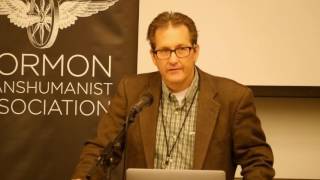
Steven Peck
The Evolution of Novelty in an Open Universe: Requiem for Laplace’s Demon
Steven Peck challenges the deterministic “block universe” of Laplace’s demon, arguing that genuine randomness—rooted in quantum events—bubbles up through biology to create an open, evolving cosmos. Drawing on chaos theory, emergence, and evolutionary biology, he contends that novelty is continuously generated in ways that were never predetermined at the Big Bang. For Peck, this openness has profound theological implications: if God has an embodied, biological nature, then faith, hope, and charity are not merely earthly virtues but eternal necessities for navigating a universe where the future remains genuinely unwritten.
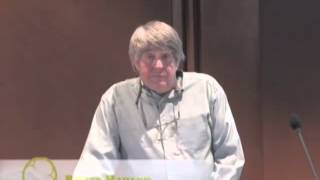
Three Spiritual Exemplars for Religious Transhumanists
Roger Hansen examines the lives and ideas of three early twentieth-century thinkers—John A. Widtsoe, Alfred North Whitehead, and Pierre Teilhard de Chardin—whose work offers valuable insights for religious transhumanists. Drawing on their shared beliefs in evolutionary progress, the interconnectedness of life, and the compatibility of science and religion, Hansen argues that these “spiritual exemplars” provide a theological foundation for eternal progression and the ongoing technological revolution. He suggests that Widtsoe’s commitment to reconciling LDS theology with science, Whitehead’s process philosophy, and Teilhard’s vision of humanity evolving toward an “Omega Point” all resonate deeply with Mormon transhumanist aspirations.