Authors
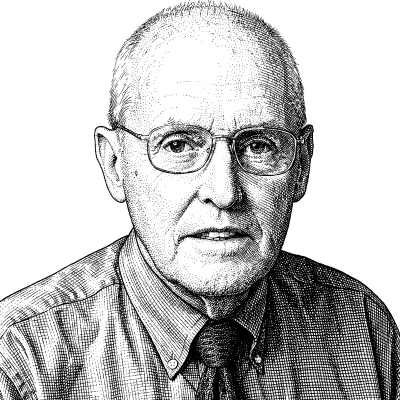
Allen Leigh is a veteran software engineer, electrical engineer, and author whose work seeks to harmonize the rigors of technical science with the principles of Latter-day Saint theology. With a professional career spanning forty-four years in the software industry and a background in electrical engineering, Leigh brings a pragmatic, systems-based perspective to religious inquiry, focusing on the structural mechanics of creation and eternity. Leigh’s intellectual contributions are best encapsulated in his book, One Mormon’s View of the Science-Religion Debate and the Quest for Eternity . In this text, he navigates the often-contentious boundary between empirical evidence and spiritual belief, arguing that the two disciplines are not mutually exclusive but rather complementary frameworks for understanding the universe. His work suggests that the perceived rift between science and religion often stems from a misunderstanding of the methodologies inherent to both. A key figure in discussions on Mormon Transhumanism, Leigh has applied his technical expertise to theological cosmology. His presentation at the MTAConf 2009 entitled “God, the Perfect Engineer” focused on the concept of “engineering design cycles”—the iterative processes used to plan, build, test, and refine complex systems. Leigh proposed a model in which God functions as a Master Engineer, utilizing similar design cycles in the creation of the earth. This framework raises profound questions regarding the nature of divine omnipotence and the practical realities of creation. By drawing parallels to earthly engineering projects—which are subject to constraints, iterations, and the risk of failure—Leigh investigates whether the creation of the earth followed a similar, non-linear path. He challenges his audience to consider if a divine creation project could, in theory, fail, and what the implications of such a failure would be for our understanding of God’s plan. Through this lens, Leigh encourages a view of the cosmos that appreciates the intricate, perhaps even experimental, nature of existence.
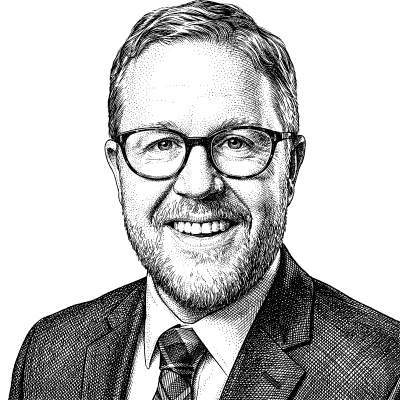
Ben Blair holds a PhD in philosophy and education from Teachers College, Columbia University. He is the co-founder of Newlane University—a platform focused on deinstitutionalizing education. An active member of the Church of Jesus Christ of Latter-day Saints, Blair’s work and perspective explore the intersection of religious community and secular ideals. He is particularly interested in how religious and post-religious communities can work towards shared goals, and he questions the equation of any particular organization with the broader concept of the ‘kingdom of God’. Blair, along with his wife, Gabrielle Blair, resides in France and they are the parents of six children. He presented at Sunstone West and is an attendee and speaker at Mormon Transhumanist Association conferences, where he explores the philosophical implications of faith, community, and progress.
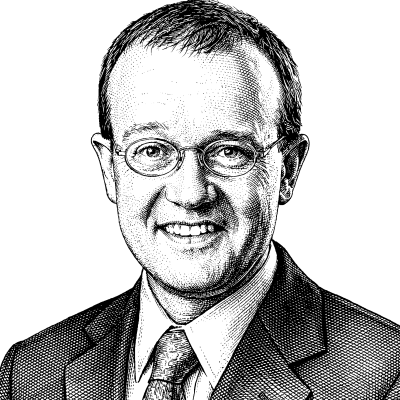
Brian Green is a scholar at Santa Clara University specializing in the intersection of transhumanism and Catholic ethics. His research explores the complex relationship between these seemingly disparate fields, seeking to identify areas of both conflict and potential collaboration. He has dedicated approximately a decade to this field of study, commencing with his master’s program at the Graduate Theological Union in Berkeley. His work aims to foster mutual understanding and dispel misconceptions between transhumanist and Christian communities. At the Religion and Transhumanism Conference 2014, Green addressed prevalent myths regarding the Catholic Church’s stance on life extension and human genetic manipulation, arguing for a more nuanced perspective that acknowledges the diversity within both transhumanism and Christianity. He advocates for identifying true points of tension and exploring potential alliances between these groups. Green’s research considers the justice implications of emerging technologies, and the practical challenges of achieving immortality. He seeks to encourage productive dialog that reconciles the benefits of emerging technologies with Catholic concerns for social justice, human dignity, and spiritual well-being.

Caleb Jones is a speaker and thinker deeply engaged with the intersection of Mormon theology, transhumanism, and intergenerational connection. His work focuses on the spirit of Elijah, as referenced in Malachi, and its implications for creating faith-based connections across generations, both living and deceased. He advocates for a broader interpretation of this principle, extending it beyond traditional temple work to encompass a reconciliation of ancient wisdom with modernity. Jones draws upon G.K. Chesterton’s concept of the “democracy of the dead” to frame his exploration of tradition and remembrance. He posits that our ancestors, through their artifacts and influence, continue to participate in the present. He sees the redemption of the dead through these artifacts—books, music, laws, traditions—as a collective human endeavor involving various disciplines such as literary scholarship, archaeology, and religious studies. His perspective emphasizes the importance of engaging with the past to inform and enrich the future, particularly within the context of Mormonism and its emphasis on family history and genealogical work. Jones champions seeking a healthy balance and ongoing reconciliation of the hearts and minds of the dead and dying with the hearts and minds of the living, to redeem rising generations.
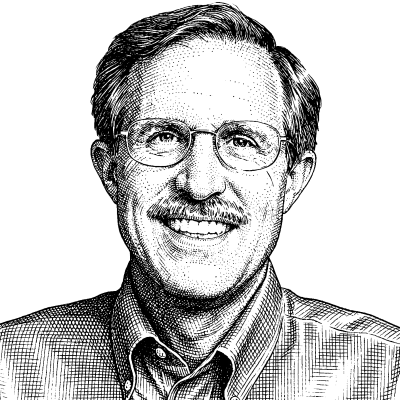
David Harold Bailey is a distinguished American mathematician and computer scientist whose work has fundamentally altered the landscape of computational number theory. A pioneer in the field of experimental mathematics, Bailey is perhaps best known for co-discovering the Bailey-Borwein-Plouffe (BBP) formula, an algorithm that allows for the calculation of the n-th binary digit of pi without calculating the preceding digits—a feat previously thought impossible. Born in 1948, Bailey pursued his education at Brigham Young University, where he received his B.S. in mathematics in 1972, followed by a Ph.D. from Stanford University in 1976. His career spanned decades at the forefront of high-performance computing, including fourteen years at the NASA Ames Research Center and fifteen years as a Senior Scientist at the Lawrence Berkeley National Laboratory. Bailey’s most famous contribution, the BBP formula, was published in a 1997 paper co-authored with Peter Borwein and Simon Plouffe. This discovery not only revolutionized how irrational constants could be computed but also provided deep insights into the question of “normality”—whether the digits of constants like pi are statistically random. Beyond pure mathematics, Bailey has made significant strides in numerical analysis and parallel computing. He is a co-author of the NAS Benchmarks, a standard metric for assessing the performance of supercomputers, and has conducted critical research into financial mathematics, warning against “pseudo-mathematics” and statistical overfitting in financial markets. A devoted member of the Church of Jesus Christ of Latter-day Saints, Bailey actively works to bridge the gap between scientific inquiry and religious faith. He operates the website Science Meets Religion , where he advocates for the harmonization of modern science—including evolution and cosmology—with theology. He argues that scientific truth and religious truth are complementary parts of a greater whole, a perspective that resonates deeply with the transhumanist pursuit of truth through both spiritual and technological means.

Don Bradley is an American historian specializing in the origins of the Latter-day Saint movement and the early history of the Book of Mormon. His meticulous archival research and innovative historical methodology have shed new light on some of the most intriguing questions surrounding the founding events of Mormonism. He is best known for his groundbreaking work reconstructing the lost 116 pages of the Book of Mormon manuscript. Bradley ’ s book The Lost 116 Pages: Reconstructing the Book of Mormon’s Missing Stories (2019) represents years of detective work piecing together what the lost manuscript likely contained. Using contemporary accounts, textual analysis, and historical context, Bradley reconstructed the narrative of Lehi and his family that was contained in the Book of Lehi—the portion translated by Joseph Smith and lost by Martin Harris in 1828. His work has been widely praised for its scholarly rigor and its contributions to understanding early Mormon history. Bradley’s faith journey has been marked by both departure and return. After leaving The Church of Jesus Christ of Latter-day Saints, he found his way back to faith in part through the influence of the Mormon Transhumanist Association, whose integration of religious belief with rational inquiry resonated with his scholarly temperament. Lincoln Cannon, founder and first president of the MTA, performed Bradley’s rebaptism—a meaningful connection between his intellectual and spiritual homecoming. Bradley has spoken openly about how his historical research, rather than undermining his faith, ultimately contributed to his decision to return. Bradley has presented his research at numerous academic conferences, including the Mormon History Association and FairMormon. He has contributed to scholarly journals and collaborative volumes on Latter-day Saint history. His work on the lost pages has influenced how scholars understand the structure and content of the Book of Mormon, as well as the translation process Joseph Smith employed. His research touches on themes relevant to transhumanist thought, particularly regarding the nature of knowledge, the recovery of lost information, and the relationship between faith and empirical inquiry. Bradley’s methodology demonstrates how careful scholarship can illuminate religious origins while respecting the complexity of belief—a model for integrating scientific and spiritual approaches to understanding human experience and potential.
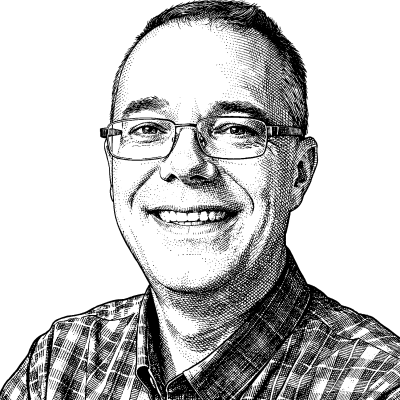
Eric G. Swedin is an American historian, novelist, and professor whose work bridges the gap between the history of science, technology, and Latter-day Saint theology. A member of the faculty at Weber State University in Ogden, Utah, Swedin serves as a professor in the History Department, where he teaches courses on the history of science and technology, as well as classes in computer science and information systems. Swedin’s academic contributions are particularly relevant to the dialogue between faith and modernity. His 2003 book, Healing Souls: Psychotherapy in the Latter-day Saint Community , explores the historical tension and eventual integration between Mormon theology and secular psychology. In this work, Swedin documents how the LDS community navigated the rise of the mental health professions, ultimately melding theological doctrines with mainstream psychiatry—a historical precedent that mirrors contemporary discussions regarding transhumanism and the integration of emerging technologies with religious practice. Beyond his work on religious history, Swedin is a recognized voice in the history of computing. He co-authored Computers: The Life Story of a Technology (2005) and edited Science Fiction and Computing: Essays on Interlinked Domains (2011), investigating how speculative fiction has influenced the development of real-world technologies. Through his dual focus on the history of technology and the rigorous imagination of alternate history, Swedin offers a unique perspective on human progress, the fragility of civilization, and the enduring role of belief in a technological age.
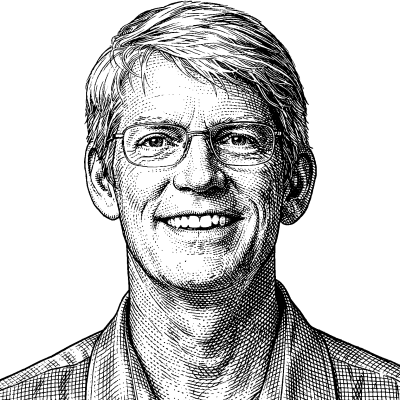
George Handley
George Handley (b. 1964) is an American scholar, essayist, and professor of humanities at Brigham Young University, where he has taught for over two decades. Born and raised in the United States, Handley earned his doctorate from the University of California, Berkeley, and has built a distinguished career at the intersection of environmental humanities, comparative literature, and Latter-day Saint thought. He is the author of several books, including Home Waters: A Year of Recompenses on the Provo River (2010) and The Hope of Nature: Our Care for God’s Creation (2020), works that weave together ecological attentiveness, theological reflection, and personal memoir. Handley’s scholarship is characterized by a sustained effort to hold together what contemporary culture often separates: scientific understanding of the natural world and the religious imagination that finds meaning within it. His work in comparative literature ranges across the Americas, with particular attention to Caribbean and Latin American traditions, and he has written extensively on the moral obligations that arise from genuine encounter with the living world. At BYU he has been a central voice in efforts to bring environmental stewardship into serious dialogue with Latter-day Saint theology. Handley’s deepest contribution may be his insistence that creation is not a mere backdrop to human history but an active element of moral and spiritual life. His writing calls readers toward a more reverent, attentive, and responsible relationship with the earth—one grounded not in fear or nostalgia but in the conviction that caring for the world is itself a form of worship and a practice of discipleship. This posture of creative stewardship, where faith, science, and love of the natural world converge, resonates with the Mormon transhumanist vision of humanity as co-creator with God, called to participate wisely and compassionately in the ongoing work of a living cosmos.
Stephen L. Richards
Stephen L Richards (1879–1959) was a prominent leader in The Church of Jesus Christ of Latter-day Saints who served as a member of the Quorum of the Twelve Apostles for thirty-four years and as First Counselor in the First Presidency under President David O. McKay. A trained lawyer with a keen intellect, Richards was known for his thoughtful approach to reconciling religious faith with scientific understanding and his emphasis on the practical application of gospel principles. Born in Mendon, Cache County, Utah, Richards was the son of a local bishop and grandson of Willard Richards, an early apostle and church historian. He graduated from the University of Utah and the University of Chicago Law School, practicing law in Salt Lake City before his call to full-time church service. His legal training shaped his analytical approach to theological questions and church administration. Richards was ordained an apostle in 1917 at age thirty-seven. Over the following decades, he became known for addresses that addressed the relationship between science and religion with nuance and openness. He taught that if the evolutionary hypothesis of creation is ultimately found correct, the biblical account is sufficiently comprehensive to include the whole process. This perspective reflected his broader conviction that truth is truth, whether discovered through revelation or scientific inquiry. In 1951, when David O. McKay became church president, Richards was called as First Counselor in the First Presidency. He served in this capacity until his death eight years later. During this period, the church experienced significant growth and modernization. Richards contributed to efforts to professionalize church administration and expand its educational programs. Richards’s approach to faith and reason reflects themes central to Mormon transhumanist thought. His willingness to embrace scientific findings as compatible with religious truth, his emphasis on human agency and moral development, and his conviction that the gospel encompasses all truth anticipated later discussions about the harmony between religious and scientific worldviews. His teachings suggest that human progression—intellectual, moral, and spiritual—is central to the divine purpose.