resurrection
Articles (9)
In Memory of Mike Perry
Remembering Dr. R. Michael Perry—devoted Alcor pioneer, cryonics advocate, and beloved Mormon Transhumanist Association member who bridged faith and technological resurrection.
Celestial Forensics
Carl Youngblood's essay 'Celestial Forensics,' published in Wayfare Magazine, explores the Mormon doctrine of resurrection through a transhumanist lens.
Ordaining Priesthood for Resurrection
Explore how Mormon Transhumanism and priesthood intersect—discover why ordination matters in a world of miraculous technology, and how ancient authority illuminates the path to resurrection.
Aspire to Embodied Immortality
On Easter, Lincoln Cannon explores what the Bible says about the resurrection of Christ and why transhumanists should aspire to embodied immortality.
Illustrated Second Edition of The Consolation
Lincoln Cannon marks living as many days as his father did before his death from cancer by publishing an illustrated second edition of The Consolation.
Quotations (24)
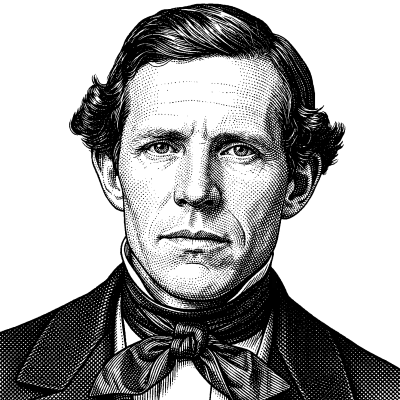 Joseph Smith
Topical Guide (5)
Videos (4)
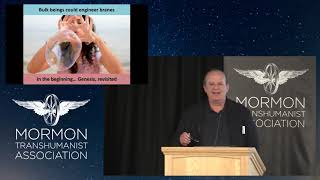
Giulio Prisco
How to Bring Eduardo Back to Life
Giulio Prisco explores the speculative physics and technology that might one day enable the resurrection of the dead, using his ancestor Eduardo Scarpeta as a personal example. Drawing on concepts from string theory, higher-dimensional physics, and the film Interstellar, he imagines future beings with access to the fourth spatial dimension who could scan information from the past and restore individuals to life. Prisco frames technological resurrection not as imminent but as a far-future possibility—one that invites hope rather than passive waiting, much like early science fiction inspired the eventual reality of space travel.
Mike Perry
An Alternative to Quantum Archaeology in Resurrecting the Dead
Mike Perry, a longtime cryonicist and author of Forever for All, proposes “parallel recreation” as an alternative to quantum archaeology for resurrecting the dead. While quantum archaeology attempts to retrodict the exact positions of atoms throughout history—an approach Perry finds implausible given quantum uncertainty—his method accepts some loss of historical information while still achieving meaningful resurrection through “informed guesswork.” Drawing on multiverse theory and an informational view of reality where identical copies are distributed across infinite universes, Perry argues that recreating persons consistent with surviving historical records would yield authentic versions of those who once lived. He views cryonics as the preferable path, allowing one to be a benefactor in future resurrection efforts rather than merely a beneficiary.
Lincoln Cannon
The Consolation: An Adaptation of the King Follett Sermon of Joseph Smith
Lincoln Cannon adapts Joseph Smith’s King Follett Sermon for a transhumanist age, offering consolation to those mourning the loss of loved ones. He argues that God was once as we are now and became posthuman through the same creative process we ourselves may follow. Information, like matter and energy, is eternal and cannot be created from nothing or annihilated—our dead persist in the causal fabric of reality, awaiting resurrection through the work of compassionate creators. Cannon calls for a synthesis of ritual and engineering: sacraments without technology are impotent, while technology without meaning is empty.
Mike Perry
Christian Atheist Universal Immortalism
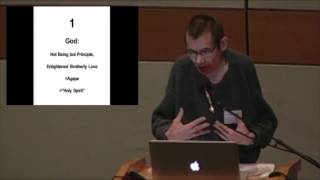
Mike Perry presents “Christian Atheist Universal Immortalism,” a philosophy combining the ethical framework of Christianity—enlightened brotherly love—with the belief that death can be overcome through scientific means rather than supernatural intervention. Perry argues that while Christian atheism provides a satisfying moral framework, it remains “deathist” in its acceptance of mortality; universal immortalism adds the commitment that all sentient beings should eventually gain salvation and eternal life through technological means such as cryonics. He views Jesus as a pioneer transhumanist immortalist whose command to “heal the sick and raise the dead” should be taken literally as our technology advances, and proposes that resurrection may be achieved through his “minibodies” theory rather than quantum archaeology, acknowledging that information may be irretrievably lost but that multiple authentic timelines could still be realized.