revelation
Articles (7)
Just as We Have, They Received the Holy Gift
Lincoln Cannon presents a narrative from Acts, exploring how Peter's vision of radical inclusion challenges every boundary of the expected and the holy.
“Unto what shall I liken?” - Breaking the Fourth Wall of Revelation
Explore how ancient symbols, language, and semiotics shape revelation. Discover how scripture “breaks the fourth wall,” inviting us to rethink how meaning survives translation across time.
Local Truth and Revelation
Giulio Prisco examines how truth operates locally—drawing parallels between scientific validity and religious revelation.
Spiritual Intuition and Scientific Inspiration
Exploring the parallels between scientific intuition and spiritual inspiration — from Beveridge's research methods to Joseph Smith's revelatory insights.
Encountering God
Joseph Smith's first vision reframes creeds as substitutes for direct divine encounter—a call to experience God rather than merely hold ideas about God.
Authors (1)

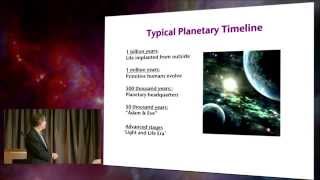
Byron Belitsos is a publisher and evangelist focused on promoting and exploring the Urantia Revelation—also known as the Urantia Papers or Urantia Book, published in 1955. He sees the Urantia Book as a revelatory text with significant implications for understanding human history and the potential for future transhuman evolution. Belitsos is deeply interested in the intersection of spirituality, transhumanism, and integral perspectives. He argues that a spiritually informed transhumanism is essential for achieving sustainable and desirable human enhancement. He emphasizes the importance of understanding deep history, addressing theological and spiritual poverty, and overcoming the limitations of reductionist and materialist views within the transhumanist movement. As a publisher, Belitsos is actively working to disseminate information about the Urantia Book and its relevance to contemporary discussions on transhumanism. He also organizes conferences that bring together diverse perspectives—including those from Mormon, Uranian, Raëlian, and Wiccan traditions—to explore the book’s themes and implications.