transhumanism experts
Articles (9)
In Memory of Mike Perry
Remembering Dr. R. Michael Perry—devoted Alcor pioneer, cryonics advocate, and beloved Mormon Transhumanist Association member who bridged faith and technological resurrection.
What Happens When FM-2030 Is Resurrected?
Lincoln Cannon asks what happens when FM-2030 is resurrected—reviewing a documentary and reflecting on cryonics, identity, and eternal life.
Lincoln Cannon Featured at Ozy on Tech and Church
Lincoln Cannon, MTA president, is featured in Ozy exploring the relationship between technology and the LDS Church.
Ralph Merkle, Transhumanist Technologist, to Keynote at 2015 Conference of the MTA
Transhumanist technologist Ralph Merkle is announced as keynote speaker for the 2015 MTA Conference, bringing cutting-edge tech perspectives to the event.
Natasha Vita-More at 2014 Conference of the Mormon Transhumanist Association
Natasha Vita-More keynotes the 2014 MTA Conference, exploring transhumanism, technology, and spirituality at the intersection with Mormonism.
Authors (55)
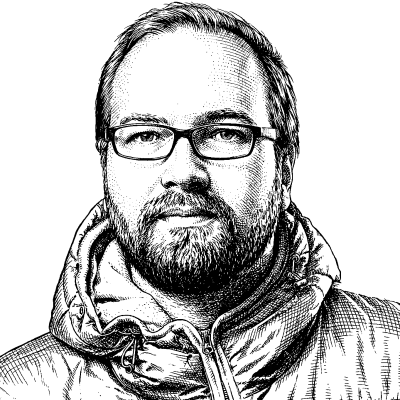
Alexei Turchin
Alexei Turchin (born 1973, Moscow) is a Russian independent researcher, author, and transhumanist thinker whose work concentrates on existential risk, life extension, and the theoretical and technological pathways to human resurrection. Educated in physics and art history at Moscow State University, he has been an active figure in the Russian transhumanist movement since 2007 and a contributor to the Arch Mission Foundation, which is dedicated to preserving human knowledge across deep time. Turchin has written extensively on what he frames as a multilevel strategy for immortality: Plan A (defeating aging), Plan B (cryonics), Plan C (digital immortality), and Plan D (multiverse or quantum immortality). His philosophical work engages questions of personal identity, the nature of the connectome, and the informational basis of human consciousness—arguing that death is, at its core, a loss of information, and that resurrection is therefore a project of information reconstruction. Drawing on the Russian cosmist tradition, especially Nikolai Fedorov’s vision of the universal resurrection of the dead, Turchin argues that a sufficiently advanced superintelligent AI could simulate all of human history in enough detail to reconstruct every person who ever lived, transferring them into personalized continuations of existence. This vision resonates deeply with Mormon transhumanist hopes for technological resurrection and the redemption of the dead. At the 2019 Mormon Transhumanist Association Conference, themed “Redeeming Our Dead,” Turchin presented these ideas directly, proposing that benevolent superintelligences—far outnumbering malevolent ones across the universe—would be the natural agents of such a project. His work treats moral seriousness as inseparable from technical aspiration: questions of consent, unnecessary suffering, and the ethics of simulated existence are not afterthoughts but load-bearing concerns. In this sense, Turchin exemplifies the cosmist conviction that intelligence, at sufficient scale, becomes a redemptive force—a conviction that Mormon transhumanism, with its own doctrine of eternal progression and compassionate creation, finds deeply familiar.

Aubrey de Grey is a biomedical gerontologist based in Cambridge, United Kingdom, and Mountain View, California. He is recognized for his work in combating the aging process and is a frequent speaker at events focused on the intersection of science, ethics, and longevity. De Grey serves as the Chief Science Officer of SENS Research Foundation, a California-based nonprofit dedicated to developing and promoting therapies to reverse aging. He is also the Editor-in-Chief of Rejuvenation Research , a leading peer-reviewed journal focused on intervention in aging. De Grey is best known for developing Strategies for Engineered Negligible Senescence (SENS), a comprehensive plan for repairing the accumulating molecular and cellular damage that constitutes mammalian aging. SENS breaks aging down into seven major classes of damage and identifies detailed approaches to addressing each one.

Bernardo Vicente is an economist and researcher deeply interested in the intersection of economics, technology, and culture. He holds a degree in business administration and accounting from Lisbon Polytechnic Institute, along with a specialization in business analytics. Driven by a desire to leverage technology for societal betterment, he has developed an innovative economic theory known as “Harberger Georgism.” Harberger Georgism builds upon the principles of Georgism and Harberger taxation, exploring how Web3 technologies can sustainably develop the digital era and enhance the physical world. This theory aims to potentiate development in the physical world using economic strategies. Currently, Bernardo volunteers as a researcher at the Ethereum Foundation, contributing his expertise to the advancement of blockchain technology. His work explores the teleology and utility of emerging technologies like NFTs and the metaverse, aiming to ensure their positive impact on society.

Blaire Ostler is a philosopher, author, and artist whose work explores the intersection of Mormon theology, transhumanism, and human identity. A ninth-generation Latter-day Saint, she has been a notable voice in conversations about the synthesis of religious tradition with technological progress and expanding theological inquiry. Ostler holds a Bachelor of Fine Arts in Design from the International Academy of Design and Technology–Seattle. Her background as an abstract modern artist deeply informs her philosophical work. Her paintings, characterized by their exploration of aesthetics and form, can be found in residences and businesses throughout Seattle. This artistic sensibility extends to her writing, where she examines the boundaries of traditional categories to explore a more expansive understanding of divinity and humanity. Ostler is the author of Queer Mormon Theology: An Introduction (2021), in which she engages with Mormon doctrinal concepts such as the nature of the divine, the significance of Heavenly Mother, and the potential for technological resurrection. Her involvement with the Mormon Transhumanist Association has been significant; she served on the Board of Directors for six years and as CEO from 2016 to 2018. Her transhumanist vision emphasizes active discipleship, where humanity participates in the work of God through morphological freedom and cognitive liberty. Blaire continues to write, paint, and speak on themes of identity, truth, and beauty, exploring the relationship between the human and the divine.

Brent Allsop
Brent Allsop (b. 1959) is an American technologist, transhumanist activist, and co-founder of the Mormon Transhumanist Association, whose career has been shaped by a sustained conviction that the most important questions about consciousness, identity, and human destiny are both scientific and spiritual. Allsop is a Senior Software Engineer at 3M Health Information Systems and the founder of Canonizer.com, a collaborative wiki-survey platform launched in 2006 and designed to help communities build genuine consensus on contested questions—from philosophy of mind to ethics to emerging technology. His professional life has run in parallel with decades of advocacy for life extension and transhumanist causes, and he has been a founding voice in the MTA since its inception. At the center of Allsop’s intellectual work is a serious engagement with the philosophy of consciousness—specifically the problem of qualia, or the subjective qualities of experience. He has developed a theoretical framework for scientifically detecting and measuring qualia, arguing that bridging the explanatory gap between brain states and conscious experience requires new mapping functions and, ultimately, direct brain-to-brain connections that allow individuals to share elemental experiences. His vision of mind uploading follows from this: not a copy-and-delete procedure but a gradual transition of experiential continuity into enhanced digital form. This work finds a natural resonance with Joseph Smith’s teaching that “all spirit is matter”—a naturalist theology that Allsop has taken seriously as a framework for understanding what spiritual engineering and consciousness uploading might actually involve. Allsop has also applied his consensus-building instincts to the MTA itself, presenting the 2012 member survey and reflecting on what distinguishes the Association from other transhumanist communities: a spirit of mutual support and collaborative inquiry rather than fractiousness. His Canonizer platform embodies the same aspiration at scale—enabling individuals to identify trusted experts and survey their collective views, so that the expanding moral landscape of technological power can be navigated with wisdom rather than paralysis. The emerging expert consensus on representational qualia theory, he has noted, aligns surprisingly well with 19th-century Mormon descriptions of consciousness and spirit—a convergence he regards not as coincidence but as evidence that prophetic and scientific inquiry can illuminate the same truths from different directions.
Quotations (3)

 Nick Bostrom
 Ray Kurzweil