Authors
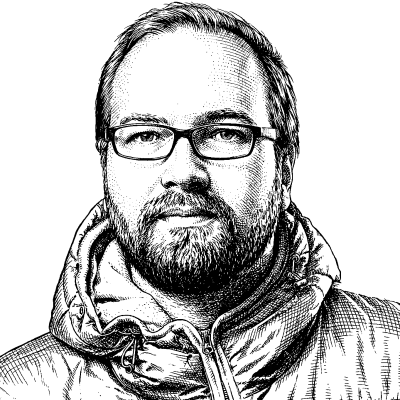
Alexei Turchin
Alexei Turchin (born 1973, Moscow) is a Russian independent researcher, author, and transhumanist thinker whose work concentrates on existential risk, life extension, and the theoretical and technological pathways to human resurrection. Educated in physics and art history at Moscow State University, he has been an active figure in the Russian transhumanist movement since 2007 and a contributor to the Arch Mission Foundation, which is dedicated to preserving human knowledge across deep time. Turchin has written extensively on what he frames as a multilevel strategy for immortality: Plan A (defeating aging), Plan B (cryonics), Plan C (digital immortality), and Plan D (multiverse or quantum immortality). His philosophical work engages questions of personal identity, the nature of the connectome, and the informational basis of human consciousness—arguing that death is, at its core, a loss of information, and that resurrection is therefore a project of information reconstruction. Drawing on the Russian cosmist tradition, especially Nikolai Fedorov’s vision of the universal resurrection of the dead, Turchin argues that a sufficiently advanced superintelligent AI could simulate all of human history in enough detail to reconstruct every person who ever lived, transferring them into personalized continuations of existence. This vision resonates deeply with Mormon transhumanist hopes for technological resurrection and the redemption of the dead. At the 2019 Mormon Transhumanist Association Conference, themed “Redeeming Our Dead,” Turchin presented these ideas directly, proposing that benevolent superintelligences—far outnumbering malevolent ones across the universe—would be the natural agents of such a project. His work treats moral seriousness as inseparable from technical aspiration: questions of consent, unnecessary suffering, and the ethics of simulated existence are not afterthoughts but load-bearing concerns. In this sense, Turchin exemplifies the cosmist conviction that intelligence, at sufficient scale, becomes a redemptive force—a conviction that Mormon transhumanism, with its own doctrine of eternal progression and compassionate creation, finds deeply familiar.

Aubrey de Grey is a biomedical gerontologist based in Cambridge, United Kingdom, and Mountain View, California. He is recognized for his work in combating the aging process and is a frequent speaker at events focused on the intersection of science, ethics, and longevity. De Grey serves as the Chief Science Officer of SENS Research Foundation, a California-based nonprofit dedicated to developing and promoting therapies to reverse aging. He is also the Editor-in-Chief of Rejuvenation Research , a leading peer-reviewed journal focused on intervention in aging. De Grey is best known for developing Strategies for Engineered Negligible Senescence (SENS), a comprehensive plan for repairing the accumulating molecular and cellular damage that constitutes mammalian aging. SENS breaks aging down into seven major classes of damage and identifies detailed approaches to addressing each one.

Bernardo Vicente is an economist and researcher deeply interested in the intersection of economics, technology, and culture. He holds a degree in business administration and accounting from Lisbon Polytechnic Institute, along with a specialization in business analytics. Driven by a desire to leverage technology for societal betterment, he has developed an innovative economic theory known as “Harberger Georgism.” Harberger Georgism builds upon the principles of Georgism and Harberger taxation, exploring how Web3 technologies can sustainably develop the digital era and enhance the physical world. This theory aims to potentiate development in the physical world using economic strategies. Currently, Bernardo volunteers as a researcher at the Ethereum Foundation, contributing his expertise to the advancement of blockchain technology. His work explores the teleology and utility of emerging technologies like NFTs and the metaverse, aiming to ensure their positive impact on society.

Blaire Ostler is a philosopher, author, and artist whose work explores the intersection of Mormon theology, transhumanism, and human identity. A ninth-generation Latter-day Saint, she has been a notable voice in conversations about the synthesis of religious tradition with technological progress and expanding theological inquiry. Ostler holds a Bachelor of Fine Arts in Design from the International Academy of Design and Technology–Seattle. Her background as an abstract modern artist deeply informs her philosophical work. Her paintings, characterized by their exploration of aesthetics and form, can be found in residences and businesses throughout Seattle. This artistic sensibility extends to her writing, where she examines the boundaries of traditional categories to explore a more expansive understanding of divinity and humanity. Ostler is the author of Queer Mormon Theology: An Introduction (2021), in which she engages with Mormon doctrinal concepts such as the nature of the divine, the significance of Heavenly Mother, and the potential for technological resurrection. Her involvement with the Mormon Transhumanist Association has been significant; she served on the Board of Directors for six years and as CEO from 2016 to 2018. Her transhumanist vision emphasizes active discipleship, where humanity participates in the work of God through morphological freedom and cognitive liberty. Blaire continues to write, paint, and speak on themes of identity, truth, and beauty, exploring the relationship between the human and the divine.

Brent Allsop
Brent Allsop (b. 1959) is an American technologist, transhumanist activist, and co-founder of the Mormon Transhumanist Association, whose career has been shaped by a sustained conviction that the most important questions about consciousness, identity, and human destiny are both scientific and spiritual. Allsop is a Senior Software Engineer at 3M Health Information Systems and the founder of Canonizer.com, a collaborative wiki-survey platform launched in 2006 and designed to help communities build genuine consensus on contested questions—from philosophy of mind to ethics to emerging technology. His professional life has run in parallel with decades of advocacy for life extension and transhumanist causes, and he has been a founding voice in the MTA since its inception. At the center of Allsop’s intellectual work is a serious engagement with the philosophy of consciousness—specifically the problem of qualia, or the subjective qualities of experience. He has developed a theoretical framework for scientifically detecting and measuring qualia, arguing that bridging the explanatory gap between brain states and conscious experience requires new mapping functions and, ultimately, direct brain-to-brain connections that allow individuals to share elemental experiences. His vision of mind uploading follows from this: not a copy-and-delete procedure but a gradual transition of experiential continuity into enhanced digital form. This work finds a natural resonance with Joseph Smith’s teaching that “all spirit is matter”—a naturalist theology that Allsop has taken seriously as a framework for understanding what spiritual engineering and consciousness uploading might actually involve. Allsop has also applied his consensus-building instincts to the MTA itself, presenting the 2012 member survey and reflecting on what distinguishes the Association from other transhumanist communities: a spirit of mutual support and collaborative inquiry rather than fractiousness. His Canonizer platform embodies the same aspiration at scale—enabling individuals to identify trusted experts and survey their collective views, so that the expanding moral landscape of technological power can be navigated with wisdom rather than paralysis. The emerging expert consensus on representational qualia theory, he has noted, aligns surprisingly well with 19th-century Mormon descriptions of consciousness and spirit—a convergence he regards not as coincidence but as evidence that prophetic and scientific inquiry can illuminate the same truths from different directions.
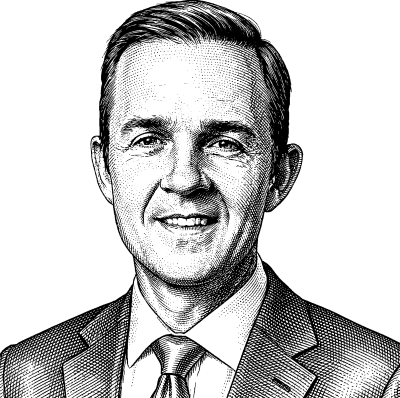
Carl Youngblood co-founded the MTA in 2006 and has served as its President and CEO since 2021. He is engaged with the Association’s efforts to explore the intersection of Mormon theology and transhumanist philosophy. Among the many initiatives that Carl has been involved with, he has designed and built the Association’s current website, which unifies all prior content in a single location using inspiring visuals and animations. Youngblood’s professional career spans more than two decades of full-stack software development at the intersection of Silicon Slopes and Silicon Valley. He was an early employee at Omniture (acquired by Adobe), a founding engineering leader at Divvy (a Utah-based unicorn startup), co-founder of Blockscale LLC (a blockchain services firm eventually contracted into Coinbase), and Senior Solutions Architect for Amazon Managed Blockchain at AWS. His technical fluency ranges from scalable web architecture to blockchain infrastructure—the kind of deep engineering experience that grounds his theological speculation in working knowledge of the systems he writes about. Under his leadership, the Association has developed its mission of promoting abundant human flourishing through the compassionate use of science and technology, fostering dialogue across secular and religious audiences and arguing that each has something essential to learn from the other. His writing, collected on his blog From the Depths , spans over a decade of conference presentations and theological essays: meditations on participatory resurrection, the alignment of artificial intelligence read through the Grand Council narrative, intelligence as eternal and multifaceted, and religion as social technology. He writes, as a colleague has observed, with warmth and accessibility on questions of momentous practical consequence—how to navigate faith crisis without losing faith’s power, how to think about resurrection as something we actively participate in rather than passively receive. Youngblood’s distinctive contribution to transhumanism is the integration of serious technical expertise with serious theological reflection. He embodies the Mormon transhumanist conviction that scientific and spiritual development are not parallel tracks but a single path—that the learning required to build better systems is continuous with the exaltation Mormon theology envisions, and that human ingenuity, rightly oriented, is itself a divine imperative.
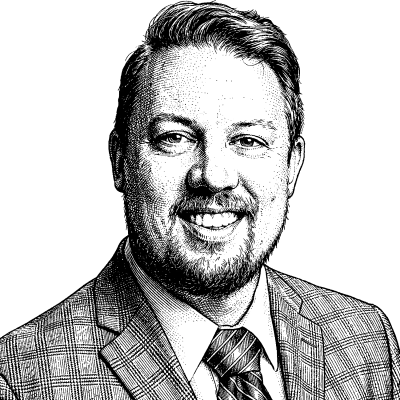
Chris Benek is an American Presbyterian minister, theologian, and leading voice in the emerging field of Christian transhumanism. As a founding co-chair of the Christian Transhumanist Association and a prolific writer and speaker at the intersection of faith and technology, Benek has worked to establish theological frameworks for engaging artificial intelligence, enhancement, and the long-term future of humanity within the Christian tradition. Ordained in the Presbyterian Church (USA), Benek has served as an associate pastor in Florida while simultaneously developing a public ministry focused on technology ethics and Christian futurism. He has written extensively on the theological implications of artificial intelligence, arguing that AI systems may be capable of participating in God’s redemptive work—a position he has defended in venues ranging from academic conferences to popular media. He co-founded the Christian Transhumanist Association to provide an institutional home for Christians who believe that technological development, rightly ordered, is continuous with the Gospel’s call to heal, restore, and transform creation. Benek’s significance lies in his insistence that Christian faith is not a constraint on technological imagination but a motivating force for it. His willingness to ask whether artificial intelligence might itself be redeemed and enlisted in the work of redemption reflects a theological seriousness about the scope of Christ’s reconciling work—one that resonates with the Mormon transhumanist conviction that creation, intelligence, and transformation are inseparably linked. Across traditions, he and like-minded thinkers represent a growing recognition that the deepest questions about technology are also the deepest questions about what it means to be made in the image of a creative, loving God.

David Brin
David Brin (born 1950) is an American scientist and science fiction author widely recognized for his explorations of technological progress, accountability, and the future trajectory of human civilization. A physicist by training, with a PhD from the University of California, San Diego, Brin has become one of the most prominent voices in contemporary science fiction, celebrated for works that grapple seriously with the responsibilities that accompany advancing knowledge and power. Brin is perhaps best known for his Uplift series, which imagines a galaxy in which elder species genetically elevate (or “uplift”) younger species to sapience, creating complex webs of patronage and obligation. The series earned him multiple Hugo and Nebula Awards and introduced themes that resonate deeply with transhumanist thought: the idea that intelligence and consciousness can be cultivated, expanded, and shared across species, and that such uplift carries profound moral responsibilities. His standalone novel The Postman (1985), later adapted into a film, explores how communities rebuild civilization after catastrophe through acts of hope and civic trust. His nonfiction work The Transparent Society (1998) argues that openness and mutual accountability, rather than secrecy, are the best safeguards for freedom in an age of pervasive technology. Brin is a self-described advocate of the Enlightenment tradition, championing science, democratic governance, and an optimistic but critical view of human progress. He has been vocal in futurist and transhumanist circles, generally supporting the idea that humanity can and should use technology to improve the human condition, overcome biological limitations, and expand into the cosmos. His vision of “otherness”—the moral imperative to consider perspectives beyond one’s own—aligns with broader transhumanist commitments to expanding empathy and capability. From the perspective of Mormon Transhumanism, Brin’s work offers rich resonances: his uplift narratives echo themes of theosis and compassionate creation, wherein more advanced beings extend their capacities to others—a pattern the New God Argument finds deeply meaningful. His emphasis on accountability and transparency complements the Mormon Transhumanist commitment to ethical stewardship of technology. Where Brin’s views may diverge is in his secular, Enlightenment-centered framework; he generally frames progress in terms of human reason and democratic institutions rather than divine grace, prophetic authority, or the restored Gospel. He has at times expressed skepticism toward religious institutions as arbiters of truth. Nevertheless, his abiding faith in humanity’s capacity for moral growth and his insistence that advanced power demands advanced compassion place him in substantial sympathy with the Mormon Transhumanist vision of becoming compassionate creators.

David Deutsch
David Elieser Deutsch (born 1953) is a British-Israeli physicist at the University of Oxford, widely regarded as one of the founding fathers of quantum computation. A Fellow of the Royal Society, Deutsch has profoundly shaped our understanding of the physical world and the nature of reality itself. Deutsch earned his PhD from the University of Oxford and has spent much of his career at the Clarendon Laboratory. In 1985, he published a landmark paper describing the first universal quantum computer, demonstrating that a quantum mechanical system could simulate any physical process—a breakthrough that launched the field of quantum computing. He further contributed to the development of the Deutsch-Jozsa algorithm, one of the earliest demonstrations of quantum computational advantage. His intellectual framework draws heavily on the many-worlds interpretation of quantum mechanics championed by Hugh Everett. Beyond his technical contributions, Deutsch is renowned as a public intellectual and author. His books The Fabric of Reality (1997) and The Beginning of Infinity (2011) weave together quantum physics, epistemology, the theory of computation, and the theory of evolution into a unified worldview. In The Beginning of Infinity , he argues that problems are soluble through the creation of knowledge, and that there is no fundamental limit to human progress—a deeply optimistic vision of unbounded human potential. Deutsch’s philosophy resonates with transhumanist themes central to the Mormon Transhumanist Association’s mission. His conviction that human beings are not cosmically insignificant but are instead “universal explainers” capable of unlimited understanding and transformation of reality echoes theological ideas of theosis and humanity’s divine potential. His insistence that the reach of human knowledge and creativity is genuinely infinite offers a scientific and philosophical foundation for hope in humanity’s capacity to transcend current limitations.

David Pearce is a prominent figure in the transhumanist movement, known for his advocacy of “paradise engineering.” He argues that advances in biotechnology and genetic engineering offer the potential to eliminate suffering throughout the living world. Pearce, who hails from the UK, has dedicated over two decades to exploring the technical possibilities and ethical implications of such a radical transformation of the biosphere. Pearce’s work focuses on outlining a practical plan to phase out involuntary pain and suffering, not only in humans but across all species. He is actively exploring technological proposals which would align with the vision of a world free from cruelty, a concept deeply rooted in utopian ideals, such as the Peaceable Kingdom of Isaiah, and that are also ecologically literate.