science
Articles (7)
Vazza Overstates Constraints on the Simulation
Lincoln Cannon argues Vazza overstates computational constraints on the Simulation Hypothesis—defending its plausibility against dismissive critiques.
Scientific Reasons to Abstain from Alcohol
Discover the compelling scientific evidence against alcohol consumption—from health risks to societal costs—presented with transparency about cultural perspective and backed by peer-reviewed research.
Got Science? Then Be Religious In the Right Ways
Lincoln Cannon contends that science supports religiosity—research links religion to better health, mental well-being, and community outcomes.
Local Truth and Revelation
Giulio Prisco examines how truth operates locally—drawing parallels between scientific validity and religious revelation.
Spiritual Intuition and Scientific Inspiration
Exploring the parallels between scientific intuition and spiritual inspiration — from Beveridge's research methods to Joseph Smith's revelatory insights.
Authors (7)

Albert Einstein
Albert Einstein (1879–1955) was a German-born theoretical physicist whose work transformed humanity’s understanding of space, time, energy, and matter, making him one of the most consequential scientific minds in recorded history. Einstein developed the special theory of relativity (1905) and the general theory of relativity (1915), the latter offering a geometric account of gravity that replaced Newtonian mechanics at cosmological scales. His famous mass-energy equivalence, expressed as E=mc², opened new vistas in physics and eventually in energy technology. He was awarded the Nobel Prize in Physics in 1921 for his discovery of the law of the photoelectric effect, a cornerstone of quantum theory. Einstein held positions at the Swiss Federal Patent Office, the University of Zurich, the German University in Prague, ETH Zurich, and the Prussian Academy of Sciences before emigrating to the United States in 1933, where he joined the Institute for Advanced Study in Princeton until his death. Beyond equations and thought experiments, Einstein was a deeply reflective thinker on the relationship between human intelligence and ultimate reality. He resisted the label of atheist, describing his orientation instead as a posture of humble wonder before a universe marvelously arranged and obeying certain laws—laws our limited minds only dimly understand. He held that science without religion is lame, and religion without science is blind, insisting the two must work hand-in-hand. This is not the posture of a secularist who has set metaphysics aside; it is the posture of someone who treats the intelligibility of the cosmos as a moral and spiritual provocation. That sensibility finds natural resonance with the Mormon transhumanist conviction that creation, intelligence, and Godhood are continuous rather than severed—that the universe’s deep order is something we are called to investigate, participate in, and ultimately embody. Einstein did not share Mormon theology, but his insistence that wonder before the cosmos is practically indistinguishable from religious seriousness, and that the advance of knowledge is bound up with something larger than mere utility, speaks across that distance. His life’s work stands as a testament to the proposition that rigorous intelligence and reverent imagination are not opposites but partners in the long, unfinished project of understanding our place in a universe of staggering complexity and beauty.

Amit Goswami is a scientist and researcher who challenges mainstream scientific materialism, particularly in its application to consciousness, health, and healing. He advocates for the integration of spirituality with medicine and seeks to demonstrate the importance of consciousness in these areas—a view often dismissed by conventional scientific paradigms. Goswami draws heavily on the principles of quantum physics to argue for a reality where consciousness plays a fundamental role. He posits that the prevailing materialistic worldview, which treats the body and mind as mere machines, inhibits our understanding of health, healing, and the human experience. He believes that quantum physics offers an alternative perspective, one that acknowledges the subjective aspect of consciousness and its potential impact on our well-being. At a 2013 conference jointly organized by the Integrative Health Network and the Mormon Transhumanist Association, Goswami presented on “Quantum Physics, Consciousness and Health.” He emphasized the disconnect between the implications of quantum physics and its public perception, suggesting that media and academia have perpetuated materialistic concepts to the detriment of a more holistic understanding of consciousness and its potential for influencing health and personal agency. His work attempts to bridge the gap between scientific inquiry and spiritual understanding, encouraging a reevaluation of the role of consciousness in our lives.

Carl Sagan
Carl Edward Sagan (1934–1996) was an American astronomer, planetary scientist, cosmologist, and one of the most influential science communicators of the twentieth century. His ability to convey the wonder of the cosmos to a broad public audience made him a defining figure in popular science. Sagan spent much of his career at Cornell University, where he served as a professor of astronomy and director of the Laboratory for Planetary Studies. He contributed significantly to planetary science, including research on the atmospheres of Venus and Titan, and played a key role in NASA’s Mariner, Viking, Voyager, and Galileo missions. He helped design the Pioneer plaque and the Voyager Golden Record—messages from humanity launched into interstellar space. His 1980 television series Cosmos: A Personal Voyage became one of the most widely watched programs in public television history, and his novel Contact (1985) explored humanity’s first encounter with extraterrestrial intelligence. Sagan was a passionate advocate for scientific literacy, critical thinking, and the search for life beyond Earth. While he identified as an agnostic and approached questions of God and transcendence through a scientific lens, his work resonated deeply with themes central to transhumanist thought: the aspiration to transcend present human limitations, the ethical stewardship of technology, and a profound reverence for the potential of conscious life in the universe. His famous declaration that “we are a way for the cosmos to know itself” echoes theological ideas of humanity’s participatory role in creation and theosis—the notion that intelligent beings may grow toward ever-greater understanding, compassion, and capacity. Sagan’s legacy continues to inspire those who see science and wonder as complementary paths toward human flourishing.

Johannes Kepler
Johannes Kepler (27 December 1571 – 15 November 1630) was a German mathematician, astronomer, and natural philosopher who fundamentally transformed humanity’s understanding of the cosmos. Born in Weil der Stadt, Germany, to a soldier father and an herbalist mother who was later accused of witchcraft, Kepler studied at the University of Tübingen under Michael Maestlin, who taught him the Copernican heliocentric system. In 1596, Kepler published Mysterium Cosmographicum ( The Cosmographic Mystery ), the first published defense of Copernicus’s sun-centered model. After being forced out of his teaching position in Graz due to his Lutheran faith, he moved to Prague in 1600 to work for the renowned astronomer Tycho Brahe. When Tycho died suddenly in 1601, Kepler succeeded him as imperial mathematician to Holy Roman Emperor Rudolf II. Kepler’s greatest achievement was his three laws of planetary motion: that planets move in elliptical orbits with the sun at one focus (1609); that a line connecting a planet to the sun sweeps equal areas in equal times; and that the square of a planet’s orbital period is proportional to the cube of its mean distance from the sun (1619). These laws, published in Astronomia Nova (1609) and Harmonices Mundi (1619), laid the foundation for Newton’s law of universal gravitation. Called the “founder of celestial mechanics,” Kepler was the first to identify natural laws in the modern sense. His fusion of physics and astronomy created modern astronomical science, demonstrating that the same physical principles governing motion on Earth apply throughout the universe—a revolutionary insight with profound implications for understanding humanity’s place in the cosmos.

Michael Shermer
Michael Brant Shermer (born 1954) is an American science writer, historian of science, and founder of The Skeptics Society. His work explores the intersection of science, skepticism, and belief. Shermer earned his PhD in the history of science from Claremont Graduate University and has written extensively on evolution, pseudoscience, and the psychology of belief. He founded Skeptic Magazine and has been a columnist for Scientific American . While generally skeptical of supernatural claims, Shermer has engaged thoughtfully with questions about the future of intelligence and technology, including what he calls “Shermer’s Last Law”—that any sufficiently advanced extraterrestrial intelligence would be indistinguishable from God.
Quotations (11)
 John A. Widtsoe
 Brigham Young
 John Taylor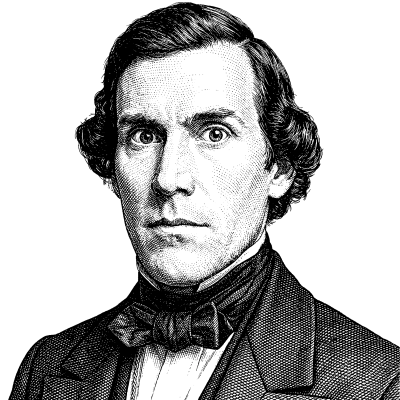
Topical Guide (5)
Videos (6)
Jon Bialecki
After Anthropos: Humanistic Social Science in a Posthuman Milieu
Anthropologist John Bialecki examines what transhumanism means for a social science that defines itself as the study of the human. He traces anthropology’s Boasian tradition of treating humanity as remarkably plastic yet culturally dependent, then asks whether posthuman transformations—particularly radical scenarios like Churchland’s networked “centipede” minds—would place future beings beyond the reach of ethnographic methods. Bialecki proposes that anthropology’s capacity to study a transformed subject might serve as a test for whether that transformation enhances or abandons what we recognize as human.
George Handley
Caring for Creation: an LDS Perspective
George Handley outlines ten distinctive LDS doctrines that provide theological resources for environmental stewardship, including the belief that Earth is humanity’s intended eternal home rather than a mere way station, that bodies and sensory experience are to be treasured, and that all life forms were created spiritually before physically and are entitled to “multiply and replenish.” He emphasizes that LDS teachings on creation from unorganized matter (rather than ex nihilo) imply reverence for natural processes, while scriptures like the Word of Wisdom and the Law of Consecration mandate eating locally, consuming sparingly, and redistributing resources to the poor. Handley argues that the Anthropocene demands Latter-day Saints bring together both scientific literacy and religious values to adequately respond to environmental challenges.
Steven Peck
The Evolution of Novelty in an Open Universe: Requiem for Laplace’s Demon
Steven Peck challenges the deterministic “block universe” of Laplace’s demon, arguing that genuine randomness—rooted in quantum events—bubbles up through biology to create an open, evolving cosmos. Drawing on chaos theory, emergence, and evolutionary biology, he contends that novelty is continuously generated in ways that were never predetermined at the Big Bang. For Peck, this openness has profound theological implications: if God has an embodied, biological nature, then faith, hope, and charity are not merely earthly virtues but eternal necessities for navigating a universe where the future remains genuinely unwritten.
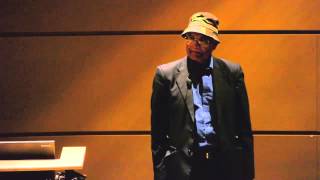
Amit Goswami
Amit Goswami on Quantum Physics, Consciousness and Health
Amit Goswami argues that quantum physics reveals a reality beyond space-time—a domain of potentiality from which consciousness chooses what becomes actual. He presents experimental evidence for nonlocal communication between correlated minds, showing that intention and meditation can produce measurable brain activity in distant subjects. Goswami applies these principles to health and healing, proposing that blocked emotions—particularly suppressed love associated with the heart chakra—can impair immune function and contribute to diseases like breast cancer. He advocates for a science that treats humans not as machines but as conscious beings capable of participating in their own healing through quantum leaps of insight and transformation.
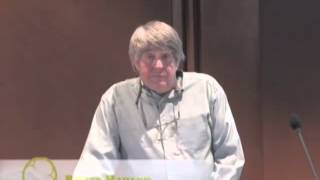
Three Spiritual Exemplars for Religious Transhumanists
Roger Hansen examines the lives and ideas of three early twentieth-century thinkers—John A. Widtsoe, Alfred North Whitehead, and Pierre Teilhard de Chardin—whose work offers valuable insights for religious transhumanists. Drawing on their shared beliefs in evolutionary progress, the interconnectedness of life, and the compatibility of science and religion, Hansen argues that these “spiritual exemplars” provide a theological foundation for eternal progression and the ongoing technological revolution. He suggests that Widtsoe’s commitment to reconciling LDS theology with science, Whitehead’s process philosophy, and Teilhard’s vision of humanity evolving toward an “Omega Point” all resonate deeply with Mormon transhumanist aspirations.