accelerating change
Articles (9)
Reflections on a Pivotal Year
Carl Youngblood reflects on a pivotal year — examining society's relationship with generosity, technology, faith, and intelligence at a critical moment.
Exponential Technological Trends and Humanity’s Future
Explore how exponential technological growth and human-tech integration may propel humanity toward a superhuman future, transforming our capacities as profoundly as evolution transformed our ancestors.
Exponential Change
Technological development follows an exponential curve that Mormon prophecy anticipates—understanding accelerating change prepares us for what's ahead.
Retrospective at Year’s End
Carl Youngblood reflects at year's end on the dramatic changes witnessed in 2024 — a personal retrospective on revelation, intelligence, and evolution.
How to Conduct Future Shock
Lincoln Cannon examines the future shock of OpenAI's Sora—which prompted Tyler Perry to cancel an $800M studio expansion—and how to navigate rapid AI change.
Authors (2)

James Carroll is a speaker and thinker focused on the drivers of technological progress and their implications for the future. He presented at the MTAConf 2014, examining the rate of technological change and questioning whether it is linear or exponential. His 2014 presentation sought to temper overly confident singularitarian views, such as those proposed by Raymond Kurzweil, suggesting that an exponential trajectory was uncertain at best. Building on his previous work, Carroll’s subsequent research has extended the discussion to include additional paradigms for innovation, specifically invention and specialization, trade, and the economics of scale (referred to as the ‘scale’ paradigm). He explores the relationships between these paradigms and population growth, arguing that technology impacts population size by enabling larger populations through advances in food production, reduced epidemics, and lower infant mortality rates. Carroll’s work considers both the impact of technological progress on society, and the societal factors that drive innovation. He argues that understanding these forces is crucial for assessing the potential for transhumanist visions to be realized, and for navigating the future of humanity in a rapidly changing world.

Robin Hanson is an economist and researcher known for his work on topics ranging from prediction markets and signaling theory to the potential societal impacts of future technologies, particularly artificial intelligence. His work often involves applying economic principles to understand and forecast long-term trends in growth and technological development. He is known for taking a ‘big picture’ approach to history, studying the history of the human economy over long timescales. Hanson’s presentations often explore the possibility of dramatic future economic transformations driven by advances in AI and automation. He examines historical patterns of exponential growth, suggesting that the rate of growth is accelerating, and that this acceleration could lead to massive changes in the economy. He believes artificial intelligence represents a major possibility. He was formerly an AI researcher and asks AI researchers about how far we have come in the last 20 years. His analyses provoke discussions about the future of work, the nature of intelligence, and the potential consequences of technological singularity.
Quotations (9)

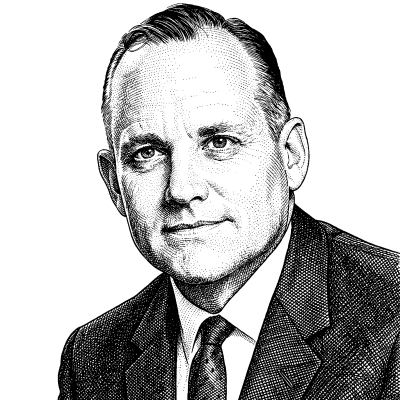 Howard W. Hunter
 B. H. Roberts
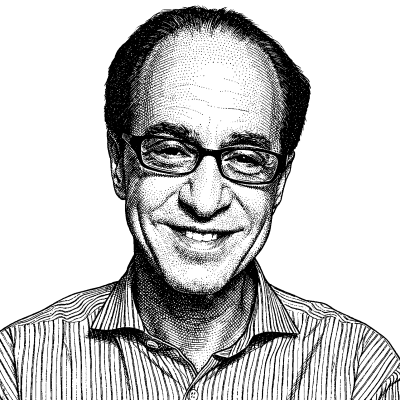 Ray Kurzweil