James E. Talmage on Harmonization
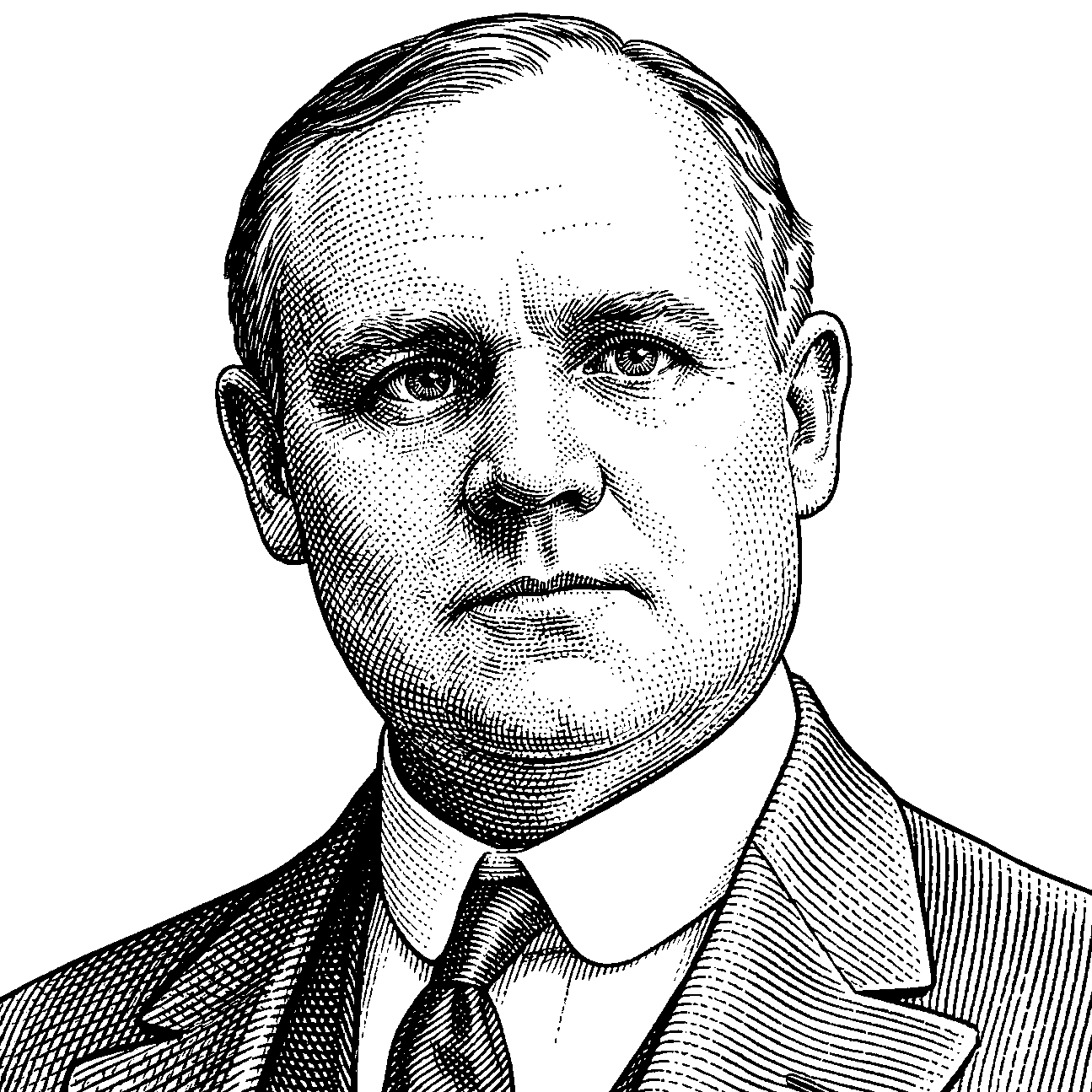
James E. Talmage

James E. Talmage

In conclusion, let it be said that science is undoubtedly entitled to a place in the curriculum of Association studies; it should have its right, but at the expense of nothing else that is good.  Among our young people I consider scientific knowledge as second in importance only to that knowledge that pertains to the Church and Kingdom of God; such information is of greatest worth to us, because of greatest use.  It is superior to science, to art, to literature.  Nature as we study it, is but the temple of the Almighty⁠—wonderful, imposing, awe-inspiring structure though it is, and the duty of science is to conduct us through the portals, and lead us to the altar where we will acknowledge, with reverential sincerity, “In Him we live and move and have our being.”
“Science in the Associations,” Mutual Improvement Association Conference, 1898

Related Quotes

Lorenzo SnowLorenzo Snow

These children are now at play, making mud worlds. The time will come when some of them, through their faithfulness to the gospel, will progress and develop in knowledge, intelligence and power, in future eternities, until they shall ... rule as gods.

Brigham YoungBrigham Young

Will the Saints arise from the dead? Yes. Who will know it? But a few. When the resurrection commences, I say but few will know it . . . Will the Saints rise from the dead before the world is converted? Yes. You may despair of ever seeing all creation converted to the Lord Jesus, or to the faith of the holy Gospel. Will you see the resurrection? Yes: you will be in it, and enjoy it; you will be in the first resurrection.

Dallin H. OaksDallin H. Oaks

The use of medical science is not at odds with our prayers of faith and our reliance on priesthood blessings. When a person requested a priesthood blessing, Brigham Young would ask, “Have you used any remedies?” To those who said no because “we wish the Elders to lay hands upon us, and we have faith that we shall be healed,” President Young replied: “That is very inconsistent according to my faith. If we are sick, and ask the Lord to heal us, and to do all for us that is necessary to be done, according to my understanding of the Gospel of salvation, I might as well ask the Lord to cause my wheat and corn to grow, without my plowing the ground and casting in the seed. It appears consistent to me to apply every remedy that comes within the range of my knowledge, and then to ask my Father in Heaven … to sanctify that application to the healing of my body.”

More from James E. Talmage

We believe in a God who is Himself progressive . . . whose perfection consists in eternal advancement . . . a Being who has attained His exalted state.

It is reasonable to believe, in the absence of direct revelation by which alone absolute knowledge of the matter could be acquired, that, in accordance with God’s plan of eternal progression, advancement from grade to grade within any kingdom, and from kingdom to kingdom, will be provided for.

Miracles are commonly regarded as occurrences in opposition to the laws of nature. Such a conception is plainly erroneous, for the laws of nature are inviolable.

Some of the latest and highest achievements of man in the utilization of natural forces approach the conditions of spiritual operations. To count the ticking of a watch thousands of miles away; to speak in but an ordinary tone and be heard across the continent; to signal from one hemisphere and be understood on the other though oceans roll and roar between; to bring the lightning into our homes and make it serve as fire and torch; to navigate the air and to travel beneath the ocean surface; to make chemical and atomic energies obey our will—are not these miracles?

According to the conception of geologists the earth passed through ages of preparation, to us unmeasured and immeasurable, during which countless generations of plants and animals existed in great variety and profusion and gave in part the very substance of their bodies to help form certain strata which are still existent as such. . . .