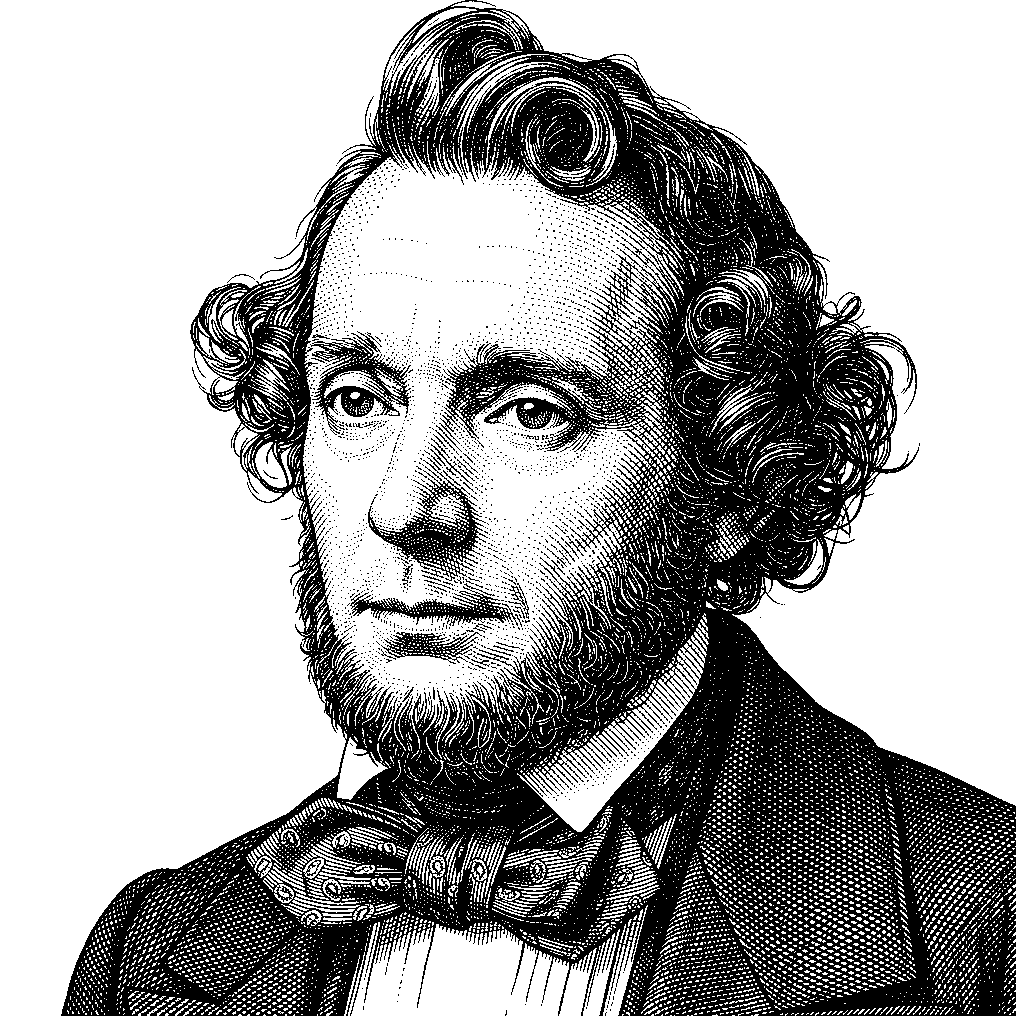
James E. Talmage on Eternal Progression

James E. Talmage

James E. Talmage

“

We believe in a God who is Himself progressive . . . whose perfection consists in eternal advancement . . . a Being who has attained His exalted state.

”
Articles of Faith, page 430, Salt Lake City, Utah: Deseret Book, 1984

Related Quotes

Sarah M. KimballSarah M. Kimball

It is proper on occasions like this to consider such topics as shall be of the highest benefit to womankind; into my mind, it is fitting to discuss here that capacity of mind in which woman is preeminently fitted to excel. …

Lorenzo SnowLorenzo Snow

We should strive earnestly to establish the principles of heaven within us, rather than trouble ourselves in fostering anxieties like the foolish people of the Tower of Babel, to reach its location before we are properly and lawfully prepared to become its inhabitants. Its advantages and blessings, in a measure, can be obtained in this probationary state by learning to live in conformity with its laws and the practice of its principles. To do this, there must be a feeling and determination to do God’s will.

Joseph SmithJoseph Smith

The first principles of man are self-existent with God. God himself, finding he was in the midst of spirits and glory, because he was more intelligent, saw proper to institute laws whereby the rest could have a privilege to advance like himself. The relationship we have with God places us in a situation to advance in knowledge.

More from James E. Talmage

In conclusion, let it be said that science is undoubtedly entitled to a place in the curriculum of Association studies; it should have its right, but at the expense of nothing else that is good. Among our young people I consider scientific knowledge as second in importance only to that knowledge that pertains to the Church and Kingdom of God; such information is of greatest worth to us, because of greatest use.

According to the conception of geologists the earth passed through ages of preparation, to us unmeasured and immeasurable, during which countless generations of plants and animals existed in great variety and profusion and gave in part the very substance of their bodies to help form certain strata which are still existent as such. . . .

Miracles are commonly regarded as occurrences in opposition to the laws of nature. Such a conception is plainly erroneous, for the laws of nature are inviolable.

Miracles cannot be in contravention of natural law, but are wrought through the operation of laws not universally or commonly recognized. Gravitation is everywhere operative, but the local and special application of other agencies may appear to nullify it—as by muscular effort or mechanical impulse a stone is lifted from the ground, poised aloft, or sent hurtling through space.

It is reasonable to believe, in the absence of direct revelation by which alone absolute knowledge of the matter could be acquired, that, in accordance with God’s plan of eternal progression, advancement from grade to grade within any kingdom, and from kingdom to kingdom, will be provided for.