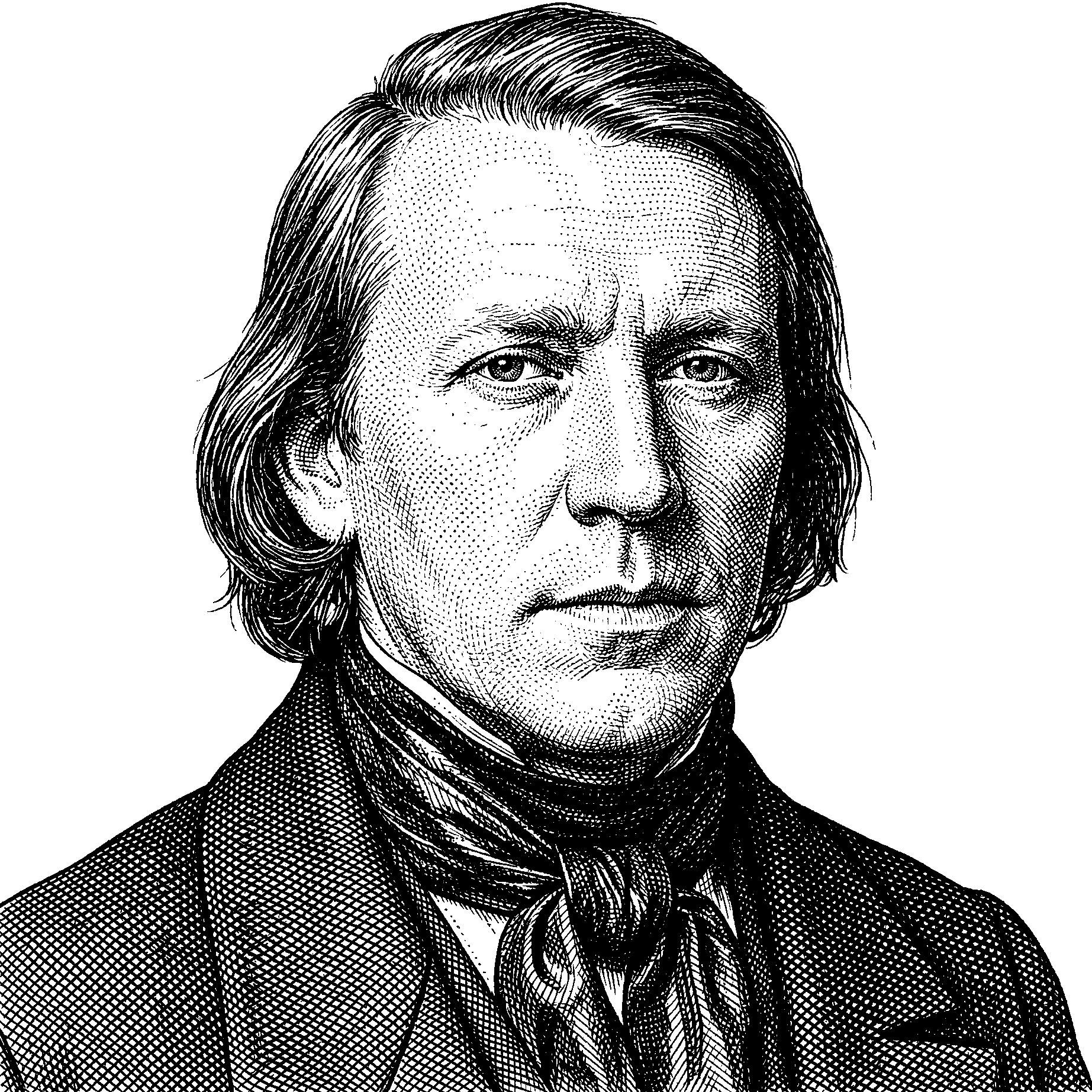
James E. Talmage on Naturalism

James E. Talmage

James E. Talmage

Miracles cannot be in contravention of natural law, but are wrought through the operation of laws not universally or commonly recognized. Gravitation is everywhere operative, but the local and special application of other agencies may appear to nullify it⁠—as by muscular effort or mechanical impulse a stone is lifted from the ground, poised aloft, or sent hurtling through space. At every stage of the process, however, gravity is in full play, though its effect is modified by that of other and locally superior energy. The human sense of the miraculous wanes as comprehension of the operative process increases.

Jesus the Christ, page 143, Salt Lake City, Utah: Deseret Book, 1982

Related Quotes

Joseph SmithJoseph Smith

This day I have been walking through the most splended part of the City of New York, ... and the language of my heart is like this: “Can the great God of all the Earth, maker of all things magnificent and splendid, be displeased with man for all these great inventions sought out by them?” My answer is no. It cannot be, seeing these works are are calculated to make men comfortable, wise, and happy.

Brigham YoungBrigham Young

My religion is natural philosophy. You never heard me preach a doctrine but what has a natural system to it, and, when understood, is as easy to comprehend as that two and two equal four. All the revelations of the Lord Almighty to the children of men, and all revealed doctrines of salvation are upon natural principles, upon natural philosophy.

Sterling M. McMurrinSterling M. McMurrin

The typical Mormon conception of a miracle is that the miraculous event, though entirely natural, is simply not understood because of deficiencies in human knowledge. From the perspective of God there are no miracles.

More from James E. Talmage

It is reasonable to believe, in the absence of direct revelation by which alone absolute knowledge of the matter could be acquired, that, in accordance with God’s plan of eternal progression, advancement from grade to grade within any kingdom, and from kingdom to kingdom, will be provided for.

We believe in a God who is Himself progressive . . . whose perfection consists in eternal advancement . . . a Being who has attained His exalted state.

In conclusion, let it be said that science is undoubtedly entitled to a place in the curriculum of Association studies; it should have its right, but at the expense of nothing else that is good. Among our young people I consider scientific knowledge as second in importance only to that knowledge that pertains to the Church and Kingdom of God; such information is of greatest worth to us, because of greatest use.

Some of the latest and highest achievements of man in the utilization of natural forces approach the conditions of spiritual operations. To count the ticking of a watch thousands of miles away; to speak in but an ordinary tone and be heard across the continent; to signal from one hemisphere and be understood on the other though oceans roll and roar between; to bring the lightning into our homes and make it serve as fire and torch; to navigate the air and to travel beneath the ocean surface; to make chemical and atomic energies obey our will—are not these miracles?

Miracles are commonly regarded as occurrences in opposition to the laws of nature. Such a conception is plainly erroneous, for the laws of nature are inviolable.