Opinion

Human initiative and God’s desires

We are admonished in the scriptures to let our will be swallowed up in the will of God, suggesting that our desires can only be inferior to God’s, whose desires for us far surpass our own. There is certainly something right about this; if our concept of God does not acknowledge the superiority of divinity to humanity, we are merely worshipping ourselves.

Divine fire becomes holy when human desire learns what to do with it.

Read more →

Almost an Atheist: A Mormon Welcome to Transhumanist Atheists

If theism is simply belief in God or Gods, then I am clearly a theist. What flavor of theism is more complex, and I don’t know the closest words, but I believe in a very Mormon structure of families of Gods going back in time perhaps longer than we can imagine. But look for a moment at this definition of atheism from Michael Shermer:

Doubt and discipleship can look through the same lens toward a larger light.

Read more →

Who or what is God?

Dorothy Deasy
Dorothy Deasy

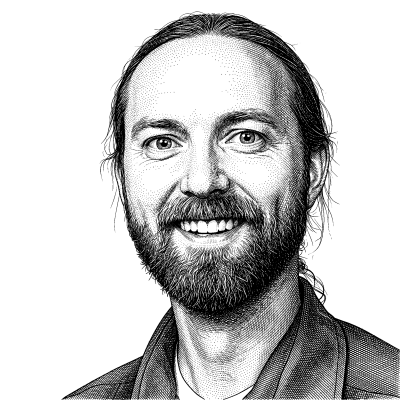
Dorothy Deasy is a Methodist theologian currently pursuing a Master’s of Applied Theology from Merrill Hurst University. Her spiritual journey began later in life with an awakening experience triggered by her study of the historical Jesus. Deasy’s work explores the intersection of spirituality and technology, particularly examining the nature of religious experience in the context of rapidly advancing biotechnologies. She questions whether electronically or pharmacologically induced religious experiences hold the same value and significance as traditional spiritual engagement, emphasizing that true spirituality involves the incorporation of insights from peak experiences into daily life—a call to action and interconnectedness. Deasy posits that neuroscience, with discoveries like mirror neurons, increasingly supports the idea that empathy and sociability are fundamental aspects of human development. She argues against the dualistic separation of science and religion, suggesting that understanding the biological mechanisms behind transcendent experiences does not negate their profound meaning. Her research bridges the gap between scientific understanding and spiritual experience, relevant in an age where humanity has the potential to alter the human body and influence the very triggers of life.

Funny how the lessons of life recur. We see them in one form, glean insights, and years later in a different guise. We build lesson upon lesson and are architects of sorts. From where do the raw materials stem? From where do the lessons which become our personal thesis arise?

The divine may be vast enough to be personal without being small.

Read more →

Pragmatic Prayer

Blaire Ostler
Blaire Ostler

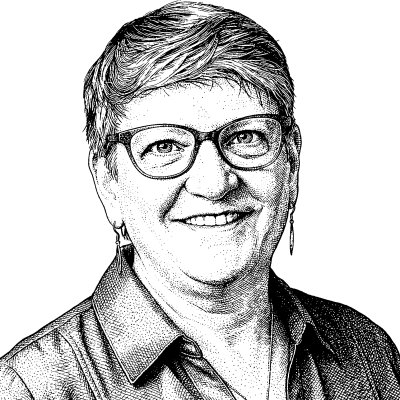
Blaire Ostler is a philosopher, author, and artist whose work explores the intersection of Mormon theology, transhumanism, and human identity. A ninth-generation Latter-day Saint, she has been a notable voice in conversations about the synthesis of religious tradition with technological progress and expanding theological inquiry. Ostler holds a Bachelor of Fine Arts in Design from the International Academy of Design and Technology–Seattle. Her background as an abstract modern artist deeply informs her philosophical work. Her paintings, characterized by their exploration of aesthetics and form, can be found in residences and businesses throughout Seattle. This artistic sensibility extends to her writing, where she examines the boundaries of traditional categories to explore a more expansive understanding of divinity and humanity. Ostler is the author of Queer Mormon Theology: An Introduction (2021), in which she engages with Mormon doctrinal concepts such as the nature of the divine, the significance of Heavenly Mother, and the potential for technological resurrection. Her involvement with the Mormon Transhumanist Association has been significant; she served on the Board of Directors for six years and as CEO from 2016 to 2018. Her transhumanist vision emphasizes active discipleship, where humanity participates in the work of God through morphological freedom and cognitive liberty. Blaire continues to write, paint, and speak on themes of identity, truth, and beauty, exploring the relationship between the human and the divine.

While reading some comments on social media concerning prayer, I’ve found that too many of my fellow believers and non-believers have sorely lost sight of the function of prayer.

Prayer becomes practical when compassion refuses to stay abstract.

Before discussing prayer, I’d like to address agency. In Mormonism, agency is “…the ability and privilege God gives us to choose and to act for ourselves. Agency is essential in the plan of salvation.”

We are granted agency to act as autonomous individuals. Agency allows us to govern ourselves and allows for optimal growth and development in our endeavors to become compassionate creators. With agency also comes the risk of suffering.

Read more →

Not Dying to See the Singularity: A Young Physician’s Evaluation of the Ray Kurzweil Regimen

Jordan Roberts
Jordan Roberts

Jordan Roberts, MD, is a physician, humanitarian, and bioethicist whose work bridges the intersections of clinical medicine, Mormon theology, and transhumanist philosophy. Born in Mesa, Arizona, to a Mormon mother and a Jewish father, Roberts grew up at a unique cultural crossroads that has informed his lifelong interest in the synthesis of diverse religious and scientific traditions. Roberts’s academic journey began at Arizona State University, where he earned a Bachelor of Science in Life Sciences. He subsequently received his medical degree from the University of Arizona College of Medicine–Phoenix. Following his medical education, he completed his residency in family medicine at St. Mark’s Hospital in Salt Lake City, Utah. His professional background as a clinician is deeply intertwined with his philosophical pursuits, particularly regarding the ethical implications of emerging technologies and the moral imperative of life extension and health equity. In 2017, Roberts was appointed as the Chief Humanitarian Officer of the Mormon Transhumanist Association (MTA). In this leadership role, he focused on the practical application of transhumanist ideals—specifically the use of technology to alleviate human suffering and expand the reach of compassionate care. His vision of “Humanitarian Transhumanism” emphasizes that the transition to a posthuman or exalted state must be rooted in helping the needy among us. Roberts presented a compelling lecture at the MTAConf 2017 titled “The Evolution of Zion.” In his presentation, he explored the concept of Zion not merely as a historical or geographical location, but as an evolving socio-technical state. He posits that the religious mandate to build Zion is compatible with the transhumanist goal of using advanced science to create a society characterized by the absence of poverty, disease, and inequality. By drawing on his dual heritage, he often incorporates themes from both Jewish tikkun olam (repairing the world) and the Mormon pursuit of the New Jerusalem. Roberts remains an avid student of science fiction, philosophy, and the history of medicine. He served a full-time mission for The Church of Jesus Christ of Latter-day Saints in Brazil, an experience that helped shape his global perspective on public health and humanitarianism. Through his writing and speaking, Roberts continues to advocate for a future where technology and theology work in tandem to fulfill the highest aspirations of the human spirit.

The futurist Ray Kurzweil is not only famous for consistently predicting a technological singularity within decades, but also for his unusual habit of consuming more than 250 supplements per day in an attempt to live to see it. His logic: that if one can live long enough to witness the singularity, one may achieve “longevity escape velocity“ and, perhaps, biological immortality (not to mention conscious immortality via mind uploading). While most professing transhumanists cannot afford Kurzweil’s fountain-of-youth cocktail, there are many practical, evidence-based interventions that can extend our lives and health.

Longevity asks for hope disciplined by evidence.

Read more →

What is Transhumanism? A Network Analysis of Wikipedia Pages

Caleb Jones
Caleb Jones

Caleb Jones is a speaker and thinker deeply engaged with the intersection of Mormon theology, transhumanism, and intergenerational connection. His work focuses on the spirit of Elijah, as referenced in Malachi, and its implications for creating faith-based connections across generations, both living and deceased. He advocates for a broader interpretation of this principle, extending it beyond traditional temple work to encompass a reconciliation of ancient wisdom with modernity. Jones draws upon G.K. Chesterton’s concept of the “democracy of the dead” to frame his exploration of tradition and remembrance. He posits that our ancestors, through their artifacts and influence, continue to participate in the present. He sees the redemption of the dead through these artifacts—books, music, laws, traditions—as a collective human endeavor involving various disciplines such as literary scholarship, archaeology, and religious studies. His perspective emphasizes the importance of engaging with the past to inform and enrich the future, particularly within the context of Mormonism and its emphasis on family history and genealogical work. Jones champions seeking a healthy balance and ongoing reconciliation of the hearts and minds of the dead and dying with the hearts and minds of the living, to redeem rising generations.

portion of actual link network of transhuman wikipedia pages

A movement becomes legible when its ideas begin to show their relations.

Often times I get asked, “So, what is transhumanism?” While I’m sure not all transhumanists agree on a single definition, one of the most concise definitions I use is, “The belief that technology can not only improve the human condition but fundamentally change it.”

Read more →

The Future of Real: Meaning and Social Intelligence in a Transhuman Age

Dorothy Deasy
Dorothy Deasy

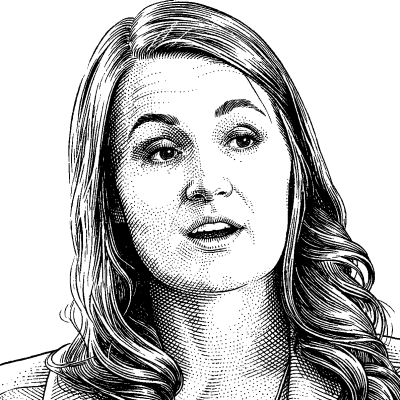
Dorothy Deasy is a Methodist theologian currently pursuing a Master’s of Applied Theology from Merrill Hurst University. Her spiritual journey began later in life with an awakening experience triggered by her study of the historical Jesus. Deasy’s work explores the intersection of spirituality and technology, particularly examining the nature of religious experience in the context of rapidly advancing biotechnologies. She questions whether electronically or pharmacologically induced religious experiences hold the same value and significance as traditional spiritual engagement, emphasizing that true spirituality involves the incorporation of insights from peak experiences into daily life—a call to action and interconnectedness. Deasy posits that neuroscience, with discoveries like mirror neurons, increasingly supports the idea that empathy and sociability are fundamental aspects of human development. She argues against the dualistic separation of science and religion, suggesting that understanding the biological mechanisms behind transcendent experiences does not negate their profound meaning. Her research bridges the gap between scientific understanding and spiritual experience, relevant in an age where humanity has the potential to alter the human body and influence the very triggers of life.

[NOTE: This is a condensed version of the talk by the same title delivered at the Extreme Tech Conference on July 19, 2015 in Redmond, WA]

I remember seeing the children falling through the air, their limbs akimbo, grasping for land or any anchor that would save them from the fall. I remember the feelings of terror, panic, pity and helplessness as I watched, unable to intervene. And then I awoke⁠—alone, scared and slowly came to the realization that it was simply a dream, though still I feared closing my eyes again too soon lest I return. That dream took place more than 30 years ago. Much of the detail has faded⁠—how did they come to fall? Were they pushed or did they jump like lemmings? – still I remember the images, can recall the emotions. It was just a dream; it wasn’t real. But I recall the experience of the dream. The personal semiotics that the dream contained were real, telling me something about my own psyche, my own sense of self and so making it an experience with meaning.
Read more →

Mormonism and Transhumanism: A match made in heaven

I’m in. That was my first thought when I read just a couple of pieces about Mormon Transhumanism. It was a Wednesday evening early this summer. I had read a description of Transhumanism in a Huffington Post article:

The future is easiest to welcome when covenant already teaches us to say yes.

Read more →

The Cosmos as Imagined in the Beatitudes

Jonathan Cannon
Jonathan Cannon

Jonathan lives in rural Georgia with his wife and three boys, teaching Chemistry and enjoying the good people of his community. He studied Molecular Biology at Brigham Young University, and Biophysics at the University of Wisconsin, Madison. Jonathan is passionate about fatherhood, teaching and learning, Mormonism, and dance (he’s much better at the first three), and dabbles in home repairs, various crafts, poetry, music, gardening, and Transhumanism. He has enjoyed many years working in Primary, with Young Adults and Ward Missions in various capacities. He currently enjoys serving in his ward and community however he is able.

I more than once have learned that “Blessed” in the Beatitudes is a word that implies the happy state that the Gods are in. What if one were to take this meaning very literally, and set the Sermon on the Mount in the context of the Mormon and Transhumanist ideals of humanity actually approaching or achieving Godhood? Where our Heavenly Father and Mother had parents of their own and went through the same process we are now experiencing? Then the Beatitudes would begin:

A blessed cosmos leaves room for hunger, mercy, and endless becoming.

Read more →

God-fearing Atheist

Blaire Ostler
Blaire Ostler

Blaire Ostler is a philosopher, author, and artist whose work explores the intersection of Mormon theology, transhumanism, and human identity. A ninth-generation Latter-day Saint, she has been a notable voice in conversations about the synthesis of religious tradition with technological progress and expanding theological inquiry. Ostler holds a Bachelor of Fine Arts in Design from the International Academy of Design and Technology–Seattle. Her background as an abstract modern artist deeply informs her philosophical work. Her paintings, characterized by their exploration of aesthetics and form, can be found in residences and businesses throughout Seattle. This artistic sensibility extends to her writing, where she examines the boundaries of traditional categories to explore a more expansive understanding of divinity and humanity. Ostler is the author of Queer Mormon Theology: An Introduction (2021), in which she engages with Mormon doctrinal concepts such as the nature of the divine, the significance of Heavenly Mother, and the potential for technological resurrection. Her involvement with the Mormon Transhumanist Association has been significant; she served on the Board of Directors for six years and as CEO from 2016 to 2018. Her transhumanist vision emphasizes active discipleship, where humanity participates in the work of God through morphological freedom and cognitive liberty. Blaire continues to write, paint, and speak on themes of identity, truth, and beauty, exploring the relationship between the human and the divine.

You’ve probably heard the old saying “everyone is born an atheist; we have to be taught religion.” In my case, that might actually be true.

Faith can be honest about doubt without surrendering its reverence.

Even at a young age, doubting the absoluteness of my religion, Mormonism, came quite naturally to me.

Read more →