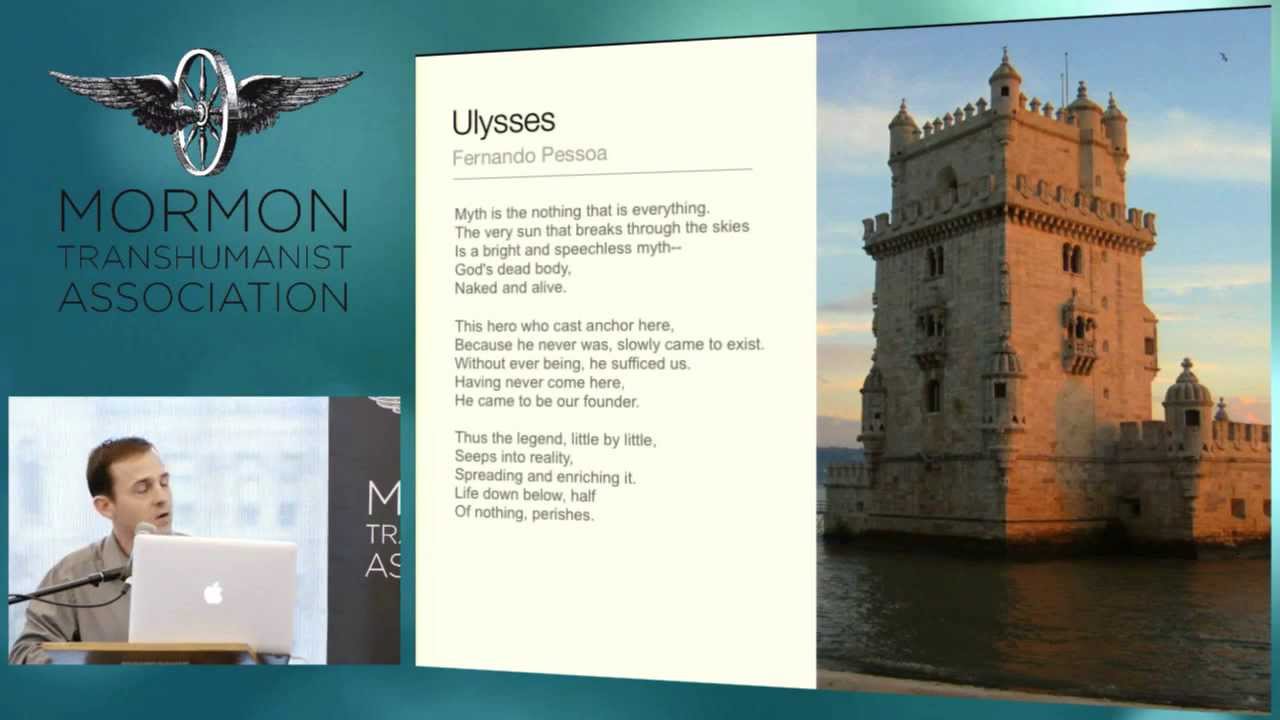
Ulysses — Fernando Pessoa
O mytho é o nada que é tudo.
O mesmo sol que abre os céus
É um mytho brilhante e mudo—
O corpo morto de Deus,
Vivo e desnudo.
Este, que aqui aportou,
Foi por não ser existindo.
Sem existir nos bastou.
Por não ter vindo foi vindo
E nos creou.
Assim a lenda se escorre
A entrar na realidade.
E a fecundal-a decorre.
Em baixo, a vida, metade
De nada, morre.
Ulysses1
Myth is the nothing that is all.
The same sun that opens the skies
Is a bright myth that, silent, calls—
The dead body of God that lies,
Living, before all.
This man, who here disembarked,
Began, by not being, to be.
Absence was a good enough start.
Without life, he ultimately
Our life did impart.
Thus does the legend endeavor
To seep into reality,
Sowing seeds whithersoever.
Everyday life loses meaning
From its source severed.2
Thus begins the epic set of poems entitled Mensagem (“Message”) by Fernando Pessoa, a Portuguese poet and author regarded by Harold Bloom as one of the founders of the “Western Canon” and one of the most important literary figures of the twentieth century.3 Through one of his many “heteronyms,” or alternate identities through which he often wrote, Pessoa lamented that he “belong[ed] to a generation of Portuguese who, after the Indies were discovered, found themselves out of a job.”4 Pessoa felt nostalgia for the industrious zeal displayed by his people during the Age of Discovery and deplored their subsequent languor and lack of ambition. Mensagem was an effort to rekindle that zeal by resurrecting the ancient symbols of Portuguese dominance. The title of this poem is “Ulysses,” the Latin name for the protagonist of Homer’s Odyssey, who, according to legend, founded the city of Lisbon.5 Pessoa displays keen insight into the nature of myth. It doesn’t just explain the world; it creates it. Although he wasn’t a ‘real’ person, this legendary figure, “by not being,” nonetheless provided the identity through which the Portuguese nation rose to become a superpower.
Like the ancient symbols of Portugal, the symbols of Mormonism are also in a state of flux. The Mormon Church is facing increased levels of disaffection6 and public scrutiny,7 in addition to increasing tension between its doctrinal paradigms and those of the larger culture. This essay seeks to explain this process and explore ways that Mormonism can adapt to the sea change it is presently experiencing. I wish to express my gratitude to Richard Holloway for his lectures at Gresham College on “The Myths of Christianity,” from which I borrow heavily.8