Videos

Showing 171–180 of 276
Panel with Zoltan Istvan, Shannon Avana, Lincoln Cannon, and Robert Kurtz
23:11

Zoltan Istvan

Panel with Zoltan Istvan, Shannon Avana, Lincoln Cannon, and Robert Kurtz

A Seventh-day Adventist minister reflects on the surprising parallels between his tradition and transhumanism, noting that Adventists have long invested in life extension through health practices, pioneering medical technologies, and anti-smoking campaigns. He draws a historical parallel to the Millerite movement’s “Great Disappointment” of 1844, cautioning that transhumanists should remain humble about predictions while maintaining hope. The speaker emphasizes the importance of keeping religious agendas out of government, challenges orthodoxies that might impede scientific progress, and urges each religious tradition represented to prevent their communities from obstructing transhumanist goals. He advocates for intellectual humility, distinguishing between beliefs and knowledge, while remaining open to consciousness research that may transcend strict materialist frameworks.

The Viability of Panpsychism
21:03

Chris Bradford

The Viability of Panpsychism

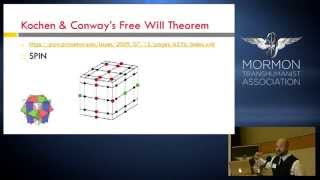
Chris Bradford argues that panpsychism—the view that mental experience is a fundamental feature of the universe—offers the most coherent explanation for consciousness. He critiques substance dualism, physicalism, and strong emergentism as inadequate, drawing on philosopher Galen Strawson’s argument that if everything is physical and experience is part of concrete reality, then panpsychism becomes the only reasonable position. Bradford connects this to Mormon theology’s commitment to materialism (“there is no such thing as immaterial matter”) and presents the free will theorem by Kochen and Conway as evidence that elementary particles possess a form of proto-experiential agency, suggesting that our rich conscious experience may arise from these fundamental proto-mental properties of matter.

Worship Through Corporeality: Mormonism, Hasidism, and Management
21:58

Allen Hansen

Worship Through Corporeality: Mormonism, Hasidism, and Management

Allen Hansen explores the Hasidic concept of “worship through corporeality”—the idea that mundane acts can be sanctified and transformed into acts of devotion—drawing parallels with Latter-day Saint theology. He traces this doctrine through the legend of Enoch the shoemaker, who achieved exaltation by blessing God with every stitch, and connects it to similar themes in early Mormon thought under Joseph Smith and Brigham Young. Hansen argues that both traditions collapse the sacred-secular divide, finding divine significance in daily labor and practical work, and suggests that modern management principles of autonomy, mastery, and purpose align with these religious ideals of meaningful engagement.