Opinion

59 Thoughts on October 2016 General Conference
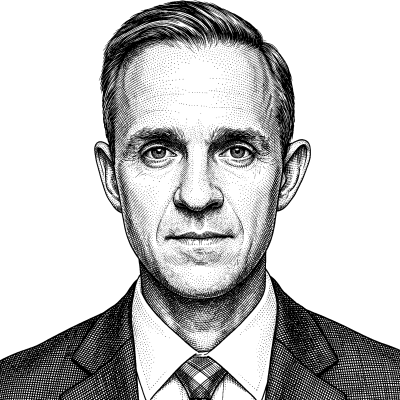
Lincoln Cannon
Lincoln Cannon

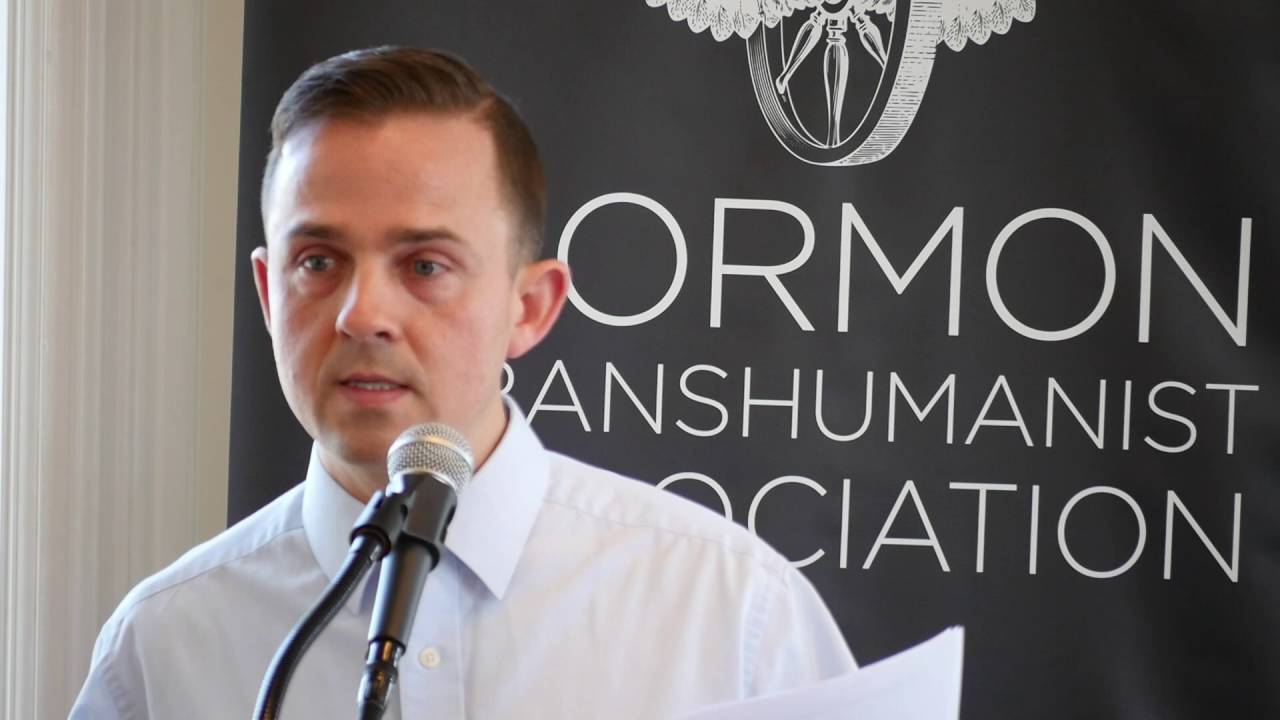
Lincoln Cannon is an American philosopher and technologist who co-founded the Mormon Transhumanist Association in 2006, serving as its president from 2006 to 2016. He is a leading advocate of technological evolution and postsecular religion, combining software engineering expertise with degrees in philosophy and business. Cannon is also a founder and board member of the Christian Transhumanist Association. He formulated the New God Argument, a logical argument for faith in God that has become popular among religious transhumanists. His academic work includes “Mormonism Mandates Transhumanism” published in Religion and Human Enhancement: Death, Values, and Morality (Palgrave Macmillan, 2017) and “Transfigurism: A Future of Religion as Exemplified by Religious Transhumanists” published in The Transhumanism Handbook (Springer Verlag, 2019). Mormon transhumanism, as articulated by Cannon, holds that humanity should learn how to be compassionate creators. This idea is central to the Mormon theological tradition, which provides a religious framework consistent with naturalism and supportive of human transformation. Cannon’s work bridges religious faith with scientific advancement, advocating for the ethical use of technology to extend human abilities in ways consistent with a religious worldview.

In the spring and fall of each year, The Church of Jesus Christ of Latter-day Saints holds its annual general conference. Hundreds of thousands of Mormons converge on Salt Lake City for two days of sermons from top leaders of the Church, which with around 16 million members is by far the largest Mormon denomination in the world. The most recent conference was held yesterday and today.

General Conference
Read more →

The Sacred Road to the Stars

Giulio Prisco
Giulio Prisco

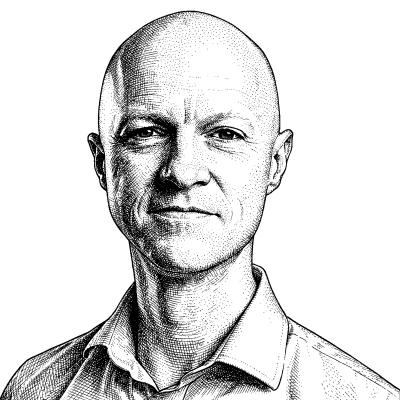
Giulio Prisco is a writer, technologist, futurist, and transhumanist. He is based in Budapest and is a frequent speaker and writer on topics related to science, technology, and the future. A former manager in European Science and Technology Centers, Prisco’s interests span a wide range of subjects, including information technology, emerging technologies, virtual worlds, space exploration, and future studies. He is especially interested in the convergence of science, technology, and spirituality—a theme he explores through his work with the Turing Church of Transcendent Engineering. Prisco is deeply interested in concepts like mind uploading, cryonics, and brain preservation, and how these technologies intersect with philosophy and religion. He is an advocate for the potential of technology to transcend human limitations and explore spiritual possibilities, dedicating his work to advancing these ideas within the broader transhumanist community.

Ground Control to Major Tom Commencing countdown, engines on Check ignition and may God’s love be with you - David Bowie, 1947-2016 (Thanks Major Tom!)

A cathedral of stars makes expansion feel like pilgrimage.

Read more →

“I Was a Stranger”

Carl Youngblood
Carl Youngblood

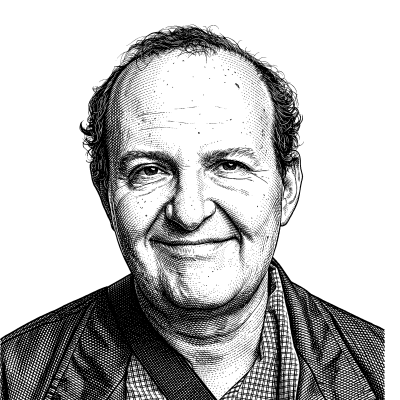
Carl Youngblood co-founded the MTA in 2006 and has served as its President and CEO since 2021. He is engaged with the Association’s efforts to explore the intersection of Mormon theology and transhumanist philosophy. Among the many initiatives that Carl has been involved with, he has designed and built the Association’s current website, which unifies all prior content in a single location using inspiring visuals and animations. Youngblood’s professional career spans more than two decades of full-stack software development at the intersection of Silicon Slopes and Silicon Valley. He was an early employee at Omniture (acquired by Adobe), a founding engineering leader at Divvy (a Utah-based unicorn startup), co-founder of Blockscale LLC (a blockchain services firm eventually contracted into Coinbase), and Senior Solutions Architect for Amazon Managed Blockchain at AWS. His technical fluency ranges from scalable web architecture to blockchain infrastructure—the kind of deep engineering experience that grounds his theological speculation in working knowledge of the systems he writes about. Under his leadership, the Association has developed its mission of promoting abundant human flourishing through the compassionate use of science and technology, fostering dialogue across secular and religious audiences and arguing that each has something essential to learn from the other. His writing, collected on his blog From the Depths, spans over a decade of conference presentations and theological essays: meditations on participatory resurrection, the alignment of artificial intelligence read through the Grand Council narrative, intelligence as eternal and multifaceted, and religion as social technology. He writes, as a colleague has observed, with warmth and accessibility on questions of momentous practical consequence—how to navigate faith crisis without losing faith’s power, how to think about resurrection as something we actively participate in rather than passively receive. Youngblood’s distinctive contribution to transhumanism is the integration of serious technical expertise with serious theological reflection. He embodies the Mormon transhumanist conviction that scientific and spiritual development are not parallel tracks but a single path—that the learning required to build better systems is continuous with the exaltation Mormon theology envisions, and that human ingenuity, rightly oriented, is itself a divine imperative.

“When the Son of Man comes in his glory, and all the angels with him, then he will sit on the throne of his glory. All the nations will be gathered before him, and he will separate people one from another as a shepherd separates the sheep from the goats, and he will put the sheep at his right hand and the goats at the left. Then the king will say to those at his right hand, ‘Come, you that are blessed by my Father, inherit the kingdom prepared for you from the foundation of the world; for I was hungry and you gave me food, I was thirsty and you gave me something to drink, I was a stranger and you welcomed me, I was naked and you gave me clothing, I was sick and you took care of me, I was in prison and you visited me.’ Then the righteous will answer him, ‘Lord, when was it that we saw you hungry and gave you food, or thirsty and gave you something to drink? And when was it that we saw you a stranger and welcomed you, or naked and gave you clothing? And when was it that we saw you sick or in prison and visited you?’ And the king will answer them, ‘Truly I tell you, just as you did it to one of the least of these who are members of my family, you did it to me.’” (Matthew 25:31⁠–40, NRSV)[^1]

Read more →

I’m a Critical Thinker!

Exercising Our Critical Thinking Muscles

Thinking critically begins to mature when certainty learns humility.

Online forums and social media are great and terrible places to test your critical thinking. As I’ve written on Mormonism and Transhumanism on Rational Faiths, Exploring Sainthood, and the Transfigurist for over two years, now, as well as interacting on online LDS faith transition and support groups for this same time, I’ve experienced warm approval, condescending criticism, and a lot of good (if sometimes intense) dialogue. Any of you who have followed similar paths will have seen the same trends--most arguers can see how they are thinking clearly and critically and you aren’t. Not everyone does do that, but a lot of us think it in our heads at least. I think this is especially true in our early stages of understanding a new thing. When we finally make sense of the New God Argument, or figure out the impossibility of textbook style historicity for the Book of Mormon, or realize that there is no way our childhood God could be more than a fantasy--or perhaps even evil--we get a real rush. Our bodies release dopamine at these moments of enlightenment, and we feel excitement and even joy. We want to share what we learned, and we subsequently feel great frustration when others reject the beautiful opportunity we are offering them. And it’s even worse when they start (or continue) arguing for the goodness or rightness of something we no see is wrong, misguided, ill-informed, or even hurtful. We have stretched our critical thinking muscles, and think the rest of the world should be working harder at developing their own.

Read more →

Transhumanism: Reflections from a Non-Scientist

Anonymous

My name is Matt Howe and I am not a scientist. I am, in fact a business man, and other than a few classes in college, my formal training in most scientific disciplines ended either in college or from what I can gather off the internet or have learned from others. Yes, I have a great deal of expertise in the Risk Management sector and being in sales I have probably a better than average gift for communication, but despite all these seeming limitations, I am a Transhumanist, part of the Mormon Transhumanist Association, and Transhumanism needs me.

A movement needs more than experts when its promise is meant for everyone.

Read more →

The Problem of Pain

The problem of pain is not in its logic. It only defeats false Gods, or Gods unconstrained by the realities of the nature we live daily.

Pain turns theology into something the heart must answer.

Read more →

Don’t Disparage Death: a Call to Curb our Transthusiasm

Jordan Roberts
Jordan Roberts

Jordan Roberts, MD, is a physician, humanitarian, and bioethicist whose work bridges the intersections of clinical medicine, Mormon theology, and transhumanist philosophy. Born in Mesa, Arizona, to a Mormon mother and a Jewish father, Roberts grew up at a unique cultural crossroads that has informed his lifelong interest in the synthesis of diverse religious and scientific traditions. Roberts’s academic journey began at Arizona State University, where he earned a Bachelor of Science in Life Sciences. He subsequently received his medical degree from the University of Arizona College of Medicine–Phoenix. Following his medical education, he completed his residency in family medicine at St. Mark’s Hospital in Salt Lake City, Utah. His professional background as a clinician is deeply intertwined with his philosophical pursuits, particularly regarding the ethical implications of emerging technologies and the moral imperative of life extension and health equity. In 2017, Roberts was appointed as the Chief Humanitarian Officer of the Mormon Transhumanist Association (MTA). In this leadership role, he focused on the practical application of transhumanist ideals—specifically the use of technology to alleviate human suffering and expand the reach of compassionate care. His vision of “Humanitarian Transhumanism” emphasizes that the transition to a posthuman or exalted state must be rooted in helping the needy among us. Roberts presented a compelling lecture at the MTAConf 2017 titled “The Evolution of Zion.” In his presentation, he explored the concept of Zion not merely as a historical or geographical location, but as an evolving socio-technical state. He posits that the religious mandate to build Zion is compatible with the transhumanist goal of using advanced science to create a society characterized by the absence of poverty, disease, and inequality. By drawing on his dual heritage, he often incorporates themes from both Jewish tikkun olam (repairing the world) and the Mormon pursuit of the New Jerusalem. Roberts remains an avid student of science fiction, philosophy, and the history of medicine. He served a full-time mission for The Church of Jesus Christ of Latter-day Saints in Brazil, an experience that helped shape his global perspective on public health and humanitarianism. Through his writing and speaking, Roberts continues to advocate for a future where technology and theology work in tandem to fulfill the highest aspirations of the human spirit.

The Last Sleep of Arthur in Avalon, Sir Edward Coley Burne-Jones, 1833 – 1898

Hope is strongest when it is honest about what death still takes.

As a transhumanist I am full of hope that one day the knowledge of certain death will no longer be the prime mover of the human heart. Whether by digital or biotechnological means (or both) I believe it is possible that within my lifetime I may witness breakthroughs in science that could extend the life of bodies and brains, and the existence of individual minds well beyond one century. I hope, but humbly so, recognizing that for now and the foreseeable future--what lies beyond the singularity is not foreseeable--we die.

Death and Medicine

As part of my residency training, I spent the month of December in the hospital caring for some very sick patients, some of whom medicine could not help. I became a doctor because I believe in the healing power of compassionate medical science and want to extend its reach, but more often than I anticipated I have been humbled by the limits of what I can do for those who are dying. During this month of “wards” I had the responsibility of calling and leading four family meetings to discuss the diagnosis and prognosis of a terminal illness in their loved one, the futility of current medical treatments aimed at cure, and what is for now the best alternative we have: palliation and hospice.

Read more →

“Unto what shall I liken?” - Breaking the Fourth Wall of Revelation

Caleb Jones
Caleb Jones

Caleb Jones is a speaker and thinker deeply engaged with the intersection of Mormon theology, transhumanism, and intergenerational connection. His work focuses on the spirit of Elijah, as referenced in Malachi, and its implications for creating faith-based connections across generations, both living and deceased. He advocates for a broader interpretation of this principle, extending it beyond traditional temple work to encompass a reconciliation of ancient wisdom with modernity. Jones draws upon G.K. Chesterton’s concept of the “democracy of the dead” to frame his exploration of tradition and remembrance. He posits that our ancestors, through their artifacts and influence, continue to participate in the present. He sees the redemption of the dead through these artifacts—books, music, laws, traditions—as a collective human endeavor involving various disciplines such as literary scholarship, archaeology, and religious studies. His perspective emphasizes the importance of engaging with the past to inform and enrich the future, particularly within the context of Mormonism and its emphasis on family history and genealogical work. Jones champions seeking a healthy balance and ongoing reconciliation of the hearts and minds of the dead and dying with the hearts and minds of the living, to redeem rising generations.

We share an evolutionary history of language and semiotics as evident in this survey of common symbols found on stone age artifacts which follow patterns of human migration.

Revelation can become a mirror before it becomes an answer.

Ancient symbols keep asking modern readers how meaning survives translation.

Religion too has evolved over time influenced by culture, language, music, interaction with the divine, and other forms of semiological expression.

Read more →

“Help Thou Mine Unbelief”

Carl Youngblood
Carl Youngblood

Carl Youngblood co-founded the MTA in 2006 and has served as its President and CEO since 2021. He is engaged with the Association’s efforts to explore the intersection of Mormon theology and transhumanist philosophy. Among the many initiatives that Carl has been involved with, he has designed and built the Association’s current website, which unifies all prior content in a single location using inspiring visuals and animations. Youngblood’s professional career spans more than two decades of full-stack software development at the intersection of Silicon Slopes and Silicon Valley. He was an early employee at Omniture (acquired by Adobe), a founding engineering leader at Divvy (a Utah-based unicorn startup), co-founder of Blockscale LLC (a blockchain services firm eventually contracted into Coinbase), and Senior Solutions Architect for Amazon Managed Blockchain at AWS. His technical fluency ranges from scalable web architecture to blockchain infrastructure—the kind of deep engineering experience that grounds his theological speculation in working knowledge of the systems he writes about. Under his leadership, the Association has developed its mission of promoting abundant human flourishing through the compassionate use of science and technology, fostering dialogue across secular and religious audiences and arguing that each has something essential to learn from the other. His writing, collected on his blog From the Depths, spans over a decade of conference presentations and theological essays: meditations on participatory resurrection, the alignment of artificial intelligence read through the Grand Council narrative, intelligence as eternal and multifaceted, and religion as social technology. He writes, as a colleague has observed, with warmth and accessibility on questions of momentous practical consequence—how to navigate faith crisis without losing faith’s power, how to think about resurrection as something we actively participate in rather than passively receive. Youngblood’s distinctive contribution to transhumanism is the integration of serious technical expertise with serious theological reflection. He embodies the Mormon transhumanist conviction that scientific and spiritual development are not parallel tracks but a single path—that the learning required to build better systems is continuous with the exaltation Mormon theology envisions, and that human ingenuity, rightly oriented, is itself a divine imperative.

This paper was presented at MTAConf 2016

In the course of his interactions with Brigham Young, Parley P. Pratt was once said to have proclaimed that after the practice of polygamy was made public, he had assumed that the “cat” had finally been let out of the proverbial “bag.” Brigham Young, however, let him know that he had another thing coming: “Allow me to tell you, Elders of Israel, and delegates to Congress, you may expect an eternity of cats, that have not yet escaped from the bag.”[^1]

Read more →