Authors
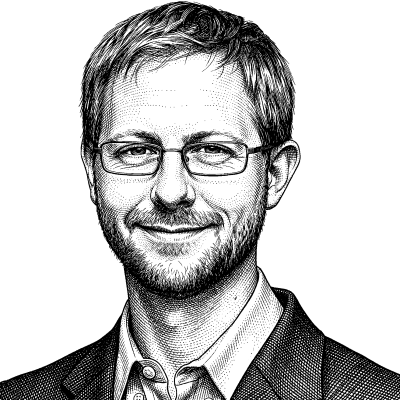
Nathaniel Givens is a multifaceted individual—a writer, entrepreneur, and tech worker with a diverse academic background. He holds degrees in mathematics from the University of Richmond, systems engineering from the University of Virginia, and economics from the University of Michigan. Givens’s work explores the intersection of technology, faith, and society, particularly within the Mormon Transhumanist Association (MTA) context. Givens is an active blogger, operating “Difficult Run,” which focuses on politics, policy, and philosophy, and “The Loose Canon,” dedicated to science fiction. He also contributes to various publications, including Times and Seasons , First Things , Real Clear Religion , Meridian , and Utah Politico Hub , sharing his insights on a range of topics. His talks at the MTA conference explore themes like the nature of Zion in Mormon scripture and community, which suggests an interest in how transhumanist concepts may align to theological concepts. In the tech industry, Givens demonstrated entrepreneurial skills as a co-founder of a mobile software development studio in 2011, which was successfully sold in 2015. Currently, he serves as Director of Client Solutions for a boutique software development consultancy, showcasing his expertise in software development and client relations. He resides in Williamsburg, Virginia, with his wife and two children.
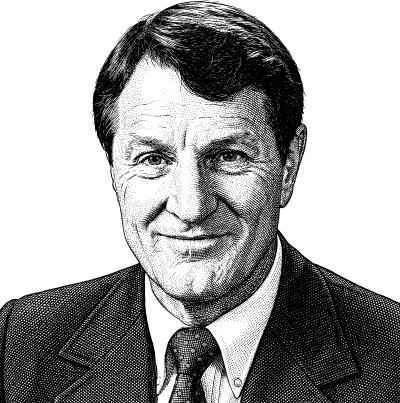
Neal A. Maxwell
Neal Ash Maxwell (1926–2004) was a member of the Quorum of the Twelve Apostles of The Church of Jesus Christ of Latter-day Saints from 1981 until his death. He was known for his eloquent speaking and writing style. Born in Salt Lake City, Maxwell served in World War II and later earned a PhD in political science. He served as Commissioner of the Church Educational System and was Executive Vice President of the University of Utah before his call to the Seventy and later the Twelve. His teachings often explored the tension between absolute truth and fraternal love, drawing from diverse sources including Thomas Merton and Mahatma Gandhi. He taught that love is the only answer to the challenge of possessing truth while remaining fraternal with others who see differently.
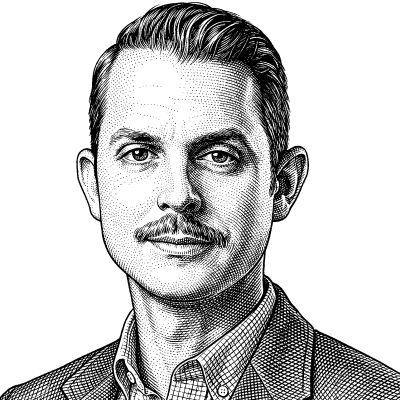
Dr. Neal Davis is a scholar and technologist whose work sits at the intersection of high-performance computing, Web3 architecture, and the philosophy of science. Originally trained in nuclear and chemical engineering, Davis transitioned into scientific computing, eventually earning his PhD from the University of Illinois at Urbana-Champaign. His early career in the physical sciences provided a rigorous foundation for his later focus on the evolution of complexity and the interplay between technology and social trust. As a dedicated educator, Davis has spent over a decade training engineers and scientists to enhance their research through computational literacy. At the University of Illinois, he has led courses in software development, computational mechanics, and research methodology. His pedagogical expertise extends to his work with The Carpentries, where he has been instrumental in bridging the gap between traditional engineering disciplines and modern computer science. In the realm of decentralized computing, Davis has become a key figure within the Urbit ecosystem. He previously led developer experience and education at the Urbit Foundation, where he helped shape the pedagogical framework for a new, secure internet. His technical contributions are significant, including the development of the Jock language for Zorp Corp and work on the Nockchain Zero-Knowledge Virtual Machine (ZKVM), both aimed at advancing sovereign digital infrastructure. Beyond his engineering work, Davis explores the philosophical dimensions of technology through a Mormon Transhumanist lens. In his 2022 MTAConf presentation, Immunology for the Internet Age, he utilized biological metaphors to advocate for more resilient digital architectures. He continues to write on organizational behavior, engineering pedagogy, and the history of the internet at his Substack, Extelligencer, and the Urbit Systems Technical Journal.

Neylan McBaine is a prominent figure in Utah’s women’s advocacy scene and a connector between Mormon history and future-oriented thought. Originally from the East Coast, she graduated from Yale University and then honed her skills as a digital marketer at both large corporations like Walmart and smaller companies like Tea Collection. Additionally, she served as a brand strategist for Bonneville Communications, gaining valuable experience in shaping narratives and messaging. For over a decade, McBaine has been a vocal advocate for women in Utah. She is the founder of the Mormon Women Project, a nonprofit organization dedicated to amplifying the voices of Mormon women by sharing their stories and exploring avenues for greater inclusion within the Church of Jesus Christ of Latter-day Saints. Her commitment to this cause led her to author the book, *Women at Church*. Most recently, McBaine co-founded and serves as the CEO of Better Days 2020, a statewide Utah project commemorating the 150th anniversary of women first voting in Utah and the centennial of the Nineteenth Amendment. This role allows her to combine her marketing expertise with her passion for women’s history, particularly the significant contributions of women in the Church of Jesus Christ of Latter-day Saints to the suffrage movement. She explores the application of women’s history lessons to diverse priorities including those found within transhumanist thought. While now focusing on a broader scope encompassing all Utah women, McBaine acknowledges the importance of her Mormon heritage and its connection to her work. Her perspective bridges the past and the future, making her a unique voice in conversations about progress, faith, and the potential of women.
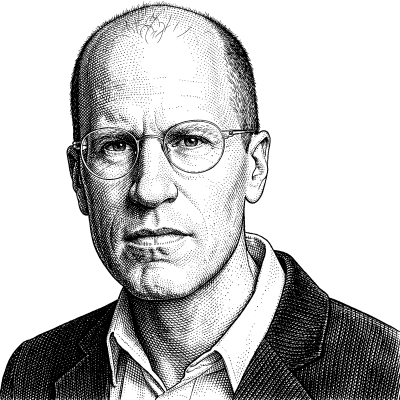
Nick Bostrom
Nick Bostrom (born 1973) is a Swedish-born philosopher known for his work on existential risk, the simulation argument, and superintelligence. He is a professor at Oxford University and director of the Future of Humanity Institute. Bostrom earned his PhD from the London School of Economics and has published influential papers on the anthropic principle, human enhancement ethics, and the future of intelligence. His book Superintelligence: Paths, Dangers, Strategies examines the potential risks and opportunities of artificial general intelligence. His simulation argument—that we might be living in a computer simulation—has generated significant philosophical discussion about the nature of reality and has been compared to religious cosmologies that see the physical world as embedded within a larger spiritual reality.
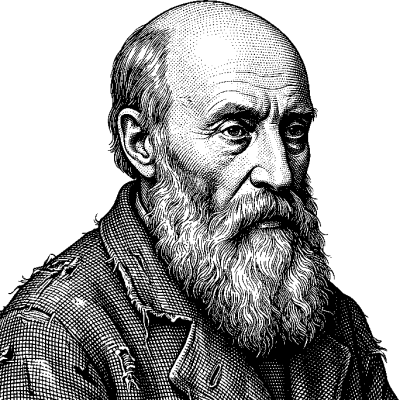
Nikolay Fyodorov
Nikolay Fyodorovich Fyodorov (9 June 1829 – 28 December 1903) was a Russian Orthodox Christian philosopher, religious thinker, and futurologist who founded the intellectual movement known as Russian cosmism—a direct precursor to modern transhumanism. Born as Nikolay Pavlovich Gagarin, the illegitimate son of Prince Pavel Ivanovich Gagarin, he studied at the Richelieu Lyceum in Odessa before serving as a teacher and later joining the Rumyantsev Museum as a librarian in 1878. Called the “Socrates of Moscow,” Fyodorov was respected and admired by Leo Tolstoy, Fyodor Dostoevsky, and Vladimir Solovyov. His major contribution to philosophy was the “Common Task”—humanity’s collective mission to regulate the forces of nature, defeat death, and resurrect ancestors through scientific means. He advocated for radical life extension, physical immortality, and the literal resurrection of the dead, insisting that knowledge without action was worthless. Fyodorov opposed intellectual property and never published during his lifetime. His selected articles were printed posthumously as Philosophy of the Common Task (also known as Philosophy of Physical Resurrection ). His ideas influenced diverse figures, from rocket pioneer Konstantin Tsiolkovsky to composer Alexander Scriabin. He died of pneumonia in 1903 in a shelter for the poor; his grave was destroyed by the Soviet government in 1930. Fyodorov’s synthesis of Orthodox Christianity with scientific ambition for immortality and resurrection makes him a foundational figure for understanding the religious dimensions of transhumanist thought.
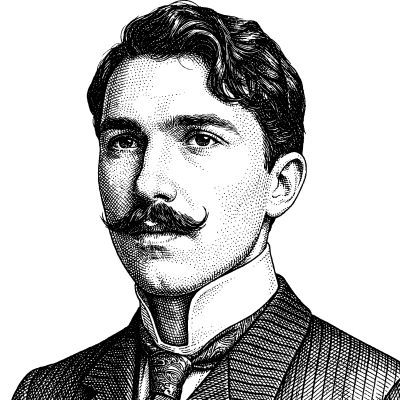
Nikos Kazantzakis
Nikos Kazantzakis (1883–1957) was a Greek writer, philosopher, and one of the most celebrated authors of the 20th century. Born in Heraklion, Crete, during Ottoman rule, he studied law at the University of Athens before pursuing philosophy in Paris under Henri Bergson. His dissertation explored Nietzsche’s philosophy of right and state. Kazantzakis is best known for Zorba the Greek , inspired by his friendship with a worker named Georgios Zorbas. The novel became world-famous after the 1964 film adaptation. His other major works include The Last Temptation of Christ , Christ Recrucified , and his epic poem The Odyssey: A Modern Sequel , which he considered his greatest achievement. He was nominated for the Nobel Prize in Literature nine times, losing to Albert Camus in 1957 by a single vote. Camus later said Kazantzakis deserved the honor “a hundred times more” than himself. His epitaph, inscribed on his tomb overlooking the mountains and sea of Crete, reads: “I hope for nothing. I fear nothing. I am free.”
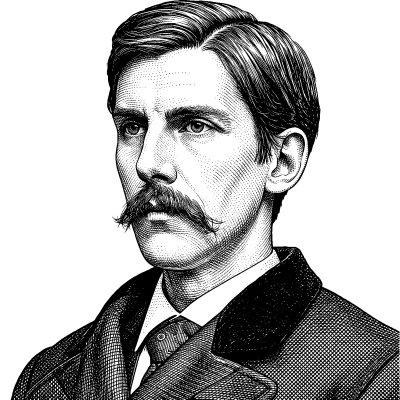
Oliver Wendell Holmes Jr.
Oliver Wendell Holmes Jr. (1841–1935) was an American jurist and legal scholar who served on the United States Supreme Court from 1902 to 1932. Born in Boston, he was the son of the physician and writer Oliver Wendell Holmes Sr. He graduated from Harvard College in 1861, served as a Union officer during the Civil War, and was wounded three times. After the war, he studied at Harvard Law School and entered legal practice in Boston. Holmes combined practice with editing, teaching, and scholarship. In The Common Law (1881), he examined the historical development of legal rules and argued that experience, social conditions, and practical judgments shape the law. He briefly held a professorship at Harvard Law School before joining the Massachusetts Supreme Judicial Court in 1882. He became its chief justice in 1899. President Theodore Roosevelt appointed him to the United States Supreme Court in 1902. His judicial opinions helped shape debates about constitutional interpretation, legislative authority, and freedom of speech. His dissent in Lochner v. New York (1905) opposed imposing a particular economic theory through constitutional adjudication. His later free-speech dissents, including Abrams v. United States (1919), influenced the development of stronger protections for political expression. His writing also contributed to the intellectual foundations of American legal realism. Holmes's record includes decisions that severely restricted individual rights. In Buck v. Bell (1927), he wrote the majority opinion upholding Virginia's compulsory sterilization law, lending judicial authority to eugenics and its coercive treatment of disabled people. His legacy therefore encompasses both influential arguments for intellectual freedom and grave failures to protect vulnerable individuals. He retired in 1932 and died in Washington, D.C., in 1935.
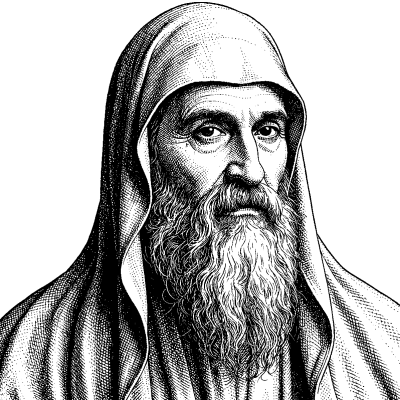
Origen
Origen of Alexandria (c. 184–253 AD) was an early Christian scholar, ascetic, and theologian. He was one of the most influential figures in early Christian theology and philosophy, known for his allegorical interpretation of Scripture. Born to Christian parents in Alexandria, Origen became head of the catechetical school there at age eighteen. He was extraordinarily prolific, producing biblical commentaries, theological treatises, and apologetic works. His Contra Celsum is a major defense of Christianity against pagan criticism. Origen taught that through communion with the divine, humans may rise to become divine—not only in Jesus but in all who believe and enter upon the life that Jesus taught. While some of his speculative ideas were later condemned, his influence on Christian thought, particularly on human potential for transformation and union with God, remains profound.
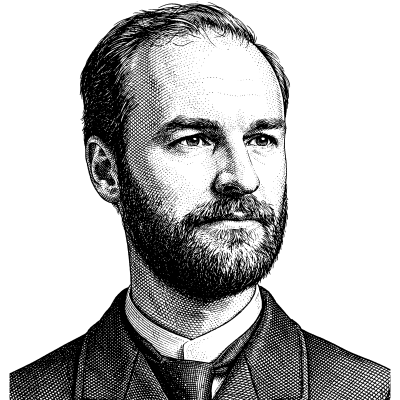
Orson F. Whitney
Orson Ferguson Whitney (1855–1931) was an apostle, historian, and poet who articulated an early vision for Mormon literature. Born in Salt Lake City, he was the son of Horace K. Whitney and Helen Mar Kimball, connecting him to both the Whitney and Kimball families prominent in early Church history. As a young man, Whitney aspired to be an actor, but during his mission to the Eastern States he discovered his calling as a writer and speaker. He served as bishop of the Eighteenth Ward for 28 years and as Assistant Church Historian before his call as an apostle in 1906. He also served in the Salt Lake City Council and as a State Senator. Whitney authored The History of Utah and biographies of Heber C. Kimball and Lorenzo Snow. His epic poem Elias, An Epic of the Ages represents a major work of early Mormon literature. His 1888 sermon “Home Literature” was the first to articulate a vision for distinctively Mormon literary arts. He also wrote hymns including “Savior, Redeemer of My Soul.”