Authors
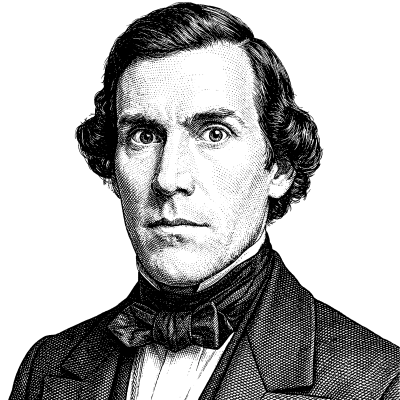
Orson Pratt
Orson Pratt (1811–1881) was an original member of the Quorum of the Twelve Apostles, a mathematician, and a prolific writer for the early Latter-day Saint movement. The younger brother of Parley P. Pratt, he was baptized on his nineteenth birthday in 1830 and ordained an apostle in 1835. He became the last surviving member of the original Twelve. On July 21, 1847, Pratt became the first Latter-day Saint to enter the Salt Lake Valley, arriving three days before the main pioneer company. He preached the first sermon in the valley and dedicated it to the Lord. He and William Clayton also invented a precursor to the modern odometer to measure their journey. Throughout his life, Pratt pursued his strong interest in mathematics and astronomy. He published New and Easy Method of Solution of the Cubic and Biquadratic Equations and Key to the Universe. He served as Church Historian and Recorder, edited Church periodicals, and divided the Book of Mormon and Doctrine and Covenants into verses with cross-references.

Pace Ellsworth is a marketing consultant specializing in small businesses within the technology and finance sectors. Born in Abu Dhabi, United Arab Emirates, as the son of diplomat and linguist Matt Alan Ellsworth, he possesses a global perspective and a keen interest in the intersection of technology and culture. Ellsworth graduated from Brigham Young University with a bachelor’s degree in linguistics and minors in both Spanish and Linguistic Computing. This diverse academic background informs his approach to marketing and communication, particularly within the rapidly evolving tech landscape. He describes himself as an anarcho-transfigurist, demonstrating an interest in the radical potential of technology to reshape society and individual agency. Ellsworth’s core interests lie in classical liberalism and futurism. He emphasizes the importance of individual agency and the power to act according to one’s conscience. He champions solutions that expand freedom and progress away from limitations, especially using technological progress to connect individuals across the planet to collaborate and solve problems.
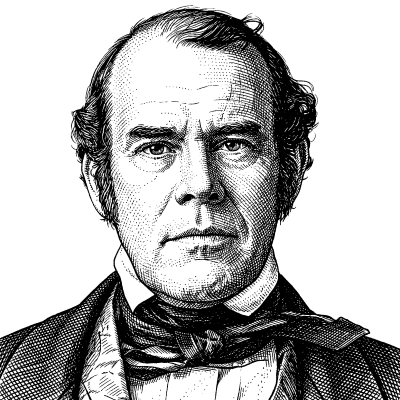
Parley P. Pratt
Parley Parker Pratt was among the most talented and influential figures in the formative period of The Church of Jesus Christ of Latter-day Saints: Apostle, missionary, theologian, poet, polemicist, prisoner, explorer, polygamist, and finally, in the view of many, martyr. Pratt was born in central New York State to Jared Pratt—a weaver thrown out of employment in his trade by the Industrial Revolution—and his wife, Charity. Like the Prophet Joseph Smith, who was two years his senior, Parley P. Pratt grew up in a family on the margins of the rural economy. Jared Pratt moved from place to place as a landless itinerant laborer whose “means to educate his children were very limited,” although they did have access to what Parley later termed an “excellent system of common school education.” Notwithstanding their limited opportunities, two of Jared and Charity Pratt’s five sons, Parley and his younger brother Orson, would become distinguished among the first generation of Latter-day Saints for their intellectual and rhetorical powers. Parley compensated for the deficiencies in his formal education through an early and avid appetite for reading: “I always loved a book; . . . a book at every leisure moment of my life.” Prominent among these readings was the Bible, which Pratt began to study at the age of seven under the direction of his mother. From this literary self-education, Pratt derived a broad and ready general knowledge and an uncommon facility in writing and public speaking. Following his 1830 conversion to the Latter-day Saint faith (characteristically, through reading the Book of Mormon ), Pratt devoted the remainder of his life to Church service. Although he was frequently absent from Church headquarters on numerous missions in the United States, Canada, Britain, and Chile, he still managed to play a prominent role in many of the key events of early Latter-day Saint history: the establishment of a body of Church members in the neighborhood of Kirtland, Ohio, in 1830; the settlement of Jackson County, Missouri, in 1832, and the forced expulsion the following year; the Zion’s Camp relief expedition; the crisis attending the collapse of the Kirtland realestate bubble and the failure of the Kirtland Safety Society in 1837; the Missouri troubles of 1838–39 (as a consequence of which Pratt was imprisoned for eight months, a longer period than any other Church leader); the leadership crisis following the assassination of Joseph Smith in 1844; the expulsion from Nauvoo in 1846; and the westward migration to the Great Salt Lake Valley in 1847. Most importantly, Pratt’s active pen generated a series of books and pamphlets that included the first and most influential systematic statement of Latter-day Saint beliefs ( A Voice of Warning , 1837), the defining Mormon persecution narrative ( History of the Late Persecution Inflicted by the State of Missouri upon the Mormons , 1839), and the foremost nineteenthcentury theological treatise ( Key to the Science of Theology , 1855). (Grow, Matthew J.; Armstrong, Gregory K.; Siler, Dennis J.; Geary, Edward A.; and Givens, Terryl L. (2012) “ Parley P. Pratt: The Apostle Paul of Mormonism and Parley P. Pratt and the Making of Mormonism ,” BYU Studies : Vol. 51: Iss. 2, Article 13.)

Peter Wicks is an atheist transhumanist who presented a critique of religious transhumanism at the MTAConf 2013. He holds a PhD in Mathematics from Cambridge, England, earned in 1991. Since receiving his doctorate, Wicks has worked primarily at the European Commission. His responsibilities there have encompassed a range of policy areas, from environmental policy to research on industrial accidents. In 2011, he took unpaid leave from the Commission to explore alternative career opportunities. In recent years, Wicks has developed a strong interest in the philosophical implications of emerging technologies. He broadly supports the goals of the transhumanist movement. Although raised as an Anglican Christian, he now identifies as an atheist.
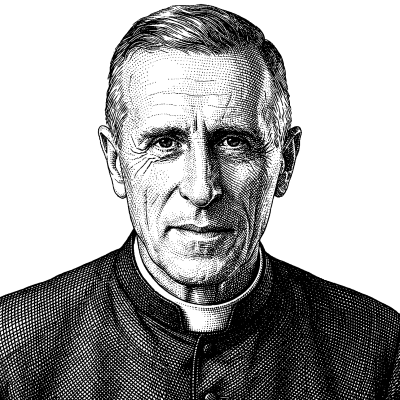
Pierre Teilhard de Chardin
Pierre Teilhard de Chardin (1 May 1881 – 10 April 1955) was a French Jesuit priest, paleontologist, philosopher, and mystic whose synthesis of science and Christian faith profoundly influenced twentieth-century religious thought. Born in Auvergne, France, he was distantly related to both Voltaire and Blaise Pascal. Teilhard joined the Jesuit order in 1899 and was ordained to the priesthood in 1911. During World War I, he chose to serve as a stretcher bearer rather than a chaplain, earning the Legion of Honour for his courage. His paleontological work took him to China, where he participated in the 1929 discovery of Peking Man ( Homo erectus pekinensis ), establishing its geological era at approximately 750,000 years ago. His major works, The Divine Milieu and The Phenomenon of Man , written in the 1920s and ’30s, were forbidden publication during his lifetime by Jesuit authorities due to his evolutionary reinterpretation of Christian doctrine. Teilhard developed the concept of the Omega Point—a theorized future event toward which the universe spirals in increasing complexity and consciousness, which he identified with Christ. Along with Vladimir Vernadsky, he contributed to developing the concept of the noosphere—a sphere of human thought encircling the earth. Teilhard’s earth-affirming theology has grown in acceptance since his death, influencing Vatican II’s “The Church in the Modern World” and being cited by Pope Francis in Laudato si’ . His vision of cosmic evolution toward divine unity resonates deeply with transhumanist themes of human transformation and technological transcendence.
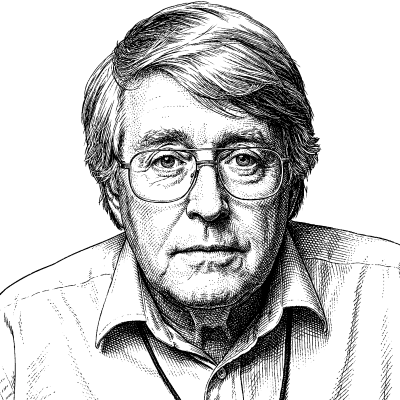
Roger Dennis Hansen is a professional water resources engineer, historian, and a contemplative figure within the Mormon Transhumanist movement. With a career spanning several decades in hydraulic engineering and international development, Hansen has carved out a unique niche by bridging the technical rigors of environmental science with the expansive cosmological visions of Latter-day Saint theology. Born and raised in the American West, Hansen’s early life was informed by the cultural and physical landscapes of the Mormon corridor. He pursued a rigorous academic path, earning a Bachelor of Science and a Master of Science in Civil and Environmental Engineering from Utah State University, followed by a PhD from the University of Colorado. Professionally, he distinguished himself through his work with the United States Bureau of Reclamation and various international water management projects in the Middle East and Africa, focusing on the sustainable use of the earth’s most vital resource. Beyond his engineering achievements, Hansen is a dedicated historian and author. His research often centers on the intersection of nineteenth-century Mormonism and the development of the American West. He has authored several works, including The Mormon New World Order, which examines the radical social and theological structures envisioned by early Church leaders. Hansen views these historical efforts not as relics of the past, but as a trajectory toward a future defined by communal progression and technological stewardship. In his 2014 presentation at the Mormon Transhumanist Association Conference, titled “What If Joseph Smith Jr. Had Lived Longer?”, Hansen explored the counterfactual history of a long-lived Joseph Smith. He posited that the Prophet’s trajectory was leaning toward an increasingly sophisticated, high-bandwidth “Pure Language” and a radical restructuring of society. Hansen suggested that Smith’s vision of a “global brain” or a unified human consciousness—achieved through spiritual and intellectual refinement—parallels modern transhumanist aspirations for enhanced communication and collective intelligence. Hansen’s work is characterized by the belief that science and religion are complementary tools for understanding the cosmos. He maintains that the Mormon tradition, with its emphasis on the eternal nature of matter and the potential for human deification, provides an ideal framework for embracing transhumanist goals.

Rachael Givens Johnson is a historian and assistant professor of Interdisciplinary Humanities at Brigham Young University. Her work explores the intersections of embodiment, religious materialism, and transatlantic cultural history. Having earned her Ph.D. in history from the University of Virginia, her scholarship primarily examines peninsular and viceregal Spain during the early modern period, shedding light on the evolving relationship between the physical human body and the sacred. At the core of Dr. Johnson’s academic pursuits is a fascination with how historical, sensory, and theological shifts impact human experience. She is currently developing a monograph that tracks the changing models of the human sensorium during the Spanish Enlightenment. This research investigates how altered perceptions of sensory experience influenced devotional practices—including the use of physical and mental imagery, religious processions, and sensory technologies—ultimately reshaping notions of subjectivity and intersubjectivity. Furthermore, her scholarly projects extend to late-nineteenth-century transatlantic discourse regarding the deliberate construction of a “modern religion” and the multivalent understandings of “materialism.” Her academic writings have been featured in prominent journals, reflecting her deep engagement with historical theology. In Eighteenth-Century Studies (2024), she explored reformed social imaginaries of charity, while her 2023 work in the Bulletin for Spanish and Portuguese Historical Studies analyzed shifting conceptions of the sacred and the profane in the Spanish Atlantic. Dr. Johnson’s earlier publications also tackle intriguing intersections of gender and theology, notably her 2015 piece on Mary Wollstonecraft and the “sexless soul” in Religion in the Age of Enlightenment . Dr. Johnson core beliefs resonate with themes highly relevant to the Mormon Transhumanist Association, particularly the theological implications of embodiment and technological progress. At MTAConf 2024, she delivered a presentation titled Incarnation: Some Theological-Historical Notes, bringing historical and theological depth to contemporary discussions of physical existence, human potential, and divine nature. Her continued engagement with the philosophical challenges of modern technology is evident in her 2025 presentation, “Retrieving the Humanities in the Age of LLMs,” co-presented at Organized Intelligence in Salt Lake City. Additionally, she has contributed to discourse on Mormonism’s unique physical theology, presenting on Latter-day Saint material metaphysics at UC Berkeley in 2024. Through her teaching—which spans Latin American Humanities, Baroque and Enlightened Catholicism, and the specific study of embodiment and emotion—Dr. Johnson continues to foster a rigorous dialogue on how humanity’s physical, spiritual, and intellectual pursuits intertwine across centuries.

Rachel Stone is a civic technologist and data strategist who has been instrumental in modernizing governmental institutions through human-centered design and data-sharing initiatives. She earned her degree in Political Science with a minor in Computer Science from Brigham Young University, driven by a deep interest in the intersection of technology, government, and human progress. During her undergraduate studies, she gained early hands-on experience helping her local city council improve IT and e-service delivery. Stone’s work is heavily influenced by a passion for e-governance, crowdsourcing, and direct democracy. Drawing inspiration from democracy activists like Pia Mancini and technologists like Beth Novick, she has consistently advocated for a top-down redesign of governmental processes to better meet the demands of the twenty-first century. In 2018, Stone was selected as a Product Fellow for Coding it Forward, a prestigious civic tech program, where she was placed at the U.S. Department of State. There, she collaborated on interdisciplinary teams to redesign web platforms and build impact maps—an experience that cemented her belief in the necessity of bringing dedicated product managers, designers, and user experience researchers into public service. Her technical acumen and proactive initiative soon brought her to the State of Utah’s Governor’s Office of Management and Budget. Tasked with launching a massive data-sharing project, Stone recognized a critical gap in state leadership and successfully advocated to become Utah’s first Chief Data Officer. In this role, she championed the state’s Social Service Blueprint Solution, a pioneering effort that broke down institutional silos to improve the effectiveness of key social service programs. Later, Stone transitioned to a role as a Product Manager for Utah’s Department of Government Operations Division of Technology Services, where she continued to spearhead user research and optimize digital service delivery. Within the transhumanist and techno-progressive communities, Stone is recognized for her forward-looking approach to civic architecture. At the MTAConf 2015, she presented Ask Siri: A Glimpse of Tomorrow’s Technological Government . In her presentation, Stone articulated a bold vision for integrating technological advancement into traditional governmental institutions, emphasizing transparency, e-participation, and the unique potential of technology to elevate the human condition through intelligent, responsive governance.
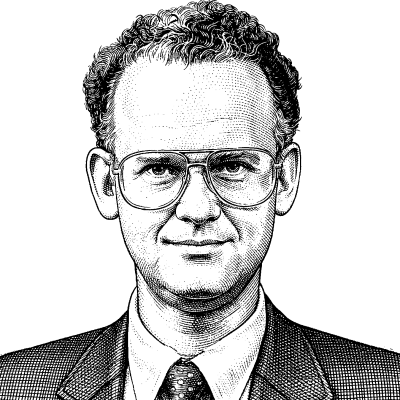
Ralph Merkle is a prominent figure in the field of nanotechnology, particularly known for his work on molecular nanotechnology and its potential applications in medicine and manufacturing. His research focuses on the development of molecular robotics and nanomedicine, envisioning a future where nanotechnology can significantly extend human health and lifespan. Merkle has a keen interest in the intersection of science, technology, and transhumanist ideals, evident in his willingness to discuss topics such as radical life extension and the potential for human advancement beyond current limitations. His engagement with the Mormon Transhumanist Association suggests an interest in exploring the spiritual and philosophical implications of advanced technologies, particularly in the context of concepts like exaltation and the potential for human beings to evolve. Merkle’s presentation at the MTAConf 2015 highlighted exponential trends in manufacturing, precision, and cost reduction, specifically referencing advances in 3D printing and its potential to revolutionize production processes. He draws parallels between the rise of 3D printing and the computer revolution, envisioning a future where customized manufacturing becomes increasingly accessible. He has deep technical knowledge with subjects such as extrusion, and printhead mechanics.
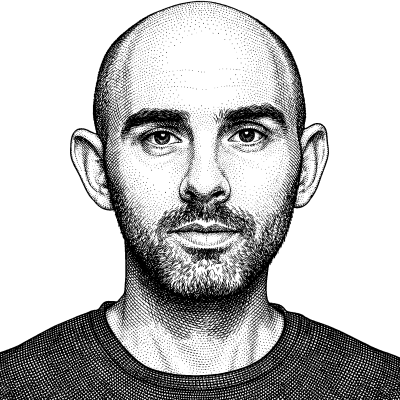
Ralph Spencer Steenblik is an emerging voice in the field of architecture, exploring innovative intersections of technology, urbanism, and sustainability. As a graduate student at the Southern California Institute of Architecture (SCI-Arc), his academic focus centers on neuromorphic architecture and compact urbanism—areas that reflect a deep interest in the future of human habitats. Steenblik’s work demonstrates a commitment to moving beyond traditional paradigms of urban development. He advocates for an “ecosystem mentality” that emphasizes the transformation of waste products into resources, promoting true sustainability. His research draws inspiration from decentralized organizational models like swarm theory, suggesting a vision of urban spaces as interconnected, self-organizing systems. His presentation at the Transhumanism and Spirituality 2010 conference explored transhumanism as not just a merging of humans and machines but as a “superorganism” of the human family. This perspective suggests a belief that collective action and a unified approach can unlock new potentials for societal progress.