Authors

Micah Redding is a multifaceted individual with a diverse background. He spent his formative years as a preacher’s kid before transitioning into a career as a rock musician for eight years. He has also had a mysterious experience involving a high-speed pursuit of a spy plane. Currently, Micah focuses on software development and writing, exploring the intersection of human values and technology. He is particularly interested in exploring Christian views of resurrection and how they apply to transhumanism. Micah is a key figure in the Christian Transhumanist movement. He is a founder, board member, and the Executive Director of the Christian Transhumanist Association.

Michael Ferguson is a neuroscientist, researcher, and educator whose work explores the biological foundations of spiritual experience and the intersection of cognitive science and theology. A prominent voice in the dialogue between Mormonism and transhumanism, Dr. Ferguson is widely recognized for his pioneering research into the “religious brain,” seeking to understand how profound spiritual states are mapped within the human nervous system. Dr. Ferguson’s academic journey began with a focus on physics and communication, but his interest soon shifted toward the complexities of the human mind. He earned his Ph.D. in Bioengineering from the University of Utah, where his doctoral research gained international attention. During this period, he led a landmark study using functional magnetic resonance imaging (fMRI) to monitor the brain activity of devout Latter-day Saints as they reported “feeling the Spirit.” This research identified specific activation in the nucleus accumbens—a region of the brain associated with reward and dopamine—suggesting that spiritual experiences leverage the same neural circuits involved in music, love, and other deeply meaningful stimuli. Following his doctoral work, Dr. Ferguson completed postdoctoral fellowships at Cornell University and Beth Israel Deaconess Medical Center. He currently serves as an Instructor in Neurology at Harvard Medical School and as a researcher at the Center for Brain Circuit Therapeutics at Brigham and Women’s Hospital. His clinical and research interests have expanded to include the use of brain lesion network mapping and deep brain stimulation to explore the neural circuits associated with religiosity, spirituality, and various neuropsychiatric conditions. A frequent contributor to the Mormon Transhumanist Association, Dr. Ferguson presented “The Religious Brain Project” at the MTAConf 2014. In this and other presentations, he argues that a scientific understanding of spiritual mechanics does not diminish their sanctity but rather provides a “technological” vocabulary for the soul. He posits that by understanding the neural architecture of transcendence, humanity can better cultivate profound experiences of wonder, connection, and ethical transformation.
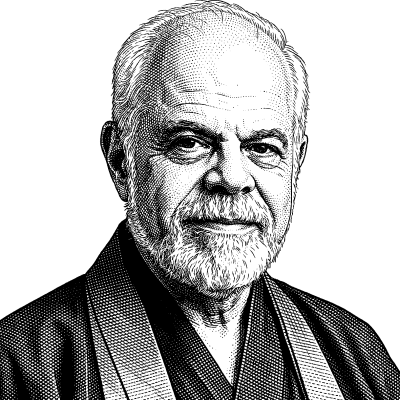
Michael LaTorra
Michael LaTorra (1953-2026) was a retired professor of English at New Mexico State University. He was actively involved in the transhumanist community, having previously served on the boards of Humanity Plus (formerly the World Transhumanist Association) and the Institute for Ethics and Emerging Technologies. His academic work explored the intersection of transhumanism, religion, and spirituality. LaTorra’s publications include the paper “Trans Spirit, Religion, Spirituality, and Transhumanism” in the Journal of Evolution and Technology , and the book A Warrior Blends with Life, A Modern Tao . His presentation at the MTAConf 2014, titled “Where is Heaven?”, delves into the philosophical aspects of transhumanism, exploring the concepts of meliorism, satisficing, and the Buddhist Two Truths doctrine in relation to achieving ultimate reality. Beyond his academic pursuits, LaTorra was an ordained Zen Buddhist priest and previously served as the abbot of the Zen Center of Las Cruces in New Mexico. He was also a formal devotee of Avatar Adi Da Samraj, further underscoring his deep engagement with spiritual traditions.
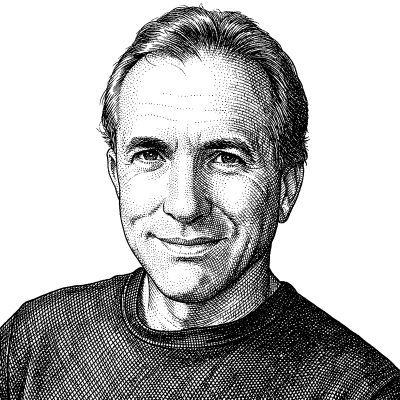
Michael Shermer
Michael Brant Shermer (born 1954) is an American science writer, historian of science, and founder of The Skeptics Society. His work explores the intersection of science, skepticism, and belief. Shermer earned his PhD in the history of science from Claremont Graduate University and has written extensively on evolution, pseudoscience, and the psychology of belief. He founded Skeptic Magazine and has been a columnist for Scientific American . While generally skeptical of supernatural claims, Shermer has engaged thoughtfully with questions about the future of intelligence and technology, including what he calls “Shermer’s Last Law”—that any sufficiently advanced extraterrestrial intelligence would be indistinguishable from God.
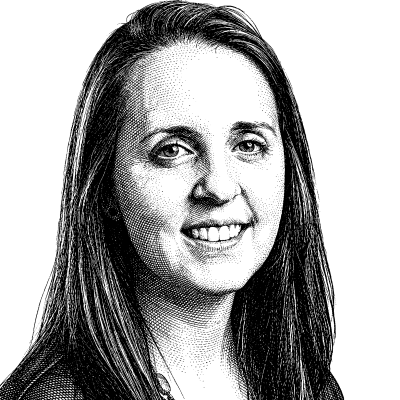
Michaelann Gardner is a speaker who has presented at several Mormon Transhumanist Association conferences. Her presentation at the MTAConf 2019 focused on the impact of family history and ancestral trauma on personal well-being and resilience, particularly in the context of emotional vulnerability and mental health. Gardner’s talk explored the challenges of confronting difficult family narratives and embracing personal messiness and complexity. She drew on personal experiences related to her grandfather, Bert Gardner, and great-grandfather, both of whom struggled with alcoholism and created instability for their families. She connects these family dynamics to broader themes of emotional expression, financial security, and anxiety. She integrates insights from therapy and psychology, referencing research that suggests building resilience through understanding one’s family history. Her work appears to be a combination of personal reflection with family systems and positive psychology.

Michelle Glauser is a software engineer and advocate for diversity and inclusion in the tech industry. Growing up in a large Mormon family in Salt Lake City, she nurtured her early interest in computers through school clubs and experimenting with Visual Basic and HTML. Despite her aptitude, a career in tech didn’t initially seem attainable. After struggling in San Francisco, Michelle discovered her passion for software engineering through an intensive training program, a move that dramatically improved her career prospects and income. This experience opened her eyes to the significant lack of diversity in the tech world, particularly the underrepresentation of women, Latinos, and Black individuals. Driven to address this imbalance, Michelle began organizing meetups and compiling open-source learning resources for aspiring coders. In 2015, she co-created the viral hashtag campaign, #ILookLikeAnEngineer, in response to stereotypes faced by women in tech. The campaign sparked a global conversation about representation and challenged narrow perceptions of what an engineer should be. Michelle is also concerned about the socio-economic disparities in the Bay Area, particularly the displacement of vulnerable populations amidst the tech boom. Her work highlights the potential of technology to empower marginalized groups and promote a more equitable future, aligning with transhumanist ideals of using technology to improve the human condition. Her journey from a Mormon upbringing to tech advocate illustrates a unique perspective on the intersection of faith, technology, and social justice.
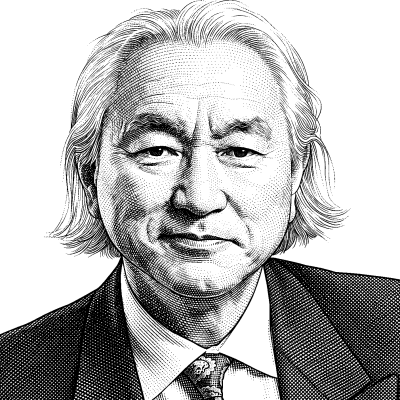
Michio Kaku
Michio Kaku (born 1947) is an American theoretical physicist, futurist, and one of the most prominent science communicators of the contemporary era. A co-founder of string field theory, Kaku has spent his career exploring the fundamental nature of the universe while simultaneously making advanced physics accessible to millions through bestselling books, television programs, and public lectures. Born in San Jose, California, to Japanese-American parents, Kaku demonstrated exceptional scientific aptitude from a young age, reportedly building a particle accelerator in his garage as a teenager. He earned his Ph.D. from the University of California, Berkeley, and has held a long-standing professorship at the City College of New York. His academic work centers on string theory and its quest for a unified “Theory of Everything”—a single framework that would reconcile all fundamental forces of nature. Beyond the academy, Kaku has authored numerous popular science books, including Hyperspace , The Future of the Mind , Physics of the Impossible , and The Future of Humanity , which explore topics ranging from higher dimensions to the long-term trajectory of human civilization. Kaku’s futurism resonates strongly with several themes central to Mormon Transhumanism. He has articulated a vision of humanity’s future in which civilizations advance through progressively higher types on the Kardashev scale, eventually harnessing the energy of entire galaxies and potentially mastering the fabric of spacetime itself. His discussions of mind uploading, life extension, terraforming, and the colonization of space align with the transhumanist conviction that scientific knowledge and technological power can serve as means to realize extraordinary human potential. His concept of a “Type III” or even higher civilization—beings with godlike power over nature—echoes, in secular terms, the Mormon Transhumanist affirmation that humanity is invited to become compassionate creators. Where Kaku’s vision diverges from Mormon Transhumanism is primarily in its philosophical framing rather than its trajectory. Kaku generally approaches these questions from a naturalistic perspective, expressing admiration for Einstein’s impersonal “God of Spinoza”—a sense of cosmic order and harmony—rather than affirming a personal, relational God or the reality of divine grace working through human progress. Mormon Transhumanism would locate humanity’s extraordinary technological and creative future within a framework of covenant, prophetic authority, and trust in Christ, seeing these advances not merely as emergent properties of intelligence but as ordained means toward theosis. Nonetheless, Kaku’s expansive optimism about human potential and his insistence that the laws of physics permit civilizations of astonishing scope and power make his work a compelling conversation partner for anyone exploring the intersection of science, human destiny, and the divine.

Mike Perry
R. Michael Perry , PhD (1947–2026), was a computer scientist, author, and prominent figure in the cryonics and transhumanist movements. For nearly four decades, he served as Care Services Manager at the Alcor Life Extension Foundation in Scottsdale, Arizona, where he oversaw the stabilization and long-term maintenance of cryopreserved patients. On April 15, 2026, Dr. Perry was involved in a fatal motor vehicle accident as a pedestrian. True to his lifelong convictions, Alcor’s DART team immediately took him into care, and he received an excellent cryopreservation. He is now an Alcor patient, continuing his commitment to technological resurrection in the facility he served for so long. Beyond his technical role at Alcor, Perry was a prolific writer and philosopher. He is the author of Forever for All: Moral Philosophy, Cryonics, and the Scientific Prospects for Immortality (2000), a comprehensive work that argues for the ethical necessity and scientific feasibility of achieving physical immortality. His philosophical outlook, which he described as “Christian Atheist Universal Immortalism,” sought to bridge the gap between religious aspirations for an afterlife and the technological means to achieve it. He posited that a future superintelligence could utilize advanced simulations and information-recovery techniques to resurrect everyone who has ever lived, a concept rooted in the traditions of Russian Cosmism. Perry’s influence extended deeply into the organizational leadership of the transhumanist community. He was a cofounder and president of the Society for Universal Immortalism and an ordained minister for the Society for Venturism, where he performed ceremonies reflecting a commitment to the scientific conquest of death. Through his long-running column “For the Record” in Cryonics magazine, he became the primary historian of the cryonics movement, meticulously documenting its early failures and successes so that the lessons of the past could inform the technology of the future. Dr. Perry was a dedicated advocate for the “techno-psycho-cyber-heaven”—a future state dominated by benevolence and universal life extension. Gentle, soft-spoken, and principled, he was an anchor in the cryonics community for decades. He came in early, stayed late, and often remained at the facility for days at a time to ensure Alcor’s patients were always properly cared for. The cryonics movement owes him a debt of gratitude that cannot be overstated. Now, after watching over Alcor’s patients for nearly forty years, it is their turn to watch over him as he rests in cryopreservation, awaiting the future he worked so tirelessly to help create. His life’s work remains a testament to the belief that death is a problem to be solved through the rigorous application of science, mathematics, and a hopeful, rational philosophy.
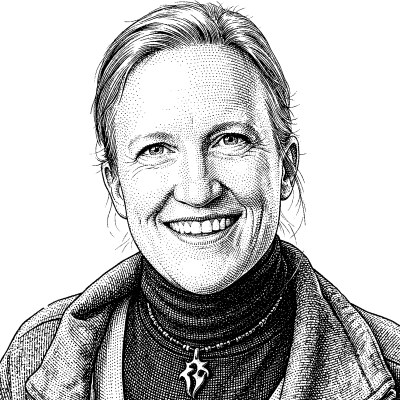
Nancy Fulda is an American computer scientist, researcher, and award-winning science fiction author who specializes in artificial intelligence and natural language processing. She holds both Bachelor’s and Master’s degrees from Brigham Young University. Her technical career began at the German Aerospace Center (DLR), where she worked on autonomous robotic systems. She later pursued doctoral research at the University of Utah, focusing on the cognitive aspects of human-machine interaction and the ethical implications of emerging technologies. As a writer, Fulda has gained significant acclaim for her ability to make complex technical concepts relatable. Her fiction, including the Hugo and Nebula Award-nominated short story “Movement,” has been published in prominent magazines such as Asimov’s Science Fiction and Analog . Her literary work often explores the intersection of neurodiversity, machine intelligence, and the future of human consciousness, positioning her as an important link between rigorous engineering and speculative humanism. Fulda is the founder of AnthroCloud, a venture aimed at developing intelligent systems that prioritize human agency. She has consistently advocated for a balanced understanding of machine learning, serving in various data science roles where she critiques both the utopian hype and dystopian alarmism surrounding AI. Her work emphasizes that while AI can analyze vast amounts of data, it remains a tool that requires human moral oversight and creative direction. At the 2024 Mormon Transhumanist Association Conference, Fulda delivered the keynote address titled “Fact, Fiction, and Fantasy: Demystifying AI Hype in the Information Age.” She urged the audience to look beyond the “magic” of Large Language Models and understand their mechanical realities. Fulda argues that true progress lies in using technology to enhance, rather than replace, the human soul. Today, she continues to influence the field by advocating for a future where digital advancement and spiritual purpose coexist.

Natasha Vita-More is a distinguished designer and theorist recognized for her pioneering work in transhumanism. She currently serves as a professor at the University of Advancing Technology and holds the position of Chairman of Humanity Plus. Furthermore, she is a fellow of the Institute for Ethics and Emerging Technologies, solidifying her standing as a key figure in the field. Vita-More’s academic pursuits culminated in a doctorate from the Planetary Collegium, University of Plymouth, where her research centered on human enhancement and radical life extension. She is the designer and author of the influential ‘Platform Diverse Body Substrate Autonomous Person.’ Her contributions extend to published works, most notably as co-editor of The Transhumanist Reader: Classical and Contemporary Essays on the Science, Technology, and Philosophy of the Human Future (2013). A driving force in the transhumanist movement, Vita-More authored the Transhuman Manifesto in 1983 and subsequently founded Transhumanist Arts and Culture in 1993. She has also held leadership positions, including chair of the Vital Progress Summit 2004, which fostered crucial dialogue on human enhancement, and president of the Extropy Institute from 2002 to 2006. Her work has been showcased at prestigious venues, including the National Center for Contemporary Arts and the Telluride Film Festival. While primarily involved in the secular transhumanist movement, Vita-More brings her considerable expertise to events like the Mormon Transhumanist Association conference, reflecting the broader relevance of her insights regarding the future of humanity and the ethical considerations surrounding technological advancements.