Videos

Showing 41–50 of 276
Blockchain: Surety and the Hope for a Better World
18:19

Scott Stornetta

Blockchain: Surety and the Hope for a Better World

Dr. Scott Stornetta, whose pre-Bitcoin research constitutes three of the eight citations in the Bitcoin white paper, shares the spiritual backstory of blockchain’s invention. While working to prove that immutable digital records were impossible without trusted central authorities, he experienced a breakthrough insight: “What if we made the entire world the witness?” He frames blockchain as an “inverse panopticon” where collective witnessing eliminates the need to trust privileged authorities. Drawing on Latter-day Saint scripture about surety and abundance, Stornetta cautions against technological utopianism while affirming blockchain’s potential to end asymmetric information access—yet emphasizes that empathy, not technology, is the true superpower that triumphs over every obstruction.

Panel Discussion w Dr. Neal Davis, Laura Shin and Dr. Tomicah Tillemann, moderated
46:55

Panel Discussion w Dr. Neal Davis, Laura Shin and Dr. Tomicah Tillemann, moderated

A panel discussion featuring Dr. Tomicah Tillemann, Laura Shin, and Dr. Neal Davis explores the intersection of faith, blockchain technology, and the future of society. Tillemann, whose grandmother was a Holocaust survivor who found reconciliation in Mormonism’s teaching that Christ is Jehovah, discusses how blockchain enables new forms of organization beyond the traditional corporation. Shin, host of the Unchained podcast, observes parallels between Mormon values and blockchain’s emphasis on decentralization and inclusivity. Davis advocates for transhumanism that emphasizes the “humanism,” using technology to fulfill rather than supersede human nature. The panelists offer advice to Mormon transhumanists: occupy the unique intersection of faith and technology where breakthroughs occur, go all in on faith, and move from descriptive aspiration to prescriptive action by building concrete projects.
Can Provably Fair Trade Be a Technology of Spiritual Liberation?
19:14

Vinay Gupta

Can Provably Fair Trade Be a Technology of Spiritual Liberation?

Vinay Gupta, founder of the blockchain company Materium and inventor of the Hexayurt refugee shelter, introduces the concept of “moral computing”—using technology to address the “moral toxins” that accumulate when consumers unknowingly support exploitative labor practices or environmental harm. He argues that while supply chain information about products already exists, it remains siloed within distant organizations, leaving consumers unable to make informed ethical choices. By combining blockchain’s transparency with Gandhian principles of fair trade, Gupta envisions a future where purchasing automatically triggers offsetting actions—like carbon credits—and where machine-readable specifications allow people to automate their moral preferences, filtering out goods produced under questionable conditions.

Closing Session: a discussion on COVID-19 and the interconnectedness of our world
34:39

Closing Session: a discussion on COVID-19 and the interconnectedness of our world

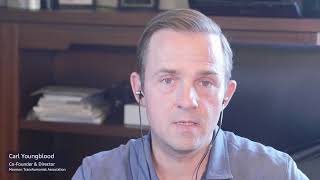
This closing session roundtable discussion from the 2020 MTA conference explores the COVID-19 pandemic’s effects on global interconnectedness. Participants highlight encouraging developments—from a seventeen-year-old creating a widely-used pandemic dashboard to international cooperation on medical technology and the rapid expansion of remote work and education. The conversation turns to what the MTA can do during the crisis, with participants emphasizing the need to balance transhumanist optimism with genuine empathy for those suffering, the importance of understanding exponential growth’s implications, and the opportunity to strengthen the broader transhumanist movement through increased virtual collaboration.