Opinion

Last General Conference Sermons of Church Presidents

Lincoln Cannon
Lincoln Cannon

Lincoln Cannon is an American philosopher and technologist who co-founded the Mormon Transhumanist Association in 2006, serving as its president from 2006 to 2016. He is a leading advocate of technological evolution and postsecular religion, combining software engineering expertise with degrees in philosophy and business. Cannon is also a founder and board member of the Christian Transhumanist Association. He formulated the New God Argument, a logical argument for faith in God that has become popular among religious transhumanists. His academic work includes “Mormonism Mandates Transhumanism” published in Religion and Human Enhancement: Death, Values, and Morality (Palgrave Macmillan, 2017) and “Transfigurism: A Future of Religion as Exemplified by Religious Transhumanists” published in The Transhumanism Handbook (Springer Verlag, 2019). Mormon transhumanism, as articulated by Cannon, holds that humanity should learn how to be compassionate creators. This idea is central to the Mormon theological tradition, which provides a religious framework consistent with naturalism and supportive of human transformation. Cannon’s work bridges religious faith with scientific advancement, advocating for the ethical use of technology to extend human abilities in ways consistent with a religious worldview.

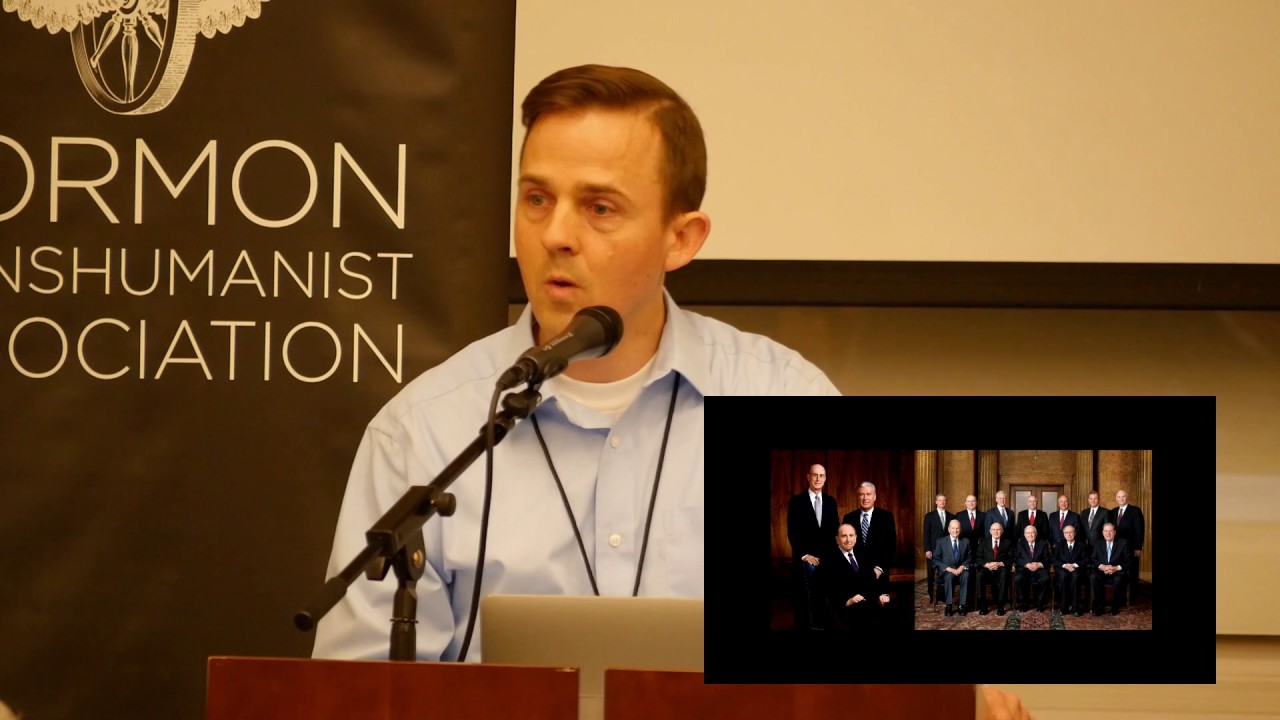
The Church of Jesus Christ of Latter-day Saints (LDS Church), the largest Mormon denomination, has had 16 presidents since and including Joseph Smith, the founding prophet of Mormonism.

My favorite sermon delivered by Joseph Smith happens to have been the last sermon he delivered to Mormons gathered for a general conference of the Church. And I thought it would be interesting to go back, identify, and read the last sermons delivered to a general conference of the Church by its other presidents over the last two centuries.


Read more →

The Gospel of Tron

Caleb Jones
Caleb Jones

Caleb Jones is a speaker and thinker deeply engaged with the intersection of Mormon theology, transhumanism, and intergenerational connection. His work focuses on the spirit of Elijah, as referenced in Malachi, and its implications for creating faith-based connections across generations, both living and deceased. He advocates for a broader interpretation of this principle, extending it beyond traditional temple work to encompass a reconciliation of ancient wisdom with modernity. Jones draws upon G.K. Chesterton’s concept of the “democracy of the dead” to frame his exploration of tradition and remembrance. He posits that our ancestors, through their artifacts and influence, continue to participate in the present. He sees the redemption of the dead through these artifacts—books, music, laws, traditions—as a collective human endeavor involving various disciplines such as literary scholarship, archaeology, and religious studies. His perspective emphasizes the importance of engaging with the past to inform and enrich the future, particularly within the context of Mormonism and its emphasis on family history and genealogical work. Jones champions seeking a healthy balance and ongoing reconciliation of the hearts and minds of the dead and dying with the hearts and minds of the living, to redeem rising generations.

In an early blog post to the Transfigurist, I wrote some thoughts on the relationship to faith, creation, and programming:

Creation becomes divine when emergence exceeds control.

What is particularly interesting about programming is that the creative process occurs in the abstract only. Yes, the program is stored on disk in the form of magnetic variations, but even this is invisible to the human eye and is not the purpose for which the program is created. A program is not the series of characters typed by the programmer. Rather the substance of a program is thought itself, concept described. Working this close to raw thought not just at the beginning of the creative process but all throughout the program’s creation requires a high level of concentration and mental exertion but likewise delivers a high level of satisfaction and joy.

While the details of exactly what ‘spiritual creation’ is may be unclear, this process of creating implementable concepts and structures mentally surely must play a pivotal role. Thus, as we practice and participate in the process of creation and exercise our faculties (mental, physical, and spiritual), we draw nearer to God and learn more about the nature of eternity. This is why programming is, and many other creative processes are, so joyful. The creative process is itself a symbol of Eternity.

Read more →

A Vision Worth Believing In: Transhumanism, Driven By Spiritual and Ethical Progress

Jon Ogden
Jon Ogden

Jon Ogden is an author, educator, and entrepreneur focused on the intersection of faith, family, and technology. He is the co-founder of Uplift Kids, a platform providing families with a lesson library and curriculum designed to foster spiritual health and well-being within the home. Ogden is also the author of When Mormons Doubt: A Way to Strengthen Relationships and Live a Quality Life, a work that explores themes of faith, doubt, and community within a Mormon context. His exploration of religious belief as a potentially modular system, similar to an API, suggests an openness to integrating diverse philosophical and spiritual traditions—a perspective that aligns with the Mormon Transhumanist Association’s interest in exploring how technology and innovation can enhance human experience and spiritual development. He holds a Bachelor’s degree in English, Literature, and a Master’s degree in Writing and Rhetoric, both from Brigham Young University. Ogden lives in Provo, Utah, with his spouse and two children and writes regularly at johnogden.com.

If our prehistoric ancestors were to board a tour bus and visit the present day, what would they think?

Paradise has to be chosen, not only invented.

They might delight at the feeling of air-conditioned buildings, marvel at mundane inventions such as doorknobs, be amazed that people walk around unafraid of sudden attacks from wild beasts, and gawk at lawns and manicured gardens.

They might believe, in short, that they’ve arrived in some sort of paradise.

Read more →

Help Mormons Know that Evolution Complements Religion

Lincoln Cannon
Lincoln Cannon

Lincoln Cannon is an American philosopher and technologist who co-founded the Mormon Transhumanist Association in 2006, serving as its president from 2006 to 2016. He is a leading advocate of technological evolution and postsecular religion, combining software engineering expertise with degrees in philosophy and business. Cannon is also a founder and board member of the Christian Transhumanist Association. He formulated the New God Argument, a logical argument for faith in God that has become popular among religious transhumanists. His academic work includes “Mormonism Mandates Transhumanism” published in Religion and Human Enhancement: Death, Values, and Morality (Palgrave Macmillan, 2017) and “Transfigurism: A Future of Religion as Exemplified by Religious Transhumanists” published in The Transhumanism Handbook (Springer Verlag, 2019). Mormon transhumanism, as articulated by Cannon, holds that humanity should learn how to be compassionate creators. This idea is central to the Mormon theological tradition, which provides a religious framework consistent with naturalism and supportive of human transformation. Cannon’s work bridges religious faith with scientific advancement, advocating for the ethical use of technology to extend human abilities in ways consistent with a religious worldview.

If, like I am, you’re a Mormon that considers our religion and evolution to be complementary, you have an opportunity. Organizers at the Monte L. Bean Life Science Museum at Brigham Young University are considering an exhibit on the theme of “Faith and Science.” And they are collecting feedback on exhibit ideas via a survey that you can take before 1 September 2017.

Evolution

I took the survey. I like their ideas. And I think it’s a project worth supporting. So please go take the survey.

Read more →

Theology May Become a Science of Superintelligence

Lincoln Cannon
Lincoln Cannon

Lincoln Cannon is an American philosopher and technologist who co-founded the Mormon Transhumanist Association in 2006, serving as its president from 2006 to 2016. He is a leading advocate of technological evolution and postsecular religion, combining software engineering expertise with degrees in philosophy and business. Cannon is also a founder and board member of the Christian Transhumanist Association. He formulated the New God Argument, a logical argument for faith in God that has become popular among religious transhumanists. His academic work includes “Mormonism Mandates Transhumanism” published in Religion and Human Enhancement: Death, Values, and Morality (Palgrave Macmillan, 2017) and “Transfigurism: A Future of Religion as Exemplified by Religious Transhumanists” published in The Transhumanism Handbook (Springer Verlag, 2019). Mormon transhumanism, as articulated by Cannon, holds that humanity should learn how to be compassionate creators. This idea is central to the Mormon theological tradition, which provides a religious framework consistent with naturalism and supportive of human transformation. Cannon’s work bridges religious faith with scientific advancement, advocating for the ethical use of technology to extend human abilities in ways consistent with a religious worldview.

Sometimes, perhaps more often than not, we forget origins. We forget where we came from and how we got here. We forget lessons learned along the way. And often, perhaps more often than not, we progress more slowly than we might otherwise because we don’t look back to learn. We imagine ourselves more creative, more unique, more exceptional than is likely warranted.

It’s true that we have new tools. And there are many more of us than ever before. Our global technological civilization is at least exceptional in that sense. But on a biological and cognitive level, we aren’t too different from our ancestors one hundred, one thousand, and perhaps even ten thousand years ago.

Read more →

CRISPR LOVE

Anonymous

Guest Blogger:

Love becomes dangerous when improvement is demanded as erasure.

Gary Lee Parker

I cut my genes for you

I cut myself to keep your love

I trim the edges, rough to smooth

I shape my soul to fit your glove

Read more →

10 Things I Love About Mormon Heaven

Lincoln Cannon
Lincoln Cannon

Lincoln Cannon is an American philosopher and technologist who co-founded the Mormon Transhumanist Association in 2006, serving as its president from 2006 to 2016. He is a leading advocate of technological evolution and postsecular religion, combining software engineering expertise with degrees in philosophy and business. Cannon is also a founder and board member of the Christian Transhumanist Association. He formulated the New God Argument, a logical argument for faith in God that has become popular among religious transhumanists. His academic work includes “Mormonism Mandates Transhumanism” published in Religion and Human Enhancement: Death, Values, and Morality (Palgrave Macmillan, 2017) and “Transfigurism: A Future of Religion as Exemplified by Religious Transhumanists” published in The Transhumanism Handbook (Springer Verlag, 2019). Mormon transhumanism, as articulated by Cannon, holds that humanity should learn how to be compassionate creators. This idea is central to the Mormon theological tradition, which provides a religious framework consistent with naturalism and supportive of human transformation. Cannon’s work bridges religious faith with scientific advancement, advocating for the ethical use of technology to extend human abilities in ways consistent with a religious worldview.

I love how heaven is presented in the Mormon authoritative tradition, in scriptures and by leaders of The Church of Jesus Christ of Latter-day Saints (LDS Church). Well, at least I love my interpretation of how it’s presented. I suppose we’re all that way to some extent or another.

Heaven

There are some interpretations of heaven, Mormon and otherwise, that sadden, frighten, anger, bore, or entertain me. Maybe it would be interesting to write about them sometime. But for now, I’m going to tell you what I love about the Mormon version of heaven, as I understand it and as it inspires me.

Read more →

Brief History of the Mormon Transhumanist Association

Lincoln Cannon
Lincoln Cannon

Lincoln Cannon is an American philosopher and technologist who co-founded the Mormon Transhumanist Association in 2006, serving as its president from 2006 to 2016. He is a leading advocate of technological evolution and postsecular religion, combining software engineering expertise with degrees in philosophy and business. Cannon is also a founder and board member of the Christian Transhumanist Association. He formulated the New God Argument, a logical argument for faith in God that has become popular among religious transhumanists. His academic work includes “Mormonism Mandates Transhumanism” published in Religion and Human Enhancement: Death, Values, and Morality (Palgrave Macmillan, 2017) and “Transfigurism: A Future of Religion as Exemplified by Religious Transhumanists” published in The Transhumanism Handbook (Springer Verlag, 2019). Mormon transhumanism, as articulated by Cannon, holds that humanity should learn how to be compassionate creators. This idea is central to the Mormon theological tradition, which provides a religious framework consistent with naturalism and supportive of human transformation. Cannon’s work bridges religious faith with scientific advancement, advocating for the ethical use of technology to extend human abilities in ways consistent with a religious worldview.

At the 2017 Conference of the Mormon Transhumanist Association (MTA), I presented a brief history of the association. Below is an outline of the events I mentioned, beginning with the founding of the association on 3 March 2006 and ending in 2016, when we changed the leadership of the association. And at the end is a recording of the presentation.

Of necessity, this history doesn’t include everything the association and its members have done or experienced over the years. But it does call out what I consider to be particularly noteworthy events. In most cases, this reflects my assessment of their relative magnitude of effect over time.

Read more →

Responding Prophetically to Technological Disruption

Carl Youngblood
Carl Youngblood

Carl Youngblood co-founded the MTA in 2006 and has served as its President and CEO since 2021. He is engaged with the Association’s efforts to explore the intersection of Mormon theology and transhumanist philosophy. Among the many initiatives that Carl has been involved with, he has designed and built the Association’s current website, which unifies all prior content in a single location using inspiring visuals and animations. Youngblood’s professional career spans more than two decades of full-stack software development at the intersection of Silicon Slopes and Silicon Valley. He was an early employee at Omniture (acquired by Adobe), a founding engineering leader at Divvy (a Utah-based unicorn startup), co-founder of Blockscale LLC (a blockchain services firm eventually contracted into Coinbase), and Senior Solutions Architect for Amazon Managed Blockchain at AWS. His technical fluency ranges from scalable web architecture to blockchain infrastructure—the kind of deep engineering experience that grounds his theological speculation in working knowledge of the systems he writes about. Under his leadership, the Association has developed its mission of promoting abundant human flourishing through the compassionate use of science and technology, fostering dialogue across secular and religious audiences and arguing that each has something essential to learn from the other. His writing, collected on his blog From the Depths, spans over a decade of conference presentations and theological essays: meditations on participatory resurrection, the alignment of artificial intelligence read through the Grand Council narrative, intelligence as eternal and multifaceted, and religion as social technology. He writes, as a colleague has observed, with warmth and accessibility on questions of momentous practical consequence—how to navigate faith crisis without losing faith’s power, how to think about resurrection as something we actively participate in rather than passively receive. Youngblood’s distinctive contribution to transhumanism is the integration of serious technical expertise with serious theological reflection. He embodies the Mormon transhumanist conviction that scientific and spiritual development are not parallel tracks but a single path—that the learning required to build better systems is continuous with the exaltation Mormon theology envisions, and that human ingenuity, rightly oriented, is itself a divine imperative.

This essay was presented at MTAConf 2017

“It was the best of times,
it was the worst of times,
it was the age of wisdom,
it was the age of foolishness,
it was the epoch of belief,
it was the epoch of incredulity,
it was the season of Light,
it was the season of Darkness,
it was the spring of hope,
it was the winter of despair,
we had everything before us,
we had nothing before us,
we were all going direct to Heaven,
we were all going direct the other way.”
— Charles Dickens, A Tale of Two Cities

Read more →

Church Has No Official Position on Human Evolution

Lincoln Cannon
Lincoln Cannon

Lincoln Cannon is an American philosopher and technologist who co-founded the Mormon Transhumanist Association in 2006, serving as its president from 2006 to 2016. He is a leading advocate of technological evolution and postsecular religion, combining software engineering expertise with degrees in philosophy and business. Cannon is also a founder and board member of the Christian Transhumanist Association. He formulated the New God Argument, a logical argument for faith in God that has become popular among religious transhumanists. His academic work includes “Mormonism Mandates Transhumanism” published in Religion and Human Enhancement: Death, Values, and Morality (Palgrave Macmillan, 2017) and “Transfigurism: A Future of Religion as Exemplified by Religious Transhumanists” published in The Transhumanism Handbook (Springer Verlag, 2019). Mormon transhumanism, as articulated by Cannon, holds that humanity should learn how to be compassionate creators. This idea is central to the Mormon theological tradition, which provides a religious framework consistent with naturalism and supportive of human transformation. Cannon’s work bridges religious faith with scientific advancement, advocating for the ethical use of technology to extend human abilities in ways consistent with a religious worldview.

The Church of Jesus Christ of Latter-day Saints (LDS Church), the largest Mormon denomination, has no official position on human evolution. This should be repeated and emphasized, in part because the LDS Church has not done much to ensure this non-position is communicated to its members. Consequently, for many years, extending well before the beginning of my own life, many members have claimed that the Church opposes human evolution. They are incorrect, as demonstrated by the following statements from modern and historic Church authorities:

Read more →
  1. Original URL: https://transfigurism.meetup.com/. This link is no longer accessible.

    ↩