Authors

Connie Packer has previously served as the Vice President of the Mormon Transhumanist Association. As a leader within the MTA, she played a key role in guiding the Association’s activities and affairs, focusing on the publication of quality content related to transhumanism and Mormon Transhumanism. Packer helped to facilitate important processes like board member elections and charitable endeavors through initiatives like Kiva Micro Loans, which have collectively funded hundreds of loans to help lift people, improve their conditions, and help them reach their goals.

Cynthia Bailey is a lecturer in computer science at Stanford University. A dedicated educator, her research focuses on best practices in computer science education, with a particular emphasis on promoting inclusiveness in the tech industry. She is known for her thoughtful and well-researched contributions to discussions surrounding women in technology and the queer community. Beyond her work in computer science, Cynthia Bailey has been actively engaged in exploring the intersection of Mormonism and modern life. For a time she blogged about Mormon life on By Common Consent , providing insights and perspectives on faith in a contemporary context. Her presentation at the Sunstone West 2016 highlighted her interest in bringing together her professional expertise and her engagement with Mormon themes, specifically addressing the underrepresentation of women in technology within the Mormon community and exploring the potential of gospel principles in empowering girls’ coding initiatives. Cynthia resides in Palo Alto. She is esteemed for her quiet dedication to life-altering ideas, community building, and insightful contributions to discussions related to technology, social issues, and faith.
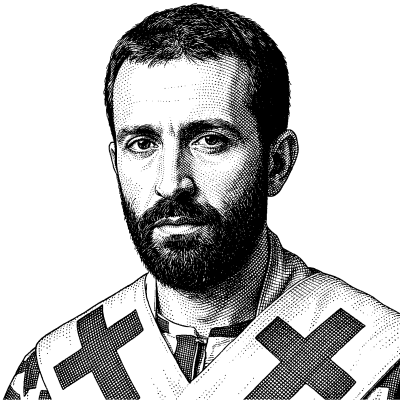
Cyprian
Cyprian of Carthage (c. 200–258 CE) was one of the most influential bishops and theologians of early Christianity, whose writings on ecclesiology, martyrdom, and the nature of the Church shaped Latin Christian thought for centuries. Born in Roman North Africa, likely to a wealthy pagan family, Cyprian converted to Christianity around 246 CE and rose rapidly to become Bishop of Carthage within two years. His episcopate was defined by crisis: he led his community through the Decian and Valerian persecutions, navigating fierce debates over how to treat Christians who had lapsed under imperial pressure. His treatises—among them On the Unity of the Church , On the Lapsed , On Mortality , and On Works and Almsgiving —combined pastoral urgency with theological precision, establishing principles of communal discipline, sacramental life, and episcopal authority that would echo through Western Christianity. He was martyred in 258 CE under the Emperor Valerian, becoming one of the most venerated figures in the early Church. Cyprian’s theological legacy is most vivid where it touches the question of human transformation. His conviction that Christ assumed the fullness of human nature so that humanity might ascend to share in the divine—captured in the axiom that what humanity is, Christ was willing to become, so that humanity might become what Christ is—places him in the ancient tradition of theosis, the teaching that the divine-human gap is not a fixed boundary but a trajectory of becoming. This vision of participation in the divine life, grounded in incarnation and sustained by community, finds deep resonance with the Mormon transhumanist intuition that human potential is genuinely open-ended, that the relationship between humanity and God is one of shared nature and increasing likeness rather than infinite ontological distance. Cyprian did not frame this hope in technological terms, but his insistence that moral transformation, communal practice, and the grace of Christ collaborate in making humanity more than it currently is speaks across centuries to anyone who takes seriously the possibility that the divine future of the human person is real, not merely symbolic.
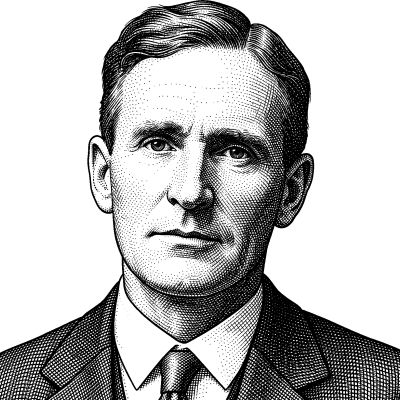
D. H. Fowler
David Henry Fowler was an American educator, writer, and civic leader in the state of Utah, known for his decades of service in public education and his editorial contributions to early twentieth-century Latter-day Saint periodical literature. Born on May 8, 1879, in Hooper, Weber County, Utah, Fowler was the son of Samuel Fowler and Rachel Taylor. He was raised in a pioneer Latter-day Saint household during a formative period in Utah’s territorial and early statehood history, and from an early age demonstrated an aptitude for study that would shape the trajectory of his life’s work. In 1906, Fowler was called to serve a proselytizing mission for The Church of Jesus Christ of Latter-day Saints in the Northern States Mission. His capabilities as a writer and communicator were soon recognized, and he was transferred to the mission headquarters in Independence, Missouri, where he was appointed Associate Editor of Liahona, the Elders’ Journal . This publication—one of the principal periodicals serving missionaries and members outside the Intermountain West—provided doctrinal instruction, mission news, and devotional literature to a wide readership. Fowler’s editorial labors placed him among a small circle of early twentieth-century Latter-day Saint writers helping to amplify the voice of the Church during a period of expanding national presence. Fowler pursued higher education at the University of Utah, completing his degree in 1919. His academic pursuits translated directly into a career in public education, where he rose to serve as both a high school principal and a superintendent of schools in Emery and Summit counties, Utah. In these roles, Fowler shaped the educational foundations of two rural communities at a formative moment in Utah’s development as a state, helping to build institutional structures that would serve generations of students. Fowler’s career reflected a lifelong conviction that education, faith, and community progress were inseparable. As an administrator, he worked to extend the reach of secondary schooling into communities whose economic realities often competed with classroom attendance, and as a writer and editor he helped articulate the intellectual and spiritual aspirations of his religious tradition for a dispersed readership.
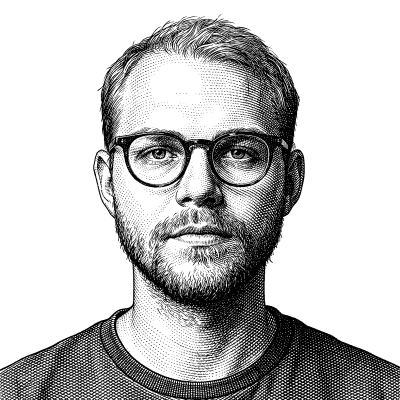
Dallin Bradford is a second-generation Mormon transhumanist and speaker at MTA conferences.
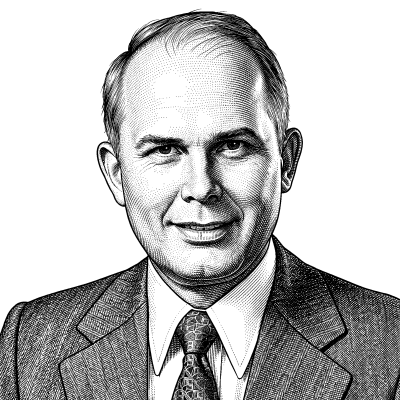
Dallin H. Oaks
Dallin Harris Oaks (born 1932) is an American religious leader, author, and former jurist who currently serves as the 18th president of The Church of Jesus Christ of Latter-day Saints. He was called into the holy apostleship in 1984. Prior to his call as Church President, he served as First Counselor in the Church’s First Presidency from 2018 to 2025. Born in Provo, Utah, Oaks graduated from Brigham Young University and earned his law degree from the University of Chicago Law School. He clerked for U.S. Supreme Court Chief Justice Earl Warren, practiced law in Chicago, and served as a professor and then president of Brigham Young University (1971–1980). He was appointed to the Utah Supreme Court in 1980 before being called as a member of the Quorum of the Twelve Apostles in 1984, a position he held until being called to the First Presidency in 2018. Oaks brought to religious leadership a trained legal and analytical mind—the habits of careful definition, reasoned argument, and institutional stewardship. His scholarship on constitutional law, religious freedom, and the relationship between civic and ecclesiastical authority reflects a conviction that rigorous intelligence and faithful discipleship are not merely compatible but mutually reinforcing. His teaching on the integration of medical science and priesthood faith exemplifies this disposition: drawing on Brigham Young’s own pragmatic theology, he argued that applying “every remedy that comes within the range of my knowledge” and then seeking divine blessing is not a compromise of faith but its fullest expression. In that vision, human knowledge and divine power are partners in healing—a sensibility that resonates with the Mormon transhumanist intuition that developing our God-given capacities is itself an act of worship and a step toward theosis. Oaks’s legacy is that of a rigorous institutional mind in service of a faith that takes human intelligence seriously. His life’s work suggests that the pursuit of knowledge—legal, medical, scientific—is not a concession to the secular but a fulfillment of the sacred charge to grow in wisdom and stature, after the pattern of the God we are, in Mormon understanding, becoming.
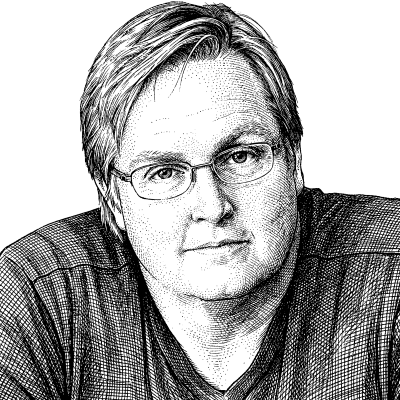
Dan Wotherspoon is a prominent voice in discussions surrounding Mormonism and intellectual inquiry. He currently hosts the Latter-day Faith podcast, where he explores a wide range of topics relevant to Mormon thought and culture. He is also the former editor of Sunstone Magazine , a publication known for its engagement with Mormon history, theology, and contemporary issues. Wotherspoon holds a PhD in religion from Claremont Graduate University. His doctoral dissertation focused on deep Mormon sensibilities concerning the intrinsic worth and interconnectedness of all existence and how these values might contribute to a sustainable and peaceful world. This research reflects his commitment to exploring the intersection of Mormonism with broader ethical and philosophical concerns. Wotherspoon’s work often involves facilitating dialogue and understanding between diverse perspectives, as evidenced by his involvement with the Mormon Transhumanist Association (MTA). He has spoken at MTA conferences and hosted discussions related to transhumanism on his podcast, demonstrating his interest in the potential for Mormon thought to engage with emerging technologies and ideas. He lives in Tooele, Utah with his wife Laurie. They are about to be empty nesters.
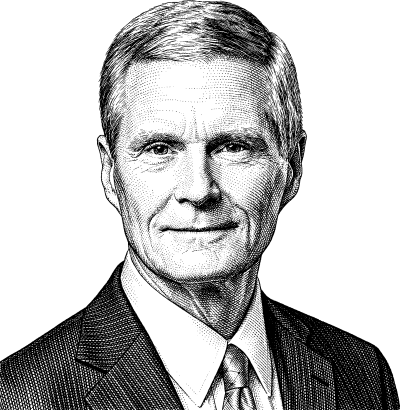
David A. Bednar
David A. Bednar (b. 1952) is a member of the Quorum of the Twelve Apostles of The Church of Jesus Christ of Latter-day Saints. Widely regarded as one of the most analytically rigorous teachers in contemporary Latter-day Saint leadership, he has shaped how millions of members understand the relationship between agency, covenant, and discipleship. Before his call to the holy apostleship in 2004, Bednar served as president of Ricks College (later BYU–Idaho) from 1997 to 2004, where he led a significant institutional transformation, including the college’s transition to a four-year university. His academic background is in organizational behavior, and he has brought that analytical sensibility to his theological teaching, consistently emphasizing patterns, principles, and the active responsibilities of covenant discipleship. Bednar’s legacy rests substantially on his insistence that discipleship is participatory rather than passive. His teaching frames human beings not as recipients of divine action but as agents commissioned in a shared work of redemption—what he has described as the Lord’s agents in the work of salvation and exaltation. That framing resonates with the Mormon transhumanist reading of theosis: Godhood is not bestowed but developed through active, willing participation in the work of God.
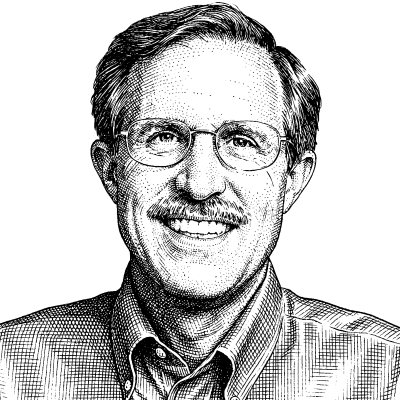
David Harold Bailey is a distinguished American mathematician and computer scientist whose work has fundamentally altered the landscape of computational number theory. A pioneer in the field of experimental mathematics, Bailey is perhaps best known for co-discovering the Bailey-Borwein-Plouffe (BBP) formula, an algorithm that allows for the calculation of the n-th binary digit of pi without calculating the preceding digits—a feat previously thought impossible. Born in 1948, Bailey pursued his education at Brigham Young University, where he received his B.S. in mathematics in 1972, followed by a Ph.D. from Stanford University in 1976. His career spanned decades at the forefront of high-performance computing, including fourteen years at the NASA Ames Research Center and fifteen years as a Senior Scientist at the Lawrence Berkeley National Laboratory. Bailey’s most famous contribution, the BBP formula, was published in a 1997 paper co-authored with Peter Borwein and Simon Plouffe. This discovery not only revolutionized how irrational constants could be computed but also provided deep insights into the question of “normality”—whether the digits of constants like pi are statistically random. Beyond pure mathematics, Bailey has made significant strides in numerical analysis and parallel computing. He is a co-author of the NAS Benchmarks, a standard metric for assessing the performance of supercomputers, and has conducted critical research into financial mathematics, warning against “pseudo-mathematics” and statistical overfitting in financial markets. A devoted member of the Church of Jesus Christ of Latter-day Saints, Bailey actively works to bridge the gap between scientific inquiry and religious faith. He operates the website Science Meets Religion , where he advocates for the harmonization of modern science—including evolution and cosmology—with theology. He argues that scientific truth and religious truth are complementary parts of a greater whole, a perspective that resonates deeply with the transhumanist pursuit of truth through both spiritual and technological means.
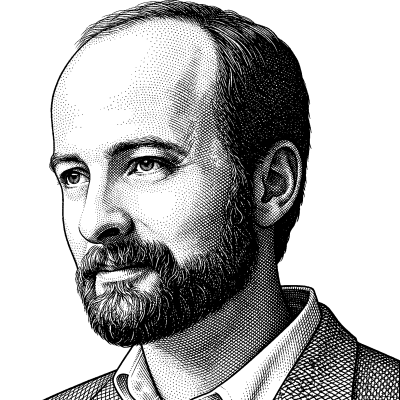
David Brin
David Brin (born 1950) is an American scientist and science fiction author widely recognized for his explorations of technological progress, accountability, and the future trajectory of human civilization. A physicist by training, with a PhD from the University of California, San Diego, Brin has become one of the most prominent voices in contemporary science fiction, celebrated for works that grapple seriously with the responsibilities that accompany advancing knowledge and power. Brin is perhaps best known for his Uplift series, which imagines a galaxy in which elder species genetically elevate (or “uplift”) younger species to sapience, creating complex webs of patronage and obligation. The series earned him multiple Hugo and Nebula Awards and introduced themes that resonate deeply with transhumanist thought: the idea that intelligence and consciousness can be cultivated, expanded, and shared across species, and that such uplift carries profound moral responsibilities. His standalone novel The Postman (1985), later adapted into a film, explores how communities rebuild civilization after catastrophe through acts of hope and civic trust. His nonfiction work The Transparent Society (1998) argues that openness and mutual accountability, rather than secrecy, are the best safeguards for freedom in an age of pervasive technology. Brin is a self-described advocate of the Enlightenment tradition, championing science, democratic governance, and an optimistic but critical view of human progress. He has been vocal in futurist and transhumanist circles, generally supporting the idea that humanity can and should use technology to improve the human condition, overcome biological limitations, and expand into the cosmos. His vision of “otherness”—the moral imperative to consider perspectives beyond one’s own—aligns with broader transhumanist commitments to expanding empathy and capability. From the perspective of Mormon Transhumanism, Brin’s work offers rich resonances: his uplift narratives echo themes of theosis and compassionate creation, wherein more advanced beings extend their capacities to others—a pattern the New God Argument finds deeply meaningful. His emphasis on accountability and transparency complements the Mormon Transhumanist commitment to ethical stewardship of technology. Where Brin’s views may diverge is in his secular, Enlightenment-centered framework; he generally frames progress in terms of human reason and democratic institutions rather than divine grace, prophetic authority, or the restored Gospel. He has at times expressed skepticism toward religious institutions as arbiters of truth. Nevertheless, his abiding faith in humanity’s capacity for moral growth and his insistence that advanced power demands advanced compassion place him in substantial sympathy with the Mormon Transhumanist vision of becoming compassionate creators.