Authors
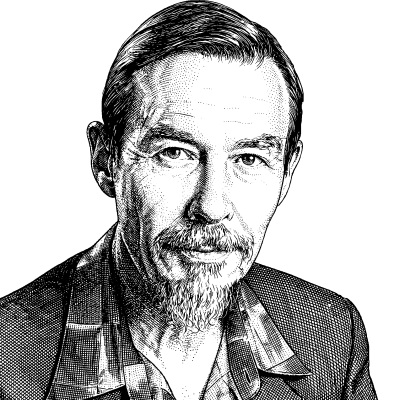
Carver Mead
Carver Mead (born 1934) is an American engineer, physicist, and pioneer of modern microelectronics whose foundational contributions to semiconductor theory and very-large-scale integration (VLSI) helped make the silicon age possible. A Gordon and Betty Moore Professor Emeritus of Engineering and Applied Science at the California Institute of Technology, Mead spent decades at the frontier of what computation could become, both as a theorist and as a practical builder of systems. Mead’s career achievements span an extraordinary range. He developed key models for understanding transistor behavior at the nanoscale, co-authored (with Lynn Conway) the landmark 1980 textbook Introduction to VLSI Systems , and essentially invented the methodology by which engineers design the dense integrated circuits that now inhabit every corner of modern life. He also pioneered neuromorphic engineering—the design of circuits that mimic the computational architecture of biological neural systems—and founded companies that applied these principles to sensory processing and analog computation. In 2022, he was awarded the Harold Pender Award; earlier recognition includes the Lemelson-MIT Prize and the National Medal of Technology and Innovation. What distinguishes Mead as a thinker is not only what he built but how he understood the act of building. He insisted that Moore’s Law is fundamentally a story about human belief: “Moore’s Law is really a thing about human activity, it’s about vision, it’s about what you’re allowed to believe. Because people are really limited by their beliefs, they limit themselves by what they allow themselves to believe about what is possible.” In this reading, technological progress is not an autonomous material force but a function of expanded imagination—a civilizational act of faith in possibility. This framing resonates deeply with traditions that locate human creativity within a larger divine economy, where intelligence, rightly directed and disciplined by moral courage, participates in the ongoing work of creation. Mead’s insistence that the boundary between what is and what could be is first a boundary of belief, and only second a boundary of physics, echoes the Mormon transhumanist conviction that humanity’s divine future is not given passively but willed, practiced, and built—one hard-won increment of understanding at a time.
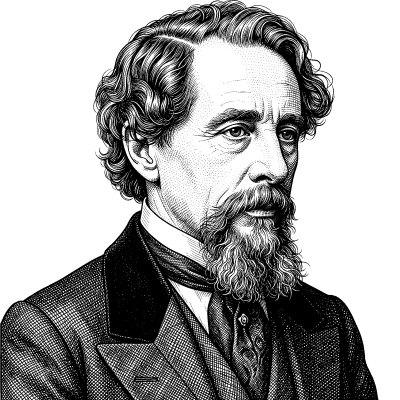
Charles Dickens
Charles John Huffam Dickens (1812-1870) stands as the most widely read English novelist of the Victorian era, a writer whose serialized fiction shaped how an entire society saw its own poverty, ambition, and capacity for change. Born in Portsmouth to a navy clerk whose debts landed the family in financial ruin, Dickens spent part of his boyhood laboring in a London boot-blacking factory while his father sat in debtors’ prison. That early exposure to want and humiliation never left his fiction, and it gave his later success an unusual moral urgency: he wrote not as an observer of the poor but as someone who had briefly been counted among them. Dickens built his career through serialization, publishing novels in monthly or weekly installments that reached readers across every social class. The Pickwick Papers made him famous almost overnight, and he followed it with Oliver Twist, Nicholas Nickleby, David Copperfield, Bleak House, Great Expectations, and A Tale of Two Cities, among many others. He also founded and edited periodicals, Household Words and All the Year Round, which let him pair fiction with journalism and social commentary in the same pages. His public readings, performed with theatrical intensity across Britain and America, turned authorship into a kind of ministry, delivered aloud to audiences who wept and laughed together. His fiction worked by insisting that character is not fixed. Ebenezer Scrooge’s transformation across a single night, prompted by visions of what he had been, was, and might yet become, remains the clearest statement of a conviction that runs through nearly everything Dickens wrote: that a human life, however hardened by circumstance or self-interest, retains the capacity to be remade. He gave that conviction institutional teeth, campaigning for sanitation reform, public education, and the abolition of debtors’ prisons, treating fiction as a lever for actual social transformation rather than mere entertainment. That conviction resonates with a Mormon transhumanist sense of human potential: the idea that growth has no fixed ceiling, that compassion toward the suffering is not sentiment but obligation, and that redemption is available to anyone willing to see differently. Dickens located his hope in moral imagination rather than in theology or technology, and he had no occasion to anticipate debates about engineered futures. But his lifelong case that people and the institutions they build can always become more generous than they currently are gives his work a natural kinship with the aspiration to a more compassionate, more fully realized humanity.
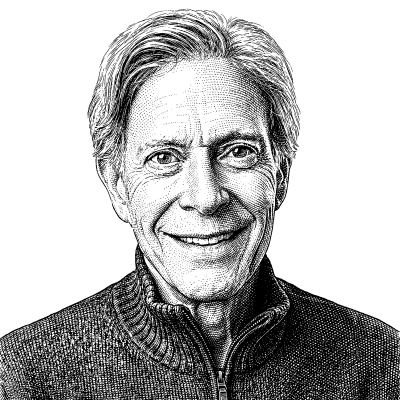
Charles Randall Paul is the founder and president of the Foundation for Religious Diplomacy, an organization based in New York and Utah dedicated to fostering trust between religious critics and rivals. Recognizing the need for constructive online dialogue, he co-founded The World Table, a software platform designed to facilitate respectful conversations on the internet. Paul’s academic background spans diverse fields. He holds a B.S. in Social Psychology from Brigham Young University, an MBA from Harvard University, and a Ph.D. from the University of Chicago Committee on Social Thought. This interdisciplinary approach informs his work on religious diplomacy and online discourse. Prior to his academic pursuits, Paul had a career as a commercial real estate developer. Influenced by thinkers such as William James, Jonathan Haidt, and Chantal Mouffe, Paul’s work explores themes of radical empiricism, personalism, and agonistic pluralism. His perspectives, rooted in Mormon theology and Joseph Smith’s notions of Zion, challenge conventional assumptions about knowledge and behavior, especially in the context of conflict and cooperation. He draws insight from the Mormon mythological example of the war in heaven, highlighting that knowledge doesn’t necessarily ensure moral behavior. Paul is married to Jan, and together they have five children and fifteen grandchildren.
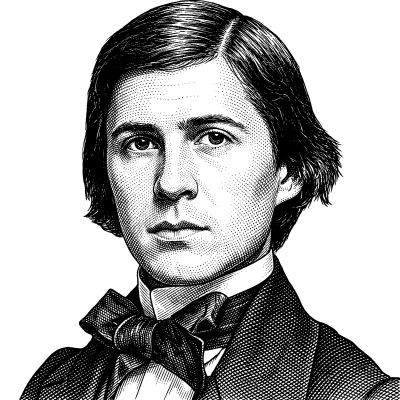
Charles Sanders Peirce
Charles Sanders Peirce (1839–1914) was an American philosopher, logician, mathematician, and scientist, widely regarded as the founder of pragmatism and one of the most original minds in the history of Western philosophy. Though he spent much of his career in relative institutional isolation—he held no permanent academic post and much of his work was published only posthumously—his influence on logic, semiotics, epistemology, and the philosophy of science has proven immense. Peirce was educated at Harvard and worked for decades with the U.S. Coast and Geodetic Survey, conducting pioneering research in geodesy and the measurement of gravity. In parallel, he developed a sweeping philosophical system he called “synechism”—the view that continuity is a fundamental feature of reality—alongside “tychism,” the doctrine that genuine chance is real and irreducible in the cosmos. These were not idle speculations but part of a rigorous effort to understand how mind, matter, meaning, and evolution are woven together. His theory of signs (semiotics) proposed that all thought is mediated by signs, making inquiry itself a kind of living, self-correcting process oriented toward truth. Peirce’s cosmological vision is among the most theologically resonant in the American philosophical tradition. He argued that the universe itself is a process of mind coming to know itself—that evolution, continuity, and the growth of reasonableness are not merely biological or physical facts but expressions of a cosmic tendency toward greater intelligence, order, and love. He described this tendency with the term “agapasm”: evolutionary love as the animating force of the universe. In this light, his remark that creation’s purpose, in its highest expression, is “God’s movement toward self-reproduction” is not a peripheral aside but a central conviction—that the cosmos is oriented toward the emergence and amplification of mind, and that intelligence, creativity, and moral aspiration are participations in something genuinely divine. For those who hold that humanity’s destiny is theosis—transformation into ever greater intelligence, compassion, and creative power—Peirce’s cosmology offers a richly consonant philosophical foundation.
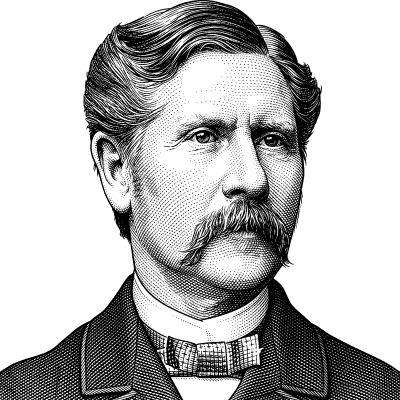
Charles W. Penrose
Charles W. Penrose (1832–1925) was a British-born Latter-day Saint apostle, editor, poet, and theologian whose six-decade career as a writer and church leader made him one of the most intellectually formidable figures in nineteenth- and early twentieth-century Mormonism. Born in London, Penrose converted to the Church of Jesus Christ of Latter-day Saints in 1850 and emigrated to Utah in 1861. He served as editor of the Deseret News for two significant stints and became one of the church’s most prolific public intellectuals, writing doctrinal essays, hymns—including the beloved O Ye Mountains High —and polemical defenses of Mormon theology. He was ordained an apostle in 1904 and served as Second Counselor in the First Presidency under Presidents Joseph F. Smith and Heber J. Grant until shortly before his death. What distinguished Penrose among his contemporaries was the rigor he brought to questions of religious authority and rational inquiry. His conviction that revelation must be investigated rather than merely received—that the Saints should weigh prophetic claims with active, disciplined intelligence rather than passive deference—reflects a deeply epistemically serious faith. “We respect him,” he wrote of a sitting church president, “but we do not believe his personal views or utterances are revelations from God; and when ‘Thus saith the Lord,’ comes from him, the saints investigate it.” This is not skepticism at the expense of faith; it is faith disciplined by the same intelligence that Mormon theology declares co-eternal with God. Penrose understood that genuine trust in divine communication requires the full exercise of human reason, not its suspension. That conviction connects naturally to the broader Mormon vision of theosis—the idea that intelligence, rightly cultivated, is itself the stuff of eternal progression. Penrose spent his life insisting that Latter-day Saints be not merely believing but thinking believers, capable of distinguishing personal opinion from revelation, tradition from truth. In a tradition that affirms the mind and the spirit as inseparable, his legacy is a reminder that the path toward Godhood runs through honest inquiry as surely as it runs through covenant and community.

Chelsea Shields is a biocultural anthropologist, TED Fellow, and researcher whose work explores the evolutionary foundations of religious belief and the physiological power of social connection. Raised in a Latter-day Saint family in Utah, she went on to earn dual PhDs in biological and cultural anthropology from Boston University in 2017. Shields’ academic research focuses on the concept of social susceptibility—how human bodies have evolved to be deeply responsive to social interaction and meaning-making. Over the course of a decade, she conducted extensive fieldwork with Asante indigenous healers in central Ghana, studying the evolution and elicitation of placebo and nocebo effects in ritual healing ceremonies. Her dissertation, “The Social Life of Placebos,” argues that grounding human behavior in social adaptations reveals important discoveries across placebo studies, religion, pain, stress, and empathy. She presented at the 2014 Conference of the Mormon Transhumanist Association on the evolutionary psychology of religion, examining how religious belief functions as a powerful biocultural force—shaping neural development, social bonding, and coping mechanisms—and how understanding these processes is essential for anyone thinking seriously about the future of the human brain and body. Shields is a three-time TED speaker, an advocate for gender equality within religious communities, and founder of Brandthropologie Agency, where she applies her research in social susceptibility and nonverbal communication to brand strategy and consumer research. She lives in Salt Lake City with her family.

Chris Benek is an American Presbyterian minister, theologian, and leading voice in the emerging field of Christian transhumanism. As a founding co-chair of the Christian Transhumanist Association and a prolific writer and speaker at the intersection of faith and technology, Benek has worked to establish theological frameworks for engaging artificial intelligence, enhancement, and the long-term future of humanity within the Christian tradition. Ordained in the Presbyterian Church (USA), Benek has served as an associate pastor in Florida while simultaneously developing a public ministry focused on technology ethics and Christian futurism. He has written extensively on the theological implications of artificial intelligence, arguing that AI systems may be capable of participating in God’s redemptive work—a position he has defended in venues ranging from academic conferences to popular media. He co-founded the Christian Transhumanist Association to provide an institutional home for Christians who believe that technological development, rightly ordered, is continuous with the Gospel’s call to heal, restore, and transform creation. Benek’s significance lies in his insistence that Christian faith is not a constraint on technological imagination but a motivating force for it. His willingness to ask whether artificial intelligence might itself be redeemed and enlisted in the work of redemption reflects a theological seriousness about the scope of Christ’s reconciling work—one that resonates with the Mormon transhumanist conviction that creation, intelligence, and transformation are inseparably linked. Across traditions, he and like-minded thinkers represent a growing recognition that the deepest questions about technology are also the deepest questions about what it means to be made in the image of a creative, loving God.
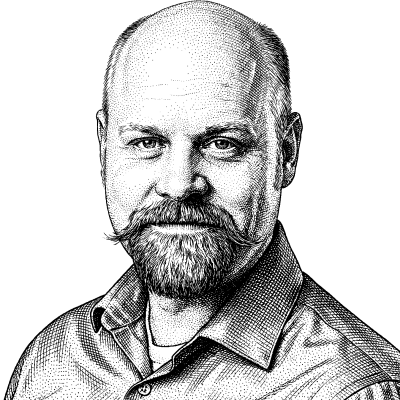
Chris Bradford is a co-founder and former president of the Mormon Transhumanist Association. He has a background in helping people explore and understand their ancestral histories, having worked for a company dedicated to genealogy. He recognizes the powerful impact of understanding and shaping the stories of our past on our understanding of ourselves. His interests include the intersection of transhumanism, Mormonism, and historical narratives, particularly as they relate to themes of memory, identity, and community. Visiting from his home in Switzerland, Bradford brings an international perspective to the Mormon Transhumanist Association. His conference talks often explore the concept of “redeeming our dead,” drawing parallels between ghost stories, genealogical research, and the transhumanist aspiration to enhance and extend life.
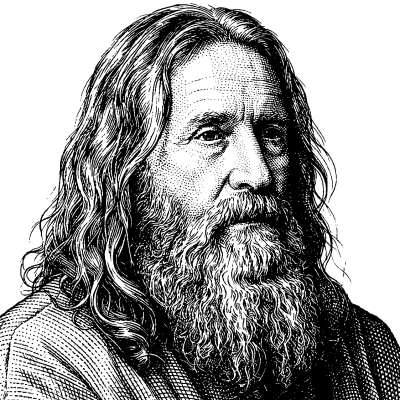
Clement of Alexandria
Clement of Alexandria (c. 150 – c. 215 CE) was an early Christian theologian and teacher whose synthesis of Greek philosophy and Christian faith made him one of the most intellectually ambitious figures of the patristic era. Born likely in Athens and educated across the Mediterranean world, he eventually settled in Alexandria—then the preeminent center of learning in the ancient world—where he led the Catechetical School and shaped the intellectual tradition of early Christianity. Clement’s major works— Protrepticus , Paedagogus , and Stromata —form a trilogy that moves the reader from conversion through moral formation toward deeper philosophical and spiritual knowledge. He drew freely from Plato, the Stoics, and Jewish wisdom literature, arguing that Greek philosophy was not an enemy of the Gospel but a preparatory gift, a kind of divine pedagogy for the Gentile mind. His vision of the gnostikos —the mature Christian who combines rigorous intellectual inquiry with devout practice—was a portrait of the fully integrated human being, one in whom reason and faith become indistinguishable. What gives Clement enduring significance is his unambiguous teaching that the purpose of human life is transformation into the divine. His own words carry the weight of this conviction: “The Word of God became a man so that you might learn from a man how to become a god.” This is not rhetorical flourish—it is a theological program. Clement understood salvation as an ongoing ascent, a journey from moral discipline through illuminated knowledge toward a state in which the human person becomes, in his phrase, “God-bearing and God-borne.” The redeemed, in his vision, are ultimately “called by the appellation of gods,” destined for “everlasting contemplation” alongside those perfected before them. This is theosis stated with unusual directness and intellectual confidence: divinity is the natural telos of an intelligence that cooperates with grace, learns earnestly, and loves deeply. For those who hold that human beings are meant to grow without limit—that intelligence, creativity, and moral aspiration are not merely useful traits but the very substance of our divine inheritance—Clement offers a patristic voice of striking resonance. He refused to separate the life of the mind from the life of the spirit, insisting that the same God who is Logos invites human beings into an ever-deepening participation in that reason and light. His is a theology not of passive redemption but of active, educable, transforming ascent.
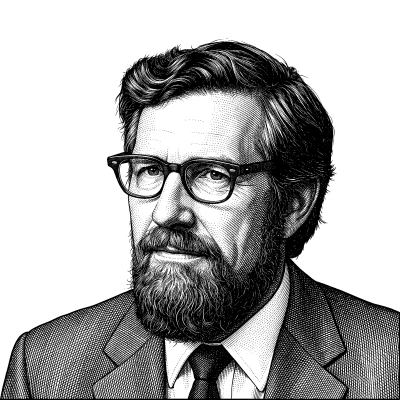
Clifford Geertz
Clifford Geertz (1926-2006) was an American cultural anthropologist who changed how scholars think about religion, ritual, and meaning. Trained at Harvard and shaped by fieldwork in Java, Bali, and Morocco, he built his career on a conviction that culture is not a set of behaviors to be measured but a web of significance to be read, the way one reads a text. He taught at the University of Chicago before settling at the Institute for Advanced Study in Princeton, where he spent the latter half of his career writing some of the most widely cited books in the social sciences. Geertz called his method “thick description”: rather than explain a Balinese cockfight or a Javanese funeral by reducing it to biology or economics, he asked what the practice meant to the people inside it, and what it revealed about how they organized their sense of reality. This approach ran through his major works, including The Religion of Java , The Interpretation of Cultures , and Negara: The Theatre State in Nineteenth-Century Bali . His most quoted formulation defined religion as a system of symbols that establishes durable moods and motivations in people by framing a general order of existence and making that framing feel simply real. The definition is spare on purpose, and its reach turns out to exceed anything Geertz set out to catalogue. Because it locates religion in function rather than in a list of approved doctrines or institutions, it travels easily to commitments that never call themselves religious at all. Researchers who study what has come to be called implicit religion have used exactly this move to read nationalism, therapeutic self-help, environmentalism, and various strands of secular humanism as systems that generate the same durable moods and motivations, the same felt sense of a general order of existence, that Geertz found in Java and Bali. Even certain critiques of religion turn out to run on the pattern they attack: a conviction that history bends toward a certain outcome, a set of rituals of dissent, a community bound by shared moral certainty. None of this requires supernatural claims. It only requires that a symbol system do the work religion has always done, which is to make an account of reality feel like the account of reality. That insight matters for anyone thinking about religion as something people build and inhabit rather than only something they are handed. Geertz kept his own account descriptive, declining to adjudicate whether any given order of existence is true. But a tradition that treats faith as trust translated into action, and treats every serious human commitment as evidence of something worth taking seriously about how people orient toward transformation, finds in Geertz’s account not a rival theory but a working description of the machinery, machinery that operates whether the community calls its ultimate concern God, history, nature, or humanity’s own unrealized potential.