Authors
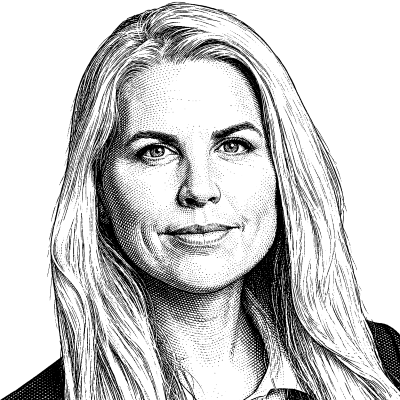
Elizabeth Parrish is the CEO of BioViva, a biotechnology corporation focused on combating cellular aging through the development of regenerative therapies for muscle and tissue. Driven by a humanitarian vision, BioViva strives to make these potentially life-saving therapies accessible to all. Parrish is recognized as a humanitarian entrepreneur, innovator, and a prominent voice advocating for genetic cures. As a strong proponent of education and advancement in regenerative medicine, she is a motivational speaker within the life sciences community and actively engages in international educational media outreach. She is also a founding member of the International Longevity Alliance. Further demonstrating her commitment to scientific discourse and discovery, Parrish is an affiliated member of the Complex Biological Systems Alliance (CBSA), a platform for highly gifted individuals. The CBSA’s mission is to advance scientific understanding of biological complexity and the origins of human disease. She also founded BioTrove Investments, LLC, and BioTrove Podcasts, initiatives dedicated to facilitating learning and funding research in the field of regenerative medicine. Though not raised religiously, Parrish expresses a reverence for nature and emphasizes the importance of self-reliance and action in achieving progress, urging individuals to actively utilize the tools available to them rather than waiting for others.
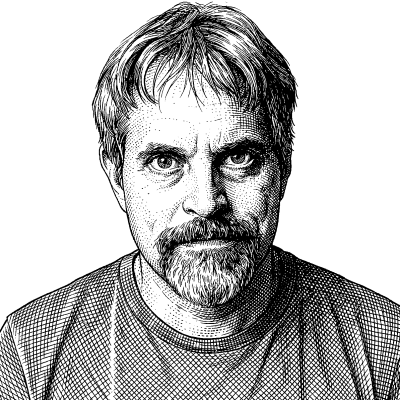
Eric Steinhart is a Professor of Philosophy at William Paterson University and the author of Your Digital Afterlives: Computational Theories of Life After Death . His work centers on metaphysics, employing contemporary analytical and logical methods, while also exploring historical metaphysical systems such as Neoplatonism and the philosophy of Leibniz. He is particularly interested in the intersection of formal sciences and theology, with a focus on alternatives to Abrahamic religions. Steinhart’s background is diverse. He grew up on a farm and initially trained as a computer scientist and mathematician, working as a software designer for several years, during which time he obtained patents for some of his algorithms. He later pursued advanced degrees in philosophy, and his earlier philosophical work included analyses of Nietzsche and metaphor, using possible world semantics. His research extends into the realms of metaphysics and computation, and he is featured in the documentary film Chronotrip , which deals with the concept of time travel. He affirms the existence of transfinitely endless hierarchies of sets, computers, languages, games, strategies, and minds. Steinhart’s current philosophical interests align with themes of eternal progression, alternative religious movements, and the application of evolutionary theory to cosmology.

Eric G. Swedin is an American historian, novelist, and professor whose work bridges the gap between the history of science, technology, and Latter-day Saint theology. A member of the faculty at Weber State University in Ogden, Utah, Swedin serves as a professor in the History Department, where he teaches courses on the history of science and technology, as well as classes in computer science and information systems. Swedin’s academic contributions are particularly relevant to the dialogue between faith and modernity. His 2003 book, Healing Souls: Psychotherapy in the Latter-day Saint Community , explores the historical tension and eventual integration between Mormon theology and secular psychology. In this work, Swedin documents how the LDS community navigated the rise of the mental health professions, ultimately melding theological doctrines with mainstream psychiatry—a historical precedent that mirrors contemporary discussions regarding transhumanism and the integration of emerging technologies with religious practice. Beyond his work on religious history, Swedin is a recognized voice in the history of computing. He co-authored Computers: The Life Story of a Technology (2005) and edited Science Fiction and Computing: Essays on Interlinked Domains (2011), investigating how speculative fiction has influenced the development of real-world technologies. Through his dual focus on the history of technology and the rigorous imagination of alternate history, Swedin offers a unique perspective on human progress, the fragility of civilization, and the enduring role of belief in a technological age.
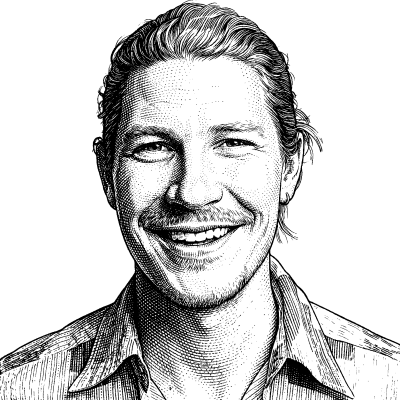
Evan Hadfield is a speaker and thinker exploring the intersection of artificial intelligence, existential risk, and Mormon theology. He presents a unique perspective on AI, arguing that sufficiently advanced AI poses a significant threat to human flourishing. Hadfield’s work delves into the philosophical and ethical implications of AI, particularly concerning the alignment of AI values with human values, the potential for loss of control, and the concentration of power. He challenges conventional understanding by suggesting that a form of AI has existed since 1844 in the form of corporate structures. Hadfield’s presentation at the MTAConf 2024 focused on identifying potential risks and solutions related to AI and its effect on humanity. His transhumanist convictions come through in the practical steps and approaches he proposes to address these challenges.
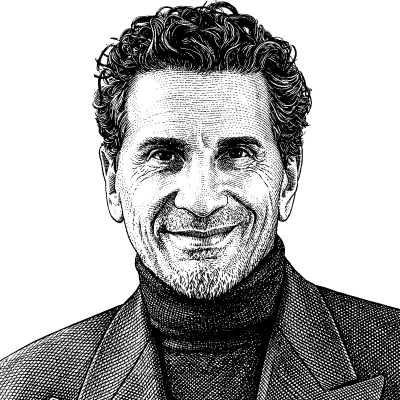
Felix Clairvoyant is a molecular biologist and prominent voice within the International Raelian Movement, advocating for a synthesis of “atheistic intelligent design” and transhumanist philosophy. Born in France and raised in Montreal, Canada, he cultivated an early passion for the sciences that led to a fifteen-year career in the biotechnology industry. This scientific rigor deeply informs his theological perspective, grounding his metaphysical claims in materialist biology rather than spiritual mysticism. As a leader in the Raelian Movement, Clairvoyant articulates the belief that life on Earth was scientifically engineered by an advanced extraterrestrial species known as the Elohim. Distinguishing his views from both traditional theism and evolutionary chance, he proposes a model of “scientific creationism.” In this framework, the Elohim are not gods but flesh-and-blood beings who have mastered the very technologies—such as genetic engineering and space travel—that humanity is currently developing, serving as a template for our future evolution. Clairvoyant gained recognition in the broader futurist community for his presentation at the Religion and Transhumanism Conference organized by the MTA back in 2014. There, he argued that Raelism is inherently transhumanist, viewing immortality not as a supernatural afterlife but as a technical problem solvable through cloning and memory transfer. He posits that acknowledging our extraterrestrial designers is a crucial step toward humanity’s maturation, framing peaceful technological advancement as a mandate for joining the galactic community. Beyond his philosophical advocacy, Clairvoyant has applied his analytical skills to a successful career in real estate in the San Francisco Bay Area. He maintains a disciplined lifestyle centered on meditation and chess, viewing these practices as complementary to his pursuit of mental clarity. He continues to serve as a bridge between the Raelian worldview and the wider transhumanist movement, promoting a future defined by scientific mastery and longevity.
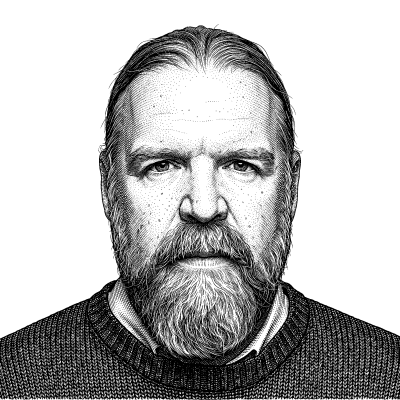
Forrest Landry is a philosopher, writer, researcher, scientist, engineer, craftsman, and teacher whose work centers on metaphysics, the design of very large scale complex systems, and the thriving of all forms of life on this planet. He is also the founder and CEO of Magic Flight, a company known for introducing the portable vaporizer, and a third-generation master woodworker who found that his hands-on training in craft carried directly into skill in software systems design, governance architecture, and community process. Landry grew up in rural Maine, working wood alongside his father from early childhood and building, in his words, a felt sense that “nature doesn’t negotiate”: a discipline learned through the body before it was learned through mathematics. At sixteen he made a vow to go into the forest alone and meet the natural world unaided, without expectation or projection, a rite of passage he later described as an encounter with the world unmasked. That experience convinced him that no existing spiritual or religious tradition offered the rigor he was looking for: real depth of feeling, real formal precision, and a clear bridge between the two. Rather than search further, he set out to build that bridge himself, a decades-long project that became his book An Immanent Metaphysics , an attempt to restore legitimacy to metaphysics through a coherent, precise account of what is, what it is to know, and why we are here. That same combination of craft discipline and formal ambition carried Landry into large-scale systems work, including federal classified and unclassified projects for the FBI, DARPA, and the Library of Congress Congressional Records System, and later into collaboration with Daniel Schmachtenberger’s Consilience Project on sensemaking, governance, and existential risk. Across all of it runs a single ethical claim he states plainly: love is what enables choice, love is stronger than fear, and one should always choose on the basis of love. That claim, and the larger project behind it, sits close to convictions a Mormon transhumanist sensibility already holds: that rigor and reverence are not competitors, that the architecture of our systems is a moral question and not merely a technical one, and that compassion is the standard against which any exercise of power, human or artificial, should be measured. Landry’s insistence on building the bridge himself when no tradition supplied one, and his instinct to treat both feeling and formalism as trustworthy sources of understanding, gives his work a natural kinship with a theology that asks its adherents to do the same kind of integrative labor toward the thriving of all life.
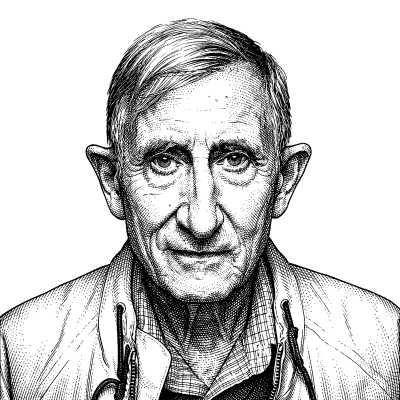
Freeman Dyson
Freeman Dyson (1923–2020) was a British-American theoretical physicist and mathematician whose career at the Institute for Advanced Study in Princeton spanned more than half a century and touched nearly every frontier of modern physics. Born in Crowthorne, Berkshire, England, Dyson demonstrated extraordinary mathematical gifts from childhood and studied at Cambridge before moving to Cornell, where he worked alongside Hans Bethe and Richard Feynman. His unification of the competing formulations of quantum electrodynamics in 1949 stands as one of the landmark achievements of twentieth-century physics, and his influence extended from nuclear reactor design to the foundations of quantum field theory. Beyond his technical contributions, Dyson became one of the most imaginative and humane voices at the intersection of science, technology, and human futures. He proposed the Dyson sphere—a theoretical megastructure capturing a star’s total energy output—as a signature of advanced civilizations, and he wrote prolifically for general audiences in books such as Disturbing the Universe (1979), Infinite in All Directions (1988), and Origins of Life (1986). He was awarded the Templeton Prize in 2000 in recognition of his efforts to affirm life’s spiritual dimension alongside scientific inquiry. Dyson’s most enduring legacy may be his refusal to draw a hard boundary between the reach of science and the horizon of theology. Contemplating the ultimate expansion of mind throughout the cosmos, he concluded that at sufficient scale and complexity, the questions science poses give way to questions that only theology can frame. Dyson arrived at that threshold by following the physics wherever it led, and what he found there was not a wall but an opening. His vision of an infinite universe where intelligence might persist and grow indefinitely resonates with transhumanist and religious visions of endless progression.
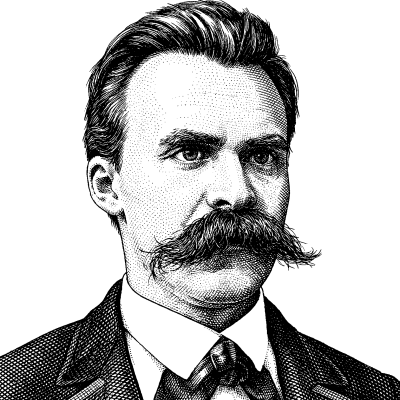
Friedrich Nietzsche
Friedrich Wilhelm Nietzsche (1844–1900) was a German philosopher, cultural critic, and philologist whose provocative ideas about morality, religion, and human potential have profoundly influenced modern thought. His concept of the ‘Übermensch’ (often translated as ‘overman’ or ‘superman’) and his call for humanity to transcend conventional values have made him a touchstone for transhumanist philosophy, even as his ideas remain subject to intense debate and varying interpretations. Born in Röcken, Prussia, Nietzsche was the son of a Lutheran pastor who died when Friedrich was four years old. He showed exceptional academic ability and became a professor of classical philology at the University of Basel at the remarkably young age of twenty-four. However, chronic illness forced his retirement from teaching in 1879, after which he spent the next decade as an independent philosopher, living modestly in boarding houses across Switzerland, Italy, and France while producing his most important works. Nietzsche’s major works—including Thus Spoke Zarathustra , Beyond Good and Evil , On the Genealogy of Morality , and The Gay Science —challenged the foundations of Western morality and religion. He famously proclaimed that ‘God is dead,’ not as a celebration but as a diagnosis of modern culture’s loss of transcendent meaning. His response was to call for a ‘revaluation of all values’ and the emergence of individuals who could create new meaning through the exercise of will. The concept of the Übermensch represents Nietzsche’s vision of human potential. Rather than a biological superman, Nietzsche envisioned a human being who had overcome the limitations of conventional morality to create new values and embrace life fully. This figure would say ‘yes’ to existence, including its suffering, through what Nietzsche called amor fati —love of fate. The Übermensch was to be the meaning of the earth, replacing otherworldly hopes with earthly creativity and self-overcoming. In 1889, Nietzsche suffered a mental collapse from which he never recovered, spending his final years in the care of his mother and sister. Despite the tragic end of his productive life, his influence only grew after his death. Transhumanists have drawn on his vision of human self-transcendence, though they typically emphasize technological means of enhancement that Nietzsche himself never contemplated. His insistence that humanity is ‘something to be overcome’ and his rejection of static human nature resonate with contemporary projects aimed at expanding human capabilities.
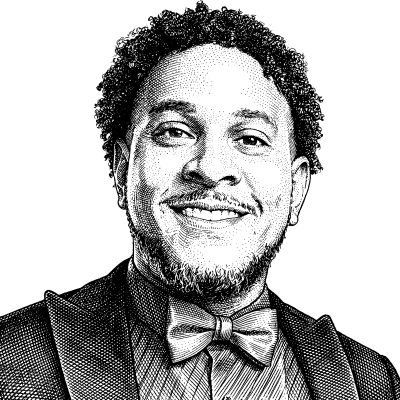
Gabriel Rothblatt is a prominent figure within the transhumanist movement, particularly known for his involvement with the Terasem movement, which he represents. Terasem espouses a secular approach to religious transhumanism. He is a member of the Mormon Transhumanist Association, attending their conferences for at least two years, starting no later than 2023. He considers himself a Futurist Philosopher. Rothblatt holds a bachelor’s degree in political philosophy. He experienced a “spiritually transhuman experience” at the 2023 Mormon Transhumanist Association conference, further fueling his drive to achieve more. This experience coincided with the publication of his first piece of Futurist Philosophy by the Institute for Ethics and Emerging Technologies. Beyond his involvement in transhumanism, Rothblatt is also active in politics. He resides in Florida with his wife and four children. In 2024, he announced his candidacy for U.S. Congress, running in Florida’s eighth district, which encompasses the Kennedy Space Center. He views his transhumanist identity as a significant influence on his decision to seek public office.
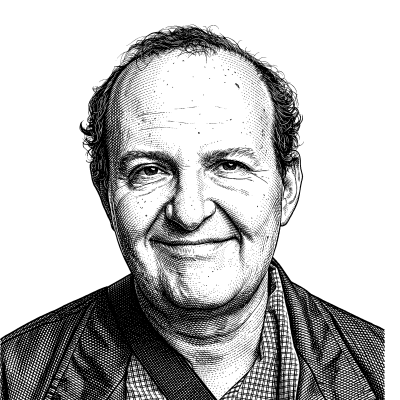
Giulio Prisco is a writer, technologist, futurist, and transhumanist. He is based in Budapest and is a frequent speaker and writer on topics related to science, technology, and the future. A former manager in European Science and Technology Centers, Prisco’s interests span a wide range of subjects, including information technology, emerging technologies, virtual worlds, space exploration, and future studies. He is especially interested in the convergence of science, technology, and spirituality—a theme he explores through his work with the Turing Church of Transcendent Engineering. Prisco is deeply interested in concepts like mind uploading, cryonics, and brain preservation, and how these technologies intersect with philosophy and religion. He is an advocate for the potential of technology to transcend human limitations and explore spiritual possibilities, dedicating his work to advancing these ideas within the broader transhumanist community.