Authors

Randall Paul is a theorist deeply engaged with questions of value alignment, particularly within the context of Mormon cosmology and transhumanist thought. His work explores the nature of intelligence, divine purpose, and eternal sociality, drawing on Latter-day Saint theology while also critically examining its relationship with traditional Christian influences. Paul’s perspective is rooted in the belief that intelligences have always existed as individual, self-aware entities with infinite memories and a capacity for dynamic social interaction. Paul challenges conventional interpretations of the glory of God, positing that it lies not merely in intelligence itself, but in the capacity of intelligences to freely love and interact with one another. He suggests that our current mortal existence is an experiment designed to improve our ability to trust and love, preparing us for a more harmonious eternal life. He frames the Mormon Transhumanist Association (MTA) as a microcosm of this process, a space for superhuman entities—or gods—to learn how to better interact and foster mutual love. In his explorations, Paul questions the uncritical embrace of transhumanist ideals of longevity and enhanced capacities, arguing that the fundamental challenge lies in navigating the complexities of freedom and mutual influence within eternal societies. He emphasizes the importance of freely given and received love as the most valuable—and most scarce—resource in the cosmos, suggesting that intelligences exist in societies to expand the possibilities for these experiences. His aim is to provoke reflection on the deeper purposes of existence and the nature of divine love in a transhuman future.

Rosalynde Welch is a scholar of English literature, focusing on the intersection of private conscience and early modern literature. She holds degrees in English literature from Brigham Young University and the University of California, San Diego, where she completed her dissertation. Her academic interests also extend to Mormon literature and philosophy, reflecting a broader engagement with faith and intellectual inquiry. Beyond academia, Welch contributes to public discourse as a writer on interreligious issues for the *Saint Louis Post-Dispatch* and as a blogger on Mormon topics at timesandseasons.org. She also serves as the managing editor of *The Mormon Review*, demonstrating a commitment to fostering critical conversation within and beyond the Mormon community. During her presentation at the Mormon Transhumanist Association, Welch presented “A Material Girl in a Material World: Mormonism, Materialism, and Gender.” The talk, and much of her work, navigates complex terrains of gender, religion, and philosophy. Welch has noted her interest in feminist theory and evolutionary psychology.
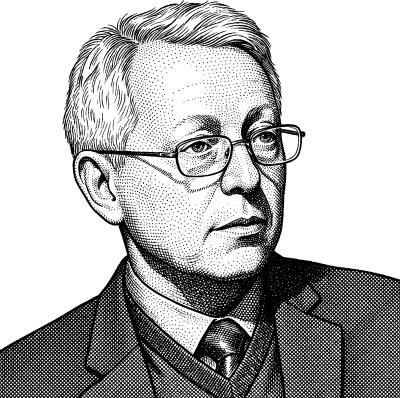
Terryl Givens is a distinguished scholar of Mormon culture and is perhaps the preeminent explicator of Mormonism’s relationship to American and global culture. He has authored an impressive number of books during his career, with more forthcoming. His work is noted for its originality of insight, native eloquence, and command of world literature, making his speeches and writings rhetorical masterpieces. His publications have significantly influenced Mormon thought, particularly the concepts of dialogic revelation and the understanding of Mormon doctrine as a series of paradoxes. Givens is widely known for his works, including Viper on the Hearth , a study of Mormonism in American culture; By the Hand of Mormon , which examines the reception and understanding of the Book of Mormon; and People of Paradox , a book which suggests a new way of looking at Mormon thought. His forthcoming book on the Book of Mormon with Oxford University Press promises to offer fresh insights into this foundational text. Givens’s work explores the intersections of Mormon cosmology, scientific speculation, and philosophical inquiry. He delivered the keynote address “No Small and Cramped Eternities” at an MTA (Mormon Transhumanist Association) conference, reflecting his understanding of the affinities between Mormonism and transhumanist thought. His work contributes to a broader understanding of Mormonism’s place in Western culture, from the Greeks to the present day, and engages readers to re-evaluate familiar concepts.
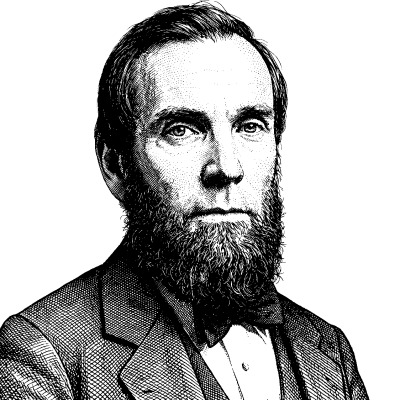
Thomas Briggs was an early Latter-day Saint pioneer who documented his experiences and beliefs about the resurrection and eternal progression in his autobiography, The History of Thomas Briggs . His writings reflect the optimism and faith of early converts to the Restored Gospel, expressing confidence in the literal nature of resurrection and the possibility of continued progression in the eternities. Like many early Latter-day Saints, Briggs saw the Restoration as opening possibilities for human advancement and transformation that exceeded the bounds of traditional Christianity.

Tomicah Tillemann is a partner and global chief policy officer at KRH Partners, a cryptocurrency venture fund led by former A16Z general partner, Katie Hahn. In this role, he focuses on building the public policy architecture to support the next generation of the Internet. A frequent speaker on the intersection of technology and theology, he brings both spheres together in his work and thought. Prior to joining KRH Partners, Tillemann served as senior advisor to two Secretaries of State, leading a team that developed 20 major initiatives across 55 countries. He previously served as Hillary Clinton’s speechwriter and spent four years on the staff of the Senate Foreign Relations Committee, working with Joe Biden, Barack Obama, and John Kerry. He has spearheaded programs addressing social impact, finance, and governance challenges on a global scale. Tillemann’s experience includes serving as Executive Director of the Digital Impact and Governance Initiative at New America, as well as membership in the World Economic Forum’s Center for the Fourth Industrial Revolution, the United Nations World Food Program Innovation Advisory Council, and the Lantos Foundation Board of Trustees. He is also Chairman of the Global Blockchain Business Council. Dr. Tillemann holds a BA magna cum laude from Yale University and a PhD with distinction from the School for Advanced International Studies at Johns Hopkins University. He is a member of The Church of Jesus Christ of Latter-day Saints and spoke at the MTAConf 2022 about the decentralization of power.

Varden Hadfield is a speaker and professional with a deep interest in the intersection of Mormonism and Transhumanism, particularly focusing on the role of Jesus Christ and the concept of grace. He presented at the MTA (Mormon Transhumanist Association) conference, exploring the perceived differences and potential merging points between these seemingly disparate fields. Since 1999, Varden has worked in major gifts for LDS Philanthropies at BYU. Prior to that, he contributed to the American Lung Association of Colorado and the Research Information Division of The Church of Jesus Christ of Latter-day Saints. His educational background includes a Bachelor of Science degree in Sociology from BYU and a Master of Arts degree in Philanthropic Studies from Indiana University. A convert to the LDS Church multiple times throughout his life, Varden served a mission in Detroit and is currently a scoutmaster in Orem, Utah. He is married with six children and enjoys a variety of hobbies including backpacking, dancing, fiddling, and woodworking. He also finds personal satisfaction in running.
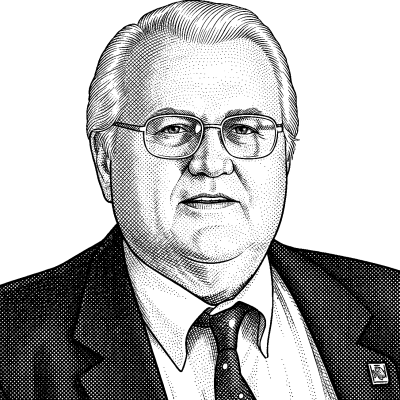
William Pickett is a senior hardware engineer and range master at the NASA Jet Propulsion Laboratory (JPL) Mesa Antenna Range, where he has worked for approximately 40 years as both an employee and a contractor. His extensive career in aerospace engineering began with North American Aviation Rockwell on the Apollo program. He gained experience at Autonetics, Hughes Ground Systems Group, IBM, GE, Martin Marietta, and Lockheed Martin before joining JPL. Pickett’s presentation at the MTA conference explores a theological perspective on space exploration, suggesting that a healthy space program, in addition to its scientific and educational benefits, may be the result of divine inspiration. As a native of California and Los Angeles County, Pickett attended Fullerton College and California State College, Fullerton, where he studied electrical engineering. He is a member of the Antenna Measurement Techniques Association and is actively involved in his ward and stake in Pasadena as a member of The Church of Jesus Christ of Latter-day Saints. Outside of his professional and religious pursuits, Pickett enjoys genealogy and live steam locomotives. Although he has retired once, he anticipates a second retirement in the future, allowing him more time to explore his interests and continue contributing to the discourse surrounding the intersection of science, technology, and theology.