Authors
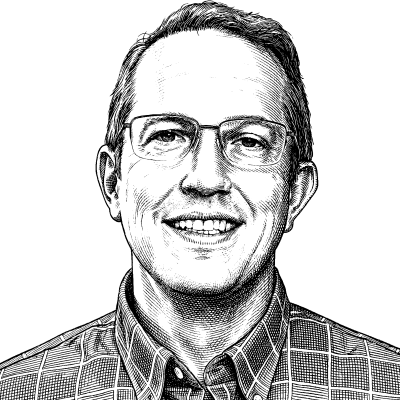
Adam Davis is a physicist and educator. He received his degree from Case Western University and currently teaches physics at Wayne State College. His academic pursuits extend beyond conventional physics into areas that bridge science and theology, particularly within the context of Latter-day Saint beliefs. Davis’s interests lie in exploring the concept of “spirit matter,” a topic central to Mormon theology. He approaches this subject through a scientific lens, seeking to develop models and frameworks for understanding its nature and properties. His work examines the theological necessity of spirit matter and considers its implications for human advancement and the attainment of divine potential. At the Mormon Thought & Engineering Vision conference held in 2009, Davis presented his perspectives on spirit matter, acknowledging the limited understanding currently available while emphasizing the importance of continued exploration. He examined scriptural and anecdotal accounts, including descriptions of spirit bodies and the spirit world, to inform his approach and stimulate further discussion on this complex topic—ultimately suggesting that no current models are completely adequate. Davis served on the MTA Board of Directors for several years.
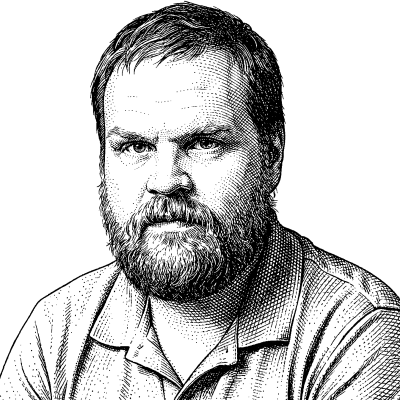
Allen Hansen was raised in northern Israel within the LDS faith, an experience that has profoundly shaped his academic and personal interests. His interdisciplinary scholarship spans a wide range of subjects, reflecting his diverse background and intellectual curiosity. Hansen’s research interests are particularly focused on the intersection of Mormonism, Judaism, and Biblical studies, with a keen interest in late antiquity. He also has scholarly interests in journalism, as well as Eastern European and Middle Eastern studies. This breadth allows him to explore unique connections between seemingly disparate fields. Hansen also brings a practical dimension to his scholarship through interests in business management and positive psychology, both of which he frames through the lens of Zion — exploring how organizational design and individual well-being might serve a larger communal vision. This thread of his work aligns naturally with the Mormon Transhumanist Association’s broader project of bridging faith and posthumanism.
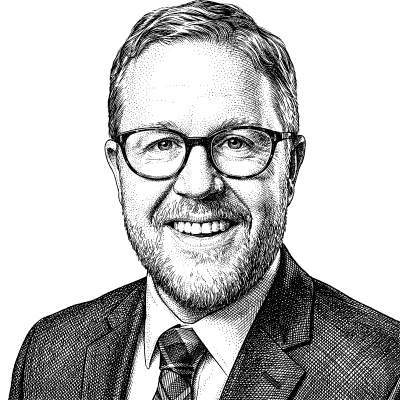
Ben Blair holds a PhD in philosophy and education from Teachers College, Columbia University. He is the co-founder of Newlane University—a platform focused on deinstitutionalizing education. An active member of the Church of Jesus Christ of Latter-day Saints, Blair’s work and perspective explore the intersection of religious community and secular ideals. He is particularly interested in how religious and post-religious communities can work towards shared goals, and he questions the equation of any particular organization with the broader concept of the ‘kingdom of God’. Blair, along with his wife, Gabrielle Blair, resides in France and they are the parents of six children. He presented at Sunstone West and is an attendee and speaker at Mormon Transhumanist Association conferences, where he explores the philosophical implications of faith, community, and progress.

Britt Hartley is an author, philosopher, and educator whose work explores the intersection of Mormon thought, philosophy, and the human search for meaning. Raised in a Latter-day Saint family in Idaho, she taught high school history and LDS seminary before pursuing graduate studies in theology with a focus on the future of American religion. Hartley is the author of Mormon Philosophy Simplified: An Easy LDS Approach to Classic Philosophical Questions (2019), which bridges the rich tradition of Mormon academic theology—drawing on thinkers like Terryl Givens, Hugh Nibley, and Blake Ostler—with the everyday questions of Latter-day Saint life. She presented at the 2019 Conference of the Mormon Transhumanist Association on how genealogical record-keeping across cultures reflects the priorities and narratives of the societies that produce them, and how advancing technology is expanding the transparency and complexity of Mormon genealogy in ways that may drive theological reflection. In her subsequent work, Hartley has focused on helping individuals navigate questions of meaning, connection, and spiritual practice beyond traditional religious frameworks. She is the author of No Nonsense Spirituality: All the Tools, No Faith Required (2024) and hosts the No-Nonsense Spirituality podcast, where she draws on philosophy, psychology, and contemplative practice to explore themes of awe, ritual, community, and purpose—concerns that resonate with the transhumanist commitment to human flourishing in all its dimensions. Hartley lives in Boise, Idaho with her husband and four children.

Bryce Haymond is an American designer, artist, writer, and independent scholar whose work explores the intersection of Mormon theology, mysticism, and the inner dimensions of human consciousness. Born and raised in the Salt Lake City area, he served a mission in El Salvador, studied design at Brigham Young University, and built a career as a professional designer and, more recently, as a developer working with generative AI. Haymond is the founder of the contemplative community and blog Thy Mind, O Human (thymindoman.com), where he investigates perennial wisdom traditions, altered states of consciousness, and the mystical cores of world religions. His scholarship draws on a broad range of sources—from Hugh Nibley and Margaret Barker to Mark Koltko-Rivera and Tibetan Buddhist philosophy—in pursuit of what he regards as the shared divine reality underlying all genuine mystical experience. He has presented multiple times at the Mormon Transhumanist Association conference, addressing the mystical core of Mormon spirituality, the Book of Mormon as literary alchemy, and most recently the use of AI art as a medium for reifying visionary and sacred experience. Haymond’s central argument—that Joseph Smith’s First Vision and comparable experiences across traditions represent genuine encounters with higher states of consciousness, accessible through contemplative practice—positions him at a generative intersection of religion, psychology, and technology. His reading of Joseph Smith as a practitioner of ‘technologies of transcendence,’ and his work using AI tools to render mystical visions into photorealistic sacred art, reflects a conviction that the boundary between inner and outer, spiritual and material, is more permeable than most traditions have allowed. The same intelligence that communes with ultimate reality in meditation, he suggests, can be cultivated, extended, and expressed through the tools humanity is now building—a vision that resonates deeply with Mormon Transhumanism’s aspiration to participate, as full human beings, in the ongoing work of creation and theosis.

Caleb Jones is a speaker and thinker deeply engaged with the intersection of Mormon theology, transhumanism, and intergenerational connection. His work focuses on the spirit of Elijah, as referenced in Malachi, and its implications for creating faith-based connections across generations, both living and deceased. He advocates for a broader interpretation of this principle, extending it beyond traditional temple work to encompass a reconciliation of ancient wisdom with modernity. Jones draws upon G.K. Chesterton’s concept of the “democracy of the dead” to frame his exploration of tradition and remembrance. He posits that our ancestors, through their artifacts and influence, continue to participate in the present. He sees the redemption of the dead through these artifacts—books, music, laws, traditions—as a collective human endeavor involving various disciplines such as literary scholarship, archaeology, and religious studies. His perspective emphasizes the importance of engaging with the past to inform and enrich the future, particularly within the context of Mormonism and its emphasis on family history and genealogical work. Jones champions seeking a healthy balance and ongoing reconciliation of the hearts and minds of the dead and dying with the hearts and minds of the living, to redeem rising generations.

Charles Randall Paul is the founder and president of the Foundation for Religious Diplomacy, an organization based in New York and Utah dedicated to fostering trust between religious critics and rivals. Recognizing the need for constructive online dialogue, he co-founded The World Table, a software platform designed to facilitate respectful conversations on the internet. Paul’s academic background spans diverse fields. He holds a B.S. in Social Psychology from Brigham Young University, an MBA from Harvard University, and a Ph.D. from the University of Chicago Committee on Social Thought. This interdisciplinary approach informs his work on religious diplomacy and online discourse. Prior to his academic pursuits, Paul had a career as a commercial real estate developer. Influenced by thinkers such as William James, Jonathan Haidt, and Chantal Mouffe, Paul’s work explores themes of radical empiricism, personalism, and agonistic pluralism. His perspectives, rooted in Mormon theology and Joseph Smith’s notions of Zion, challenge conventional assumptions about knowledge and behavior, especially in the context of conflict and cooperation. He draws insight from the Mormon mythological example of the war in heaven, highlighting that knowledge doesn’t necessarily ensure moral behavior. Paul is married to Jan, and together they have five children and fifteen grandchildren.
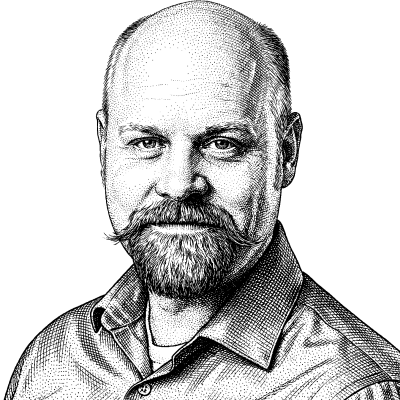
Chris Bradford is a co-founder and former president of the Mormon Transhumanist Association. He has a background in helping people explore and understand their ancestral histories, having worked for a company dedicated to genealogy. He recognizes the powerful impact of understanding and shaping the stories of our past on our understanding of ourselves. His interests include the intersection of transhumanism, Mormonism, and historical narratives, particularly as they relate to themes of memory, identity, and community. Visiting from his home in Switzerland, Bradford brings an international perspective to the Mormon Transhumanist Association. His conference talks often explore the concept of “redeeming our dead,” drawing parallels between ghost stories, genealogical research, and the transhumanist aspiration to enhance and extend life.
Cynthia Bailey is a lecturer in computer science at Stanford University. A dedicated educator, her research focuses on best practices in computer science education, with a particular emphasis on promoting inclusiveness in the tech industry. She is known for her thoughtful and well-researched contributions to discussions surrounding women in technology and the queer community. Beyond her work in computer science, Cynthia Bailey has been actively engaged in exploring the intersection of Mormonism and modern life. For a time she blogged about Mormon life on By Common Consent , providing insights and perspectives on faith in a contemporary context. Her presentation at the Sunstone West 2016 highlighted her interest in bringing together her professional expertise and her engagement with Mormon themes, specifically addressing the underrepresentation of women in technology within the Mormon community and exploring the potential of gospel principles in empowering girls’ coding initiatives. Cynthia resides in Palo Alto. She is esteemed for her quiet dedication to life-altering ideas, community building, and insightful contributions to discussions related to technology, social issues, and faith.

D. H. Fowler
David Henry Fowler was an American educator, writer, and civic leader in the state of Utah, known for his decades of service in public education and his editorial contributions to early twentieth-century Latter-day Saint periodical literature. Born on May 8, 1879, in Hooper, Weber County, Utah, Fowler was the son of Samuel Fowler and Rachel Taylor. He was raised in a pioneer Latter-day Saint household during a formative period in Utah’s territorial and early statehood history, and from an early age demonstrated an aptitude for study that would shape the trajectory of his life’s work. In 1906, Fowler was called to serve a proselytizing mission for The Church of Jesus Christ of Latter-day Saints in the Northern States Mission. His capabilities as a writer and communicator were soon recognized, and he was transferred to the mission headquarters in Independence, Missouri, where he was appointed Associate Editor of Liahona, the Elders’ Journal . This publication—one of the principal periodicals serving missionaries and members outside the Intermountain West—provided doctrinal instruction, mission news, and devotional literature to a wide readership. Fowler’s editorial labors placed him among a small circle of early twentieth-century Latter-day Saint writers helping to amplify the voice of the Church during a period of expanding national presence. Fowler pursued higher education at the University of Utah, completing his degree in 1919. His academic pursuits translated directly into a career in public education, where he rose to serve as both a high school principal and a superintendent of schools in Emery and Summit counties, Utah. In these roles, Fowler shaped the educational foundations of two rural communities at a formative moment in Utah’s development as a state, helping to build institutional structures that would serve generations of students. Fowler’s career reflected a lifelong conviction that education, faith, and community progress were inseparable. As an administrator, he worked to extend the reach of secondary schooling into communities whose economic realities often competed with classroom attendance, and as a writer and editor he helped articulate the intellectual and spiritual aspirations of his religious tradition for a dispersed readership.