Authors

Jon Ogden is an author, educator, and entrepreneur focused on the intersection of faith, family, and technology. He is the co-founder of Uplift Kids, a platform providing families with a lesson library and curriculum designed to foster spiritual health and well-being within the home. Ogden is also the author of When Mormons Doubt: A Way to Strengthen Relationships and Live a Quality Life , a work that explores themes of faith, doubt, and community within a Mormon context. His exploration of religious belief as a potentially modular system, similar to an API, suggests an openness to integrating diverse philosophical and spiritual traditions—a perspective that aligns with the Mormon Transhumanist Association’s interest in exploring how technology and innovation can enhance human experience and spiritual development. He holds a Bachelor’s degree in English, Literature, and a Master’s degree in Writing and Rhetoric, both from Brigham Young University. Ogden lives in Provo, Utah, with his spouse and two children and writes regularly at johnogden.com.
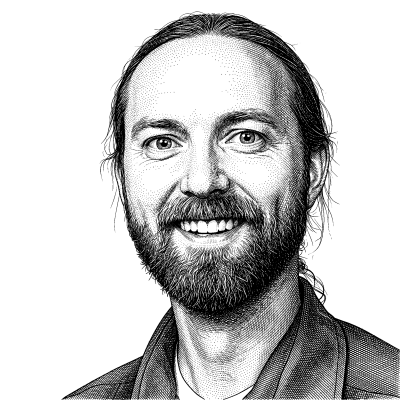
Jonathan lives in rural Georgia with his wife and three boys, teaching Chemistry and enjoying the good people of his community. He studied Molecular Biology at Brigham Young University, and Biophysics at the University of Wisconsin, Madison. Jonathan is passionate about fatherhood, teaching and learning, Mormonism, and dance (he’s much better at the first three), and dabbles in home repairs, various crafts, poetry, music, gardening, and Transhumanism. He has enjoyed many years working in Primary, with Young Adults and Ward Missions in various capacities. He currently enjoys serving in his ward and community however he is able.

Joseph West is a founding member, director, and secretary of the Mormon Transhumanist Association. He is deeply involved in exploring the crossroads of Mormonism, transhumanism, and technology. West is currently a PhD student in sociology at the University of Arizona, focusing his research on religion, culture, technology, and the family. He holds a bachelor’s degree in philosophy from the University of Utah. At the Parallels and Convergences Conference held in 2009, West presented on the “New God Argument,” co-authored with Lincoln Cannon, which explores potential reconciliations between religious perspectives and scientific materialism. The argument itself stems from secular assumptions and concludes with ideas resonating with Mormon perspectives on God and other religious matters. Beyond his academic and organizational work, West is a family man, a father of two children, and is married to their mother, Jessica.

Karl Hale is a speaker at Mormon Transhumanist Association (MTA) conferences, known for his engaging presentations on topics such as the worship of extraterrestrial humanoid deities. His perspective is informed by his background as a member of the Church of Jesus Christ of Latter-day Saints and his reflections on the nature of God. Before turning his attention to philosophical and theological explorations, Karl spent 15 years in the software and web industries. He holds a master’s degree in information systems and worked as a programmer, manager, and executive. Currently, Karl dedicates a significant portion of his time to motivational juggling—another of his passions. Karl has been married to Anna Lisa Bradford Hale for 18 years and is the father of eight children. Together, they manage a small homestead, raising their family alongside a diverse collection of animals, including 27 chickens, six goats, six frogs, and one cat. Karl’s engagement with Mormon theology, coupled with his interest in transhumanist concepts—such as the potential for technologically advanced beings—provides a unique and thought-provoking perspective. He is an engaging and interesting speaker.
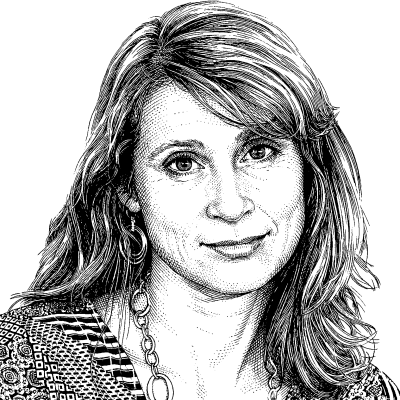
Kristine Haglund is a writer, editor, and speaker on Latter-day Saint topics. She has served as editor of Dialogue: A Journal of Mormon Thought .

Marcus Flinders is the founding attorney and managing partner of Flinders Bandy Attorneys at Law, specializing in corporate and business law, as well as tax planning and litigation. He brings over fifteen years of experience as an entrepreneur and businessman to his legal practice. At the MTAConf 2013, Flinders was responsible for arranging lunch and presented on the complex topic of the legal rights of sentient machines. Flinders holds a BS in philosophy from Utah Valley University, a JD from Valparaiso University, and an LLM in taxation from the University of Denver—making him a highly educated voice within the MTA community. He served a mission for the LDS Church in Côte d’Ivoire, demonstrating his commitment to his faith. He is married with three children. At the aforementioned conference, Flinders explored the history of rights arguments, referencing thinkers from Socrates and Aristotle to Bentham and Mill, and touching upon utilitarianism. He framed his argument for the rights of sentient machines within the context of constitutional law, highlighting the challenges and possibilities this presents for lawyers and society as technology advances.
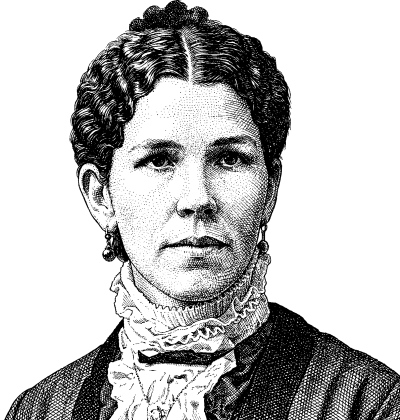
Mary Ann Freeze
Mary Ann Burnham Freeze was a leader in the Young Ladies Mutual Improvement Association and an early pioneer who crossed the plains to Utah in the 1840s or 1850s. She is documented in the Mormon Pioneer Overland Travel database under her maiden name, Mary Ann Burnham. Freeze served in leadership positions in the LDS Church’s women’s organizations during a formative period in their development. Her contributions to the Young Women’s organization helped establish patterns of service and education that would shape the organization for generations. Her life and service are documented in Augusta Joyce Crocheron’s Representative Women of Deseret (1884) and in the history of the Young Ladies’ Mutual Improvement Association. She died in 1912, having devoted decades to strengthening the young women of Zion.
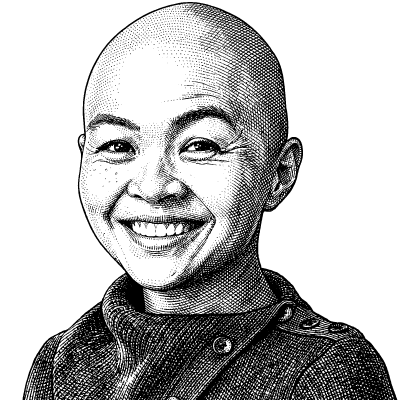
Melissa Wei-Tsing Inouye
Melissa Wei-Tsing Inouye was a scholar and historian who explored the intersection of religion and culture in Greater China, global Mormonism, and 20th-century Chinese Christianity. She received her PhD in East Asian languages and civilizations from Harvard University in 2011. Her major work, China and the True Jesus: Charisma and Organization in a Chinese Christian Church (Oxford University Press, 2019), provides a comprehensive history of the True Jesus Church and charismatic Christian movements in modern China. In addition to her academic research, Inouye was a prolific writer and essayist known for her candid reflections on faith, motherhood, and the global church. Her memoir, Crossings: A Bald Asian American Latter-day Saint Woman Scholar’s Ventures through Life, Death, Cancer, and Motherhood (2019), and her subsequent book, Sacred Struggle: Seeking Christ on the Path of Most Resistance (2023), examined the role of suffering and community within the Latter-day Saint experience. She was also a founding member of the Global Mormon Studies research network and served on the advisory board of the Neal A. Maxwell Institute for Religious Scholarship. Inouye passed away on April 23, 2024, at the age of 44, following a seven-year battle with colon cancer. She is remembered for her work bridging Chinese history, global religious movements, and transhumanist ideals, as well as for her commitment to fostering a more inclusive and globally-aware religious community.

Michael Ferguson is a neuroscientist, researcher, and educator whose work explores the biological foundations of spiritual experience and the intersection of cognitive science and theology. A prominent voice in the dialogue between Mormonism and transhumanism, Dr. Ferguson is widely recognized for his pioneering research into the “religious brain,” seeking to understand how profound spiritual states are mapped within the human nervous system. Dr. Ferguson’s academic journey began with a focus on physics and communication, but his interest soon shifted toward the complexities of the human mind. He earned his Ph.D. in Bioengineering from the University of Utah, where his doctoral research gained international attention. During this period, he led a landmark study using functional magnetic resonance imaging (fMRI) to monitor the brain activity of devout Latter-day Saints as they reported “feeling the Spirit.” This research identified specific activation in the nucleus accumbens—a region of the brain associated with reward and dopamine—suggesting that spiritual experiences leverage the same neural circuits involved in music, love, and other deeply meaningful stimuli. Following his doctoral work, Dr. Ferguson completed postdoctoral fellowships at Cornell University and Beth Israel Deaconess Medical Center. He currently serves as an Instructor in Neurology at Harvard Medical School and as a researcher at the Center for Brain Circuit Therapeutics at Brigham and Women’s Hospital. His clinical and research interests have expanded to include the use of brain lesion network mapping and deep brain stimulation to explore the neural circuits associated with religiosity, spirituality, and various neuropsychiatric conditions. A frequent contributor to the Mormon Transhumanist Association, Dr. Ferguson presented “The Religious Brain Project” at the MTAConf 2014. In this and other presentations, he argues that a scientific understanding of spiritual mechanics does not diminish their sanctity but rather provides a “technological” vocabulary for the soul. He posits that by understanding the neural architecture of transcendence, humanity can better cultivate profound experiences of wonder, connection, and ethical transformation.
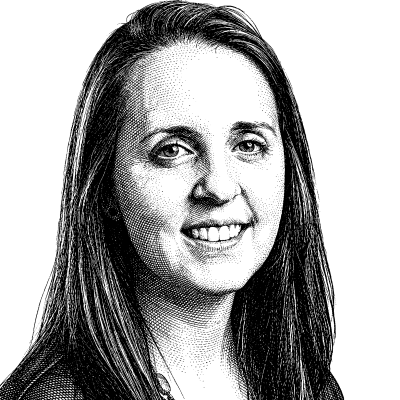
Michaelann Gardner is a speaker who has presented at several Mormon Transhumanist Association conferences. Her presentation at the MTAConf 2019 focused on the impact of family history and ancestral trauma on personal well-being and resilience, particularly in the context of emotional vulnerability and mental health. Gardner’s talk explored the challenges of confronting difficult family narratives and embracing personal messiness and complexity. She drew on personal experiences related to her grandfather, Bert Gardner, and great-grandfather, both of whom struggled with alcoholism and created instability for their families. She connects these family dynamics to broader themes of emotional expression, financial security, and anxiety. She integrates insights from therapy and psychology, referencing research that suggests building resilience through understanding one’s family history. Her work appears to be a combination of personal reflection with family systems and positive psychology.