Authors

Ben Romney is a senior software engineer at Qualtrics. Outside of his professional career, he pursues his interest in moral philosophy. He presented at the MTAConf 2020 on his paper, “A Gradient Rubric for Human and Non-Human Utility,” available at bromney.com/ethicspaper.pdf. Romney’s work focuses on expanding ethical considerations beyond the human species to encompass animals, plants, and potentially robots, all in service of maximizing global happiness. He advocates for a utilitarian approach, proposing a gradient rubric to quantify various life forms’ capacity for happiness, aiming to prioritize efforts to improve the world for all sentient beings.
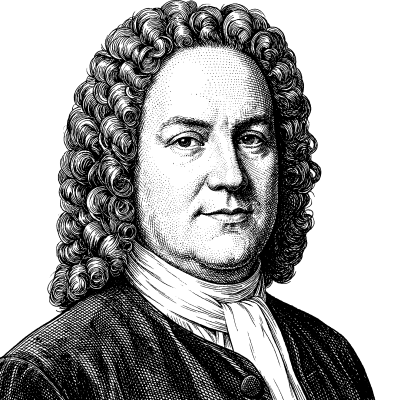
Benjamin Franklin
Benjamin Franklin (January 17, 1706 – April 17, 1790) was an American polymath, statesman, scientist, inventor, writer, printer, philosopher, and Founding Father of the United States. Among the most influential intellectuals of the Enlightenment, Franklin earned the title “The First American” for his tireless advocacy of colonial unity and his diplomatic efforts to secure French support during the American Revolution. Born in Boston, Massachusetts, Franklin received only two years of formal schooling before beginning work in his father’s candlemaking shop. At age twelve, he became an apprentice to his brother James, a printer, where he developed his love of reading and writing. By age seventeen, he had run away to Philadelphia, where he would build his fortune and reputation. Franklin’s scientific contributions were remarkable. His experiments with electricity, including the famous kite experiment, established the nature of lightning and led to the invention of the lightning rod. He also invented bifocal glasses, the Franklin stove, and the glass armonica. His curiosity extended to oceanography, meteorology, and demography. As a civic leader, Franklin founded the American Philosophical Society, the first lending library, the University of Pennsylvania, and the first fire department in Philadelphia. His wit and wisdom, expressed through Poor Richard’s Almanack, shaped American culture for generations. Franklin’s vision of human progress through science and reason resonates strongly with transhumanist thought. His belief that future generations would master nature, extend human life, and achieve powers beyond imagination prefigured modern discussions of technological enhancement and human flourishing.

Benjamin Peters
Benjamin Peters (born 1980) is an American media scholar, author, and professor known for his work on the history of communication technologies, information theory, and the social dimensions of digital networks. He serves as the Hazel Rogers Professor of Communication at the University of Tulsa and has held affiliations with several prominent research institutions. Peters is best known for his book How Not to Network a Nation: The Uneasy History of the Soviet Internet (2016), which explores the failed attempts to build a nationwide computer network in the Soviet Union and examines how social and political systems shape technological development. The work received widespread acclaim for its interdisciplinary approach, bridging media studies, history, and science and technology studies. He has also edited Digital Keywords: A Vocabulary of Information Society and Culture (2016), contributing to critical discourse around the language and concepts underpinning the digital age. Peters’s scholarship carries resonance for those interested in the intersection of technology, human potential, and collective aspiration. By investigating how societies envision and fail to realize transformative technological projects, his work illuminates the deeply human—and often ideological—dimensions of networked communication. His research reminds us that the tools we build to connect and elevate humanity are always embedded in moral, political, and even spiritual frameworks. For communities exploring themes of theosis and the cooperative pursuit of transcendence through technology, Peters’s insights into the promises and pitfalls of networked societies offer valuable perspective on how human aspiration and systemic constraints interact in the ongoing project of building a better world.

Bernardo Vicente is an economist and researcher deeply interested in the intersection of economics, technology, and culture. He holds a degree in business administration and accounting from Lisbon Polytechnic Institute, along with a specialization in business analytics. Driven by a desire to leverage technology for societal betterment, he has developed an innovative economic theory known as “Harberger Georgism.” Harberger Georgism builds upon the principles of Georgism and Harberger taxation, exploring how Web3 technologies can sustainably develop the digital era and enhance the physical world. This theory aims to potentiate development in the physical world using economic strategies. Currently, Bernardo volunteers as a researcher at the Ethereum Foundation, contributing his expertise to the advancement of blockchain technology. His work explores the teleology and utility of emerging technologies like NFTs and the metaverse, aiming to ensure their positive impact on society.

Blaire Ostler is a philosopher, author, and artist whose work explores the intersection of Mormon theology, transhumanism, and human identity. A ninth-generation Latter-day Saint, she has been a notable voice in conversations about the synthesis of religious tradition with technological progress and expanding theological inquiry. Ostler holds a Bachelor of Fine Arts in Design from the International Academy of Design and Technology–Seattle. Her background as an abstract modern artist deeply informs her philosophical work. Her paintings, characterized by their exploration of aesthetics and form, can be found in residences and businesses throughout Seattle. This artistic sensibility extends to her writing, where she examines the boundaries of traditional categories to explore a more expansive understanding of divinity and humanity. Ostler is the author of Queer Mormon Theology: An Introduction (2021), in which she engages with Mormon doctrinal concepts such as the nature of the divine, the significance of Heavenly Mother, and the potential for technological resurrection. Her involvement with the Mormon Transhumanist Association has been significant; she served on the Board of Directors for six years and as CEO from 2016 to 2018. Her transhumanist vision emphasizes active discipleship, where humanity participates in the work of God through morphological freedom and cognitive liberty. Blaire continues to write, paint, and speak on themes of identity, truth, and beauty, exploring the relationship between the human and the divine.
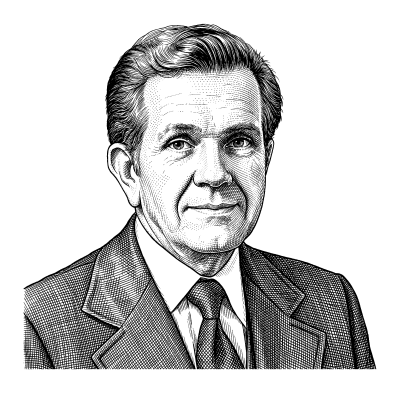
Boyd K. Packer
Boyd K. Packer (1924–2015) was one of the most influential and theologically deliberate leaders of The Church of Jesus Christ of Latter-day Saints in the twentieth and early twenty-first centuries. Born on September 10, 1924, in Brigham City, Utah, the tenth of eleven children, he overcame childhood polio, served as a bomber pilot in World War II, and earned a doctorate in education from Brigham Young University before dedicating his life to religious service and teaching. Called to the Quorum of the Twelve Apostles in 1970, he served as its acting president from 1994 to 2008 and as its president from 2008 until his death on July 3, 2015. Packer’s career spanned more than five decades of general authority service. He worked extensively within the Church Educational System, overseeing seminary and institute programs, and served as a mission president in New England. He served on the scripture revision committee that produced the landmark 1979–1981 LDS editions of the Bible and standard works. He dedicated temples and missions across multiple continents and was a prolific author and teacher. He was also a gifted visual artist, known for his paintings and sculptures of birds—a dimension of his character that reflected a disciplined attention to the natural world and a belief that beauty and truth are inseparable. Packer’s theological legacy is marked by a deep reverence for the eternal sweep of Mormon cosmology. In one memorable interview, he cited the hymn ‘If You Could Hie to Kolob’—that most expansive of Mormon texts, celebrating eternal progression, a plurality of Gods, and worlds without end—and connected it to Brigham Young’s conviction that learning is not a process approaching a terminus but one that opens onto ‘an eternity of knowledge.’ That orientation—toward an unending, ever-expanding intelligence—runs beneath much of Packer’s teaching about the relationship between mortality and eternity, between what we now see and what God sees.

Brad Levin (formerly Carmack) is an attorney, HR professional, and writer with interests spanning transhumanism, bioethics, and effective philanthropy. He earned a JD/MPA from Brigham Young University in 2011, where he also studied biology, and was admitted to the California bar that same year. He served on the MTA board of directors from 2011 to 2014 and as secretary of the association. At MTAConf 2014, Levin delivered a call to action on “Grounded Giving: How to Maximize the ROI of Your Charitable Dollars,” drawing on research from Arthur Brooks and the effective altruism movement to challenge attendees to bring the same rigor to charitable giving that investors bring to financial decisions. He argued that strategic philanthropy is one of the most accessible ways for anyone—regardless of technical background—to advance transhumanist projects and contribute to human flourishing. Levin lives in the San Francisco Bay Area.

Brent Allsop
Brent Allsop (b. 1959) is an American technologist, transhumanist activist, and co-founder of the Mormon Transhumanist Association, whose career has been shaped by a sustained conviction that the most important questions about consciousness, identity, and human destiny are both scientific and spiritual. Allsop is a Senior Software Engineer at 3M Health Information Systems and the founder of Canonizer.com, a collaborative wiki-survey platform launched in 2006 and designed to help communities build genuine consensus on contested questions—from philosophy of mind to ethics to emerging technology. His professional life has run in parallel with decades of advocacy for life extension and transhumanist causes, and he has been a founding voice in the MTA since its inception. At the center of Allsop’s intellectual work is a serious engagement with the philosophy of consciousness—specifically the problem of qualia, or the subjective qualities of experience. He has developed a theoretical framework for scientifically detecting and measuring qualia, arguing that bridging the explanatory gap between brain states and conscious experience requires new mapping functions and, ultimately, direct brain-to-brain connections that allow individuals to share elemental experiences. His vision of mind uploading follows from this: not a copy-and-delete procedure but a gradual transition of experiential continuity into enhanced digital form. This work finds a natural resonance with Joseph Smith’s teaching that “all spirit is matter”—a naturalist theology that Allsop has taken seriously as a framework for understanding what spiritual engineering and consciousness uploading might actually involve. Allsop has also applied his consensus-building instincts to the MTA itself, presenting the 2012 member survey and reflecting on what distinguishes the Association from other transhumanist communities: a spirit of mutual support and collaborative inquiry rather than fractiousness. His Canonizer platform embodies the same aspiration at scale—enabling individuals to identify trusted experts and survey their collective views, so that the expanding moral landscape of technological power can be navigated with wisdom rather than paralysis. The emerging expert consensus on representational qualia theory, he has noted, aligns surprisingly well with 19th-century Mormon descriptions of consciousness and spirit—a convergence he regards not as coincidence but as evidence that prophetic and scientific inquiry can illuminate the same truths from different directions.
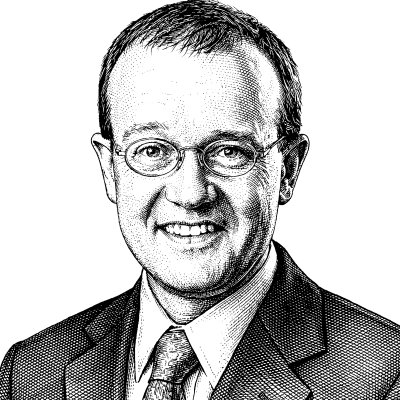
Brian Green is a scholar at Santa Clara University specializing in the intersection of transhumanism and Catholic ethics. His research explores the complex relationship between these seemingly disparate fields, seeking to identify areas of both conflict and potential collaboration. He has dedicated approximately a decade to this field of study, commencing with his master’s program at the Graduate Theological Union in Berkeley. His work aims to foster mutual understanding and dispel misconceptions between transhumanist and Christian communities. At the Religion and Transhumanism Conference 2014, Green addressed prevalent myths regarding the Catholic Church’s stance on life extension and human genetic manipulation, arguing for a more nuanced perspective that acknowledges the diversity within both transhumanism and Christianity. He advocates for identifying true points of tension and exploring potential alliances between these groups. Green’s research considers the justice implications of emerging technologies, and the practical challenges of achieving immortality. He seeks to encourage productive dialog that reconciles the benefits of emerging technologies with Catholic concerns for social justice, human dignity, and spiritual well-being.
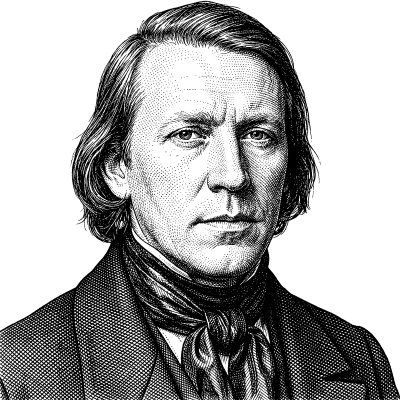
Brigham Young
Brigham Young (1801–1877) was the second president of The Church of Jesus Christ of Latter-day Saints, the architect of the Mormon migration to the Great Basin, and the founding governor of Utah Territory. As the organizing genius behind the settlement of the American West, he directed the colonization of more than 300 towns, established institutions of commerce and education, and shaped a distinctive religious civilization from the desert floor. Born in Whitingham, Vermont, Young converted to the restored church in 1832 after years of searching among the Methodist and Reformed faiths. He rose quickly through the Quorum of the Twelve Apostles, led the harrowing evacuation of Nauvoo following Joseph Smith’s martyrdom in 1844, and guided an exodus of tens of thousands across the plains to the Salt Lake Valley in 1847. As church president for thirty years, he presided over the construction of the Salt Lake Temple, founded the University of Deseret, championed the Perpetual Emigration Fund to gather converts from Europe, and negotiated—not always successfully—the church’s uneasy relationship with the federal government. What the historical record reveals, and what Young’s own sermons confirm at every turn, is a mind constitutionally unwilling to divide the sacred from the natural. He taught that God operates by law, that miracles are simply “results or effects of causes hidden from our understandings,” and that every discovery in science and art has been “given by direct revelation from God.” The telegraph, the steam engine, the plow—all were, in his view, eternal principles progressively disclosed to a humanity climbing upward from its infancy. Science and religion were not rivals in his theology but two names for the same structured reality: “there is no true religion without true science, and consequently there is no true science without true religion.” This integration carried moral weight. Young urged the Saints to become a thinking people, warning against the spiritual danger of surrendering judgment to leaders rather than seeking personal revelation—a remarkable insistence on epistemic independence from a man who wielded considerable institutional authority. His vision of human destiny was correspondingly expansive. He affirmed that God “was once a man in mortal flesh as we are” and that humanity is “organized to become Gods,” called to exercise creative authority over matter across eternal worlds. He taught that identity—the preservation of the self through resurrection and exaltation—is “the greatest gift that God can bestow,” and he framed mortality as the school in which that self is forged through trial, independent thought, and disciplined living. His counsel to “prepare to live” rather than merely to die, and to extend healthy life by understanding natural law, anticipates a tradition of practical, body-affirming faith that takes seriously both the present body and its glorified future. Young remains a towering, complicated figure whose earthly administration included serious moral failures; yet his theological instinct—that intelligence, technology, and theosis belong to a single continuous story—endures as one of the most generative ideas in the Latter-day Saint tradition.