Authors
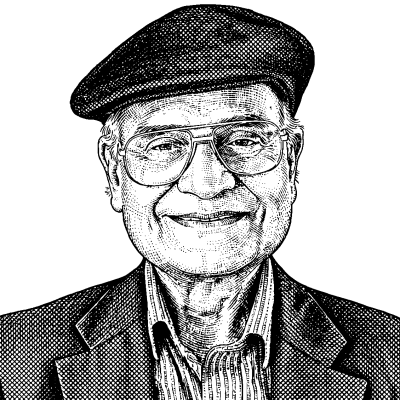
Amit Goswami is a scientist and researcher who challenges mainstream scientific materialism, particularly in its application to consciousness, health, and healing. He advocates for the integration of spirituality with medicine and seeks to demonstrate the importance of consciousness in these areas—a view often dismissed by conventional scientific paradigms. Goswami draws heavily on the principles of quantum physics to argue for a reality where consciousness plays a fundamental role. He posits that the prevailing materialistic worldview, which treats the body and mind as mere machines, inhibits our understanding of health, healing, and the human experience. He believes that quantum physics offers an alternative perspective, one that acknowledges the subjective aspect of consciousness and its potential impact on our well-being. At a 2013 conference jointly organized by the Integrative Health Network and the Mormon Transhumanist Association, Goswami presented on “Quantum Physics, Consciousness and Health.” He emphasized the disconnect between the implications of quantum physics and its public perception, suggesting that media and academia have perpetuated materialistic concepts to the detriment of a more holistic understanding of consciousness and its potential for influencing health and personal agency. His work attempts to bridge the gap between scientific inquiry and spiritual understanding, encouraging a reevaluation of the role of consciousness in our lives.
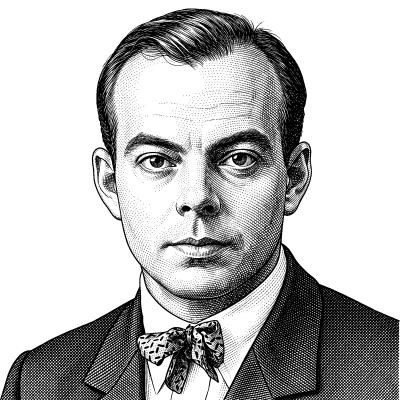
Antoine de Saint-Exupéry
Antoine de Saint-Exupéry (1900–1944) was a French aviator, writer, and moral philosopher whose work stands among the most enduring explorations of human meaning, courage, and the relationship between solitude and community in the twentieth century. Born into an aristocratic family in Lyon, he pursued aviation at a time when flight was still a frontier art, serving as a commercial and military pilot across Europe, North Africa, and South America. His cockpit became a laboratory for existential reflection, and the sky a medium through which he interrogated what it means to be fully human. Saint-Exupéry’s literary output is inseparable from his vocation as a pilot. Night Flight (1931), Wind, Sand and Stars (1939), and Flight to Arras (1942) drew directly from his aerial experience to trace the moral dimensions of responsibility, sacrifice, and fraternity under risk. The Little Prince (1943), written during wartime exile in New York, became one of the best-selling and most-translated books in history—a deceptively simple fable about perception, love, and the invisible bonds that give life its weight. He disappeared on a reconnaissance mission over the Mediterranean in July 1944, never to return; the mystery of his end deepened the mythic quality already surrounding his life. Saint-Exupéry’s lasting significance lies in his insistence that technology—the airplane above all—does not diminish humanity but can, rightly inhabited, enlarge it. He understood flight not as escape from the earth but as a vantage from which human solidarity becomes visible in a new way. His writing returns persistently to themes of creative discipline, the cultivation of inner life, the obligation of the living toward the lost, and the kind of love that sees what is essential rather than what is merely present. These concerns resonate naturally with the Mormon Transhumanist conviction that the proper work of intelligence and technology is to deepen relationship, expand moral vision, and orient human striving toward the fullest possible flourishing of every soul.
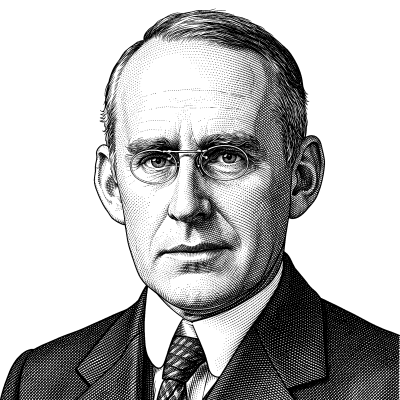
Arthur Eddington
Sir Arthur Stanley Eddington (1882-1944) was an English astrophysicist whose work gave the twentieth century its first observational proof of general relativity and its first physical account of how stars generate energy. Educated at Cambridge, he became director of the university’s observatory and spent his career translating Einstein’s abstract field equations into testable predictions about the behavior of light and matter. Eddington’s defining achievement came during the solar eclipse of 1919, when he led an expedition to the island of Principe to photograph starlight bending around the sun. The measurements matched Einstein’s prediction rather than Newton’s, and the result, announced to a world still recovering from war, made relativity a public fact almost overnight. Eddington followed that triumph with foundational work on stellar structure, showing how the balance between gravitational collapse and internal pressure explains a star’s size and luminosity, and he was among the first to argue that stars draw their energy from the fusion of hydrogen into helium, a claim later confirmed by nuclear physics. He also became one of the century’s most effective interpreters of science for lay readers, writing books that carried relativity and quantum theory to audiences well beyond the physics faculty. Eddington saw no need to partition the universe into separate realms for scientific law and ultimate meaning. He wrote of a reality standing behind both physical measurement and inner conscious experience, and treated the physicist’s equations as a partial reading of something larger, open rather than closed. That conviction, rare among physicists of his generation and expressed with unusual candor for a working Quaker scientist, gives his career a natural kinship with a Mormon transhumanist confidence that rigorous science and genuine faith investigate one continuous reality rather than opposing ones. His finding that mass bends light did more than confirm a theory. It demonstrated that the universe answers careful questions, which is itself a kind of standing invitation to keep asking them, including the questions that bear on human nature, intelligence, and destiny. Eddington framed his own search for a unified theory of physics as an attempt to show that the deepest structure of matter and the deepest structure of mind might turn out to be more alike than physics alone could prove, a hope that intelligence and understanding may themselves be built into the fabric of the universe rather than imposed on it from outside.
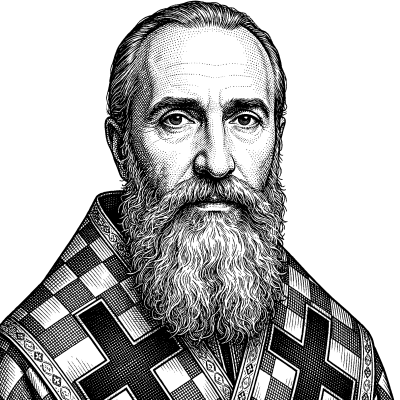
Athanasius
Athanasius of Alexandria (c. 296–373 AD) was one of the most influential theologians in Christian history, serving as the twentieth Pope of Alexandria and playing a decisive role in the development of Trinitarian doctrine. His lifelong defense of the Nicene Creed against Arianism earned him the title ‘Father of Orthodoxy,’ while his writings on the incarnation articulated a vision of human transformation that continues to resonate in Eastern Orthodox theology and beyond. Born in Alexandria, Egypt, Athanasius received a thorough education in Greek literature, philosophy, and Christian scripture. As a young deacon, he accompanied Bishop Alexander to the Council of Nicaea in 325 AD, where he witnessed the formulation of the creed that would define Christian orthodoxy. Three years later, at approximately thirty years of age, Athanasius succeeded Alexander as bishop of Alexandria—a position he would hold for forty-five years despite being exiled five times by various emperors sympathetic to Arianism. Athanasius ’ s most enduring theological contribution appears in his treatise On the Incarnation , written when he was still a young man. In this work, he articulated the doctrine of theosis—the belief that God became human so that humans might become divine. This concept, sometimes expressed as ‘God became man that man might become god,’ became central to Eastern Orthodox spirituality and has profound implications for understanding human potential and destiny. Throughout his tumultuous career, Athanasius faced opposition from Arian bishops, imperial persecution, and periods of exile in the Egyptian desert, Rome, and elsewhere. Yet he persisted in defending what he understood as apostolic faith against theological compromise. His friendship with the desert monks, including Anthony the Great, influenced his biography of Anthony, which became foundational for Christian monasticism and hagiography. Athanasius’s doctrine of theosis resonates profoundly with transhumanist themes. His vision of humanity’s potential for transformation and participation in divine nature anticipates contemporary discussions of human enhancement and transcendence. The idea that humans are destined for a radical elevation of their nature—not merely moral improvement but ontological transformation—connects ancient Christian theology with modern aspirations for human flourishing beyond current limitations.
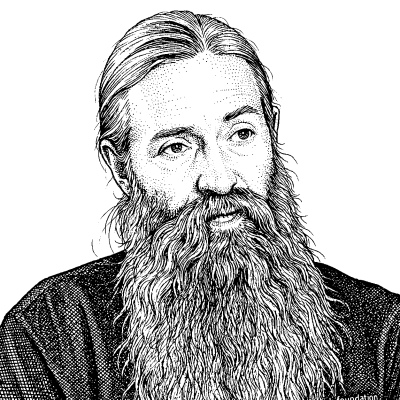
Aubrey de Grey is a biomedical gerontologist based in Cambridge, United Kingdom, and Mountain View, California. He is recognized for his work in combating the aging process and is a frequent speaker at events focused on the intersection of science, ethics, and longevity. De Grey serves as the Chief Science Officer of SENS Research Foundation, a California-based nonprofit dedicated to developing and promoting therapies to reverse aging. He is also the Editor-in-Chief of Rejuvenation Research , a leading peer-reviewed journal focused on intervention in aging. De Grey is best known for developing Strategies for Engineered Negligible Senescence (SENS), a comprehensive plan for repairing the accumulating molecular and cellular damage that constitutes mammalian aging. SENS breaks aging down into seven major classes of damage and identifies detailed approaches to addressing each one.
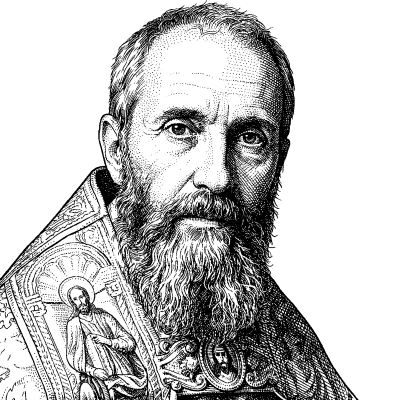
Augustine of Hippo
Aurelius Augustinus Hipponensis (354–430), commonly known as Augustine of Hippo or Saint Augustine, was a theologian, philosopher, and Bishop of Hippo Regius in Roman North Africa. He is widely regarded as one of the most influential figures in the development of Western Christianity and Western philosophy. Augustine’s major works include Confessions , a pioneering spiritual autobiography, and The City of God , a monumental defense of Christianity against pagan criticism following the sack of Rome. His theological contributions shaped doctrines on original sin, divine grace, predestination, and the nature of the Trinity. Before his conversion to Christianity, he explored Manichaeism and Neoplatonism, and his synthesis of Christian doctrine with classical philosophy profoundly influenced medieval thought, the Protestant Reformation, and modern philosophy alike. Augustine’s concept of deificatio (divinization) — the idea that humanity is called to participate in the divine nature — resonates with Mormon Transhumanist themes of theosis and the elevation of human potential. His emphasis on humanity’s restless longing for God (“Our hearts are restless until they rest in You”) speaks to a vision of human beings as fundamentally oriented toward transcendence. However, significant tensions exist between Augustine’s theology and Mormon Transhumanist thought. Augustine’s doctrine of original sin and total human depravity, his skepticism of unaided human will, and his emphasis on predestination stand in marked contrast to Latter-day Saint affirmations of human agency, moral capacity, and an optimistic anthropology. Additionally, Augustine’s commitment to creatio ex nihilo and the absolute ontological distinction between Creator and creature diverges from Mormon theology’s more materialist and continuity-oriented understanding of God and humanity. Nevertheless, Augustine’s enduring call to seek wisdom, his insistence that faith and reason are complementary, and his vision of humanity’s ultimate union with the divine ensure his lasting relevance to conversations at the intersection of faith, philosophy, and human flourishing.
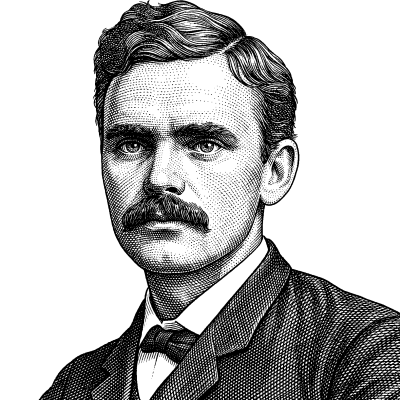
B. H. Roberts
Brigham Henry Roberts (1857–1933) was a historian, theologian, and General Authority of The Church of Jesus Christ of Latter-day Saints, widely regarded as one of the most rigorous and intellectually ambitious thinkers Mormonism has produced. Born in Warrington, England, and emigrating to Utah as a child, Roberts rose from a difficult, impoverished youth to become a missionary, editor, congressman-elect, and a member of the First Council of the Seventy from 1888 until his death. Roberts’s career bridged ecclesiastical leadership and serious scholarship. He served missions in the American South and presided over the Eastern States Mission, and he was elected to the U.S. House of Representatives in 1898, though he was denied his seat in a national controversy over plural marriage. He devoted decades to writing and editing, producing the six-volume Comprehensive History of the Church , editing the seven-volume History of the Church , and authoring theological works including The Mormon Doctrine of Deity , The Truth, The Way, The Life , and Studies of the Book of Mormon . In these works he engaged geology, biology, biblical criticism, and comparative religion with a candor unusual for his time and office. Roberts’s legacy resonates deeply with themes of human potential, intelligence, and the entanglement of faith with progress. He read the nineteenth and early twentieth centuries—railroads, electric light, wireless telegraphy, aviation, the spread of liberty—as “collateral rays” of the same light that opened the heavens to Joseph Smith, suggesting that the millennium might already be quietly underway in the works of human hands. He insisted that scientific research, including evidence of life and death long before Adam, belongs on the side of “development” rather than “contraction,” and that to engage such inquiry is “to link the church of God with the highest increase of human thought and effort.” Equally striking is Roberts’s generosity toward other traditions and his impatience with mental laziness. He refused to identify any particular church—Catholic, Protestant, Greek, Buddhist, Muslim, or even the societies of deists and atheists—as the “church of the devil,” reserving that phrase for the kingdom of evil wherever it appears, and affirming that wise teachers and prophets are raised up among all peoples. Against “simple faith” understood as ignorant acquiescence, he championed an intelligent, rational faith that strives “up to the very limit of man’s capacity” to know. In his confidence that intelligence is the glory of God and of humanity, that revelation invites rather than forecloses inquiry, and that the children of men are “moving up to a higher and truer conception of the things of God,” Roberts remains a vital voice for those who see in technology, science, and expanding moral imagination the natural shape of a divine future.
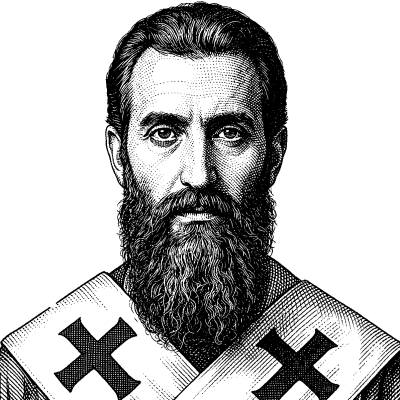
Basil the Great
Basil of Caesarea (c. 330–379), known as Basil the Great, was a bishop, theologian, and monastic reformer whose intellectual and institutional labors helped shape the foundations of Eastern Christianity. Born into a devout Christian family in Cappadocia (present-day Turkey), he studied at the finest schools of his age—Athens and Constantinople—before returning to establish a monastic community and eventually serving as Bishop of Caesarea from 370 until his death. Basil’s achievements were as practical as they were theological. He founded what historians regard as one of the earliest organized charitable complexes in the ancient world, a compound outside Caesarea that included a hospital, a hospice for travelers, and care facilities for the poor—a concrete expression of his conviction that faith without compassionate action is hollow. As a theologian, he contributed decisively to the articulation of Trinitarian doctrine and authored influential monastic rules that still govern communities of Eastern Christian monks today. Together with his brother Gregory of Nyssa and their friend Gregory of Nazianzus, he formed the Cappadocian Fathers, whose synthesis of Greek philosophy and Christian revelation became a cornerstone of classical theology. Basil’s deepest legacy may lie in his vision of human transformation through divine participation. In his treatise On the Holy Spirit , he described a soul indwelt by the Spirit as one that becomes spiritual itself, capable of “foreknowledge of the future, understanding of mysteries, apprehension of what is hidden”—a soul that advances through illumination toward what he did not hesitate to call “the being made God.” This is the doctrine of theosis : the idea that created intelligence, shaped by virtue and suffused with grace, can ascend toward genuine likeness to—and participation in—divinity. For Basil, that ascent was not a flight from the material world but a transformation of the whole person: mind, moral life, and communal practice included. His combination of rigorous intellectual formation, institutional care for the vulnerable, and fearless theological aspiration about humanity’s divine potential makes him a persistent and generative voice in any serious conversation about the relationship between intelligence, virtue, and the destiny of human beings.
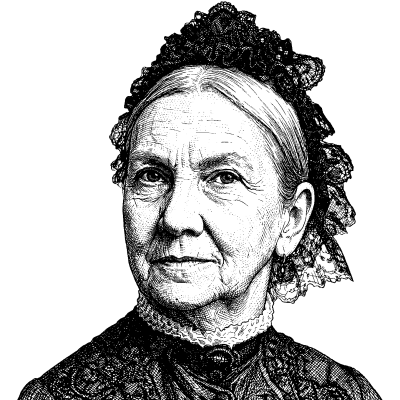
Bathsheba W. Smith
Bathsheba Wilson Bigler Smith (1822–1910) served as the fourth general president of the Relief Society from 1901 until her death. Born in what is now West Virginia, she was raised on her family’s 300-acre plantation before joining the Church in 1837 at age fifteen. She married George A. Smith, the youngest member of the Quorum of the Twelve, in 1841. At age nineteen, Bathsheba was the youngest woman present at the organization of the Relief Society in Nauvoo in 1842. She later served as matron of the Salt Lake Temple, a member of the Deseret Hospital board, and a leader in the western woman’s suffrage movement. In 1888, she became second counselor in the Relief Society general presidency. As Relief Society general president, Smith oversaw construction of the original Relief Society Building (completed 1909) and introduced classes on childrearing, industry, and marriage. Under her leadership, Relief Society wheat was shared with earthquake survivors in San Francisco and famine victims in China. She was the first woman granted a funeral service in the Salt Lake Tabernacle.

Ben Blair holds a PhD in philosophy and education from Teachers College, Columbia University. He is the co-founder of Newlane University—a platform focused on deinstitutionalizing education. An active member of the Church of Jesus Christ of Latter-day Saints, Blair’s work and perspective explore the intersection of religious community and secular ideals. He is particularly interested in how religious and post-religious communities can work towards shared goals, and he questions the equation of any particular organization with the broader concept of the ‘kingdom of God’. Blair, along with his wife, Gabrielle Blair, resides in France and they are the parents of six children. He presented at Sunstone West and is an attendee and speaker at Mormon Transhumanist Association conferences, where he explores the philosophical implications of faith, community, and progress.