Authors
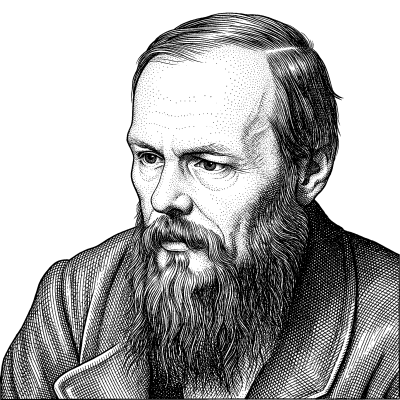
Fyodor Dostoevsky
Fyodor Mikhailovich Dostoevsky (1821-1881) was a Russian novelist whose work probes faith, suffering, freedom, and guilt with a depth few writers have matched. Trained as a military engineer in St. Petersburg, he turned to literature in his twenties, and a death sentence for revolutionary activity, commuted at the last moment to Siberian exile, marked him permanently. He emerged from four years of prison and years more of enforced military service a changed writer, one who had stared at his own execution and returned to ask what a human life, once spared, owes to others. His major novels, among them Crime and Punishment, The Idiot, Demons, and The Brothers Karamazov, stage philosophy as lived crisis rather than abstract argument. Characters murder, doubt, confess, and rebel, and Dostoevsky lets their reasoning run to its full conclusion before testing it against conscience. He wrote for serialized journals under constant financial pressure, supporting a household through gambling debts and illness, and still produced sentences that interrogate free will, suffering, and the possibility of God with an intensity that philosophy departments have never stopped reading. That intensity drew on personal loss as well as literary conviction. In 1868, grief over the death of his infant daughter Sofya surfaces in his letters in the image of the cross, a measure of how far private suffering pressed against the edges of his faith rather than a settled answer to it. The Brothers Karamazov carries that preoccupation with suffering and responsibility into its fullest statement of theology. Through the dying monk Zosima, Dostoevsky teaches that each person must recognize himself as guilty before all people, on behalf of all and for all, for every human sin, and that only there does unity become possible. The claim describes redemption as shared labor rather than a transaction completed by one party for passive others, a position with some resonance to what Mormon theology calls participatory atonement, though Dostoevsky’s own framework stayed rooted in Orthodox asceticism and submission rather than in human beings as co-creators with the divine. His recurring argument, that freedom without love collapses into nihilism, remains relevant to any account of human improvement, religious or technological, that separates moral transformation from compassion.

Jacob Baker is a scholar of philosophy of religion and theology who completed his doctoral studies at Claremont Graduate University’s School of Religion. His dissertation explored the inherent unthinkability of the problem of evil in philosophy and theology, arguing that this unthinkability is central to its status as a problem. Baker’s graduate work spans an impressive range of philosophical and theological traditions. He studied continental philosophy under Ingolf Dalferth, examining figures such as Heidegger, Wittgenstein, Nietzsche, Kierkegaard, and Tillich. His paper Heidegger and Wittgenstein: Worldliness and Surveyable Representation in the Architecture of the Ordinary argued that both philosophers share a fundamental orientation toward allowing phenomena to show themselves without philosophical interference. His work on Nietzsche explored how the philosopher’s critique of truth was ultimately in service of affirming and enhancing life itself. In phenomenology, Baker engaged deeply with Jean-Luc Marion’s work, arguing that love is the privileged theme of phenomenology and that Marion’s phenomenology of givenness can reveal how love enables the other to give herself as herself in particularity and unsubstitutability. His paper on Badiou and Zizek’s readings of St. Paul explored how these atheist philosophers converge on understanding Pauline love as work, labor, and struggle—far removed from sentimental notions. Baker has contributed significantly to Mormon intellectual discourse. His article The Grandest Principle of the Gospel: Christian Nihilism, Sanctified Activism, and Eternal Progression appeared in Dialogue: A Journal of Mormon Thought (Vol. 41, No. 3, 2008), examining how early twentieth-century Mormon intellectuals developed eternal progression as an existential response to what they perceived as the nihilistic stasis of traditional Christian heaven. In Element (Vol. 4, Issue 1, 2008), his essay The Shadow of the Cathedral argued that “open system” approaches to systematic theology can accommodate Mormon continuing revelation. His work on Joseph Smith, written under Richard L. Bushman, explored the connection between Smith’s personal experiences with friendship and his developing theology of sealing, arguing that the “welding link” concept emerged from Smith’s vision of uniting all humanity across time through bonds of love. Baker also examined whether Mormon theology can be meaningfully articulated within panentheistic discourse, suggesting that “pansyntheism”—meaning “God with us” rather than “God in us”—better accommodates Mormon emphases on divine personhood and the distinct identities of God and humans. In process theology and medieval theology, Baker examined how panentheism provides a framework capable of unifying disparate experiences—religious and secular, scientific and theological—into a coherent whole. His work on medieval atonement theory argued against contemporary calls to subordinate atonement to incarnation, demonstrating through Anselm, Abelard, Aquinas, and Bonaventure that these doctrines are mutually interdependent. During his presentation at the MTAConf 2016, he offered philosophical challenges to transhumanist thought through the lens of cosmic pessimism. His engagement with transhumanist literature reflects his broader interest in how philosophy and theology address questions of human potential, meaning, and transcendence.
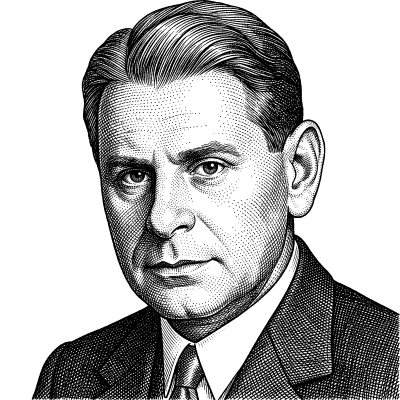
Karl Popper
Karl Raimund Popper (1902–1994) was an Austrian-British philosopher widely regarded as one of the most influential philosophers of science of the twentieth century. His work on the demarcation problem, epistemology, and the philosophy of the open society left a lasting mark on intellectual life across multiple disciplines. Popper is best known for his principle of falsifiability , which holds that for a theory to be genuinely scientific, it must be capable of being tested and potentially refuted. This criterion, articulated in his landmark work The Logic of Scientific Discovery (1934), fundamentally reshaped the philosophy of science and challenged the prevailing inductivist tradition. He spent much of his academic career at the London School of Economics, where he served as professor of logic and scientific method. His political philosophy, most notably developed in The Open Society and Its Enemies (1945), offered a vigorous defense of liberal democracy and a critique of totalitarian ideologies rooted in historicism. Popper’s epistemology carries deep resonance with transhumanist and theological themes. His vision of knowledge as an unending, self-correcting pursuit—forever open to revision and growth—aligns with the transhumanist commitment to ongoing human improvement. His concept of critical rationalism suggests that humanity progresses not by claiming certainty but by humbly identifying and correcting errors, a posture that echoes religious traditions emphasizing humility, faith in future understanding, and the aspiration toward greater light and knowledge. For the Mormon Transhumanist Association, Popper’s insistence that an open society fosters human flourishing, and that our reach should always exceed our grasp, resonates with the vision of theosis—the idea that humanity is called to grow toward the divine through both reason and faith.
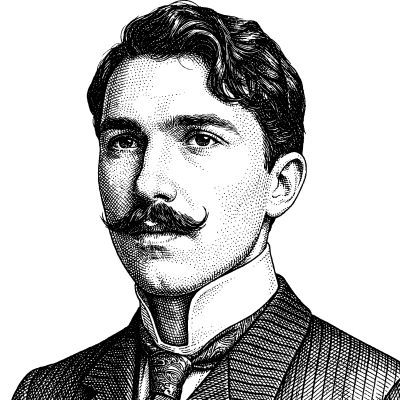
Nikos Kazantzakis
Nikos Kazantzakis (1883–1957) was a Greek writer, philosopher, and one of the most celebrated authors of the 20th century. Born in Heraklion, Crete, during Ottoman rule, he studied law at the University of Athens before pursuing philosophy in Paris under Henri Bergson. His dissertation explored Nietzsche’s philosophy of right and state. Kazantzakis is best known for Zorba the Greek , inspired by his friendship with a worker named Georgios Zorbas. The novel became world-famous after the 1964 film adaptation. His other major works include The Last Temptation of Christ , Christ Recrucified , and his epic poem The Odyssey: A Modern Sequel , which he considered his greatest achievement. He was nominated for the Nobel Prize in Literature nine times, losing to Albert Camus in 1957 by a single vote. Camus later said Kazantzakis deserved the honor “a hundred times more” than himself. His epitaph, inscribed on his tomb overlooking the mountains and sea of Crete, reads: “I hope for nothing. I fear nothing. I am free.”
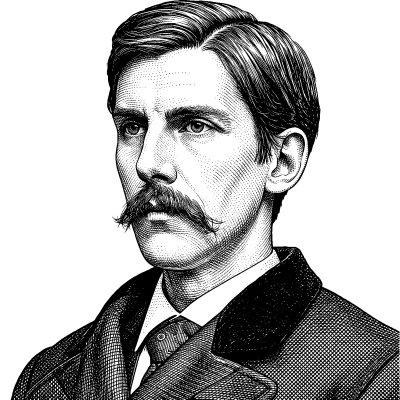
Oliver Wendell Holmes Jr.
Oliver Wendell Holmes Jr. (1841–1935) was an American jurist and legal scholar who served on the United States Supreme Court from 1902 to 1932. Born in Boston, he was the son of the physician and writer Oliver Wendell Holmes Sr. He graduated from Harvard College in 1861, served as a Union officer during the Civil War, and was wounded three times. After the war, he studied at Harvard Law School and entered legal practice in Boston. Holmes combined practice with editing, teaching, and scholarship. In The Common Law (1881), he examined the historical development of legal rules and argued that experience, social conditions, and practical judgments shape the law. He briefly held a professorship at Harvard Law School before joining the Massachusetts Supreme Judicial Court in 1882. He became its chief justice in 1899. President Theodore Roosevelt appointed him to the United States Supreme Court in 1902. His judicial opinions helped shape debates about constitutional interpretation, legislative authority, and freedom of speech. His dissent in Lochner v. New York (1905) opposed imposing a particular economic theory through constitutional adjudication. His later free-speech dissents, including Abrams v. United States (1919), influenced the development of stronger protections for political expression. His writing also contributed to the intellectual foundations of American legal realism. Holmes's record includes decisions that severely restricted individual rights. In Buck v. Bell (1927), he wrote the majority opinion upholding Virginia's compulsory sterilization law, lending judicial authority to eugenics and its coercive treatment of disabled people. His legacy therefore encompasses both influential arguments for intellectual freedom and grave failures to protect vulnerable individuals. He retired in 1932 and died in Washington, D.C., in 1935.

Rosalynde Welch is a scholar of English literature, focusing on the intersection of private conscience and early modern literature. She holds degrees in English literature from Brigham Young University and the University of California, San Diego, where she completed her dissertation. Her academic interests also extend to Mormon literature and philosophy, reflecting a broader engagement with faith and intellectual inquiry. Beyond academia, Welch contributes to public discourse as a writer on interreligious issues for the *Saint Louis Post-Dispatch* and as a blogger on Mormon topics at timesandseasons.org. She also serves as the managing editor of *The Mormon Review*, demonstrating a commitment to fostering critical conversation within and beyond the Mormon community. During her presentation at the Mormon Transhumanist Association, Welch presented “A Material Girl in a Material World: Mormonism, Materialism, and Gender.” The talk, and much of her work, navigates complex terrains of gender, religion, and philosophy. Welch has noted her interest in feminist theory and evolutionary psychology.

Samo Burja
Samo Burja is a Slovenian-American social scientist and entrepreneur best known for Great Founder Theory, an account of how institutions rise, decay, and occasionally renew themselves through the work of a small number of people who genuinely understand how those institutions function. He is the founder and president of Bismarck Analysis, a research firm that studies the hidden mechanics of governments, companies, and other organizations, and a contributing editor at Palladium Magazine, where much of his writing on civilization, elite competence, and institutional knowledge first appeared. Burja’s central distinction, between “live players” who actively grasp and can rebuild the systems they lead and “dead players” who merely execute inherited scripts without knowing why they work, has become a widely cited lens for understanding why organizations that look stable on paper can hollow out from within. He argues that formal structures, laws, and credentials often outlast the tacit, living knowledge that originally made them work, so that a society can appear intact while quietly losing the capacity to renew itself. Much of his public work, through essays, long-form interviews, and his Bismarck Brief newsletter, traces this pattern across empires, corporations, and scientific fields, asking what it takes for a civilization not merely to persist but to keep producing people capable of founding anew. That question of renewal through genuine understanding, rather than habit or formality, resonates with a Mormon Transhumanist conviction that progression requires active, informed stewardship rather than passive inheritance. Burja writes from a secular and institutional vantage rather than a theological one, but his insistence that civilizations survive only through people who truly comprehend and continue the work of creation offers a striking, if independently arrived at, echo of the call to be active participants in an ongoing restoration rather than custodians of a finished system.
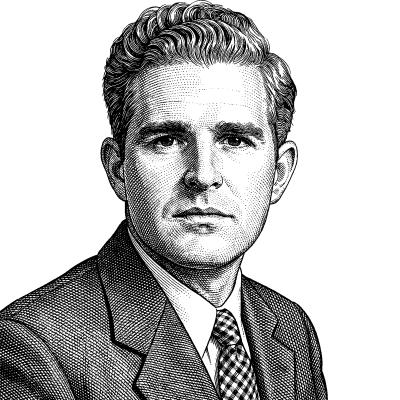
Sterling M. McMurrin
Sterling Moss McMurrin (1914–1996) was an American philosopher, educator, and public intellectual who served as United States Commissioner of Education under President John F. Kennedy. Born in Woods Cross, Utah, he spent most of his career at the University of Utah, where he was the E. E. Ericksen Distinguished Professor of Philosophy. McMurrin’s philosophical work focused on the intersection of religion and philosophy, particularly examining Mormon theology through the lens of Western philosophical traditions. His books “The Theological Foundations of the Mormon Religion” and “The Philosophical Foundations of Mormon Theology” remain influential analyses of LDS thought. Known for his intellectual independence and sometimes controversial views within Mormon circles, McMurrin emphasized the progressive and humanistic elements of Mormon theology, particularly its teachings about human potential and the relationship between humanity and divinity.
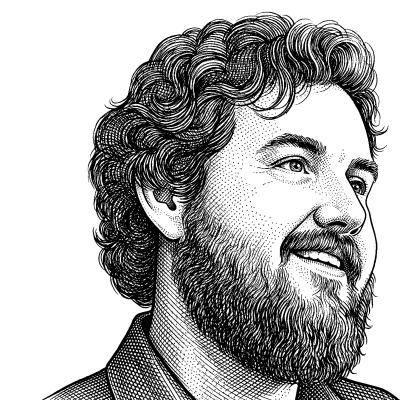
William Irwin Thompson
William Irwin Thompson (July 16, 1938-November 8, 2020) was an American cultural historian, poet, and social philosopher who studied how myth, science, and consciousness evolve together. Born in Chicago and educated at Pomona College and Cornell, he taught at MIT from 1965 to 1968 and at York University from 1968 to 1973, serving as a visiting professor at Syracuse in spring 1973. In 1972 he founded the Lindisfarne Association, which he led as founder and president until 1997. He built it into a meeting place for scientists, artists, and contemplatives who shared his conviction that no single discipline could account for a mind capable of building both cathedrals and computers. His books, including At the Edge of History (1971), Passages About Earth (1974), and The Time Falling Bodies Take to Light (1981), treat evolution as a story running through galaxies, cells, and civilizations. Drawing on figures like Teilhard de Chardin, they connect myth, spirituality, ecology, and cultural transformation. In 1976 he argued that technological expansion, including space colonization, should not become a way to evade ecological responsibility or the harder work of cultural change here on Earth.