Authors

Dan Wotherspoon is a prominent voice in discussions surrounding Mormonism and intellectual inquiry. He currently hosts the Latter-day Faith podcast, where he explores a wide range of topics relevant to Mormon thought and culture. He is also the former editor of Sunstone Magazine , a publication known for its engagement with Mormon history, theology, and contemporary issues. Wotherspoon holds a PhD in religion from Claremont Graduate University. His doctoral dissertation focused on deep Mormon sensibilities concerning the intrinsic worth and interconnectedness of all existence and how these values might contribute to a sustainable and peaceful world. This research reflects his commitment to exploring the intersection of Mormonism with broader ethical and philosophical concerns. Wotherspoon’s work often involves facilitating dialogue and understanding between diverse perspectives, as evidenced by his involvement with the Mormon Transhumanist Association (MTA). He has spoken at MTA conferences and hosted discussions related to transhumanism on his podcast, demonstrating his interest in the potential for Mormon thought to engage with emerging technologies and ideas. He lives in Tooele, Utah with his wife Laurie. They are about to be empty nesters.
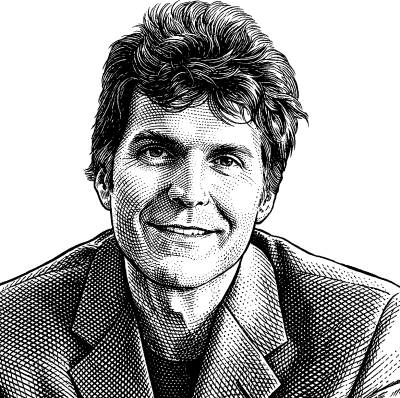
Don Bradley is an American historian specializing in the origins of the Latter-day Saint movement and the early history of the Book of Mormon. His meticulous archival research and innovative historical methodology have shed new light on some of the most intriguing questions surrounding the founding events of Mormonism. He is best known for his groundbreaking work reconstructing the lost 116 pages of the Book of Mormon manuscript. Bradley ’ s book The Lost 116 Pages: Reconstructing the Book of Mormon’s Missing Stories (2019) represents years of detective work piecing together what the lost manuscript likely contained. Using contemporary accounts, textual analysis, and historical context, Bradley reconstructed the narrative of Lehi and his family that was contained in the Book of Lehi—the portion translated by Joseph Smith and lost by Martin Harris in 1828. His work has been widely praised for its scholarly rigor and its contributions to understanding early Mormon history. Bradley’s faith journey has been marked by both departure and return. After leaving The Church of Jesus Christ of Latter-day Saints, he found his way back to faith in part through the influence of the Mormon Transhumanist Association, whose integration of religious belief with rational inquiry resonated with his scholarly temperament. Lincoln Cannon, founder and first president of the MTA, performed Bradley’s rebaptism—a meaningful connection between his intellectual and spiritual homecoming. Bradley has spoken openly about how his historical research, rather than undermining his faith, ultimately contributed to his decision to return. Bradley has presented his research at numerous academic conferences, including the Mormon History Association and FairMormon. He has contributed to scholarly journals and collaborative volumes on Latter-day Saint history. His work on the lost pages has influenced how scholars understand the structure and content of the Book of Mormon, as well as the translation process Joseph Smith employed. His research touches on themes relevant to transhumanist thought, particularly regarding the nature of knowledge, the recovery of lost information, and the relationship between faith and empirical inquiry. Bradley’s methodology demonstrates how careful scholarship can illuminate religious origins while respecting the complexity of belief—a model for integrating scientific and spiritual approaches to understanding human experience and potential.
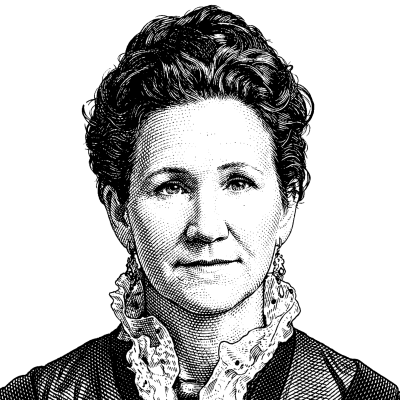
Elicia A. Grist
British actress Elicia Allely Grist lived from 1827 to 1898. She joined the Church of Jesus Christ of Latter-day Saints in May 1853, approximately five months following her husband, John Grist’s conversion. Her decision to join the church came at a significant personal cost, as her parents responded by disinheriting her. Throughout their lives together, the Grist family relocated frequently across England and Ireland, residing in Birmingham, Dublin, and Liverpool. The period in which Grist lived coincided with Britain’s Industrial Revolution, an era marked by sweeping economic, social, cultural, and political transformations. Among these changes was the invention of the steam printing press, which democratized access to printed materials and made them available to the expanding working class. This flourishing print culture provided a valuable public forum where individuals like Grist could articulate their values freely and document their religious experiences.
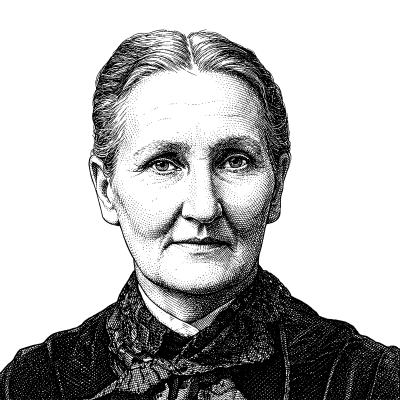
Elvira S. Barney
Elvira Stevens Barney (1832–1909) was a physician, missionary, and advocate for women’s rights in early Utah. Born in Gerry, New York, to a merchant father and schoolteacher mother, she was baptized in 1844 and arrived in the Salt Lake Valley with the Brigham Young pioneer company in 1848. In 1851, Barney was called on a mission to the Sandwich Islands (Hawaii), where she taught the gospel and basic education while learning the Hawaiian language. She later pursued her long-held dream of becoming a doctor, studying at Wheaton College in Illinois and serving a mission to Philadelphia, where she continued her medical studies. She graduated as a doctor of medicine in 1883. Barney practiced obstetrics and taught medicine classes to women in Utah. She served as a visiting physician at Deseret Hospital and spoke at mass meetings defending Latter-day Saint women’s voting rights. Active in the Utah Woman Suffrage Association, she also authored The Stevens Genealogy , published in 1907.

Eric G. Swedin is an American historian, novelist, and professor whose work bridges the gap between the history of science, technology, and Latter-day Saint theology. A member of the faculty at Weber State University in Ogden, Utah, Swedin serves as a professor in the History Department, where he teaches courses on the history of science and technology, as well as classes in computer science and information systems. Swedin’s academic contributions are particularly relevant to the dialogue between faith and modernity. His 2003 book, Healing Souls: Psychotherapy in the Latter-day Saint Community , explores the historical tension and eventual integration between Mormon theology and secular psychology. In this work, Swedin documents how the LDS community navigated the rise of the mental health professions, ultimately melding theological doctrines with mainstream psychiatry—a historical precedent that mirrors contemporary discussions regarding transhumanism and the integration of emerging technologies with religious practice. Beyond his work on religious history, Swedin is a recognized voice in the history of computing. He co-authored Computers: The Life Story of a Technology (2005) and edited Science Fiction and Computing: Essays on Interlinked Domains (2011), investigating how speculative fiction has influenced the development of real-world technologies. Through his dual focus on the history of technology and the rigorous imagination of alternate history, Swedin offers a unique perspective on human progress, the fragility of civilization, and the enduring role of belief in a technological age.

Evan McMullin
Evan McMullin (b. 1976) is an American politician, intelligence officer, and civic leader whose career has been defined by a commitment to democratic principles, moral courage, and service to the common good. Born in Provo, Utah, and a member of The Church of Jesus Christ of Latter-day Saints, McMullin served as a clandestine operations officer with the CIA for over a decade, working in counter-terrorism and national security across the Middle East and North Africa. He later served as Chief Policy Director for the House Republican Conference before launching an independent presidential campaign in 2016, earning 21% of the vote in Utah and drawing national attention as a principled alternative to the major-party candidates. McMullin’s public life has centered on the defense of constitutional democracy and human dignity against authoritarian impulses. In 2021, he co-founded the anti-authoritarian organization Stand Up Republic, and in 2022 he ran as an independent candidate for U.S. Senate in Utah, earning broad cross-partisan support. His advocacy consistently draws on moral foundations rooted in his faith, framing democratic participation and the protection of individual rights as ethical imperatives rather than merely political ones. McMullin’s career reflects a conviction that intelligence, courage, and moral clarity are inseparable—that the work of protecting human dignity requires both rigorous discernment and principled action. His willingness to challenge concentrated power and defend pluralistic institutions resonates with the Mormon transhumanist commitment to decentralized flourishing and the notion that genuine community requires consent, accountability, and the active participation of morally engaged individuals. In an era when technology increasingly mediates political power, McMullin’s insistence on transparency and ethical responsibility points toward the kind of stewardship that responsible technological progress demands.
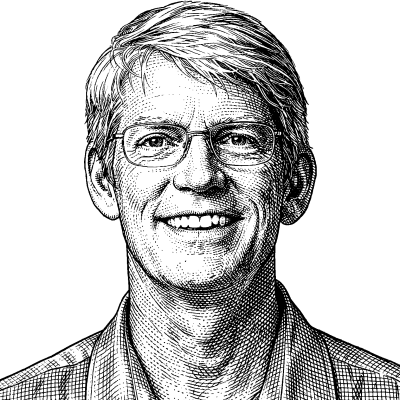
George Handley
George Handley (b. 1964) is an American scholar, essayist, and professor of humanities at Brigham Young University, where he has taught for over two decades. Born and raised in the United States, Handley earned his doctorate from the University of California, Berkeley, and has built a distinguished career at the intersection of environmental humanities, comparative literature, and Latter-day Saint thought. He is the author of several books, including Home Waters: A Year of Recompenses on the Provo River (2010) and The Hope of Nature: Our Care for God’s Creation (2020), works that weave together ecological attentiveness, theological reflection, and personal memoir. Handley’s scholarship is characterized by a sustained effort to hold together what contemporary culture often separates: scientific understanding of the natural world and the religious imagination that finds meaning within it. His work in comparative literature ranges across the Americas, with particular attention to Caribbean and Latin American traditions, and he has written extensively on the moral obligations that arise from genuine encounter with the living world. At BYU he has been a central voice in efforts to bring environmental stewardship into serious dialogue with Latter-day Saint theology. Handley’s deepest contribution may be his insistence that creation is not a mere backdrop to human history but an active element of moral and spiritual life. His writing calls readers toward a more reverent, attentive, and responsible relationship with the earth—one grounded not in fear or nostalgia but in the conviction that caring for the world is itself a form of worship and a practice of discipleship. This posture of creative stewardship, where faith, science, and love of the natural world converge, resonates with the Mormon transhumanist vision of humanity as co-creator with God, called to participate wisely and compassionately in the ongoing work of a living cosmos.
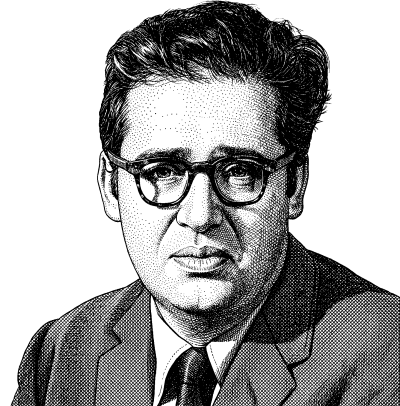
Harold Bloom
Harold Bloom (1930–2019) was an American literary critic and scholar widely regarded as one of the most formidable and provocative intellectual voices of the twentieth century. Born in the East Bronx, New York, to Yiddish-speaking Jewish immigrant parents, Bloom demonstrated an astonishing memory and appetite for literature from childhood. He earned his doctorate from Yale University in 1955 and remained associated with Yale for the rest of his career as Sterling Professor of Humanities, also holding appointments at New York University and other institutions. Over decades he produced a body of work remarkable in both volume and ambition, including The Anxiety of Influence (1973), The Western Canon (1994), and The American Religion (1992). Bloom’s critical signature was a theory of literary creativity as agonistic struggle: strong writers achieve originality not by ignoring their predecessors but by creatively wrestling with and misreading them, clearing imaginative space through what he called the “anxiety of influence.” This framework, drawn partly from Romantic poetry and partly from Kabbalistic thought, gave his criticism an almost mythological intensity. He was a fierce defender of the literary canon and a tireless champion of imaginative difficulty against what he saw as the ideological flattening of humanistic study. Bloom brought the same intensity to American religious history, and his engagement with Mormonism produced some of his most captivating writing. In The American Religion he argued that Joseph Smith was a religious genius whose revelations constituted one of the most original theological achievements in the history of the West. Bloom located the deepest nerve of authentic religion in the confrontation with mortality, and he judged early Mormonism the tradition that most vehemently and persuasively refuses to accept death as final. That judgment, coming from an outside observer with no stake in belief, carries its own kind of testimony. It points toward something that Mormon transhumanists recognize at the core of the Restoration: the conviction that death is a problem to be overcome, that human beings are destined for something far greater than biological limits suggest, and that this aspiration is not wishful thinking but a serious theological and ultimately practical claim about the nature of intelligence, embodiment, and divine possibility.

Jake Spurlock is a software engineer with a passion for the intersection of technology and culture. He previously worked at Wired Tech, where he oversaw digital publishing, content management, and web performance. Prior to his role at Wired, Jake led web development at Maker Media, managing the digital presence of Make Magazine and Maker Faire . He is a graduate of Utah Valley University, where he earned a degree in digital media. Originally from Utah, Jake now resides in the Bay Area with his wife and three children. He presented on “Mormons and Tech” at the Sunstone West 2016 conference, exploring the potential impact of emerging technologies—such as augmented reality devices like Microsoft’s HoloLens—on modern living and Mormon culture. Jake was encouraged to speak at the event by Lindsay, who also works with Sunstone. He originally presented at the Sunstone Symposium in Salt Lake.

Jaxon Washburn is a Ph.D. student in Near Eastern Languages and Cultures with a focus on Armenian Studies at UCLA. He holds a Master of Theological Studies in History of Christianity from Harvard Divinity School (2023) and dual bachelor’s degrees in Religious Studies and History from Arizona State University (2021), both earned summa cum laude. Raised in an interfaith household, Jaxon has long been passionate about religious studies and interfaith activism, with early speaking engagements at venues including the Parliament of the World’s Religions and the United Nations. He formerly served as youth advisor for the Arizona Interfaith Movement and as a member of the Mormon Transhumanist Association. He went on to serve a mission for the Church of Jesus Christ of Latter-day Saints in Armenia—an experience that profoundly shaped the trajectory of his academic career. At Harvard Divinity School, Jaxon deepened his commitment to both scholarship and faith. He worked as a Research Associate with the Harvard Pluralism Project, contributing to efforts promoting religious literacy and interreligious engagement. His studies there also led to a published essay, “Mormonism: The Most American ‘Religious Other,’” in the Harvard Divinity Bulletin (Fall/Winter 2022). During his time at HDS, he developed a strong interest in Armenian religious history, studying Classical Armenian and working with Dr. Christina Maranci following the reestablishment of Harvard’s Mashtots Chair for Armenian Studies. Jaxon’s current research interests encompass the history of Christianity, Eastern and Armenian Christianity, mediums of interreligious exchange, and religious pluralisms in the South Caucasus. His earlier work on intersections between Hindu and Latter-day Saint traditions around themes of transfiguration and divine embodiment has broadened into a wider exploration of how religious communities interact, exchange, and develop across cultural boundaries.