Authors

Rio Harvey is a dynamic speaker celebrated for her expertise in genetic technologies. Her work focuses on understanding genes—instructions for making polypeptides—and exploring the diverse applications of genetic technologies. At the MTAConf 2020, she delivered an impactful presentation, titled Genetic Technologies and Biodiversification , that offered fresh perspectives in this rapidly evolving field. Harvey’s interests span a range of topics within genetics, including personalized medicine, germ cell selection, and gene editing techniques like somatic and germline therapies. She acknowledges the potential of genetic modification in agriculture, while also expressing concerns about the concentration of ownership within a small number of organizations. She’s passionate about the ethical implications of individual genetic sequencing.
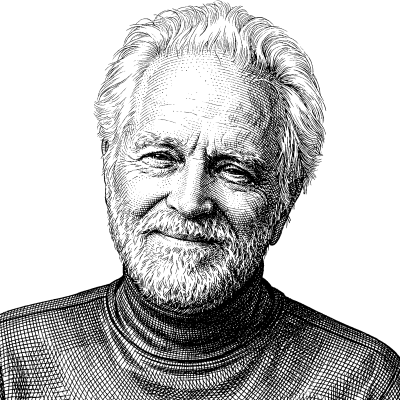
Robert A. Rees is a dynamic speaker who has previously presented at the Sunstone West 2016 Conference. He possesses experience as an educator, evidenced by his teaching in the former Soviet Union, where he developed techniques to encourage student participation and expression. His presentation at the conference explored the dual nature of technology, examining its potential for both progress and peril, drawing parallels to historical examples like Cain’s use of tools and contemporary issues like military weaponry and the accessibility of both beneficial and harmful content through modern technology. Rees’s presentation drew on his understanding of literature and history. He referenced Richard Eberhardt’s poem, “The Fury of Aerial Bombardment,” to illustrate humanity’s slow moral development, lagging behind technological advancements. He also connected the potential for good and evil inherent in technology to the wide dissemination of General Conference alongside the spread of harmful content such as pornography and the use of computer systems for genealogy and criminal schemes. This demonstrates his insightful perspective on how technological advancements intersect with moral and societal issues.
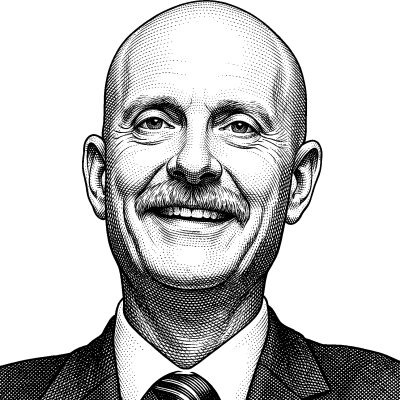
Robert Walden Kurtz is a Seventh-day Adventist minister, psychologist, and advocate for the convergence of religious faith and transhumanist aspiration. He holds a Master of Divinity from Andrews University (1990) and a Ph.D. in Psychology from Saybrook University (2022), and has served in roles spanning pastoral ministry, law enforcement, and academia—including service as a dean and professor of philosophy. Kurtz is perhaps best known within the life-extension and transhumanist communities for his insightful reflections on the intersections of technology, health, and Adventist theology. At the Religion and Transhumanism 2014 Conference, he delivered a compelling synthesis of his faith tradition’s history and transhumanist philosophy. Kurtz draws a poignant parallel between the origins of Adventism—born out of the “Great Disappointment” of 1844, when early believers deeply mourned the delay of their expected spiritual deliverance—and the overarching transhumanist hope of escaping death through technological advancement. Central to his thesis is the observation that Adventism’s foundational emphasis on health and longevity aligns naturally with transhumanist goals. He points to his denomination’s legacy of medical innovation—including pioneering smoking cessation programs, advancing proton therapy, and exploring xenotransplantation—as practical manifestations of the drive to push back against human biological limits. In his 2022 article, Transhumanism and the Future of Humanistic Psychology , Kurtz expands on these themes, asserting that humanity is no longer viewed simply as an isolated pinnacle being on Earth, but rather as an entity embedded in nature while inextricably intertwined with the technology its culture creates. While Kurtz acknowledges that not all members of his faith tradition share his enthusiasm for radical technological integration—often confronting skepticism regarding the blending of machinery with the human body—he remains a steadfast advocate for progress, dialogue, and civil liberty. He consistently calls on believers from every background to keep religious agendas out of government and champions the strict separation of church and state. Ultimately, Kurtz envisions a collaborative destiny for humanity, urging both secularists and the faithful to work together toward a future where we might “argue as immortals rather than die as rivals.”
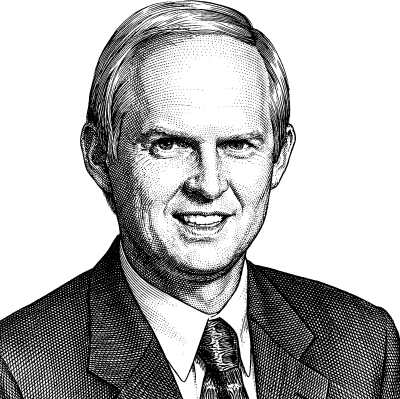
Robin Hanson is an economist and researcher known for his work on topics ranging from prediction markets and signaling theory to the potential societal impacts of future technologies, particularly artificial intelligence. His work often involves applying economic principles to understand and forecast long-term trends in growth and technological development. He is known for taking a ‘big picture’ approach to history, studying the history of the human economy over long timescales. Hanson’s presentations often explore the possibility of dramatic future economic transformations driven by advances in AI and automation. He examines historical patterns of exponential growth, suggesting that the rate of growth is accelerating, and that this acceleration could lead to massive changes in the economy. He believes artificial intelligence represents a major possibility. He was formerly an AI researcher and asks AI researchers about how far we have come in the last 20 years. His analyses provoke discussions about the future of work, the nature of intelligence, and the potential consequences of technological singularity.
Ross Richey is the owner of FTL Strategies, a software company specializing in rapid application development and lean software methodology. With a focus on efficient and agile software solutions, Ross leads his company in delivering impactful results for clients. Beyond his professional endeavors, Ross is an active commentator on the intersection of technology, religion, and politics. He maintains a blog and podcast where he shares his perspectives on these diverse topics, engaging with a wide audience on complex and thought-provoking issues. His presentation at the MTA conference reflects this broad range of interests, particularly his concern for AI risk and how it connects to the Plan of Salvation. Ross resides in Salt Lake City with his wife and four children. He uses his platform to explore the challenges of emerging technology and how principles of the Plan of Salvation might apply to the future.
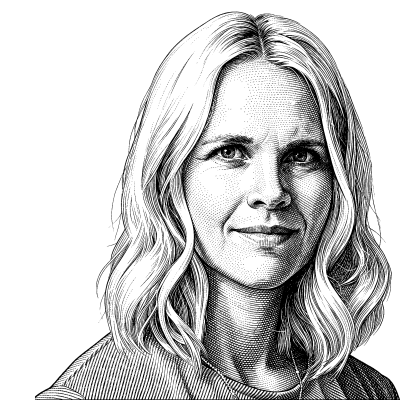
Sarah Wiley is the VP of Product Development at GenesisBlock, a Utah-based startup focused on building a consumer bank powered by Web3 technologies. With over 20 years of experience as a software engineer, Sarah brings a wealth of knowledge to the burgeoning field of decentralized finance. Prior to joining GenesisBlock, Sarah spent a significant portion of her career at Intuit. Three years ago, she discovered blockchain, decentralized development, and cryptocurrency, quickly becoming fascinated by their potential to revolutionize the financial landscape. She believes in the promise of DeFi to create censorship-resistant, permissionless, and peer-to-peer systems. At GenesisBlock, Sarah is dedicated to making DeFi accessible to everyone, addressing the current complexities and risks associated with navigating the decentralized finance world. She and the GenesisBlock team actively advise and influence legislation and regulation, build public awareness, and support projects that align with their values of democratic governance, transparency, and trustless transactions. She also enjoys mountain biking and hiking in the Wasatch Mountains. As a participant at the MTA (Mormon Transhumanist Association) conference, Sarah brings a unique perspective on the intersection of technology, faith, and the future of finance. She is particularly interested in how decentralized technologies can create systems that reflect shared values and enable a more equitable and efficient alignment of resources.
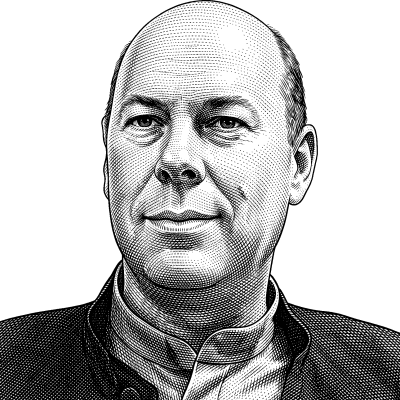
Scott Howe is a senior systems engineer at NASA Jet Propulsion Laboratory (JPL), where he is a member of the Constellation Architecture Team for the Lunar Outpost program. He brings a unique blend of architectural and engineering expertise to his work, having previously practiced as a registered architect in both California and Oregon. He spent five years with BWLC Architects in Rancho Cucamonga, California, and ten years with Kajima Corporation in Tokyo, Japan. In addition to his professional work, Howe has a strong academic background. He holds degrees from the University of Utah, the University of Michigan, and the University of Hong Kong. He has also served as an assistant professor at the University of Oregon for three years and at Hong Kong University for six years. Howe’s interests extend beyond the purely technical. At the MTA conference, he presented his initial ideas on quantifying morality, seeking to objectify moral decision-making. This project explores the intersection of engineering principles, theology, and the potential for self-assembling structures, using robotics, to inform an understanding of objective value and even the concept of the atonement. This reflects Howe’s personal belief that his religious views are intertwined with his professional and intellectual pursuits, forming a unified worldview.
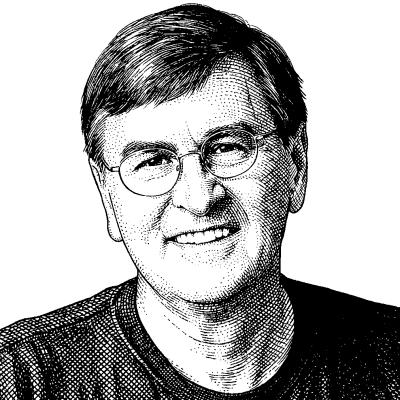
Dr. Scott Stornetta is a blockchain pioneer recognized for his foundational work dating back to 1991. He co-authored seminal papers and patents that predate and significantly influenced the development of Bitcoin and other digital currencies. His contributions are acknowledged within the Bitcoin white paper, with three of the eight citations referencing his research. Currently, Dr. Stornetta is a partner at Ugin Partners, a venture capital firm specializing in blockchain and AI technologies. He leverages his expertise to advise governments on blockchain policy and serves on multiple boards. He is also a fellow at the Creative Destruction Lab, associated with the Rotman School of Management at the University of Toronto, and a frequent lecturer at universities. He approaches his work and speaking engagements with a unique perspective, informed by his Latter-day Saint background. Dr. Stornetta holds a PhD in physics from Stanford University and has attended MIT, Harvard, and Brigham Young University.

Shannon Avana is an artist, technologist, and visionary thinker whose work explores the intersections of human consciousness, digital identity, and the future of humanity. She gained significant recognition within the Mormon Transhumanist community following her presentation at the 2014 Religion and Transhumanism Conference. Bridging the “Quantified Self” movement with the theological concept of resurrection, she proposed that our digital footprints and biological data serve as modern precursors to a technologically mediated form of eternal life. Central to Avana’s philosophy is the belief that art is a vital tool for capturing an individual’s unique essence. While raw data maps our physical trajectories, she posits that creative expression captures the subjective experience, suggesting a path toward a “technological resurrection” where human complexity can be reconstructed from the archives we leave behind. As a practicing artist, Avana continues to explore how LDS theology—with its emphasis on eternal progression—harmonizes with advancements in biotechnology and artificial intelligence. Her legacy is defined by her ability to humanize technical concepts, viewing technology not as a cold, mechanical force, but as a medium for profound spiritual and personal expression.

Sigmund Freud
Sigmund Freud (1856–1939) was an Austrian neurologist and the founder of psychoanalysis, a clinical method for treating psychopathology through dialogue between patient and analyst. His theories about the unconscious mind, defense mechanisms, and the structure of personality revolutionized the understanding of human psychology and influenced fields ranging from psychiatry to literature, art, and philosophy. Though many of his specific theories have been superseded, his broader insight—that unconscious forces shape human thought and behavior—remains foundational. Born in Freiberg, Moravia (now Příbor, Czech Republic), to Jewish parents, Freud moved with his family to Vienna at age four. He excelled academically and entered the University of Vienna medical school in 1873, eventually specializing in neurology. After studying with Jean-Martin Charcot in Paris, where he observed the use of hypnosis to treat hysteria, Freud began developing his own therapeutic techniques centered on free association and the interpretation of dreams. Freud ’ s landmark work The Interpretation of Dreams (1899) argued that dreams provide access to the unconscious mind and its repressed desires. He went on to develop a comprehensive theory of psychic structure, dividing the mind into id (primitive desires), ego (rational self), and superego (internalized moral standards). His theories of psychosexual development and the Oedipus complex, while controversial, opened new avenues for understanding childhood experience and its lasting effects. In later works such as Civilization and Its Discontents (1930), Freud explored the tension between individual drives and the demands of civilization. He suggested that human progress requires the sublimation of instinctual energies into socially constructive activities. While pessimistic about humanity’s prospects for happiness, Freud nonetheless believed that rational self-understanding could mitigate neurotic suffering and enable more authentic living. In 1938, following the Nazi annexation of Austria, Freud fled to London, where he died of cancer the following year. His legacy for transhumanist thought is ambivalent. On one hand, Freud emphasized the limitations imposed by unconscious forces and the difficulty of achieving genuine self-mastery. On the other hand, his project of bringing unconscious processes to conscious awareness—encapsulated in his maxim ‘Where id was, there ego shall be’—represents an early vision of using knowledge to enhance human autonomy and self-determination.