Authors

Ada Lovelace
Ada Lovelace (1815–1852) was a British mathematician and writer widely regarded as the world’s first computer programmer, a visionary who glimpsed the computational future nearly a century before the machines that would realize it. Born Augusta Ada Byron, the only legitimate child of the poet Lord Byron, Lovelace was raised by her mother Anne Isabella Milbanke, who deliberately cultivated in her a rigorous education in mathematics and science—partly, it is said, to guard against the romantic temperament of her absent father. That tension between poetic imagination and mathematical precision became her defining characteristic rather than her contradiction. Introduced to Charles Babbage in 1833, she became captivated by his proposed Analytical Engine. In 1843 she translated Luigi Menabrea’s account of the Engine from French, appending her own notes—nearly three times the length of the original—that described, among other things, an algorithm for computing Bernoulli numbers. This is now recognized as the first published algorithm intended for execution by a machine. Lovelace’s most striking contribution was not the algorithm itself but the conceptual leap it represented. She understood that the Analytical Engine could manipulate symbols according to rules, not merely numbers—that it was, in principle, a general-purpose engine of thought. She also recognized its limits: the machine, she wrote, could only do what we know how to order it to perform. That sober, precise boundary-drawing between tool and mind was itself a kind of philosophical precision that still shapes how we think about artificial intelligence. Her imagination ranged freely across what such an engine might compose, calculate, and create, anticipating by more than a century the questions that animate the intersection of computation and human cognition. From a Mormon transhumanist sensibility, Lovelace’s life embodies the conviction that intelligence—cultivated, disciplined, and applied to the highest tools available—is itself a sacred work. Her synthesis of mathematical rigor and imaginative reach, her insistence that the engines of computation might serve art and music as readily as arithmetic, resonates with a theology that treats creativity and intelligence as attributes of divinity in which humans genuinely participate. She died at thirty-six, leaving a legacy that took more than a century to be fully recognized—a reminder that the seeds of transformation are often sown long before the harvest is visible.

Alan Watts
Alan Wilson Watts (1915–1973) was a British-born American philosopher, writer, and speaker best known for popularizing Eastern philosophy—particularly Zen Buddhism, Taoism, and Hinduism—for Western audiences. He remains one of the most influential interpreters of Asian religious thought in the twentieth century. Watts began his career in England, where he was involved with the Buddhist Lodge in London. He later moved to the United States, briefly serving as an Episcopal priest before leaving the ministry to pursue a broader philosophical vocation. He became a professor and dean at the American Academy of Asian Studies in San Francisco and authored over twenty-five books, including The Way of Zen (1957), Psychotherapy East and West (1961), and The Book: On the Taboo Against Knowing Who You Are (1966). His lectures, many of which survive as recordings, continue to reach millions worldwide. Watts’s central teaching—that the individual self and the universe are fundamentally one—resonates with Mormon Transhumanist themes of theosis and the expansive potential of consciousness. His insistence that human beings are not merely in the universe but of it, expressions of a deeper cosmic process, parallels the tradition’s interest in humanity’s divine trajectory. However, significant differences exist. Watts generally rejected the concept of a personal God, viewing divinity as an impersonal process rather than a being with whom one could have a relationship. He was skeptical of doctrines of sin and moral depravity, seeing guilt as a psychological obstacle rather than a theological reality. He also questioned the Western emphasis on individual free will, favoring a view of spontaneous action aligned with Taoist wu wei . Despite these divergences, his lifelong project of dissolving boundaries between the sacred and the secular, the human and the divine, offers rich material for dialogue with Mormon Transhumanist thought.

Albert Einstein
Albert Einstein (1879–1955) was a German-born theoretical physicist whose work transformed humanity’s understanding of space, time, energy, and matter, making him one of the most consequential scientific minds in recorded history. Einstein developed the special theory of relativity (1905) and the general theory of relativity (1915), the latter offering a geometric account of gravity that replaced Newtonian mechanics at cosmological scales. His famous mass-energy equivalence, expressed as E=mc², opened new vistas in physics and eventually in energy technology. He was awarded the Nobel Prize in Physics in 1921 for his discovery of the law of the photoelectric effect, a cornerstone of quantum theory. Einstein held positions at the Swiss Federal Patent Office, the University of Zurich, the German University in Prague, ETH Zurich, and the Prussian Academy of Sciences before emigrating to the United States in 1933, where he joined the Institute for Advanced Study in Princeton until his death. Beyond equations and thought experiments, Einstein was a deeply reflective thinker on the relationship between human intelligence and ultimate reality. He resisted the label of atheist, describing his orientation instead as a posture of humble wonder before a universe marvelously arranged and obeying certain laws—laws our limited minds only dimly understand. He held that science without religion is lame, and religion without science is blind, insisting the two must work hand-in-hand. This is not the posture of a secularist who has set metaphysics aside; it is the posture of someone who treats the intelligibility of the cosmos as a moral and spiritual provocation. That sensibility finds natural resonance with the Mormon transhumanist conviction that creation, intelligence, and Godhood are continuous rather than severed—that the universe’s deep order is something we are called to investigate, participate in, and ultimately embody. Einstein did not share Mormon theology, but his insistence that wonder before the cosmos is practically indistinguishable from religious seriousness, and that the advance of knowledge is bound up with something larger than mere utility, speaks across that distance. His life’s work stands as a testament to the proposition that rigorous intelligence and reverent imagination are not opposites but partners in the long, unfinished project of understanding our place in a universe of staggering complexity and beauty.

Amit Goswami is a scientist and researcher who challenges mainstream scientific materialism, particularly in its application to consciousness, health, and healing. He advocates for the integration of spirituality with medicine and seeks to demonstrate the importance of consciousness in these areas—a view often dismissed by conventional scientific paradigms. Goswami draws heavily on the principles of quantum physics to argue for a reality where consciousness plays a fundamental role. He posits that the prevailing materialistic worldview, which treats the body and mind as mere machines, inhibits our understanding of health, healing, and the human experience. He believes that quantum physics offers an alternative perspective, one that acknowledges the subjective aspect of consciousness and its potential impact on our well-being. At a 2013 conference jointly organized by the Integrative Health Network and the Mormon Transhumanist Association, Goswami presented on “Quantum Physics, Consciousness and Health.” He emphasized the disconnect between the implications of quantum physics and its public perception, suggesting that media and academia have perpetuated materialistic concepts to the detriment of a more holistic understanding of consciousness and its potential for influencing health and personal agency. His work attempts to bridge the gap between scientific inquiry and spiritual understanding, encouraging a reevaluation of the role of consciousness in our lives.

Antoine de Saint-Exupéry
Antoine de Saint-Exupéry (1900–1944) was a French aviator, writer, and moral philosopher whose work stands among the most enduring explorations of human meaning, courage, and the relationship between solitude and community in the twentieth century. Born into an aristocratic family in Lyon, he pursued aviation at a time when flight was still a frontier art, serving as a commercial and military pilot across Europe, North Africa, and South America. His cockpit became a laboratory for existential reflection, and the sky a medium through which he interrogated what it means to be fully human. Saint-Exupéry’s literary output is inseparable from his vocation as a pilot. Night Flight (1931), Wind, Sand and Stars (1939), and Flight to Arras (1942) drew directly from his aerial experience to trace the moral dimensions of responsibility, sacrifice, and fraternity under risk. The Little Prince (1943), written during wartime exile in New York, became one of the best-selling and most-translated books in history—a deceptively simple fable about perception, love, and the invisible bonds that give life its weight. He disappeared on a reconnaissance mission over the Mediterranean in July 1944, never to return; the mystery of his end deepened the mythic quality already surrounding his life. Saint-Exupéry’s lasting significance lies in his insistence that technology—the airplane above all—does not diminish humanity but can, rightly inhabited, enlarge it. He understood flight not as escape from the earth but as a vantage from which human solidarity becomes visible in a new way. His writing returns persistently to themes of creative discipline, the cultivation of inner life, the obligation of the living toward the lost, and the kind of love that sees what is essential rather than what is merely present. These concerns resonate naturally with the Mormon Transhumanist conviction that the proper work of intelligence and technology is to deepen relationship, expand moral vision, and orient human striving toward the fullest possible flourishing of every soul.

Benjamin Franklin
Benjamin Franklin (January 17, 1706 – April 17, 1790) was an American polymath, statesman, scientist, inventor, writer, printer, philosopher, and Founding Father of the United States. Among the most influential intellectuals of the Enlightenment, Franklin earned the title “The First American” for his tireless advocacy of colonial unity and his diplomatic efforts to secure French support during the American Revolution. Born in Boston, Massachusetts, Franklin received only two years of formal schooling before beginning work in his father’s candlemaking shop. At age twelve, he became an apprentice to his brother James, a printer, where he developed his love of reading and writing. By age seventeen, he had run away to Philadelphia, where he would build his fortune and reputation. Franklin’s scientific contributions were remarkable. His experiments with electricity, including the famous kite experiment, established the nature of lightning and led to the invention of the lightning rod. He also invented bifocal glasses, the Franklin stove, and the glass armonica. His curiosity extended to oceanography, meteorology, and demography. As a civic leader, Franklin founded the American Philosophical Society, the first lending library, the University of Pennsylvania, and the first fire department in Philadelphia. His wit and wisdom, expressed through Poor Richard’s Almanack, shaped American culture for generations. Franklin’s vision of human progress through science and reason resonates strongly with transhumanist thought. His belief that future generations would master nature, extend human life, and achieve powers beyond imagination prefigured modern discussions of technological enhancement and human flourishing.
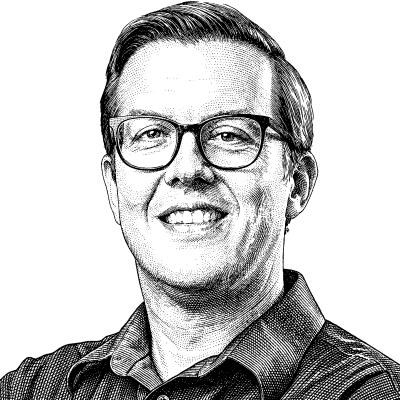
Benjamin Peters
Benjamin Peters (born 1980) is an American media scholar, author, and professor known for his work on the history of communication technologies, information theory, and the social dimensions of digital networks. He serves as the Hazel Rogers Professor of Communication at the University of Tulsa and has held affiliations with several prominent research institutions. Peters is best known for his book How Not to Network a Nation: The Uneasy History of the Soviet Internet (2016), which explores the failed attempts to build a nationwide computer network in the Soviet Union and examines how social and political systems shape technological development. The work received widespread acclaim for its interdisciplinary approach, bridging media studies, history, and science and technology studies. He has also edited Digital Keywords: A Vocabulary of Information Society and Culture (2016), contributing to critical discourse around the language and concepts underpinning the digital age. Peters’s scholarship carries resonance for those interested in the intersection of technology, human potential, and collective aspiration. By investigating how societies envision and fail to realize transformative technological projects, his work illuminates the deeply human—and often ideological—dimensions of networked communication. His research reminds us that the tools we build to connect and elevate humanity are always embedded in moral, political, and even spiritual frameworks. For communities exploring themes of theosis and the cooperative pursuit of transcendence through technology, Peters’s insights into the promises and pitfalls of networked societies offer valuable perspective on how human aspiration and systemic constraints interact in the ongoing project of building a better world.
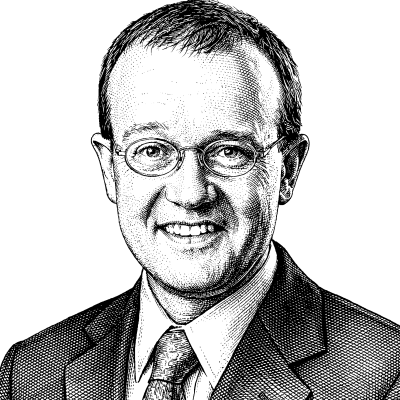
Brian Green is a scholar at Santa Clara University specializing in the intersection of transhumanism and Catholic ethics. His research explores the complex relationship between these seemingly disparate fields, seeking to identify areas of both conflict and potential collaboration. He has dedicated approximately a decade to this field of study, commencing with his master’s program at the Graduate Theological Union in Berkeley. His work aims to foster mutual understanding and dispel misconceptions between transhumanist and Christian communities. At the Religion and Transhumanism Conference 2014, Green addressed prevalent myths regarding the Catholic Church’s stance on life extension and human genetic manipulation, arguing for a more nuanced perspective that acknowledges the diversity within both transhumanism and Christianity. He advocates for identifying true points of tension and exploring potential alliances between these groups. Green’s research considers the justice implications of emerging technologies, and the practical challenges of achieving immortality. He seeks to encourage productive dialog that reconciles the benefits of emerging technologies with Catholic concerns for social justice, human dignity, and spiritual well-being.

Carl Sagan
Carl Edward Sagan (1934–1996) was an American astronomer, planetary scientist, cosmologist, and one of the most influential science communicators of the twentieth century. His ability to convey the wonder of the cosmos to a broad public audience made him a defining figure in popular science. Sagan spent much of his career at Cornell University, where he served as a professor of astronomy and director of the Laboratory for Planetary Studies. He contributed significantly to planetary science, including research on the atmospheres of Venus and Titan, and played a key role in NASA’s Mariner, Viking, Voyager, and Galileo missions. He helped design the Pioneer plaque and the Voyager Golden Record—messages from humanity launched into interstellar space. His 1980 television series Cosmos: A Personal Voyage became one of the most widely watched programs in public television history, and his novel Contact (1985) explored humanity’s first encounter with extraterrestrial intelligence. Sagan was a passionate advocate for scientific literacy, critical thinking, and the search for life beyond Earth. While he identified as an agnostic and approached questions of God and transcendence through a scientific lens, his work resonated deeply with themes central to transhumanist thought: the aspiration to transcend present human limitations, the ethical stewardship of technology, and a profound reverence for the potential of conscious life in the universe. His famous declaration that “we are a way for the cosmos to know itself” echoes theological ideas of humanity’s participatory role in creation and theosis—the notion that intelligent beings may grow toward ever-greater understanding, compassion, and capacity. Sagan’s legacy continues to inspire those who see science and wonder as complementary paths toward human flourishing.

Carl Teichrib is a Canadian researcher, writer, and lecturer who has spent more than two decades documenting the ideological and spiritual currents reshaping Western civilization—with particular attention to transhumanism, globalism, and the re-enchantment of secular culture. He is the author of Game of Gods: The Temple of Man in the Age of Re-Enchantment (2018) and served as editor of Forcing Change , a research journal tracking transformative movements in politics, religion, and technology. Teichrib’s work is rooted in on-the-ground investigation: he has attended and reported on events ranging from Burning Man to world federalist conferences to transhumanist gatherings, bringing an ethnographic sensibility to ideological terrain that most commentators treat from a distance. His research focuses on the convergence of technological aspiration, spiritual seeking, and political vision—the overlapping currents through which humanity is, in various ways, reaching for transcendence. Writing from an evangelical Christian perspective, Teichrib approaches transhumanism critically, as a symptom of a deeper human longing that he believes is being misdirected. That diagnosis differs from a Mormon transhumanist reading, which holds that the longing itself—for greater intelligence, longer life, expanded capacity, and participation in divine creative work—is genuine and worth pursuing through rigorous, ethical, technologically-engaged means. Still, Teichrib’s careful documentation of transhumanist aspirations, his recognition that the movement addresses real spiritual hunger, and his insistence that ideas about human transformation carry profound moral weight make him a serious interlocutor for anyone thinking carefully about where humanity is headed and why.