Authors
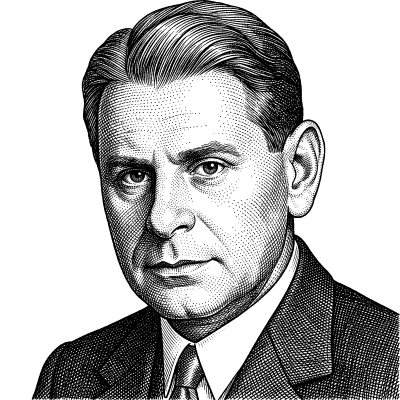
Karl Popper
Karl Raimund Popper (1902–1994) was an Austrian-British philosopher widely regarded as one of the most influential philosophers of science of the twentieth century. His work on the demarcation problem, epistemology, and the philosophy of the open society left a lasting mark on intellectual life across multiple disciplines. Popper is best known for his principle of falsifiability , which holds that for a theory to be genuinely scientific, it must be capable of being tested and potentially refuted. This criterion, articulated in his landmark work The Logic of Scientific Discovery (1934), fundamentally reshaped the philosophy of science and challenged the prevailing inductivist tradition. He spent much of his academic career at the London School of Economics, where he served as professor of logic and scientific method. His political philosophy, most notably developed in The Open Society and Its Enemies (1945), offered a vigorous defense of liberal democracy and a critique of totalitarian ideologies rooted in historicism. Popper’s epistemology carries deep resonance with transhumanist and theological themes. His vision of knowledge as an unending, self-correcting pursuit—forever open to revision and growth—aligns with the transhumanist commitment to ongoing human improvement. His concept of critical rationalism suggests that humanity progresses not by claiming certainty but by humbly identifying and correcting errors, a posture that echoes religious traditions emphasizing humility, faith in future understanding, and the aspiration toward greater light and knowledge. For the Mormon Transhumanist Association, Popper’s insistence that an open society fosters human flourishing, and that our reach should always exceed our grasp, resonates with the vision of theosis—the idea that humanity is called to grow toward the divine through both reason and faith.

Kathy Wilson is a dedicated advocate for responsible belief systems and a long-time participant in the transhumanist movement. Raised as a Mormon, she identifies as a mystic and appreciates the open-minded, boundary-breaking ethos of transhumanism, particularly within the Mormon Transhumanist Association. She sees the movement as a way to actively engage with and further explore the more unconventional beliefs within Mormonism, such as transfiguration and the Second Coming. For the past two decades, Wilson has traveled extensively in India, witnessing firsthand the country’s rapid transformation and the complex realities of its growing population. She has spent time in the slums of Delhi and Mumbai, confronting issues of poverty, gender inequality, and corruption. This experience has profoundly impacted her perspective, expanding her understanding of what is possible on planet Earth and reinforcing the interconnectedness of global challenges. Wilson collaborates with NGOs in Delhi to assist marginalized communities, particularly widows and children in slums. She aims to raise awareness about the problems in developing countries and encourages others to use their technology, education, and resources to support positive change. She believes that the quality of life and interconnectedness of countries means everyone must be aware of problems facing other countries and cultures.

Kurtis Lockhart is an urban development leader, researcher, and the Founder and Director of the Africa Urban Lab (AUL). He holds a PhD in political science from the University of Oxford, where his research examined the impact of institutional reforms on public goods provision in sub-Saharan Africa. He also obtained an MSc in Development Management from the London School of Economics—where he graduated top of his class—and a BA in Economics and Development Studies from McGill University. While at Oxford, he taught both quantitative methods and African politics, seamlessly bridging rigorous academic theory with real-world development challenges. Before focusing on urban innovation, Lockhart built extensive on-the-ground expertise managing developmental research and randomized control trials. He served as a Research Manager for the International Growth Centre and Warc Africa in Sierra Leone, and for the ELIMU Impact Evaluation Center in Kenya. These early roles across varied sectors solidified his understanding of the complex bottlenecks facing developing regions and underscored the urgent need for scalable, structural solutions. A prominent advocate for innovative governance, Lockhart previously served as Executive Director and Head of Research at the Charter Cities Institute (CCI), a Washington, D.C.-based think tank. There, he championed the development of charter cities—new urban centers granted special jurisdiction to enact institutional reforms—as a mechanism to address Africa’s rapid urbanization. Expanding on this mission in 2024, he launched the Africa Urban Lab in Zanzibar. Operating as a “teaching hospital” for urban professionals in partnership with the African School of Economics and CCI, AUL trains the next generation of municipal leaders and planners to transform urban growth into economic prosperity. Lockhart’s broader vision aligns deeply with themes of human progress, emphasizing how institutional evolution can lift communities out of poverty and foster long-term resilience. At the MTAConf 2022, he made a presentation on Charter Cities: Empowered Cities for the Urban Age, illustrating how decentralized, empowered cities can overcome traditional development hurdles. By reimagining city governance as a catalyst for human flourishing, Lockhart continues to shape the future of urban resilience and economic freedom across the Global South.

Laura Shin is a prominent crypto journalist and the host of the popular podcast, Unchained . Her work focuses on the intersection of technology, finance, and decentralized systems, making her a relevant voice for the Mormon Transhumanist Association conference. She brings an understanding of DAOs (Decentralized Autonomous Organizations) and their implications for collective action and individual empowerment—a topic relevant to transhumanist ideals of distributed governance and community building. Shin was a senior editor at Forbes, where she distinguished herself as the first mainstream journalist to cover cryptocurrency full-time. She is the author of the book The Cryptopians: Idealism, Greed, Lies, and the Making of the First Big Cryptocurrency Craze , offering a deep dive into the early days of the crypto world. Her insights into DAOs, blockchain technology, and the future of decentralized systems are well-informed by her work. Laura Shin graduated Phi Beta Kappa with honors from Stanford University and earned a Master of Arts from Columbia University School of Journalism. Her academic background combined with her practical experience in the fast-evolving world of crypto positions her as an insightful commentator on the technological and societal trends shaping the future.
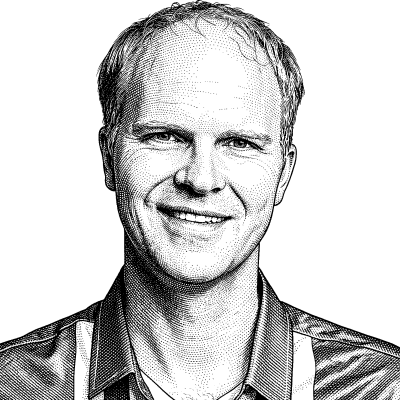
Leonard Reil is a Canadian diplomat and scholar whose professional and intellectual pursuits sit at the crossroads of international relations and transhumanist philosophy. With a career spanning several continents and cultures, Reil’s work explores the intersection of global conflict, diplomacy, and the potential for technological and spiritual evolution. Reil obtained a Bachelor of Arts in International Relations from Brigham Young University before moving to the United Kingdom to earn a Master of Arts in International Conflict Analysis from the University of Kent at Canterbury. This academic foundation prepared him for a distinguished career with Canada’s Department of Foreign Affairs and International Trade (now Global Affairs Canada). Beyond his diplomatic service, Reil is an active voice within the Mormon Transhumanist Association, where he applies his background in conflict analysis and global systems to theological and futurologist inquiries. At the 2012 MTA Conference, he delivered a compelling presentation titled The Gods of Eternity, in which he explored the concept of “Theosis” through the lens of modern science and the “Gods of the Gaps” theory. In this work, Reil posits that as human knowledge expands, the “gaps” traditionally filled by the divine are not merely shrinking but are being replaced by a more sophisticated understanding of our own potential for eternal progression. Reil’s contributions to the transhumanist community are characterized by a unique synthesis of Latter-day Saint theology and technological optimism. He often reflects on the nature of post-humanity and the ethical implications of advanced technologies, suggesting that the path toward becoming “as God is” involves a mastery of the physical and social laws that govern the universe. Through his writing and speaking, Leonard Reil continues to advocate for a future where technology is utilized to fulfill the highest aspirations of the human spirit. He remains a key figure in the MTA, embodying the association’s mission to explore the synergistic relationship between religion and science in the pursuit of human transcendence.
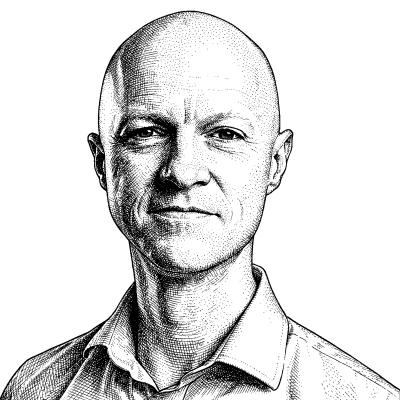
Lincoln Cannon is an American philosopher and technologist who co-founded the Mormon Transhumanist Association in 2006, serving as its president from 2006 to 2016. He is a leading advocate of technological evolution and postsecular religion, combining software engineering expertise with degrees in philosophy and business. Cannon is also a founder and board member of the Christian Transhumanist Association. He formulated the New God Argument, a logical argument for faith in God that has become popular among religious transhumanists. His academic work includes “Mormonism Mandates Transhumanism” published in Religion and Human Enhancement: Death, Values, and Morality (Palgrave Macmillan, 2017) and “Transfigurism: A Future of Religion as Exemplified by Religious Transhumanists” published in The Transhumanism Handbook (Springer Verlag, 2019). Mormon transhumanism, as articulated by Cannon, holds that humanity should learn how to be compassionate creators. This idea is central to the Mormon theological tradition, which provides a religious framework consistent with naturalism and supportive of human transformation. Cannon’s work bridges religious faith with scientific advancement, advocating for the ethical use of technology to extend human abilities in ways consistent with a religious worldview.

Luke Hutchison is a New Zealand-born computer scientist and researcher whose work explores the fundamental limits of computation, the architecture of biological systems, and the future of artificial intelligence. Known for his deep interest in the theoretical foundations of intelligence, Hutchison has spent his career at the intersection of high-performance computing and the quest to understand the nature of mind. Hutchison’s academic journey began in New Zealand before he moved to the United States to pursue advanced studies at the Massachusetts Institute of Technology (MIT). There, he completed his PhD in Computer Science and Computational Biology. His doctoral research reflected a fascination with the “software” of life, utilizing computational methods to decode complex biological patterns—a precursor to his later work in artificial neural networks and machine learning. Following his time at MIT, Hutchison joined Google, where he played a pivotal role in the company’s burgeoning AI initiatives. He co-founded a specialized AI research team within Google Machine Intelligence alongside renowned futurist and transhumanist Ray Kurzweil. During this tenure, he contributed to the development of technologies that bridge the gap between human language and machine understanding, helping to advance the capabilities of large-scale AI systems. Beyond his primary research, he is well known in the software engineering community as the creator of ClassGraph, a high-performance classpath and module scanner for the Java ecosystem. Hutchison is a frequent contributor to the dialogue surrounding the future of humanity and technology. In his presentation at the MTAConf 2024, titled “Is Intelligence Bigger than Computation?”, he challenged the prevailing materialist assumption that the human mind is merely a Turing-complete computer. Drawing on concepts from physics, information theory, and philosophy, he explored whether true intelligence requires a substrate that transcends traditional algorithmic computation, touching upon themes of consciousness and the potential for technological transcendence.
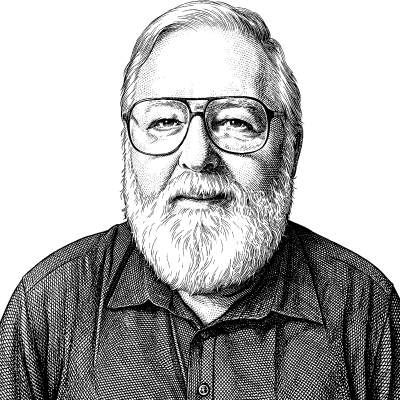
Malcolm Dean is a multi-disciplinary scholar and author whose research explores the fields of complexity science, cognitive neuroscience, and information theory. Currently a research affiliate within the UCLA Human Complex Systems Program and a member of the Higher Cognitive Affinity Group at the UCLA Brain Research Institute, Dean investigates the fundamental physical laws governing mental processes and social structures. His academic tenure at UCLA has been defined by both technical leadership and theoretical innovation, having served as a Principal Editor in the Department of Academic Computing and as a Principal Investigator for several scientific initiatives. At the core of Dean’s intellectual contribution is the development of “Cognitive Thermodynamics” and the Natural Philosophy of Information. He posits that human belief systems and cultural evolution are not merely social constructs but emergent properties of fundamental physics. In his 2020 work, Religion is Physics , Dean argues for a theoretical framework where social evolution is understood through the lens of entropy. He provides a thought-provoking link between the study of human meaning and the hard sciences by considering religion as a practical application of physical laws. Dean has been an influential figure in the discourse surrounding the intersection of spirituality and transhumanism. In his presentation at the Transhumanism & Spirituality 2010 Conference, titled “The End(s) of Mythology,” he explored the transition from traditional mythological narratives to a “scientific mythology” grounded in the reality of an information-based universe. His work suggests that as our understanding of the brain and information theory advances, the ancient human impulse toward transcendence will find its ultimate explanation—and perhaps its fulfillment—within the laws of thermodynamics and computation. Through his research and writing, Dean continues to explore how the emergence of consciousness and the structure of human societies are dictated by the flow of information. His professional versatility extends into the public sphere as a journalist and computer consultant, allowing him to translate dense scholarship for a broader audience.

Marcus Flinders is the founding attorney and managing partner of Flinders Bandy Attorneys at Law, specializing in corporate and business law, as well as tax planning and litigation. He brings over fifteen years of experience as an entrepreneur and businessman to his legal practice. At the MTAConf 2013, Flinders was responsible for arranging lunch and presented on the complex topic of the legal rights of sentient machines. Flinders holds a BS in philosophy from Utah Valley University, a JD from Valparaiso University, and an LLM in taxation from the University of Denver—making him a highly educated voice within the MTA community. He served a mission for the LDS Church in Côte d’Ivoire, demonstrating his commitment to his faith. He is married with three children. At the aforementioned conference, Flinders explored the history of rights arguments, referencing thinkers from Socrates and Aristotle to Bentham and Mill, and touching upon utilitarianism. He framed his argument for the rights of sentient machines within the context of constitutional law, highlighting the challenges and possibilities this presents for lawyers and society as technology advances.
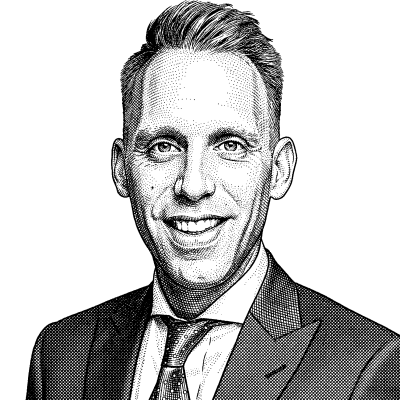
Matt Gardner is a Seminary teacher in Lehi, dedicated to helping youth navigate the complex ethical and spiritual landscape presented by emerging technologies, particularly artificial intelligence. He approaches the subject from a pragmatic, faith-based perspective, drawing on principles of the Church of Jesus Christ of Latter-day Saints to guide his pedagogy. Recognizing both the potential benefits and potential risks of AI—the former promising a quasi-millennial era, the latter potentially apocalyptic—Gardner focuses on equipping students with the tools to critically assess and engage with these technologies. His teaching methodology is based on three core principles: acting in faith, examining concepts from an eternal perspective, and seeking understanding from divinely appointed sources. He emphasizes the importance of framing questions within a gospel context rather than a purely worldly one. Gardner’s presentations often incorporate real-world examples, such as the Tesla Bot Optimus, to stimulate discussion and encourage students to consider the implications of AI development. He is committed to providing practical teaching tools that empower youth and their parents to navigate the challenges and opportunities presented by AI in a thoughtful and informed manner.