Authors
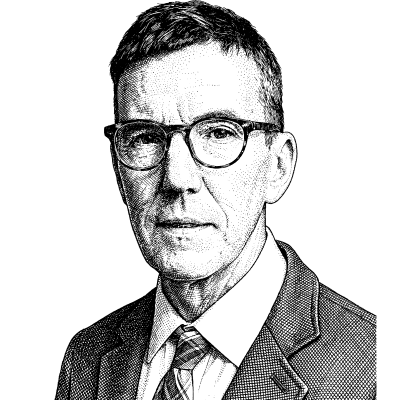
Jon Bialecki is a Continuing Lecturer in the Department of Anthropology at the University of California, San Diego, a position he has held since 2020. His research centers on the anthropology of religion, the anthropology of the subject, ontology and temporality, religious language ideology, and religious transhumanist movements. He approaches these topics with a keen interest in religious authority and its intersections with other authoritative discourses, such as science. Bialecki’s prior work includes a major field project with Southern California evangelicals, where he studied Pentecostal practices and the constitution of religious authority. This groundwork led to his current participant observation research focused on the Mormon Transhumanist Association (MTA). He holds a BA, MA, and PhD from the University of California, San Diego, as well as a JD from the University of San Diego. His work has appeared in numerous edited volumes and in academic journals such as the South Atlantic Quarterly , American Ethnologist , Anthropological Theory , and the Journal of the Royal Anthropological Institute . He also served as co-editor for a special issue of Anthropological Quarterly focusing on Christian language ideology.

Jon Ogden is an author, educator, and entrepreneur focused on the intersection of faith, family, and technology. He is the co-founder of Uplift Kids, a platform providing families with a lesson library and curriculum designed to foster spiritual health and well-being within the home. Ogden is also the author of When Mormons Doubt: A Way to Strengthen Relationships and Live a Quality Life , a work that explores themes of faith, doubt, and community within a Mormon context. His exploration of religious belief as a potentially modular system, similar to an API, suggests an openness to integrating diverse philosophical and spiritual traditions—a perspective that aligns with the Mormon Transhumanist Association’s interest in exploring how technology and innovation can enhance human experience and spiritual development. He holds a Bachelor’s degree in English, Literature, and a Master’s degree in Writing and Rhetoric, both from Brigham Young University. Ogden lives in Provo, Utah, with his spouse and two children and writes regularly at johnogden.com.
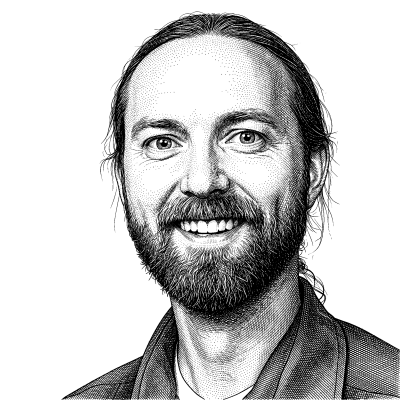
Jonathan lives in rural Georgia with his wife and three boys, teaching Chemistry and enjoying the good people of his community. He studied Molecular Biology at Brigham Young University, and Biophysics at the University of Wisconsin, Madison. Jonathan is passionate about fatherhood, teaching and learning, Mormonism, and dance (he’s much better at the first three), and dabbles in home repairs, various crafts, poetry, music, gardening, and Transhumanism. He has enjoyed many years working in Primary, with Young Adults and Ward Missions in various capacities. He currently enjoys serving in his ward and community however he is able.

Jonathan Jardine holds a bachelor’s degree in economics from Brigham Young University (BYU) and an MBA from Harvard Business School. He is the Chief Operating Officer of Blue Cloud Pediatric Surgery Centers. Prior to Blue Cloud, he served as CEO of Believe Dental, a San Antonio-based organization focused on expanding oral healthcare access for individuals with intellectual and developmental disabilities. Earlier in his career, Mr. Jardine served as Executive Director of Product Supply at Valero Energy Corporation, and as Country Manager for Valero’s Latin America business, based in Lima, Peru, where he also served as a board member of the AirBP | PBF Aviation Joint Venture. His career spans multiple sectors, including healthcare services and finance, with previous positions at Goldman Sachs and Dodge & Cox in San Francisco. Jardine draws on principles from influential thinkers like the late Harvard professor Clay Christensen, exploring concepts of emergent and deliberate strategies. His presentation at MTAConf 2022 focused on the potential of decentralized strategies within the church, particularly in its practical application, drawing inspiration from Joseph Smith’s emphasis on individual agency and governance.
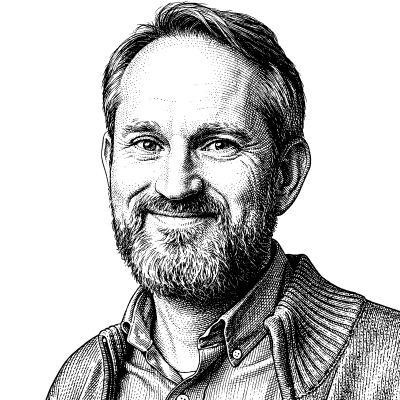
Jordan Harmon is a psychotherapist and social worker who considers himself an “accidental transhumanist.” His journey into transhumanism began after encountering the Mormon Transhumanist Association (MTA) through a podcast and subsequent interactions with members. Initially drawn by a misunderstanding—thinking it was the “Mormon Transpersonal Association” due to his interest in transpersonal psychotherapy and its implications for spiritual growth—Harmon initially approached transhumanism with some hesitation. However, after engaging with the ideas of transhumanists like Lincoln Cannon and Carl Youngblood, Harmon became increasingly interested in the movement. His work now explores the intersection of psychology and transhumanism, particularly focusing on our relationship to pain and problem-solving. He delineates two types of problem solving: the primitive, reactive response rooted in evolutionary survival, and the evolved, meaning-making response of the prefrontal cortex, which can sometimes exacerbate emotional and psychological pain. At the MTAConf 2015, Harmon discussed the “problem of problem solving,” examining how our evolved capacity for rational thought and planning can inadvertently trap us in our minds, hindering our ability to live fully. He also touched upon the internal experience, characterized by a vast array of thoughts, emotions, urges, and moral judgments, and how these elements interact to shape our perceptions and actions, highlighting persistent challenges in self-governance and interpersonal relationships.

Jordan Miller has been involved with merging AI and distributed consensus technologies for years. He built Satori , a global network of future predicting AIs.

Jordan Roberts, MD, is a physician, humanitarian, and bioethicist whose work bridges the intersections of clinical medicine, Mormon theology, and transhumanist philosophy. Born in Mesa, Arizona, to a Mormon mother and a Jewish father, Roberts grew up at a unique cultural crossroads that has informed his lifelong interest in the synthesis of diverse religious and scientific traditions. Roberts’s academic journey began at Arizona State University, where he earned a Bachelor of Science in Life Sciences. He subsequently received his medical degree from the University of Arizona College of Medicine–Phoenix. Following his medical education, he completed his residency in family medicine at St. Mark’s Hospital in Salt Lake City, Utah. His professional background as a clinician is deeply intertwined with his philosophical pursuits, particularly regarding the ethical implications of emerging technologies and the moral imperative of life extension and health equity. In 2017, Roberts was appointed as the Chief Humanitarian Officer of the Mormon Transhumanist Association (MTA). In this leadership role, he focused on the practical application of transhumanist ideals—specifically the use of technology to alleviate human suffering and expand the reach of compassionate care. His vision of “Humanitarian Transhumanism” emphasizes that the transition to a posthuman or exalted state must be rooted in helping the needy among us. Roberts presented a compelling lecture at the MTAConf 2017 titled “The Evolution of Zion.” In his presentation, he explored the concept of Zion not merely as a historical or geographical location, but as an evolving socio-technical state. He posits that the religious mandate to build Zion is compatible with the transhumanist goal of using advanced science to create a society characterized by the absence of poverty, disease, and inequality. By drawing on his dual heritage, he often incorporates themes from both Jewish tikkun olam (repairing the world) and the Mormon pursuit of the New Jerusalem. Roberts remains an avid student of science fiction, philosophy, and the history of medicine. He served a full-time mission for The Church of Jesus Christ of Latter-day Saints in Brazil, an experience that helped shape his global perspective on public health and humanitarianism. Through his writing and speaking, Roberts continues to advocate for a future where technology and theology work in tandem to fulfill the highest aspirations of the human spirit.

Joseph West is a founding member, director, and secretary of the Mormon Transhumanist Association. He is deeply involved in exploring the crossroads of Mormonism, transhumanism, and technology. West is currently a PhD student in sociology at the University of Arizona, focusing his research on religion, culture, technology, and the family. He holds a bachelor’s degree in philosophy from the University of Utah. At the Parallels and Convergences Conference held in 2009, West presented on the “New God Argument,” co-authored with Lincoln Cannon, which explores potential reconciliations between religious perspectives and scientific materialism. The argument itself stems from secular assumptions and concludes with ideas resonating with Mormon perspectives on God and other religious matters. Beyond his academic and organizational work, West is a family man, a father of two children, and is married to their mother, Jessica.
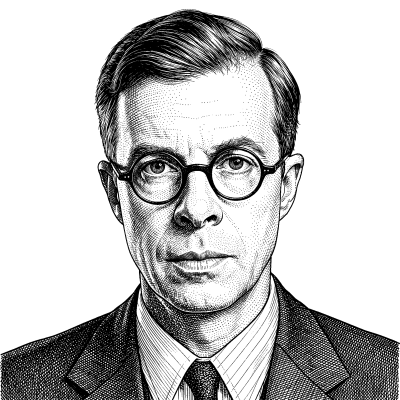
Julian Huxley
Julian Sorell Huxley (1887–1975) was a British biologist, philosopher, and humanist who coined the word “transhumanism” and gave the movement its first systematic articulation—making him, by any measure, one of the intellectual founders of the tradition the Mormon Transhumanist Association inhabits. Huxley came from one of Britain’s most distinguished intellectual families—grandson of T.H. Huxley, Darwin’s great defender, and brother of novelist Aldous Huxley—and built a career of remarkable scope. He was the first Director-General of UNESCO (1946–1948), a founding figure of the World Wildlife Fund, a prolific science communicator, and a pioneer of the Modern Synthesis that unified Darwinian evolution with Mendelian genetics. His scientific work spanned experimental embryology, ethology, and evolutionary biology, and he was elected a Fellow of the Royal Society in 1938. But Huxley’s most consequential contribution may be conceptual. In his 1957 essay “Transhumanism,” he argued that the human species can, if it wishes, transcend itself—not merely through occasional individuals but as a whole, through the deliberate application of knowledge, technology, and moral aspiration. He called this “transhumanism” and framed it as the next stage of evolutionary self-understanding: humanity taking conscious responsibility for its own development. His vision was secular in idiom but unmistakably teleological in structure—a species discovering its vocation to become more than it currently is. That teleological structure resonates naturally with Mormon theology’s insistence on eternal progression and theosis. Where Huxley grounded his vision in evolutionary biology and humanist ethics, Mormon Transhumanism adds theological depth: the process Huxley described is, in that reading, participation in the divine creative work that Joseph Smith called the purpose of existence. Huxley did not share that theological frame, but he shared the moral conviction underneath it—that intelligence, creativity, and compassion are not incidental features of the universe but its most important products, and that developing them further is our most serious obligation.

Karl Hale is a speaker at Mormon Transhumanist Association (MTA) conferences, known for his engaging presentations on topics such as the worship of extraterrestrial humanoid deities. His perspective is informed by his background as a member of the Church of Jesus Christ of Latter-day Saints and his reflections on the nature of God. Before turning his attention to philosophical and theological explorations, Karl spent 15 years in the software and web industries. He holds a master’s degree in information systems and worked as a programmer, manager, and executive. Currently, Karl dedicates a significant portion of his time to motivational juggling—another of his passions. Karl has been married to Anna Lisa Bradford Hale for 18 years and is the father of eight children. Together, they manage a small homestead, raising their family alongside a diverse collection of animals, including 27 chickens, six goats, six frogs, and one cat. Karl’s engagement with Mormon theology, coupled with his interest in transhumanist concepts—such as the potential for technologically advanced beings—provides a unique and thought-provoking perspective. He is an engaging and interesting speaker.