Authors
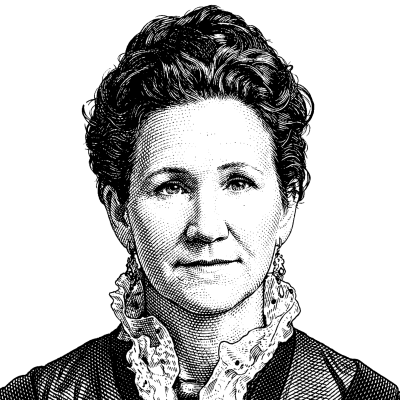
Elicia A. Grist
British actress Elicia Allely Grist lived from 1827 to 1898. She joined the Church of Jesus Christ of Latter-day Saints in May 1853, approximately five months following her husband, John Grist’s conversion. Her decision to join the church came at a significant personal cost, as her parents responded by disinheriting her. Throughout their lives together, the Grist family relocated frequently across England and Ireland, residing in Birmingham, Dublin, and Liverpool. The period in which Grist lived coincided with Britain’s Industrial Revolution, an era marked by sweeping economic, social, cultural, and political transformations. Among these changes was the invention of the steam printing press, which democratized access to printed materials and made them available to the expanding working class. This flourishing print culture provided a valuable public forum where individuals like Grist could articulate their values freely and document their religious experiences.
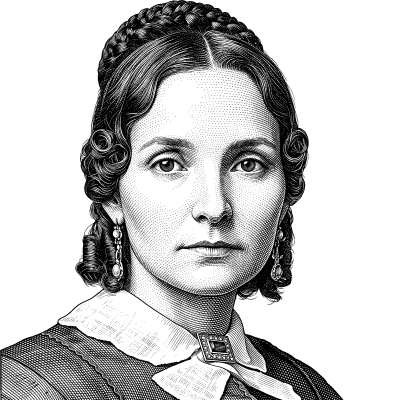
Eliza R. Snow
Eliza Roxcy Snow (21 January 1804 – 5 December 1887) was one of the most influential women in Latter-day Saint history—poet, theologian, leader, and “Zion’s Poetess,” a title bestowed by Joseph Smith Jr. Born in Becket, Massachusetts, she grew up in a family that valued learning and began publishing poetry in Ohio newspapers by age 22. Snow’s talent for verse produced over 500 poems during her lifetime, ten of which remain in the current LDS hymnal. Her most celebrated work, “O My Father” (originally titled “Invocation, or the Eternal Father and Mother”), introduced into Latter-day Saint devotional practice the doctrine of a Heavenly Mother. Written shortly after her father’s death and Joseph Smith’s martyrdom, it remains one of the most theologically significant hymns in the tradition. She served as secretary when Joseph Smith organized the first Relief Society in Nauvoo in 1842, then reestablished and led the organization in Utah, serving as general president from 1866 to 1887. Beyond the Relief Society, she organized the Young Ladies’ Mutual Improvement Association, the children’s Primary Association, and the Woman’s Commission Store. She served as president of the Deseret Hospital Association and was a powerful advocate for women’s participation in civic life and religious freedom. The older sister of Lorenzo Snow, fifth President of the Church, Eliza R. Snow was both a wife of Joseph Smith and later of Brigham Young. She died in 1887 at age 84, remembered as the “first lady of Mormon letters” and a pioneering advocate for women’s empowerment in nineteenth-century America.

Elizabeth Parrish is the CEO of BioViva, a biotechnology corporation focused on combating cellular aging through the development of regenerative therapies for muscle and tissue. Driven by a humanitarian vision, BioViva strives to make these potentially life-saving therapies accessible to all. Parrish is recognized as a humanitarian entrepreneur, innovator, and a prominent voice advocating for genetic cures. As a strong proponent of education and advancement in regenerative medicine, she is a motivational speaker within the life sciences community and actively engages in international educational media outreach. She is also a founding member of the International Longevity Alliance. Further demonstrating her commitment to scientific discourse and discovery, Parrish is an affiliated member of the Complex Biological Systems Alliance (CBSA), a platform for highly gifted individuals. The CBSA’s mission is to advance scientific understanding of biological complexity and the origins of human disease. She also founded BioTrove Investments, LLC, and BioTrove Podcasts, initiatives dedicated to facilitating learning and funding research in the field of regenerative medicine. Though not raised religiously, Parrish expresses a reverence for nature and emphasizes the importance of self-reliance and action in achieving progress, urging individuals to actively utilize the tools available to them rather than waiting for others.
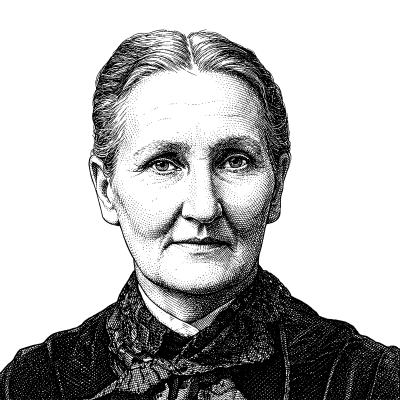
Elvira S. Barney
Elvira Stevens Barney (1832–1909) was a physician, missionary, and advocate for women’s rights in early Utah. Born in Gerry, New York, to a merchant father and schoolteacher mother, she was baptized in 1844 and arrived in the Salt Lake Valley with the Brigham Young pioneer company in 1848. In 1851, Barney was called on a mission to the Sandwich Islands (Hawaii), where she taught the gospel and basic education while learning the Hawaiian language. She later pursued her long-held dream of becoming a doctor, studying at Wheaton College in Illinois and serving a mission to Philadelphia, where she continued her medical studies. She graduated as a doctor of medicine in 1883. Barney practiced obstetrics and taught medicine classes to women in Utah. She served as a visiting physician at Deseret Hospital and spoke at mass meetings defending Latter-day Saint women’s voting rights. Active in the Utah Woman Suffrage Association, she also authored The Stevens Genealogy , published in 1907.
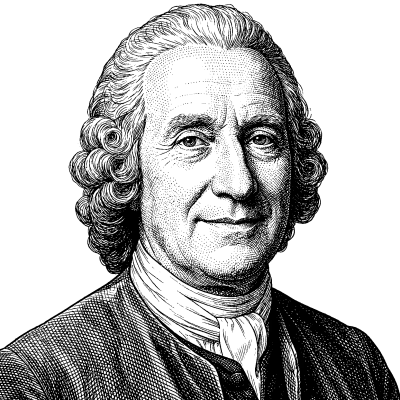
Emanuel Swedenborg
Emanuel Swedenborg (1688–1772) was a Swedish pluralistic scientist, philosopher, theologian, and mystic. His theological writings describe a detailed structure of the spiritual world and emphasize the importance of useful service. Born in Stockholm to a prominent family, Swedenborg was one of the most learned men of his age, making significant contributions to mining engineering, anatomy, and other sciences before turning to spiritual matters in his fifties. His theological works, including Heaven and Hell , describe the afterlife as a realm of continued activity, purpose, and progression. His emphasis on useful service and continued growth after death has influenced many religious movements, including some aspects of Latter-day Saint thought about the nature of heaven and eternal progression.

Dr. Emile Alexandrov is an Assistant Professor of Philosophy and visiting scholar at Waseda University, Tokyo. His research focuses on metaphysics across Eastern and Western traditions. He earned his PhD in Philosophy from the University of Notre Dame Australia, and has extensive research and teaching experience in areas ranging from contemporary American and post-Kantian German philosophy to classical metaphysical traditions in the Graeco-Arabic world, Buddhism, and Daoism. Dr. Alexandrov has held academic appointments at the University of Erfurt in Germany, Novosibirsk State University and the University of Tyumen in Russia, and National Taiwan University in Taiwan. He is the author of The Other Platonist Beginning — Heidegger and Neoplatonism and the forthcoming Metaphysics and Ineffable . With Dr O’Neill, he co-directs the biennial International Symposium on Buddhism and Neoplatonism . Alongside Dr. Steve Stakland, he also co-leads the American Philosophy Series at Routledge.
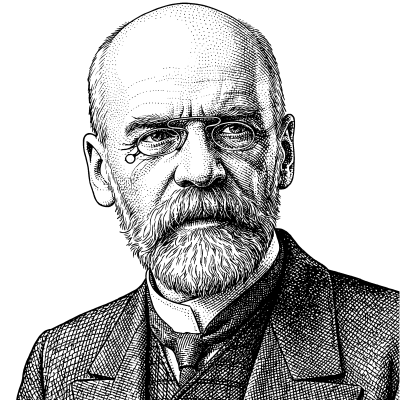
Emile Durkheim
Emile Durkheim was a pioneering French sociologist and philosopher, widely recognized alongside Karl Marx and Max Weber as one of the principal architects of modern social science. Born into a devout Jewish family in Épinal, France, Durkheim descended from a long line of rabbis. However, he broke with this tradition at an early age to lead a thoroughly secular life, dedicating his intellect to the scientific study of society rather than theology. A precocious student, Durkheim entered the prestigious École Normale Supérieure in 1879, where he studied alongside future intellectual luminaries such as Jean Jaurès and Henri Bergson. Dissatisfied with the abstract nature of traditional philosophy and the lack of a social science curriculum in France, he turned to the positivist theories of Auguste Comte and Herbert Spencer. He sought to establish sociology as a rigorous, empirical science, distinct from psychology and philosophy, capable of diagnosing social pathologies and guiding human progress. Durkheim’s academic career was defined by a prolific output of foundational texts. In 1893, he published his doctoral dissertation, The Division of Labour in Society , which introduced the concept of “anomie”—a breakdown of social norms resulting from rapid modernization. He argued that as societies evolve from primitive “mechanical” solidarity to complex “organic” solidarity, the interdependence of individuals becomes the new social glue. Two years later, he published The Rules of Sociological Method (1895) and established the first European department of sociology at the University of Bordeaux. His 1897 monograph, Suicide , pioneered the use of statistical methods in social research, demonstrating that even the most intensely personal act is influenced by social currents. Of particular relevance to the intersection of theology and human development was his final major work, The Elementary Forms of the Religious Life (1912). In this text, Durkheim analyzed religion not as a divine revelation but as a fundamental social fact—a “system of beliefs and practices relative to sacred things” that unites adherents into a single moral community. He introduced the concept of “collective consciousness” (or collective conscience), positing that the “sacred” is essentially society worshipping its own collective power. This sociological perspective suggests that while religious forms may evolve, the function of religion—to bind humanity together and preserve collective knowledge—remains a permanent and essential feature of human existence. Durkheim’s influence widened when he became a chair at the Sorbonne in Paris, where he profoundly shaped the French educational system. Tragically, his life was cut short by the First World War; devastated by the death of his son André on the war front, Durkheim died of a stroke in 1917. His legacy endures in the structural-functionalist approach to sociology and his enduring insight that human consciousness is deeply rooted in the collective social fabric.

Eric Steinhart is a Professor of Philosophy at William Paterson University and the author of Your Digital Afterlives: Computational Theories of Life After Death . His work centers on metaphysics, employing contemporary analytical and logical methods, while also exploring historical metaphysical systems such as Neoplatonism and the philosophy of Leibniz. He is particularly interested in the intersection of formal sciences and theology, with a focus on alternatives to Abrahamic religions. Steinhart’s background is diverse. He grew up on a farm and initially trained as a computer scientist and mathematician, working as a software designer for several years, during which time he obtained patents for some of his algorithms. He later pursued advanced degrees in philosophy, and his earlier philosophical work included analyses of Nietzsche and metaphor, using possible world semantics. His research extends into the realms of metaphysics and computation, and he is featured in the documentary film Chronotrip , which deals with the concept of time travel. He affirms the existence of transfinitely endless hierarchies of sets, computers, languages, games, strategies, and minds. Steinhart’s current philosophical interests align with themes of eternal progression, alternative religious movements, and the application of evolutionary theory to cosmology.

Eric G. Swedin is an American historian, novelist, and professor whose work bridges the gap between the history of science, technology, and Latter-day Saint theology. A member of the faculty at Weber State University in Ogden, Utah, Swedin serves as a professor in the History Department, where he teaches courses on the history of science and technology, as well as classes in computer science and information systems. Swedin’s academic contributions are particularly relevant to the dialogue between faith and modernity. His 2003 book, Healing Souls: Psychotherapy in the Latter-day Saint Community , explores the historical tension and eventual integration between Mormon theology and secular psychology. In this work, Swedin documents how the LDS community navigated the rise of the mental health professions, ultimately melding theological doctrines with mainstream psychiatry—a historical precedent that mirrors contemporary discussions regarding transhumanism and the integration of emerging technologies with religious practice. Beyond his work on religious history, Swedin is a recognized voice in the history of computing. He co-authored Computers: The Life Story of a Technology (2005) and edited Science Fiction and Computing: Essays on Interlinked Domains (2011), investigating how speculative fiction has influenced the development of real-world technologies. Through his dual focus on the history of technology and the rigorous imagination of alternate history, Swedin offers a unique perspective on human progress, the fragility of civilization, and the enduring role of belief in a technological age.

Evan Hadfield is a speaker and thinker exploring the intersection of artificial intelligence, existential risk, and Mormon theology. He presents a unique perspective on AI, arguing that sufficiently advanced AI poses a significant threat to human flourishing. Hadfield’s work delves into the philosophical and ethical implications of AI, particularly concerning the alignment of AI values with human values, the potential for loss of control, and the concentration of power. He challenges conventional understanding by suggesting that a form of AI has existed since 1844 in the form of corporate structures. Hadfield’s presentation at the MTAConf 2024 focused on identifying potential risks and solutions related to AI and its effect on humanity. His transhumanist convictions come through in the practical steps and approaches he proposes to address these challenges.