Authors

Connie Packer has previously served as the Vice President of the Mormon Transhumanist Association. As a leader within the MTA, she played a key role in guiding the Association’s activities and affairs, focusing on the publication of quality content related to transhumanism and Mormon Transhumanism. Packer helped to facilitate important processes like board member elections and charitable endeavors through initiatives like Kiva Micro Loans, which have collectively funded hundreds of loans to help lift people, improve their conditions, and help them reach their goals.

Dallin Bradford is a second-generation Mormon transhumanist and speaker at MTA conferences.

Dan Wotherspoon is a prominent voice in discussions surrounding Mormonism and intellectual inquiry. He currently hosts the Latter-day Faith podcast, where he explores a wide range of topics relevant to Mormon thought and culture. He is also the former editor of Sunstone Magazine , a publication known for its engagement with Mormon history, theology, and contemporary issues. Wotherspoon holds a PhD in religion from Claremont Graduate University. His doctoral dissertation focused on deep Mormon sensibilities concerning the intrinsic worth and interconnectedness of all existence and how these values might contribute to a sustainable and peaceful world. This research reflects his commitment to exploring the intersection of Mormonism with broader ethical and philosophical concerns. Wotherspoon’s work often involves facilitating dialogue and understanding between diverse perspectives, as evidenced by his involvement with the Mormon Transhumanist Association (MTA). He has spoken at MTA conferences and hosted discussions related to transhumanism on his podcast, demonstrating his interest in the potential for Mormon thought to engage with emerging technologies and ideas. He lives in Tooele, Utah with his wife Laurie. They are about to be empty nesters.
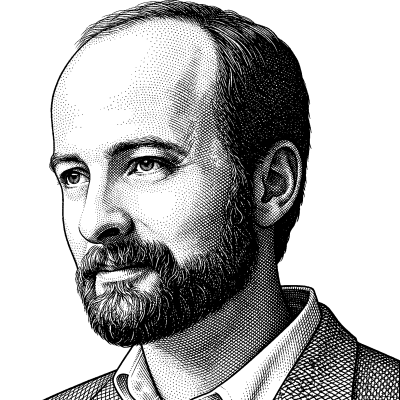
David Brin
David Brin (born 1950) is an American scientist and science fiction author widely recognized for his explorations of technological progress, accountability, and the future trajectory of human civilization. A physicist by training, with a PhD from the University of California, San Diego, Brin has become one of the most prominent voices in contemporary science fiction, celebrated for works that grapple seriously with the responsibilities that accompany advancing knowledge and power. Brin is perhaps best known for his Uplift series, which imagines a galaxy in which elder species genetically elevate (or “uplift”) younger species to sapience, creating complex webs of patronage and obligation. The series earned him multiple Hugo and Nebula Awards and introduced themes that resonate deeply with transhumanist thought: the idea that intelligence and consciousness can be cultivated, expanded, and shared across species, and that such uplift carries profound moral responsibilities. His standalone novel The Postman (1985), later adapted into a film, explores how communities rebuild civilization after catastrophe through acts of hope and civic trust. His nonfiction work The Transparent Society (1998) argues that openness and mutual accountability, rather than secrecy, are the best safeguards for freedom in an age of pervasive technology. Brin is a self-described advocate of the Enlightenment tradition, championing science, democratic governance, and an optimistic but critical view of human progress. He has been vocal in futurist and transhumanist circles, generally supporting the idea that humanity can and should use technology to improve the human condition, overcome biological limitations, and expand into the cosmos. His vision of “otherness”—the moral imperative to consider perspectives beyond one’s own—aligns with broader transhumanist commitments to expanding empathy and capability. From the perspective of Mormon Transhumanism, Brin’s work offers rich resonances: his uplift narratives echo themes of theosis and compassionate creation, wherein more advanced beings extend their capacities to others—a pattern the New God Argument finds deeply meaningful. His emphasis on accountability and transparency complements the Mormon Transhumanist commitment to ethical stewardship of technology. Where Brin’s views may diverge is in his secular, Enlightenment-centered framework; he generally frames progress in terms of human reason and democratic institutions rather than divine grace, prophetic authority, or the restored Gospel. He has at times expressed skepticism toward religious institutions as arbiters of truth. Nevertheless, his abiding faith in humanity’s capacity for moral growth and his insistence that advanced power demands advanced compassion place him in substantial sympathy with the Mormon Transhumanist vision of becoming compassionate creators.
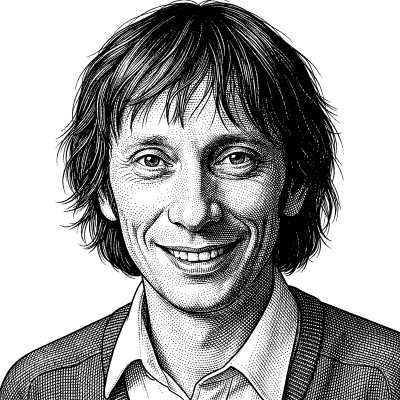
David Deutsch
David Elieser Deutsch (born 1953) is a British-Israeli physicist at the University of Oxford, widely regarded as one of the founding fathers of quantum computation. A Fellow of the Royal Society, Deutsch has profoundly shaped our understanding of the physical world and the nature of reality itself. Deutsch earned his PhD from the University of Oxford and has spent much of his career at the Clarendon Laboratory. In 1985, he published a landmark paper describing the first universal quantum computer, demonstrating that a quantum mechanical system could simulate any physical process—a breakthrough that launched the field of quantum computing. He further contributed to the development of the Deutsch-Jozsa algorithm, one of the earliest demonstrations of quantum computational advantage. His intellectual framework draws heavily on the many-worlds interpretation of quantum mechanics championed by Hugh Everett. Beyond his technical contributions, Deutsch is renowned as a public intellectual and author. His books The Fabric of Reality (1997) and The Beginning of Infinity (2011) weave together quantum physics, epistemology, the theory of computation, and the theory of evolution into a unified worldview. In The Beginning of Infinity , he argues that problems are soluble through the creation of knowledge, and that there is no fundamental limit to human progress—a deeply optimistic vision of unbounded human potential. Deutsch’s philosophy resonates with transhumanist themes central to the Mormon Transhumanist Association’s mission. His conviction that human beings are not cosmically insignificant but are instead “universal explainers” capable of unlimited understanding and transformation of reality echoes theological ideas of theosis and humanity’s divine potential. His insistence that the reach of human knowledge and creativity is genuinely infinite offers a scientific and philosophical foundation for hope in humanity’s capacity to transcend current limitations.
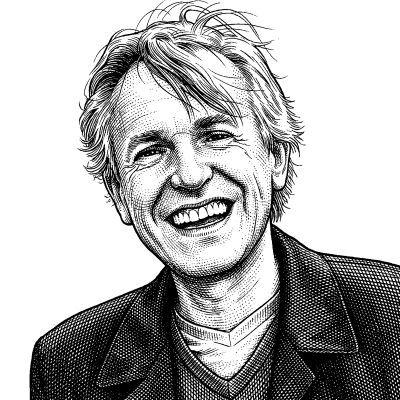
David Pearce is a prominent figure in the transhumanist movement, known for his advocacy of “paradise engineering.” He argues that advances in biotechnology and genetic engineering offer the potential to eliminate suffering throughout the living world. Pearce, who hails from the UK, has dedicated over two decades to exploring the technical possibilities and ethical implications of such a radical transformation of the biosphere. Pearce’s work focuses on outlining a practical plan to phase out involuntary pain and suffering, not only in humans but across all species. He is actively exploring technological proposals which would align with the vision of a world free from cruelty, a concept deeply rooted in utopian ideals, such as the Peaceable Kingdom of Isaiah, and that are also ecologically literate.
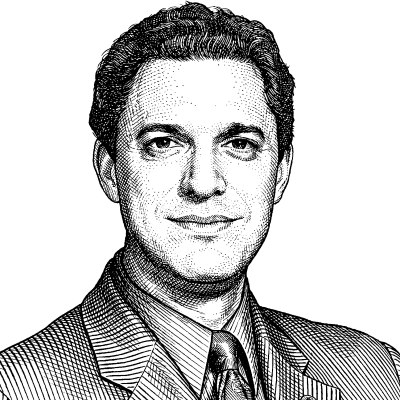
David Silverman is a speaker at MTA conferences.
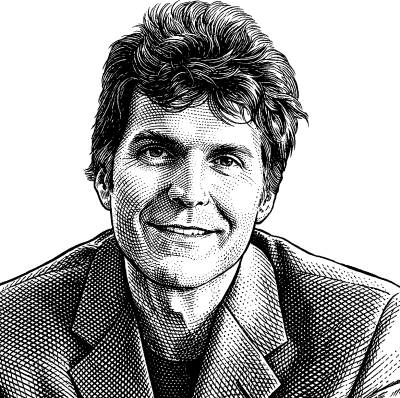
Don Bradley is an American historian specializing in the origins of the Latter-day Saint movement and the early history of the Book of Mormon. His meticulous archival research and innovative historical methodology have shed new light on some of the most intriguing questions surrounding the founding events of Mormonism. He is best known for his groundbreaking work reconstructing the lost 116 pages of the Book of Mormon manuscript. Bradley ’ s book The Lost 116 Pages: Reconstructing the Book of Mormon’s Missing Stories (2019) represents years of detective work piecing together what the lost manuscript likely contained. Using contemporary accounts, textual analysis, and historical context, Bradley reconstructed the narrative of Lehi and his family that was contained in the Book of Lehi—the portion translated by Joseph Smith and lost by Martin Harris in 1828. His work has been widely praised for its scholarly rigor and its contributions to understanding early Mormon history. Bradley’s faith journey has been marked by both departure and return. After leaving The Church of Jesus Christ of Latter-day Saints, he found his way back to faith in part through the influence of the Mormon Transhumanist Association, whose integration of religious belief with rational inquiry resonated with his scholarly temperament. Lincoln Cannon, founder and first president of the MTA, performed Bradley’s rebaptism—a meaningful connection between his intellectual and spiritual homecoming. Bradley has spoken openly about how his historical research, rather than undermining his faith, ultimately contributed to his decision to return. Bradley has presented his research at numerous academic conferences, including the Mormon History Association and FairMormon. He has contributed to scholarly journals and collaborative volumes on Latter-day Saint history. His work on the lost pages has influenced how scholars understand the structure and content of the Book of Mormon, as well as the translation process Joseph Smith employed. His research touches on themes relevant to transhumanist thought, particularly regarding the nature of knowledge, the recovery of lost information, and the relationship between faith and empirical inquiry. Bradley’s methodology demonstrates how careful scholarship can illuminate religious origins while respecting the complexity of belief—a model for integrating scientific and spiritual approaches to understanding human experience and potential.
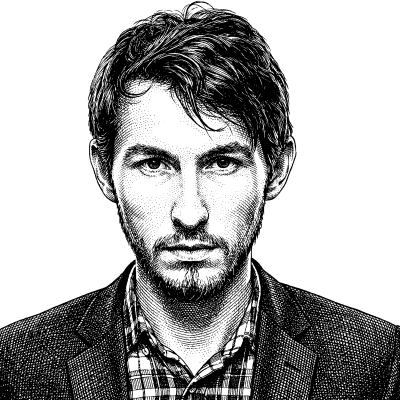
Donald Bradley Jr. , affectionately known as Donnie, is a speaker and thinker exploring the intersection of transhumanism, art, and theology. Although chronologically 84 years old, Bradley has benefited from advanced life extension technologies that have rejuvenated his physical appearance to resemble someone closer to 18. He is a member of the Mormon Transhumanist Association. Bradley’s intellectual pursuits are wide-ranging, encompassing theoretical computer science, cybernetics, foundations of mathematics, algorithmic information theory, the psychology of creativity, literary studies, and cognitive poetics. His work explores the aesthetic sense of a god, and its relation to artistic practice and religious transhumanist quests. He is particularly interested in the works of Jorge Luis Borges, viewing Borges’ creations as a laboratory for godhood and an exemplary artist for transhumanists. He argues that in art, we are doing the work of a god in microcosm, training for eventual godhood. He points to Borges’ themes of eternity, and his ability to predict future developments in a way that is training for eventual godhood and a significant religious practice. Bradley explores the idea of literature and its relation to Mormon theology.

Dorothy Deasy is a Methodist theologian currently pursuing a Master’s of Applied Theology from Merrill Hurst University. Her spiritual journey began later in life with an awakening experience triggered by her study of the historical Jesus. Deasy’s work explores the intersection of spirituality and technology, particularly examining the nature of religious experience in the context of rapidly advancing biotechnologies. She questions whether electronically or pharmacologically induced religious experiences hold the same value and significance as traditional spiritual engagement, emphasizing that true spirituality involves the incorporation of insights from peak experiences into daily life—a call to action and interconnectedness. Deasy posits that neuroscience, with discoveries like mirror neurons, increasingly supports the idea that empathy and sociability are fundamental aspects of human development. She argues against the dualistic separation of science and religion, suggesting that understanding the biological mechanisms behind transcendent experiences does not negate their profound meaning. Her research bridges the gap between scientific understanding and spiritual experience, relevant in an age where humanity has the potential to alter the human body and influence the very triggers of life.