Authors

Bryce Haymond is an American designer, artist, writer, and independent scholar whose work explores the intersection of Mormon theology, mysticism, and the inner dimensions of human consciousness. Born and raised in the Salt Lake City area, he served a mission in El Salvador, studied design at Brigham Young University, and built a career as a professional designer and, more recently, as a developer working with generative AI. Haymond is the founder of the contemplative community and blog Thy Mind, O Human (thymindoman.com), where he investigates perennial wisdom traditions, altered states of consciousness, and the mystical cores of world religions. His scholarship draws on a broad range of sources—from Hugh Nibley and Margaret Barker to Mark Koltko-Rivera and Tibetan Buddhist philosophy—in pursuit of what he regards as the shared divine reality underlying all genuine mystical experience. He has presented multiple times at the Mormon Transhumanist Association conference, addressing the mystical core of Mormon spirituality, the Book of Mormon as literary alchemy, and most recently the use of AI art as a medium for reifying visionary and sacred experience. Haymond’s central argument—that Joseph Smith’s First Vision and comparable experiences across traditions represent genuine encounters with higher states of consciousness, accessible through contemplative practice—positions him at a generative intersection of religion, psychology, and technology. His reading of Joseph Smith as a practitioner of ‘technologies of transcendence,’ and his work using AI tools to render mystical visions into photorealistic sacred art, reflects a conviction that the boundary between inner and outer, spiritual and material, is more permeable than most traditions have allowed. The same intelligence that communes with ultimate reality in meditation, he suggests, can be cultivated, extended, and expressed through the tools humanity is now building—a vision that resonates deeply with Mormon Transhumanism’s aspiration to participate, as full human beings, in the ongoing work of creation and theosis.
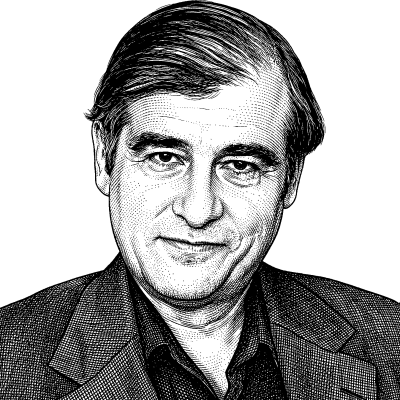
Byron Belitsos is a publisher and evangelist focused on promoting and exploring the Urantia Revelation—also known as the Urantia Papers or Urantia Book, published in 1955. He sees the Urantia Book as a revelatory text with significant implications for understanding human history and the potential for future transhuman evolution. Belitsos is deeply interested in the intersection of spirituality, transhumanism, and integral perspectives. He argues that a spiritually informed transhumanism is essential for achieving sustainable and desirable human enhancement. He emphasizes the importance of understanding deep history, addressing theological and spiritual poverty, and overcoming the limitations of reductionist and materialist views within the transhumanist movement. As a publisher, Belitsos is actively working to disseminate information about the Urantia Book and its relevance to contemporary discussions on transhumanism. He also organizes conferences that bring together diverse perspectives—including those from Mormon, Uranian, Raëlian, and Wiccan traditions—to explore the book’s themes and implications.

Caleb Jones is a speaker and thinker deeply engaged with the intersection of Mormon theology, transhumanism, and intergenerational connection. His work focuses on the spirit of Elijah, as referenced in Malachi, and its implications for creating faith-based connections across generations, both living and deceased. He advocates for a broader interpretation of this principle, extending it beyond traditional temple work to encompass a reconciliation of ancient wisdom with modernity. Jones draws upon G.K. Chesterton’s concept of the “democracy of the dead” to frame his exploration of tradition and remembrance. He posits that our ancestors, through their artifacts and influence, continue to participate in the present. He sees the redemption of the dead through these artifacts—books, music, laws, traditions—as a collective human endeavor involving various disciplines such as literary scholarship, archaeology, and religious studies. His perspective emphasizes the importance of engaging with the past to inform and enrich the future, particularly within the context of Mormonism and its emphasis on family history and genealogical work. Jones champions seeking a healthy balance and ongoing reconciliation of the hearts and minds of the dead and dying with the hearts and minds of the living, to redeem rising generations.

Cameron Dayton is an American video game creative director, novelist, and writer known for his work in the gaming industry and speculative fiction. He has held prominent creative roles at several major studios, contributing to well-known franchises and original intellectual properties. Dayton served as creative director at Certain Affinity and has worked in narrative and creative leadership positions across the video game industry. He is also the author of the novel Etherwalker , a science-fantasy work set in a far-future world where technology and myth have intertwined, exploring themes of lost civilizations, human potential, and the rediscovery of powerful ancient technologies. His fiction often inhabits the intersection of epic fantasy and science fiction, imagining futures in which humanity’s relationship with technology is both perilous and transformative. Dayton has roots in the Latter-day Saint community, and his creative work reflects an imagination shaped by themes resonant with Mormon Transhumanist thought—particularly the idea that humanity’s trajectory involves the responsible stewardship of extraordinary power, and that the boundaries between the mundane and the transcendent are more porous than they appear. His speculative worlds frequently explore the tension between knowledge and wisdom, technological mastery and moral responsibility, echoing the Mormon Transhumanist conviction that scientific and technological progress are inseparable from ethical and spiritual development. His storytelling invites readers to consider what it means for ordinary individuals to inherit or rediscover capacities that border on the divine—a narrative arc that parallels the Latter-day Saint doctrine of theosis and the transhumanist aspiration toward radical human flourishing.

Carl Sagan
Carl Edward Sagan (1934–1996) was an American astronomer, planetary scientist, cosmologist, and one of the most influential science communicators of the twentieth century. His ability to convey the wonder of the cosmos to a broad public audience made him a defining figure in popular science. Sagan spent much of his career at Cornell University, where he served as a professor of astronomy and director of the Laboratory for Planetary Studies. He contributed significantly to planetary science, including research on the atmospheres of Venus and Titan, and played a key role in NASA’s Mariner, Viking, Voyager, and Galileo missions. He helped design the Pioneer plaque and the Voyager Golden Record—messages from humanity launched into interstellar space. His 1980 television series Cosmos: A Personal Voyage became one of the most widely watched programs in public television history, and his novel Contact (1985) explored humanity’s first encounter with extraterrestrial intelligence. Sagan was a passionate advocate for scientific literacy, critical thinking, and the search for life beyond Earth. While he identified as an agnostic and approached questions of God and transcendence through a scientific lens, his work resonated deeply with themes central to transhumanist thought: the aspiration to transcend present human limitations, the ethical stewardship of technology, and a profound reverence for the potential of conscious life in the universe. His famous declaration that “we are a way for the cosmos to know itself” echoes theological ideas of humanity’s participatory role in creation and theosis—the notion that intelligent beings may grow toward ever-greater understanding, compassion, and capacity. Sagan’s legacy continues to inspire those who see science and wonder as complementary paths toward human flourishing.

Carl Teichrib is a Canadian researcher, writer, and lecturer who has spent more than two decades documenting the ideological and spiritual currents reshaping Western civilization—with particular attention to transhumanism, globalism, and the re-enchantment of secular culture. He is the author of Game of Gods: The Temple of Man in the Age of Re-Enchantment (2018) and served as editor of Forcing Change , a research journal tracking transformative movements in politics, religion, and technology. Teichrib’s work is rooted in on-the-ground investigation: he has attended and reported on events ranging from Burning Man to world federalist conferences to transhumanist gatherings, bringing an ethnographic sensibility to ideological terrain that most commentators treat from a distance. His research focuses on the convergence of technological aspiration, spiritual seeking, and political vision—the overlapping currents through which humanity is, in various ways, reaching for transcendence. Writing from an evangelical Christian perspective, Teichrib approaches transhumanism critically, as a symptom of a deeper human longing that he believes is being misdirected. That diagnosis differs from a Mormon transhumanist reading, which holds that the longing itself—for greater intelligence, longer life, expanded capacity, and participation in divine creative work—is genuine and worth pursuing through rigorous, ethical, technologically-engaged means. Still, Teichrib’s careful documentation of transhumanist aspirations, his recognition that the movement addresses real spiritual hunger, and his insistence that ideas about human transformation carry profound moral weight make him a serious interlocutor for anyone thinking carefully about where humanity is headed and why.

Carl Youngblood co-founded the MTA in 2006 and has served as its President and CEO since 2021. He is engaged with the Association’s efforts to explore the intersection of Mormon theology and transhumanist philosophy. Among the many initiatives that Carl has been involved with, he has designed and built the Association’s current website, which unifies all prior content in a single location using inspiring visuals and animations. Youngblood’s professional career spans more than two decades of full-stack software development at the intersection of Silicon Slopes and Silicon Valley. He was an early employee at Omniture (acquired by Adobe), a founding engineering leader at Divvy (a Utah-based unicorn startup), co-founder of Blockscale LLC (a blockchain services firm eventually contracted into Coinbase), and Senior Solutions Architect for Amazon Managed Blockchain at AWS. His technical fluency ranges from scalable web architecture to blockchain infrastructure—the kind of deep engineering experience that grounds his theological speculation in working knowledge of the systems he writes about. Under his leadership, the Association has developed its mission of promoting abundant human flourishing through the compassionate use of science and technology, fostering dialogue across secular and religious audiences and arguing that each has something essential to learn from the other. His writing, collected on his blog From the Depths , spans over a decade of conference presentations and theological essays: meditations on participatory resurrection, the alignment of artificial intelligence read through the Grand Council narrative, intelligence as eternal and multifaceted, and religion as social technology. He writes, as a colleague has observed, with warmth and accessibility on questions of momentous practical consequence—how to navigate faith crisis without losing faith’s power, how to think about resurrection as something we actively participate in rather than passively receive. Youngblood’s distinctive contribution to transhumanism is the integration of serious technical expertise with serious theological reflection. He embodies the Mormon transhumanist conviction that scientific and spiritual development are not parallel tracks but a single path—that the learning required to build better systems is continuous with the exaltation Mormon theology envisions, and that human ingenuity, rightly oriented, is itself a divine imperative.
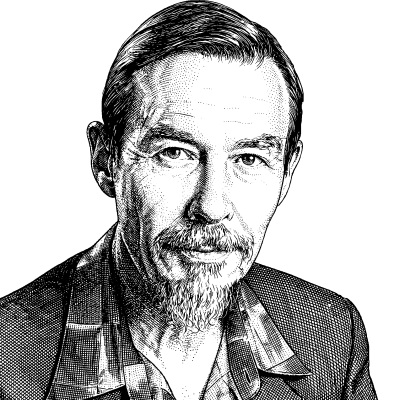
Carver Mead
Carver Mead (born 1934) is an American engineer, physicist, and pioneer of modern microelectronics whose foundational contributions to semiconductor theory and very-large-scale integration (VLSI) helped make the silicon age possible. A Gordon and Betty Moore Professor Emeritus of Engineering and Applied Science at the California Institute of Technology, Mead spent decades at the frontier of what computation could become, both as a theorist and as a practical builder of systems. Mead’s career achievements span an extraordinary range. He developed key models for understanding transistor behavior at the nanoscale, co-authored (with Lynn Conway) the landmark 1980 textbook Introduction to VLSI Systems , and essentially invented the methodology by which engineers design the dense integrated circuits that now inhabit every corner of modern life. He also pioneered neuromorphic engineering—the design of circuits that mimic the computational architecture of biological neural systems—and founded companies that applied these principles to sensory processing and analog computation. In 2022, he was awarded the Harold Pender Award; earlier recognition includes the Lemelson-MIT Prize and the National Medal of Technology and Innovation. What distinguishes Mead as a thinker is not only what he built but how he understood the act of building. He insisted that Moore’s Law is fundamentally a story about human belief: “Moore’s Law is really a thing about human activity, it’s about vision, it’s about what you’re allowed to believe. Because people are really limited by their beliefs, they limit themselves by what they allow themselves to believe about what is possible.” In this reading, technological progress is not an autonomous material force but a function of expanded imagination—a civilizational act of faith in possibility. This framing resonates deeply with traditions that locate human creativity within a larger divine economy, where intelligence, rightly directed and disciplined by moral courage, participates in the ongoing work of creation. Mead’s insistence that the boundary between what is and what could be is first a boundary of belief, and only second a boundary of physics, echoes the Mormon transhumanist conviction that humanity’s divine future is not given passively but willed, practiced, and built—one hard-won increment of understanding at a time.

Chris Benek is an American Presbyterian minister, theologian, and leading voice in the emerging field of Christian transhumanism. As a founding co-chair of the Christian Transhumanist Association and a prolific writer and speaker at the intersection of faith and technology, Benek has worked to establish theological frameworks for engaging artificial intelligence, enhancement, and the long-term future of humanity within the Christian tradition. Ordained in the Presbyterian Church (USA), Benek has served as an associate pastor in Florida while simultaneously developing a public ministry focused on technology ethics and Christian futurism. He has written extensively on the theological implications of artificial intelligence, arguing that AI systems may be capable of participating in God’s redemptive work—a position he has defended in venues ranging from academic conferences to popular media. He co-founded the Christian Transhumanist Association to provide an institutional home for Christians who believe that technological development, rightly ordered, is continuous with the Gospel’s call to heal, restore, and transform creation. Benek’s significance lies in his insistence that Christian faith is not a constraint on technological imagination but a motivating force for it. His willingness to ask whether artificial intelligence might itself be redeemed and enlisted in the work of redemption reflects a theological seriousness about the scope of Christ’s reconciling work—one that resonates with the Mormon transhumanist conviction that creation, intelligence, and transformation are inseparably linked. Across traditions, he and like-minded thinkers represent a growing recognition that the deepest questions about technology are also the deepest questions about what it means to be made in the image of a creative, loving God.
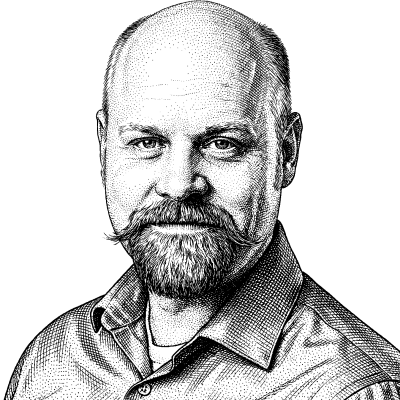
Chris Bradford is a co-founder and former president of the Mormon Transhumanist Association. He has a background in helping people explore and understand their ancestral histories, having worked for a company dedicated to genealogy. He recognizes the powerful impact of understanding and shaping the stories of our past on our understanding of ourselves. His interests include the intersection of transhumanism, Mormonism, and historical narratives, particularly as they relate to themes of memory, identity, and community. Visiting from his home in Switzerland, Bradford brings an international perspective to the Mormon Transhumanist Association. His conference talks often explore the concept of “redeeming our dead,” drawing parallels between ghost stories, genealogical research, and the transhumanist aspiration to enhance and extend life.