Authors

Steven Peck is a scholar whose interests lie at the intersection of science, ethics, and faith. His work reflects a fascination with future technologies and their implications, exemplified by his collaborative publications with students on topics ranging from the ethics of pregnancy on Mars to the use of neuroimaging for communication with individuals experiencing locked-in syndrome. These projects, published in mainstream bioethics journals, showcase his engagement with cutting-edge advancements and their potential impact on humanity. Beyond future technology, Dr. Peck harbors a deep appreciation for the natural world, particularly insects such as ants and bees. This interest extends beyond mere observation, as demonstrated by his anecdotes of field experiments involving insects and his reflections on evolutionary efficiency. His connection to the Mormon Transhumanist Association is evident in his willingness to explore the ethical and spiritual dimensions of scientific progress, blending scientific inquiry with theological considerations. Dr. Peck’s academic endeavors reflect a commitment to exploring complex ethical dilemmas arising from advancements in science and technology. His unique perspective, informed by both scientific curiosity and a strong foundation of faith, positions him as a notable voice within the Mormon Transhumanist community.

Dr. Suzanne Harrison , MD, is a physician and esthesiologist at Riverton Hospital. She is actively involved in Utah politics, having served in the Utah House of Representatives since 2018, representing the Sandy and Draper area. Dr. Harrison recently ran for the Salt Lake County Council at Large, demonstrating her commitment to public service and addressing issues affecting her community. Dr. Harrison’s educational background includes a degree from Stanford University and medical school at the University of Utah. She completed her residency at Harvard Medical School. These experiences have provided her with a strong foundation in medicine and a broad perspective on healthcare innovation, topics she addresses through her work in the Utah legislature. Beyond her professional life, Dr. Harrison enjoys spending time with her husband, John—a VP of Engineering—and their three high school-aged children. She participates in outdoor activities such as mountain biking and pickleball, reflecting a balanced lifestyle and appreciation for the Utah landscape. Her interest in incentivizing clean energy, electric vehicles, and addressing challenges like childhood poverty and gender pay gaps align with transhumanist values of improving human well-being and societal progress.

Tad R. Callister
Tad Richards Callister (1945-2025) was a General Authority of The Church of Jesus Christ of Latter-day Saints who served in the Presidency of the Seventy from 2008 to 2014 and as Sunday School General President from 2014 to 2019. A graduate of Brigham Young University and UCLA Law School, Callister practiced law before his full-time church service. He has written and spoken extensively on the Atonement and the divine potential of humanity. His BYU Education Week address “Our Identity and Our Destiny” explored the Latter-day Saint understanding of human beings as literal children of God with divine potential, connecting this doctrine to questions of purpose and meaning.

Tamara Kneese is a researcher and author whose work examines the ethical and environmental implications of technology, particularly concerning digital afterlives and artificial intelligence. Her recent book, Death Glitch: How Techno-Solutionism Fails Us in this Life and Beyond , explores the material infrastructure and collective labor required to maintain digital representations of the deceased, questioning the true cost of keeping the dead alive online. She focuses on the intersection of technology, ethics, and sustainability. Kneese’s research delves into the labor and environmental impact needed for AI systems, specifically how this plays a role in digital preservation of loved ones. This work focuses on the energy consumption and sustainability challenges associated with data centers and AI, particularly in the context of maintaining digital legacies on a fragile planet. She highlights the often-overlooked labor performed by women and marginalized groups in maintaining these systems. Kneese has engaged with Mormon Transhumanist Association (MTA), attending their conference in Provo in 2019 as part of her book research. She is interested in the combination of religious cosmologies and technological life extension, emphasizing the MTA’s ancestrally oriented approach to transhumanism and kinship networks.
Ted Peters
Ted Peters (b. 1941) is an American Lutheran theologian and ethicist widely recognized for his pioneering work at the intersection of theology and the natural sciences, particularly genetics, cosmology, and emerging technologies. He has served as a professor of systematic theology at Pacific Lutheran Theological Seminary and the Graduate Theological Union in Berkeley, California, and is the editor of the journal Theology and Science . His prolific scholarly output has made him one of the most influential voices in the religion-and-science dialogue over the past several decades. Peters is perhaps best known for his extensive engagement with the ethical and theological implications of genetic engineering, human enhancement, and what he terms the “playing God” question. His books, including Playing God? Genetic Determinism and Human Freedom and Science, Theology, and Ethics , address how Christian theology should respond to advances in biotechnology and the prospect of reshaping human nature. He has also written extensively on the doctrine of God, eschatology, and the relationship between scientific cosmology and Christian hope, notably in works like God—The World’s Future: Systematic Theology for a New Era . His participation in major research initiatives, including the Human Genome Project’s ethical dimensions, cemented his reputation as a theologian deeply conversant with cutting-edge science. Peters has engaged directly with transhumanism, offering both appreciation and critique. He acknowledges the legitimacy of using technology to alleviate suffering and improve human life, resonating with the Mormon Transhumanist conviction that scientific knowledge and technological power can serve as means ordained by God. However, Peters has raised concerns about what he sees as transhumanism’s tendency toward a purely secular eschatology—a vision of salvation through technology alone that displaces divine grace and the promised action of God in bringing about ultimate transformation. Peters’s legacy lies in his insistence that theology must engage science and technology seriously and critically, neither capitulating to technological utopianism nor retreating into anti-scientific postures. His work remains an essential reference point for anyone exploring how faith communities can thoughtfully navigate the promises and perils of human enhancement and emerging technologies.

Teresa of Avila
Teresa of Avila (1515–1582) was a Spanish Carmelite nun, mystic, and reformer whose writings on contemplative prayer transformed Christian spirituality. Born Teresa Sánchez de Cepeda y Ahumada in Avila, Spain, she entered the Carmelite Convent of the Incarnation around 1535. After years of illness and spiritual struggle, she experienced a profound religious awakening in 1555 that set the course for the rest of her life. In 1562, at the age of forty-seven, Teresa founded the first convent of the Discalced Carmelites, launching a reform movement that restored the order’s original austerity and contemplative discipline. Alongside St. John of the Cross, she established seventeen convents across Spain, insisting on poverty, enclosure, and deep interior prayer as the foundations of religious life. Teresa’s mystical writings—including The Interior Castle , The Way of Perfection , and her autobiography The Life of Teresa of Jesus —remain among the most widely read works of Christian spirituality. In 1970, Pope Paul VI declared her the first female Doctor of the Church, recognizing her enduring contribution to Catholic theology and the contemplative tradition.
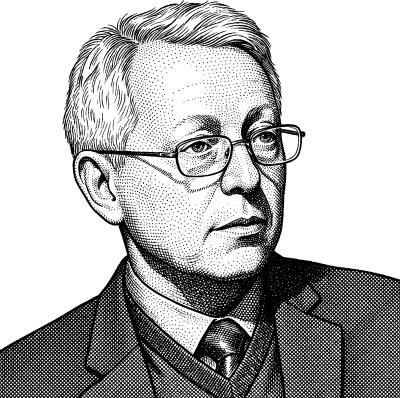
Terryl Givens is a distinguished scholar of Mormon culture and is perhaps the preeminent explicator of Mormonism’s relationship to American and global culture. He has authored an impressive number of books during his career, with more forthcoming. His work is noted for its originality of insight, native eloquence, and command of world literature, making his speeches and writings rhetorical masterpieces. His publications have significantly influenced Mormon thought, particularly the concepts of dialogic revelation and the understanding of Mormon doctrine as a series of paradoxes. Givens is widely known for his works, including Viper on the Hearth , a study of Mormonism in American culture; By the Hand of Mormon , which examines the reception and understanding of the Book of Mormon; and People of Paradox , a book which suggests a new way of looking at Mormon thought. His forthcoming book on the Book of Mormon with Oxford University Press promises to offer fresh insights into this foundational text. Givens’s work explores the intersections of Mormon cosmology, scientific speculation, and philosophical inquiry. He delivered the keynote address “No Small and Cramped Eternities” at an MTA (Mormon Transhumanist Association) conference, reflecting his understanding of the affinities between Mormonism and transhumanist thought. His work contributes to a broader understanding of Mormonism’s place in Western culture, from the Greeks to the present day, and engages readers to re-evaluate familiar concepts.
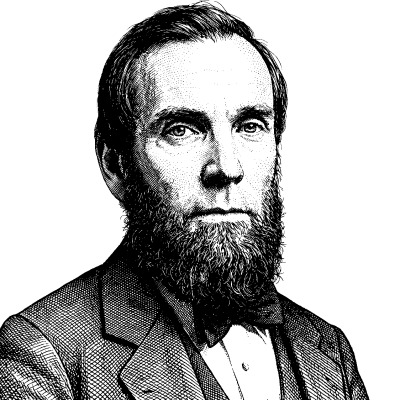
Thomas Briggs was an early Latter-day Saint pioneer who documented his experiences and beliefs about the resurrection and eternal progression in his autobiography, The History of Thomas Briggs . His writings reflect the optimism and faith of early converts to the Restored Gospel, expressing confidence in the literal nature of resurrection and the possibility of continued progression in the eternities. Like many early Latter-day Saints, Briggs saw the Restoration as opening possibilities for human advancement and transformation that exceeded the bounds of traditional Christianity.
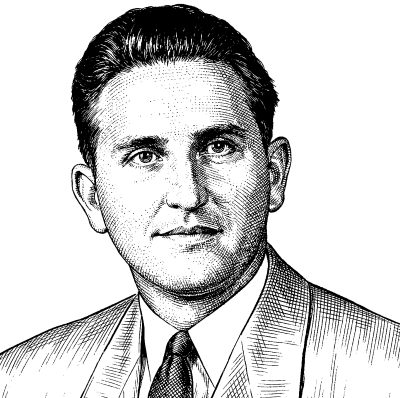
Thomas S. Monson
Thomas S. Monson (1927–2018) was the sixteenth president of The Church of Jesus Christ of Latter-day Saints and one of the most widely beloved pastoral figures in modern Mormon history. Born on August 21, 1927, in Salt Lake City, Utah, he studied at the University of Utah and earned an MBA from Brigham Young University before embarking on a career in publishing management at the Deseret News . Ordained an apostle at the remarkably young age of thirty-six in 1963, he served in the First Presidency under three successive church presidents before succeeding Gordon B. Hinckley as church president on February 3, 2008—a position he held until his death on January 2, 2018. Monson’s career was marked by breadth of institutional service and unusual constancy of personal pastoral attention. He chaired the Church Educational System’s Board of Trustees, served on the National Executive Board of Scouting America, and was appointed by President Ronald Reagan to the U.S. President’s Task Force for Private Sector Initiatives. He was a prolific author and speaker, known for a gift of memory that allowed him to recall individuals by name decades after meeting them. He received honorary doctorates from multiple institutions and the highest awards of both Scouting America and the World Organization of the Scout Movement. What distinguished Monson most was the integration he modeled between grand institutional responsibility and intimate human attention. His ministry was relentlessly oriented toward individuals: the widow, the sick, the forgotten. In one characteristic formulation, he described the faithful as literally becoming “saviors on Mount Zion”—participants in the Atonement through proxy and service, extending redemptive work to those who cannot accomplish it for themselves. That vision of distributed, participatory salvation, in which ordinary human beings become instruments of divine transformation in each other’s lives, animates a theology in which human potential and divine purpose are inseparable. Monson’s legacy is not primarily doctrinal elaboration but enacted conviction: that compassion, attention, and faithful action are among the most powerful technologies a human being can bring to bear on the world.

Tom W. Bell is a legal scholar and consultant with a diverse background spanning philosophy, law, and theology. His intellectual journey has taken him from a Methodist upbringing through phases of militant atheism and struggling agnosticism, culminating in what he terms “recreational theology.” He holds a BA in philosophy from the University of Kansas, an MA in philosophy from the University of Southern California, and a JD from the University of Chicago. Bell currently serves on the faculty of the Chapter University, Bowie School of Law, where he teaches first-year common law courses and electives in high-tech and intellectual property law. His scholarly publications cover a wide range of topics, including copyright, international law, polycentric law, constitutional law, prediction markets, and the Third Amendment. He is also the author of Your Next Government: From the Nation-State to Stateless Nations (Cambridge University Press, 2017). Through his consulting firm, Archimediate LLC, Bell advises companies developing special economic zones, focusing on the design, installation, and support of entire legal systems. His recent work explores the intersection of theology and simulation theory, presenting arguments for an “authored universe” that resonate with themes relevant to transhumanist and Mormon thought. Bell has presented his views at conferences such as the MTA conference to encourage dialogue regarding the idea of creation.