Authors

Ben Blair holds a PhD in philosophy and education from Teachers College, Columbia University. He is the co-founder of Newlane University—a platform focused on deinstitutionalizing education. An active member of the Church of Jesus Christ of Latter-day Saints, Blair’s work and perspective explore the intersection of religious community and secular ideals. He is particularly interested in how religious and post-religious communities can work towards shared goals, and he questions the equation of any particular organization with the broader concept of the ‘kingdom of God’. Blair, along with his wife, Gabrielle Blair, resides in France and they are the parents of six children. He presented at Sunstone West and is an attendee and speaker at Mormon Transhumanist Association conferences, where he explores the philosophical implications of faith, community, and progress.
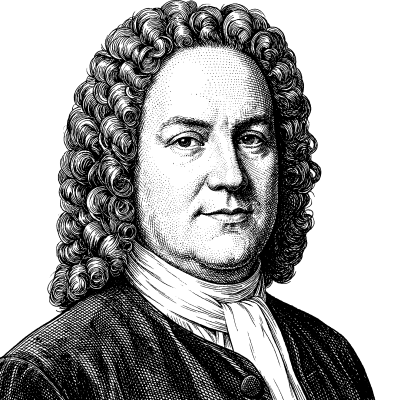
Benjamin Franklin
Benjamin Franklin (January 17, 1706 – April 17, 1790) was an American polymath, statesman, scientist, inventor, writer, printer, philosopher, and Founding Father of the United States. Among the most influential intellectuals of the Enlightenment, Franklin earned the title “The First American” for his tireless advocacy of colonial unity and his diplomatic efforts to secure French support during the American Revolution. Born in Boston, Massachusetts, Franklin received only two years of formal schooling before beginning work in his father’s candlemaking shop. At age twelve, he became an apprentice to his brother James, a printer, where he developed his love of reading and writing. By age seventeen, he had run away to Philadelphia, where he would build his fortune and reputation. Franklin’s scientific contributions were remarkable. His experiments with electricity, including the famous kite experiment, established the nature of lightning and led to the invention of the lightning rod. He also invented bifocal glasses, the Franklin stove, and the glass armonica. His curiosity extended to oceanography, meteorology, and demography. As a civic leader, Franklin founded the American Philosophical Society, the first lending library, the University of Pennsylvania, and the first fire department in Philadelphia. His wit and wisdom, expressed through Poor Richard’s Almanack, shaped American culture for generations. Franklin’s vision of human progress through science and reason resonates strongly with transhumanist thought. His belief that future generations would master nature, extend human life, and achieve powers beyond imagination prefigured modern discussions of technological enhancement and human flourishing.

Benjamin Peters
Benjamin Peters (born 1980) is an American media scholar, author, and professor known for his work on the history of communication technologies, information theory, and the social dimensions of digital networks. He serves as the Hazel Rogers Professor of Communication at the University of Tulsa and has held affiliations with several prominent research institutions. Peters is best known for his book How Not to Network a Nation: The Uneasy History of the Soviet Internet (2016), which explores the failed attempts to build a nationwide computer network in the Soviet Union and examines how social and political systems shape technological development. The work received widespread acclaim for its interdisciplinary approach, bridging media studies, history, and science and technology studies. He has also edited Digital Keywords: A Vocabulary of Information Society and Culture (2016), contributing to critical discourse around the language and concepts underpinning the digital age. Peters’s scholarship carries resonance for those interested in the intersection of technology, human potential, and collective aspiration. By investigating how societies envision and fail to realize transformative technological projects, his work illuminates the deeply human—and often ideological—dimensions of networked communication. His research reminds us that the tools we build to connect and elevate humanity are always embedded in moral, political, and even spiritual frameworks. For communities exploring themes of theosis and the cooperative pursuit of transcendence through technology, Peters’s insights into the promises and pitfalls of networked societies offer valuable perspective on how human aspiration and systemic constraints interact in the ongoing project of building a better world.

Bernardo Vicente is an economist and researcher deeply interested in the intersection of economics, technology, and culture. He holds a degree in business administration and accounting from Lisbon Polytechnic Institute, along with a specialization in business analytics. Driven by a desire to leverage technology for societal betterment, he has developed an innovative economic theory known as “Harberger Georgism.” Harberger Georgism builds upon the principles of Georgism and Harberger taxation, exploring how Web3 technologies can sustainably develop the digital era and enhance the physical world. This theory aims to potentiate development in the physical world using economic strategies. Currently, Bernardo volunteers as a researcher at the Ethereum Foundation, contributing his expertise to the advancement of blockchain technology. His work explores the teleology and utility of emerging technologies like NFTs and the metaverse, aiming to ensure their positive impact on society.

Blaire Ostler is a philosopher, author, and artist whose work explores the intersection of Mormon theology, transhumanism, and human identity. A ninth-generation Latter-day Saint, she has been a notable voice in conversations about the synthesis of religious tradition with technological progress and expanding theological inquiry. Ostler holds a Bachelor of Fine Arts in Design from the International Academy of Design and Technology–Seattle. Her background as an abstract modern artist deeply informs her philosophical work. Her paintings, characterized by their exploration of aesthetics and form, can be found in residences and businesses throughout Seattle. This artistic sensibility extends to her writing, where she examines the boundaries of traditional categories to explore a more expansive understanding of divinity and humanity. Ostler is the author of Queer Mormon Theology: An Introduction (2021), in which she engages with Mormon doctrinal concepts such as the nature of the divine, the significance of Heavenly Mother, and the potential for technological resurrection. Her involvement with the Mormon Transhumanist Association has been significant; she served on the Board of Directors for six years and as CEO from 2016 to 2018. Her transhumanist vision emphasizes active discipleship, where humanity participates in the work of God through morphological freedom and cognitive liberty. Blaire continues to write, paint, and speak on themes of identity, truth, and beauty, exploring the relationship between the human and the divine.

Brad Levin (formerly Carmack) is an attorney, HR professional, and writer with interests spanning transhumanism, bioethics, and effective philanthropy. He earned a JD/MPA from Brigham Young University in 2011, where he also studied biology, and was admitted to the California bar that same year. He served on the MTA board of directors from 2011 to 2014 and as secretary of the association. At MTAConf 2014, Levin delivered a call to action on “Grounded Giving: How to Maximize the ROI of Your Charitable Dollars,” drawing on research from Arthur Brooks and the effective altruism movement to challenge attendees to bring the same rigor to charitable giving that investors bring to financial decisions. He argued that strategic philanthropy is one of the most accessible ways for anyone—regardless of technical background—to advance transhumanist projects and contribute to human flourishing. Levin lives in the San Francisco Bay Area.

Brent Allsop
Brent Allsop (b. 1959) is an American technologist, transhumanist activist, and co-founder of the Mormon Transhumanist Association, whose career has been shaped by a sustained conviction that the most important questions about consciousness, identity, and human destiny are both scientific and spiritual. Allsop is a Senior Software Engineer at 3M Health Information Systems and the founder of Canonizer.com, a collaborative wiki-survey platform launched in 2006 and designed to help communities build genuine consensus on contested questions—from philosophy of mind to ethics to emerging technology. His professional life has run in parallel with decades of advocacy for life extension and transhumanist causes, and he has been a founding voice in the MTA since its inception. At the center of Allsop’s intellectual work is a serious engagement with the philosophy of consciousness—specifically the problem of qualia, or the subjective qualities of experience. He has developed a theoretical framework for scientifically detecting and measuring qualia, arguing that bridging the explanatory gap between brain states and conscious experience requires new mapping functions and, ultimately, direct brain-to-brain connections that allow individuals to share elemental experiences. His vision of mind uploading follows from this: not a copy-and-delete procedure but a gradual transition of experiential continuity into enhanced digital form. This work finds a natural resonance with Joseph Smith’s teaching that “all spirit is matter”—a naturalist theology that Allsop has taken seriously as a framework for understanding what spiritual engineering and consciousness uploading might actually involve. Allsop has also applied his consensus-building instincts to the MTA itself, presenting the 2012 member survey and reflecting on what distinguishes the Association from other transhumanist communities: a spirit of mutual support and collaborative inquiry rather than fractiousness. His Canonizer platform embodies the same aspiration at scale—enabling individuals to identify trusted experts and survey their collective views, so that the expanding moral landscape of technological power can be navigated with wisdom rather than paralysis. The emerging expert consensus on representational qualia theory, he has noted, aligns surprisingly well with 19th-century Mormon descriptions of consciousness and spirit—a convergence he regards not as coincidence but as evidence that prophetic and scientific inquiry can illuminate the same truths from different directions.

Brian Green is a scholar at Santa Clara University specializing in the intersection of transhumanism and Catholic ethics. His research explores the complex relationship between these seemingly disparate fields, seeking to identify areas of both conflict and potential collaboration. He has dedicated approximately a decade to this field of study, commencing with his master’s program at the Graduate Theological Union in Berkeley. His work aims to foster mutual understanding and dispel misconceptions between transhumanist and Christian communities. At the Religion and Transhumanism Conference 2014, Green addressed prevalent myths regarding the Catholic Church’s stance on life extension and human genetic manipulation, arguing for a more nuanced perspective that acknowledges the diversity within both transhumanism and Christianity. He advocates for identifying true points of tension and exploring potential alliances between these groups. Green’s research considers the justice implications of emerging technologies, and the practical challenges of achieving immortality. He seeks to encourage productive dialog that reconciles the benefits of emerging technologies with Catholic concerns for social justice, human dignity, and spiritual well-being.

Britt Hartley is an author, philosopher, and educator whose work explores the intersection of Mormon thought, philosophy, and the human search for meaning. Raised in a Latter-day Saint family in Idaho, she taught high school history and LDS seminary before pursuing graduate studies in theology with a focus on the future of American religion. Hartley is the author of Mormon Philosophy Simplified: An Easy LDS Approach to Classic Philosophical Questions (2019), which bridges the rich tradition of Mormon academic theology—drawing on thinkers like Terryl Givens, Hugh Nibley, and Blake Ostler—with the everyday questions of Latter-day Saint life. She presented at the 2019 Conference of the Mormon Transhumanist Association on how genealogical record-keeping across cultures reflects the priorities and narratives of the societies that produce them, and how advancing technology is expanding the transparency and complexity of Mormon genealogy in ways that may drive theological reflection. In her subsequent work, Hartley has focused on helping individuals navigate questions of meaning, connection, and spiritual practice beyond traditional religious frameworks. She is the author of No Nonsense Spirituality: All the Tools, No Faith Required (2024) and hosts the No-Nonsense Spirituality podcast, where she draws on philosophy, psychology, and contemplative practice to explore themes of awe, ritual, community, and purpose—concerns that resonate with the transhumanist commitment to human flourishing in all its dimensions. Hartley lives in Boise, Idaho with her husband and four children.

Bryan Johnson
Bryan Johnson (born 22 August 1977) is an American entrepreneur, venture capitalist, and longevity researcher whose work explores the technological transformation of human biology. Born in Provo, Utah, and raised in nearby Springville, he served a Latter-day Saint mission in Ecuador before earning a degree from Brigham Young University and an MBA from the University of Chicago. In 2007, Johnson founded Braintree, a mobile and web payment platform that powered services like Uber and Airbnb. In 2012, Braintree acquired Venmo for $26.2 million, and in 2013, PayPal acquired Braintree for $800 million, earning Johnson over $300 million. He subsequently invested $100 million of his personal capital in the OS Fund, supporting transformative science startups in synthetic biology, artificial intelligence, and space exploration. In 2016, Johnson founded Kernel, investing another $100 million to develop non-invasive neural interface technologies for measuring brain activity. In 2021, he launched Project Blueprint—a comprehensive anti-aging protocol involving strict nutrition, supplements, fitness regimens, and medical monitoring by a team of 30 specialists. His self-funded longevity initiative involves over 100 daily protocols, with Johnson claiming to age at a rate 46% slower than average. Johnson’s work represents a contemporary expression of transhumanist ambitions—the application of technology and rigorous methodology to extend healthy human lifespan. While his methods have attracted skepticism from some medical experts, his willingness to invest in and personally test radical approaches to human enhancement has made him one of the most visible figures in the longevity movement.