Authors

Vinay Gupta is an entrepreneur, humanitarian, and technologist. He is the founder and CEO of Materium, a blockchain technology company focused on bridging the virtual and physical economies. Materium aims to provide buyer and seller protection for physical asset NFTs, integrating real-world assets with blockchain technology. Gupta is also recognized for his contributions to the Ethereum blockchain platform. His work reflects a deep humanitarian concern, particularly for the world’s poorest populations and disaster relief efforts. This concern drives his interest in leveraging technology for social good. Beyond his work in blockchain, Gupta is known for inventing the HexaUt refugee shelter—a cheap, simple, non-patented, and open-source design. The HexaUt has become iconic within the Burning Man counterculture and serves as an example of his commitment to practical, accessible solutions for humanitarian challenges. He is also interested in weaving Gandhian principles of fair trade into his work, particularly through Materium, which is an attempt to define the moral responsibility around things people consume.
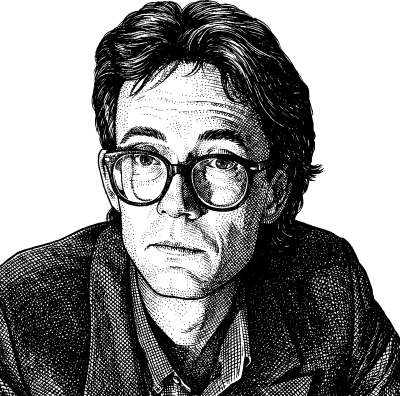
William Gibson
William Ford Gibson , born March 17, 1948, in Conway, South Carolina, is an American-Canadian speculative fiction writer widely credited with pioneering the cyberpunk genre. After dropping out of high school and traveling to Canada, he earned a B.A. from the University of British Columbia in 1977. Gibson coined the term “cyberspace” in his 1982 short story “ Burning Chrome ” and popularized the concept in his groundbreaking debut novel Neuromancer (1984), which remains the only novel to win the Hugo, Nebula, and Philip K. Dick Awards. His visionary works anticipated the Internet, virtual reality, and the pervasive digital culture that defines modern life. Gibson’s Sprawl trilogy— Neuromancer , Count Zero (1986), and Mona Lisa Overdrive (1988)—merged technology, multinational corporate capitalism, and vast urban landscapes in ways that revolutionized science fiction. His influence extends far beyond literature, inspiring films like The Matrix and shaping how we understand the relationship between humanity and technology. Gibson continues to write and lives in Vancouver, British Columbia, exploring themes of technological change and human adaptation that resonate deeply with transhumanist thought.
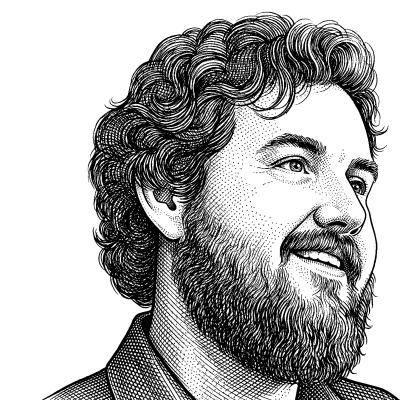
William Irwin Thompson
William Irwin Thompson (July 16, 1938-November 8, 2020) was an American cultural historian, poet, and social philosopher who studied how myth, science, and consciousness evolve together. Born in Chicago and educated at Pomona College and Cornell, he taught at MIT from 1965 to 1968 and at York University from 1968 to 1973, serving as a visiting professor at Syracuse in spring 1973. In 1972 he founded the Lindisfarne Association, which he led as founder and president until 1997. He built it into a meeting place for scientists, artists, and contemplatives who shared his conviction that no single discipline could account for a mind capable of building both cathedrals and computers. His books, including At the Edge of History (1971), Passages About Earth (1974), and The Time Falling Bodies Take to Light (1981), treat evolution as a story running through galaxies, cells, and civilizations. Drawing on figures like Teilhard de Chardin, they connect myth, spirituality, ecology, and cultural transformation. In 1976 he argued that technological expansion, including space colonization, should not become a way to evade ecological responsibility or the harder work of cultural change here on Earth.
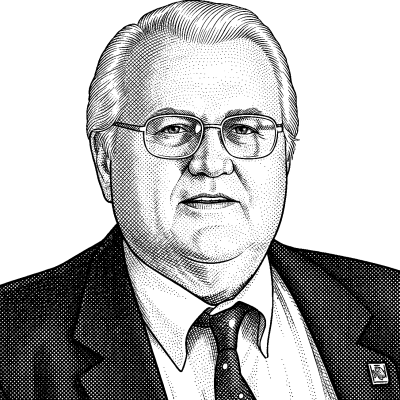
William Pickett is a senior hardware engineer and range master at the NASA Jet Propulsion Laboratory (JPL) Mesa Antenna Range, where he has worked for approximately 40 years as both an employee and a contractor. His extensive career in aerospace engineering began with North American Aviation Rockwell on the Apollo program. He gained experience at Autonetics, Hughes Ground Systems Group, IBM, GE, Martin Marietta, and Lockheed Martin before joining JPL. Pickett’s presentation at the MTA conference explores a theological perspective on space exploration, suggesting that a healthy space program, in addition to its scientific and educational benefits, may be the result of divine inspiration. As a native of California and Los Angeles County, Pickett attended Fullerton College and California State College, Fullerton, where he studied electrical engineering. He is a member of the Antenna Measurement Techniques Association and is actively involved in his ward and stake in Pasadena as a member of The Church of Jesus Christ of Latter-day Saints. Outside of his professional and religious pursuits, Pickett enjoys genealogy and live steam locomotives. Although he has retired once, he anticipates a second retirement in the future, allowing him more time to explore his interests and continue contributing to the discourse surrounding the intersection of science, technology, and theology.

Wolf Tivy is a writer and thinker focused on technology, philosophy, and the future of human agency.

Woody Allen
Woody Allen (born 1935) is an American filmmaker, writer, actor, and comedian whose career spans more than six decades. Born Allan Stewart Konigsberg in Brooklyn, New York, he began his career as a comedy writer for television before transitioning to stand-up comedy and filmmaking. Allen’s films frequently explore themes of mortality, meaning, relationships, and the human condition, often with dark humor and philosophical undertones. His work has been influenced by existentialist philosophy, psychoanalysis, and the writings of authors like Dostoevsky and Kafka. Despite controversies in his personal life, Allen’s artistic output has earned numerous Academy Awards and international recognition. His reflections on death, immortality, and the search for meaning resonate with transhumanist concerns about human finitude and the desire for transcendence.

Yuval Harari
Yuval Noah Harari (born 1976) is an Israeli historian, philosopher, and bestselling author best known for his sweeping macro-historical works that examine the past, present, and future of Homo sapiens . A professor at the Hebrew University of Jerusalem, Harari has become one of the most influential public intellectuals of the twenty-first century, shaping global conversations about technology, consciousness, and the trajectory of human civilization. Harari earned his PhD from the University of Oxford and initially specialized in medieval and military history before turning to broad questions about the human condition. His breakthrough work, Sapiens: A Brief History of Humankind (2011; English edition 2014), traces humanity’s rise from insignificant apes to planetary dominators, arguing that our capacity for shared fictions—including religion, money, and nation-states—enabled unprecedented cooperation. Its sequel, Homo Deus: A Brief History of Tomorrow (2015; English edition 2017), examines how biotechnology, artificial intelligence, and data-driven algorithms may reshape or even supersede humanity. A third major work, 21 Lessons for the 21st Century (2018), addresses the urgent political and existential challenges of the present moment. Harari’s engagement with transhumanist themes is substantial. Homo Deus explicitly explores scenarios in which humans upgrade themselves toward quasi-divine capacities—enhanced cognition, radical life extension, and even engineered bliss—territory that overlaps significantly with Mormon Transhumanist interests in theosis, immortality, and the creative potential of humanity. However, Harari approaches these possibilities with deep ambivalence. He warns that technological transcendence may benefit only a small elite, creating unprecedented inequality, and he questions whether upgraded “Homo Deus” beings would retain anything recognizably human. His framework treats religion primarily as a useful fiction rather than as a genuine encounter with divine reality, and he does not share the Mormon Transhumanist conviction that a compassionate God ordains scientific and technological progress as means toward prophetic fulfillment. Where Mormon Transhumanism sees human potential and divine purpose as mutually reinforcing—with technological advancement serving as a vehicle for God’s work—Harari tends to view the pursuit of godlike power as fraught with existential risk and moral peril, untethered from any transcendent moral order. A practicing Vipassana meditator, Harari’s personal philosophical orientation draws on Buddhist insights about the nature of consciousness and suffering, leading him to emphasize mindfulness and self-awareness as counterweights to technological disruption. His work has been translated into over sixty languages, and he has advised world leaders and spoken at major forums including the World Economic Forum. Whether or not one shares his conclusions, Harari’s bold synthesis of history, biology, and philosophy has made him an indispensable voice in contemporary debates about what humanity is becoming.

Zoltan Istvan is a transhumanist author, philosopher, and futurist. He wrote The Transhumanist Wager and ran for U.S. President in 2016 on a transhumanist platform.